
N.P. Lim
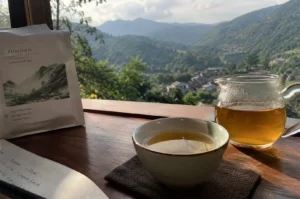
There was a time when knowing where a tea came from was enough. Now, it sometimes feels as though we need to know everything. The mountain. The village. The garden. The harvest date. The particular plot where the leaves were grown. Single-origin tea has become a mark of quality in modern tea culture. The idea…
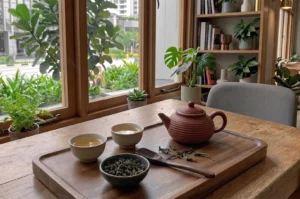
I have always found it interesting that oolong tea is one of the most misunderstood teas. People often describe it as complicated. Too many varieties. Too many brewing methods. Too many rules. The leaves should be prepared this way. The water should be at this temperature. The teapot should be a certain material. The first…

The rain had come and gone by the time I arrived, leaving the street outside slick and quiet. I stepped in without knowing quite what I wanted from the afternoon. Only that I wanted it to be slow. The Lobby Lounge at The Capitol Kempinski Hotel Singapore does not rush you. It waits. And there…
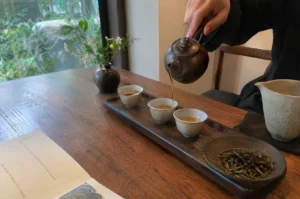
There is a particular moment that has become increasingly familiar in modern tea culture. A tea is presented. Before the first sip, we are introduced to its story. The region. The altitude. The history. The carefully chosen words that describe its character. Perhaps there are notes of wildflowers, distant forests, roasted grains, or forgotten memories.…

I almost walked past it. Located at Nine Neil Road, Tea Chapter Trading Pte Ltd sits quietly, a three-storey shophouse just across from Maxwell MRT in Singapore, its restored facade catching afternoon light. Around it, Chinatown moves at its usual pace. Inside, something slower has been happening since October 1989. I stepped in on a…
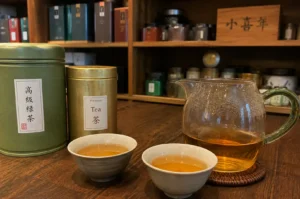
There is a belief in tea that we rarely question. If something costs more, it must be better. It is an understandable assumption. A rare tea from a respected region, carefully harvested and beautifully packaged, naturally creates expectations. We associate price with effort, craftsmanship, and quality. And often, that connection is justified. But not always.…

The lunch crowd had gone. Dinner hadn’t arrived yet. I came in during that strange, in-between hour, a little after three on a weekday, when the escalators at Wheelock Place hum quietly and Orchard Road feels almost gentle. Most people were still at their desks. I wasn’t. I wanted tea, and I wanted to sit…

There is a strange contradiction in the way we talk about tea today. For centuries, tea was appreciated for its taste, its rituals, and the moments it created. Today, it is often sold as something else entirely. A solution. A promise. A shortcut. The language surrounding wellness tea has become increasingly familiar. Detox tea. Cleansing…

You stoop to enter the traditional japanese tea house. That is the first thing the tea house asks of you, before the tea, before the talk, before anything at all. The doorway is low, deliberately so, and even the tall must bow to pass through it. In that small act of folding the body, something…

There is a word I have become increasingly cautious of in the tea world. Premium. It appears everywhere. Premium leaves. Premium harvests. Premium collections. Premium experiences. The word sounds reassuring. It suggests care, quality, and something worth paying attention to. But after seeing it attached to almost everything, I sometimes wonder whether it has started…