Hear me out: we have become far too comfortable with the phrase “caffeine-free tea.”
It appears on beautiful packaging, wellness websites, and café menus with the confidence of a health guarantee. The words suggest calm evenings, better sleep, and a gentler relationship with what we drink.
But there is a problem.
The phrase sounds clearer than it actually is.
Many people see “caffeine-free tea” and assume they are drinking something completely without caffeine. They choose it because they are sensitive to stimulants, avoiding caffeine late in the day, or simply trying to make a healthier choice.
The reality is more complicated.
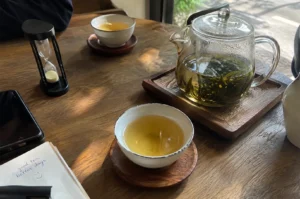
Not every tea that is marketed as a caffeine-free alternative is technically tea. Herbal infusions made from flowers, fruits, roots, and spices are naturally caffeine-free because they do not come from the Camellia sinensis plant. Chamomile, peppermint, rooibos, and ginger infusions belong to this category.
Traditional teas, however, including green tea, black tea, oolong, and white tea, naturally contain caffeine. Even products labelled as “decaffeinated” may still contain trace amounts.
So why are we allowing “caffeine-free” to become such a loose marketing phrase?
This is where things become frustrating.
Tea has always carried a sense of trust. Across cultures, it represents care, ritual, hospitality, and attention. When someone reaches for a calming cup before bed, they should not need to become a researcher reading fine print to understand what they are consuming.
This is not about banning creative branding. Tea companies should absolutely celebrate flavour, craftsmanship, and tradition. But when a phrase creates a health assumption, clarity matters.
Imagine if food labels used words like “sugar-free” loosely or “all-natural” without explanation. Consumers would rightly question it. Tea deserves the same level of honesty.
Perhaps the solution is simple: tell us what the drink actually is.
Say “herbal infusion.” Say “naturally caffeine-free.” Say “decaffeinated tea with trace caffeine.” Give people information instead of a comforting illusion.
Because tea is built on slowing down and paying attention.
The irony is that the industry selling us mindfulness may need to practise a little more of it itself.

Temperature Rules Are Overblown: The Real Brewing Variable Nobody Mentions
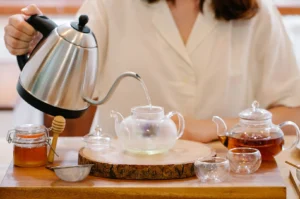
I used to think making tea required a thermometer. Not literally, perhaps, but almost. Every tea seemed to have a number attached to it. Green tea at this temperature. Oolong at another. Black tea a little hotter. Too hot and you had apparently ruined everything. For a while, I took these rules quite seriously. Then…
-
Afternoon Tea at Prada Caffè ION Orchard: A Green Room, a Pale-Blue Cup
Afternoon tea has always been about the pause for me. Not the tiers or the silverware. Just the moment when the cup is set down, the steam rises, and everything outside seems to slow a little. So I wondered what a pause would feel like inside a fashion house. One floor above Orchard Road, past…
-
A Love Letter to Oolong: The In-Between That Changed My Mind
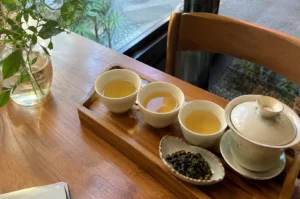
I did not understand oolong when I first encountered it. It seemed unnecessarily complicated. Green tea was green tea. Black tea was black tea. I understood where they stood. Oolong seemed determined to remain somewhere in between. Perhaps that was what initially kept me from appreciating it. Over time, however, I began to realise that…
-
Tea from Assam: The Geography, Craft, and Character Behind the Brew
The colour arrives first. A deep amber that darkens towards red as the tea leaves give up their strength. Then comes the aroma. It is warm and rounded, often compared to malt or the crust of fresh bread. The first sip has weight. It fills the mouth with a rich body and leaves a slight,…
-
Why “No Bitterness” Is a Terrible Goal (And Makes Tea Boring)
I used to think a good tea was supposed to be smooth. No bitterness. No sharp edges. Nothing that made me pause and wonder whether I was doing something wrong. It seemed logical. We naturally gravitate toward things that are easy to enjoy. A tea that is sweet, gentle, and immediately comforting feels like a…
-
Best Tea Brands Singapore: 10 Names Worth Knowing
There’s a small sound I’ve always liked. It’s the soft knock of a teapot lid settling back into place, just before the first pour. It happens at home. It happens in old shophouses and in bright mall boutiques like those in Suntec City. The setting changes, but the pause stays the same. This list is…
-
“Rare” Tea Is Often Manufactured Scarcity: Here’s How to Tell
There is a word in tea that carries unusual power. Rare. It immediately creates curiosity. A rare harvest. A rare batch. A rare tree. A tea that may never return. The suggestion is simple: if something is difficult to obtain, it must be more valuable. Sometimes, this is true. Some teas are genuinely limited because…
-
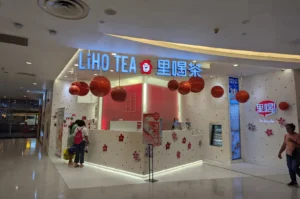
LiHO Tea Singapore: A Greeting You Can Drink
Some words carry a whole childhood inside them. Li ho. I heard it at kopitiam tables, across corridors, from uncles who never waited for a real answer. It meant “how are you,” but it also meant I see you. So when I saw that name on a tea shop sign, somewhere in the middle of…

The Myth of “Perfect” Tea: What I Stopped Chasing
For a long time, I thought I was looking for the perfect tea. I imagined there would be a moment when I found the one. The tea that made every other tea feel unnecessary. The tea I would recommend to everyone. The tea that would finally make me understand what true appreciation was supposed to…
-
Teh O: Understanding the Tea Order Behind the Name
There is a stall near where I grew up that has changed hands twice, but the tea has stayed the same. I still remember the first time I ordered teh o on my own, sometime in my early teens, mumbling the words at the counter and half-expecting to get them wrong. The uncle didn’t blink….