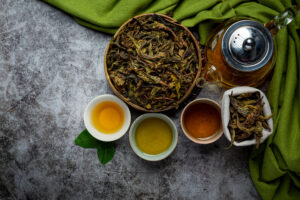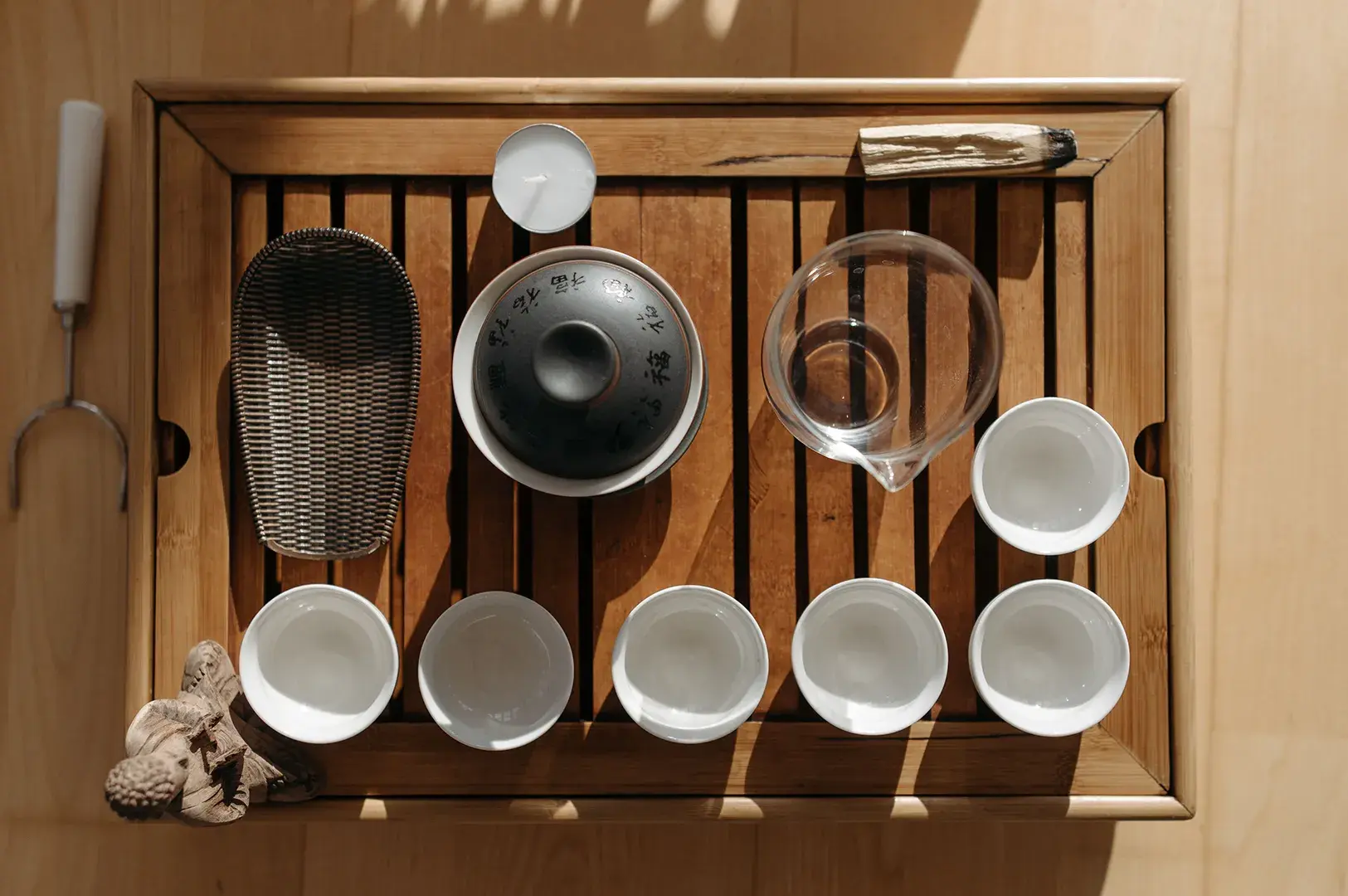
There is a small arrangement on the table this evening, and I have not touched it yet.
A pale bowl with a lid resting slightly askew. A round pitcher beside it, waiting to be filled. Cups no larger than a thumb and two fingers, lined up like a quiet sentence. The surfaces catch the last of the light, and for a moment the whole set looks less like equipment and more like something to be admired from a distance.
That admiration is where the trouble begins. Because a tea set that only looks beautiful is a kind of ornament. And an ornament, however lovely, is not what these objects were made to be.
So the question sits with me, gently. Do Chinese tea sets simply look beautiful on the table, or do their materials, proportions, and design genuinely change the way tea is brewed and tasted?
Chinese Tea Culture: Beauty That Learned to Work
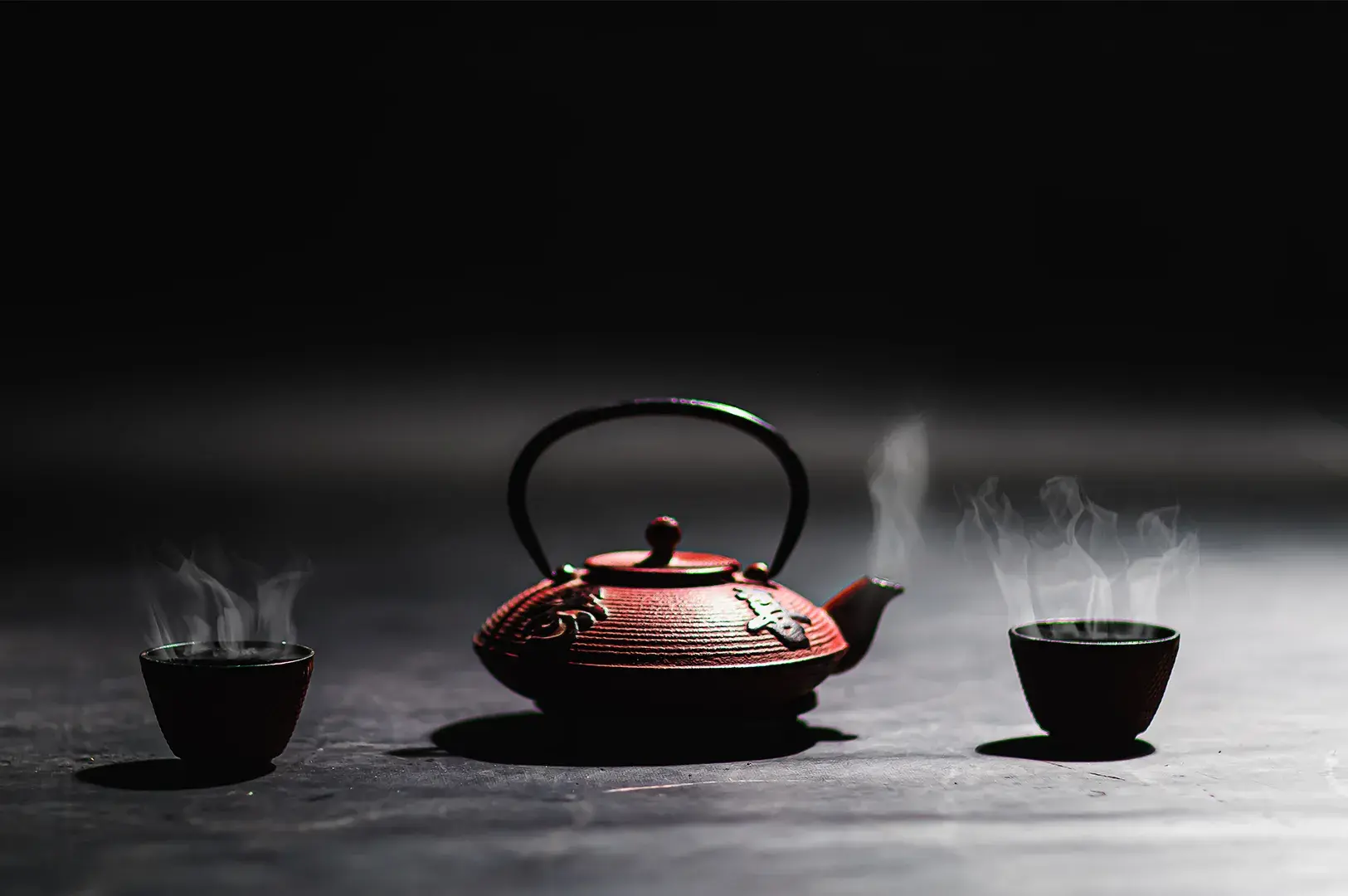
It helps to remember that most of this ware did not begin as decoration. It began as answer to a habit rooted deeply in Chinese culture.
Drinking tea took root deeply in China across many centuries, and the vessels grew up alongside it, shaped by how people actually wanted to drink. The forms we recognise today came after the shift from whisking powdered tea in a bowl to steeping loose tea leaves, a change reflected even in the museum record of old teapots. What looks decorative often turns out to be practical once you hold it.
The narrow spout that pours in a clean stream. The lid that seals warmth without trapping it. Such cups small enough to finish before the tea cools. These are not flourishes. They are decisions, worn smooth by use.
This is the first thing to understand about traditional Chinese tea culture and its objects. Craft and function were never meant to live apart. The beauty, at its best, is the shape that usefulness happened to take.
Drinking Tea: The Quiet Logic of Gong Fu Tea Brewing
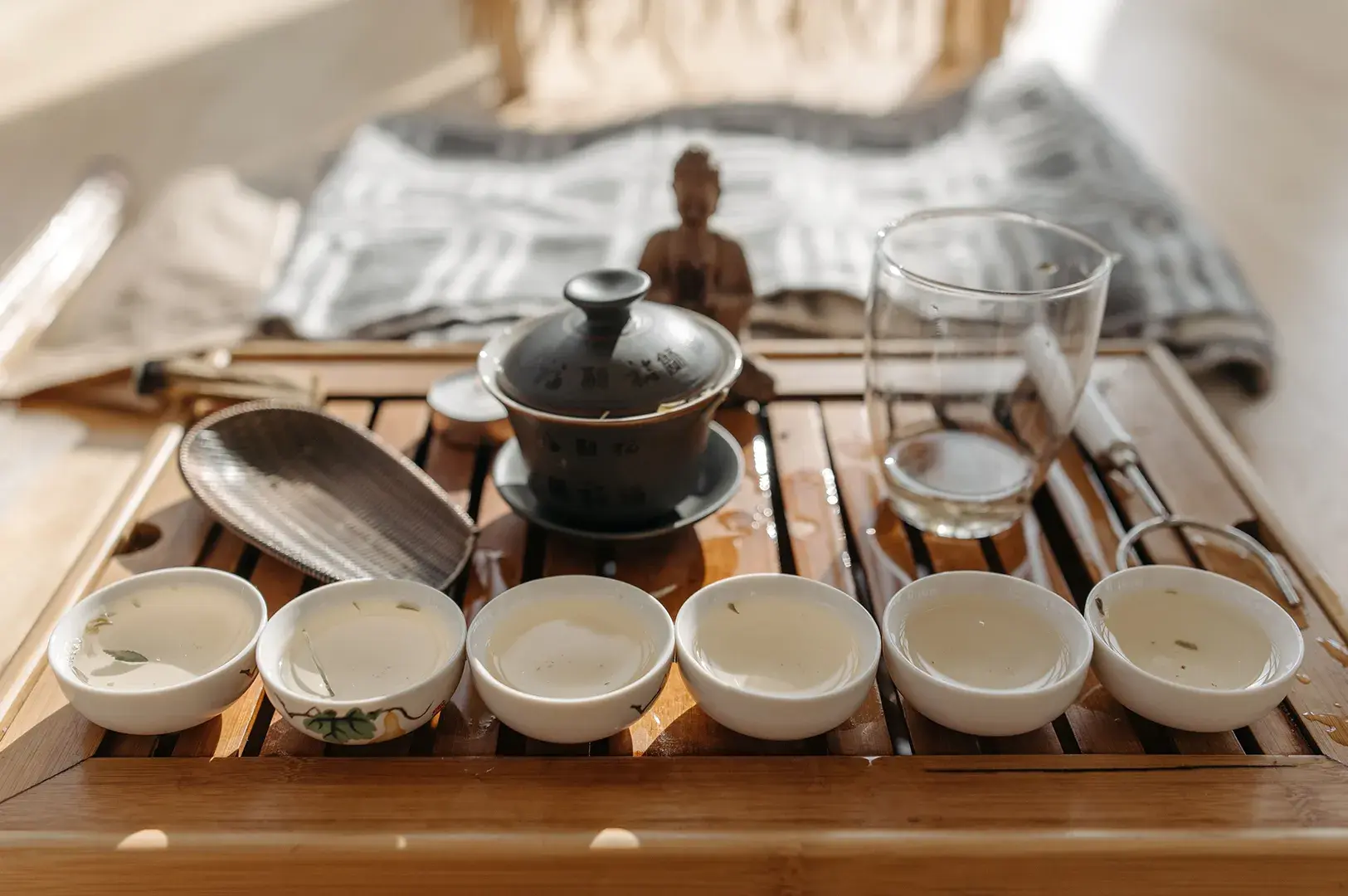
To ask how these sets brew, you have to understand what they are brewing for.
Much Chinese teaware is built around a style often called gong fu tea, a word that speaks of skill earned through patience. A gong fu tea set does not aim to make a large pot in one go. It does the opposite. It uses a small vessel, a generous amount of tea leaves, and short, repeated infusions poured one after another.
The idea is closer to attention than efficiency. You steep a concentrated measure of leaves for a brief moment, pour it all out, then steep again. The same leaves might give five or six infusion, sometimes more with oolong or pu-erh, and each pour tastes a little different from the one before.
A larger Western-style pot usually approaches the tea differently, using more water, proportionally fewer leaves, and a longer steep. Gongfu brewing instead makes repeated short infusions easier to follow from one pour to the next.
Gong Fu Tea: The Vessel at the Centre – Chinese Teapot Versus Gaiwan
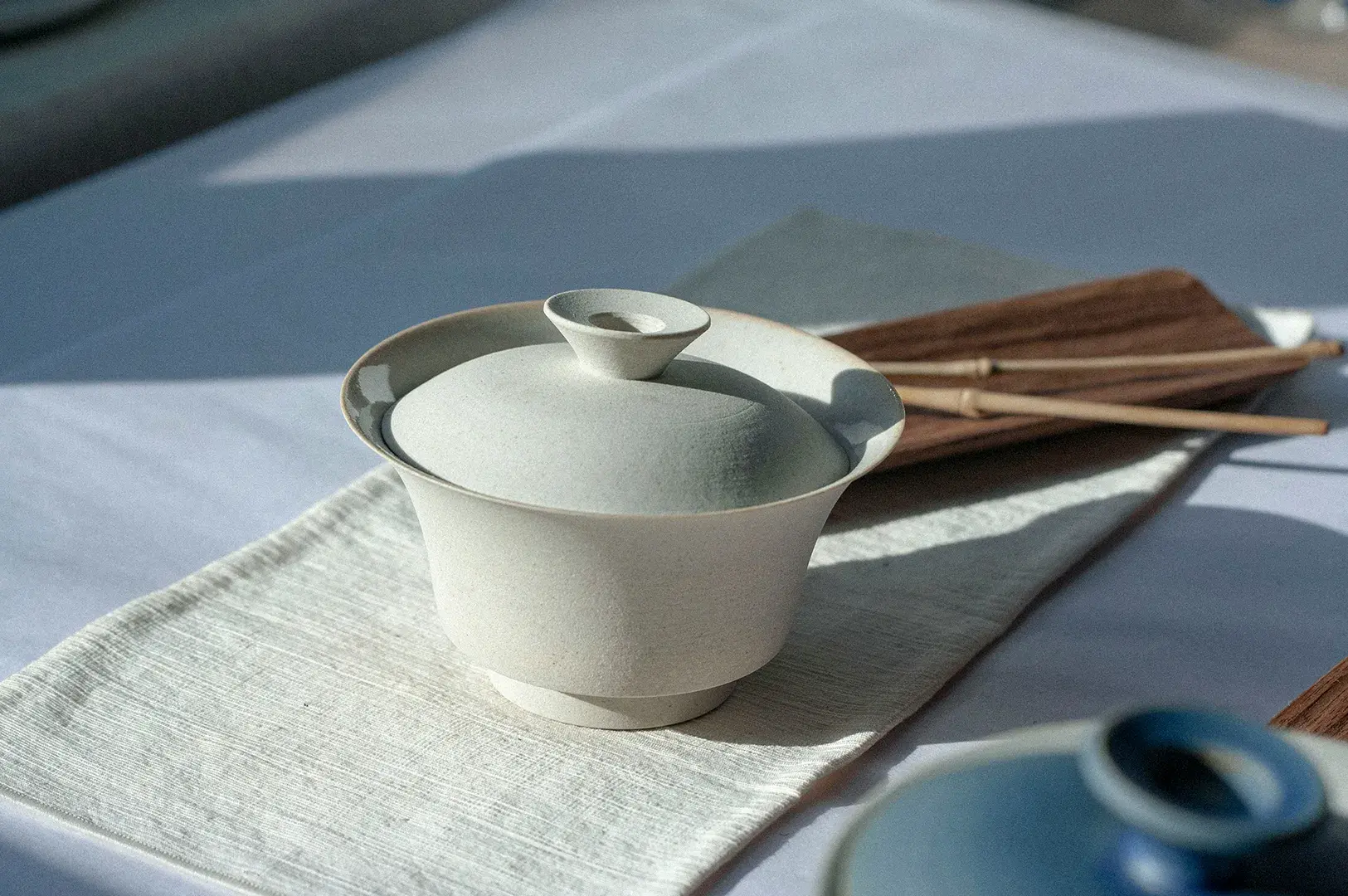
At the heart of most tea preparation sets sits one choice. Do you brew in a gaiwan or a Chinese teapot?
A gaiwan is a lidded bowl, usually of porcelain, that you hold and pour from directly using the lid to hold back the tea leaves. A Chinese teapot is what it sounds like, a pot with a spout and handle. Both do the same work. They steep and they pour. But they feel entirely different in the hand.
The gaiwan is bare and honest. Nothing hides between you and the tea. You see the leaves unfurl, you smell the lid, you control the pour by how you tilt it. It is versatile too, since a porcelain gaiwan holds no memory of previous teas and will happily brew green tea today and black tea tomorrow.
The gaiwan versus teapot question is partly about confidence. A gaiwan can run hot against the fingers until you learn the grip, and beginners often nip themselves once or twice before it becomes second nature. A teapot with a handle is kinder to the hands and steadier to pour, though it gives you less of that direct, watchful contact with the leaf.
Neither is better. They are simply two ways of paying attention.
Tea Leaves and Materials: What the Material Changes
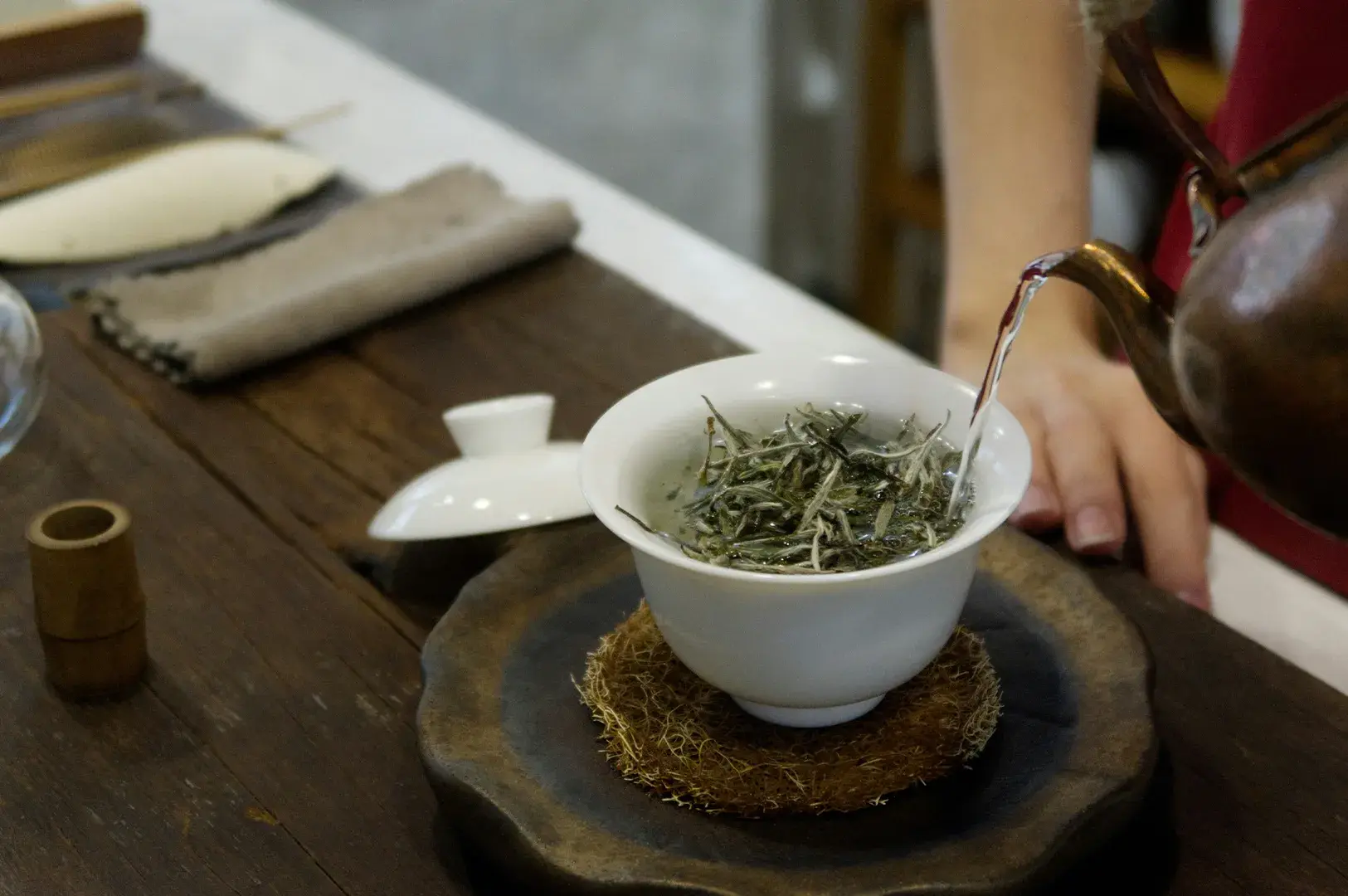
Once you have chosen a form, the material of a Chinese tea set shapes the rest. Each behaves a little differently, and none is a universal answer.
Porcelain Teaware
A porcelain tea set is the neutral, dependable choice. Dense and glassy, porcelain holds no flavour and lends none, so it lets a tea speak plainly for itself.
It suits almost anything, which is why so many gaiwans are made from it. If you want one vessel to brew many teas without confusion, porcelain is a quiet and forgiving companion.
Glazed Ceramic
Glazed ceramic sits close to porcelain in spirit. The glaze seals the clay, giving a smooth, non-absorbent surface that stays largely neutral and wipes clean easily.
It often carries a little more warmth and weight in the hand, and a broader range of colour and character. A gentle middle ground between the purity of porcelain and the earthiness of bare clay.
Glass
Glass gives you nothing to taste and everything to see. In a glass vessel you watch the tea leaves drift and open, and the liquor deepen from pale gold to amber.
That visibility makes glass lovely for delicate green tea and white tea, and a fine teacher for beginners learning how a brewing process develops. It holds heat less closely, though, which can matter for teas that want a hotter, steadier steep.
Unglazed Clay and Yixing Clay
Unglazed clay is the most particular of the materials. Because the surface is porous, some tea lovers keep a clay teapot dedicated to a single category of tea, believing it settles into that character over time.
No clay is more revered than that of Yixing clay. The V&A holds Yixing stoneware among its collections, and these unglazed purple-clay teapots have a history stretching back centuries, becoming particularly popular among scholars and educated merchants from the 16th century onwards.
They carry real cultural weight. Many Chinese connoisseurs long regarded the Yixing teapot as the finest vessel for brewing. Still, it is worth holding that reverence with a steady hand. A Yixing teapot is often small, made for gong fu tea brewing, and typically kept to one type of tea. Its value lies as much in its craft and history as in any promise about taste, and a beautiful example is not automatically a better brewer.
The porous nature of Yixing clay is chief among its virtues. Yixing teapots are also valued for their heat-retention characteristics, which can suit darker and roasted teas prepared through short, repeated infusions.
Yixing clay is also valued for the precision that skilled potters can achieve in forming a functional teapot. A well-made example may have a closely fitted lid and controlled pour, qualities that are particularly useful during short, repeated gongfu infusions.
Tea House and Tea Experience: A Quiet Look at How They Actually Perform
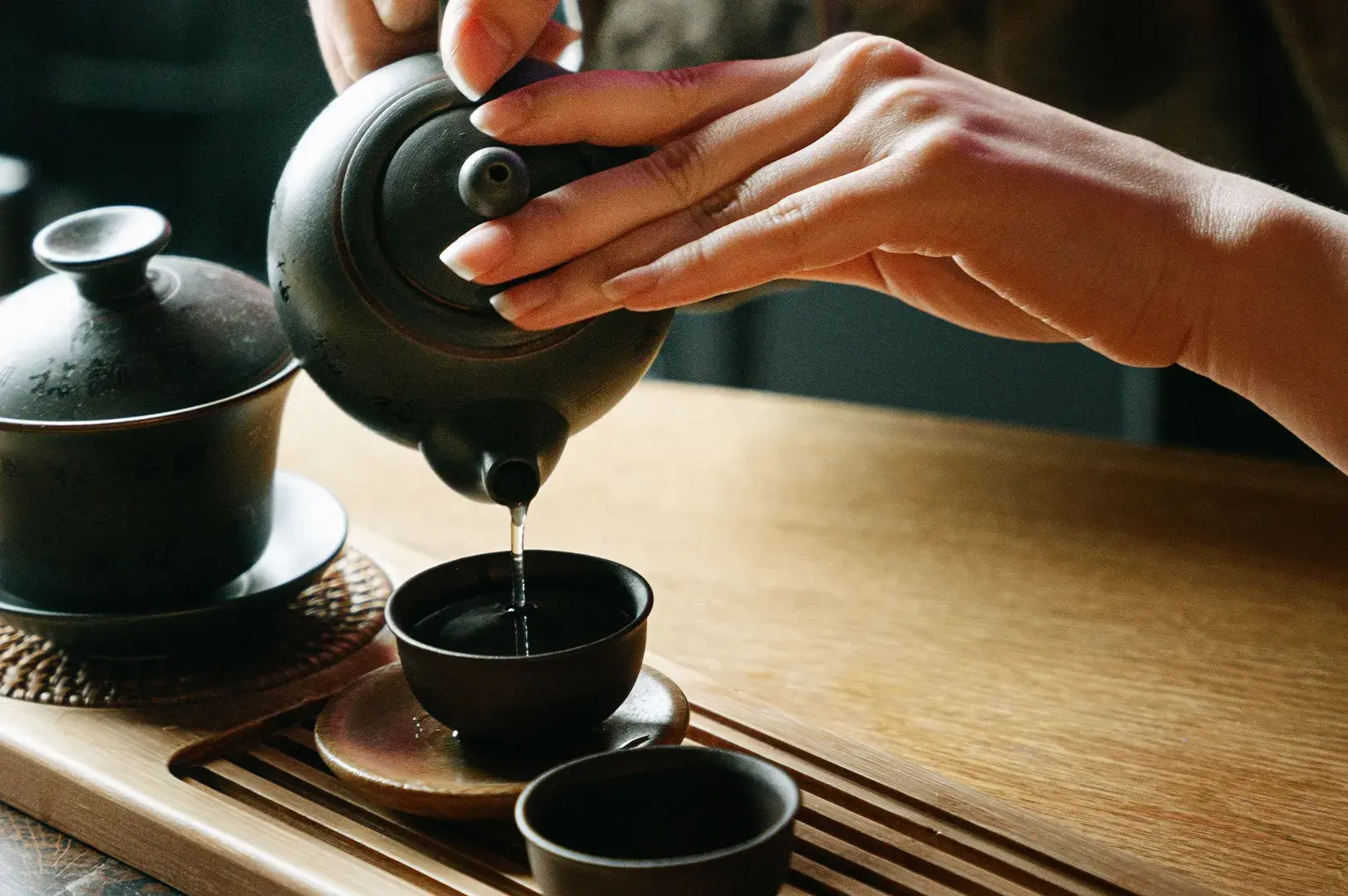
Set the beauty aside for a moment and ask the plainer question. In everyday use, how do these tea sets serve you?
At their best, they serve very well. A well-made vessel pours in a clean, quick stream, which matters when a few seconds decides whether a tea is bright or bitter. A lid that fits closely lets you hold back the tea leaves and control the pour. The right size leaves room for leaves to swell and open, which is where much of the rich flavour lives.
But not every set earns its looks. Some fall short in ways worth naming:
- Decorative handles that grow uncomfortably hot or sit awkwardly in the hand.
- Lids that fit loosely, so leaves escape or the pour turns clumsy.
- Spouts that dribble rather than stream, muddying your timing.
- Vessels that hold heat so stubbornly that delicate teas scorch.
- Oversized trays and fiddly parts that leave more to wash than to enjoy.
Cleaning is its own quiet consideration. Porcelain, glazed ceramic, and glass rinse clean and ask little. Unglazed clay wants gentler care, usually just hot water and no soap, to keep its surface as intended.
For a beginner, the honest counsel is to start simple. A plain porcelain gaiwan or a small glass pot teaches you more, and forgives more, than an elaborate set whose beauty outpaces its function.
Creating an Authentic Tea Culture: Choosing by the Tea, and by Yourself
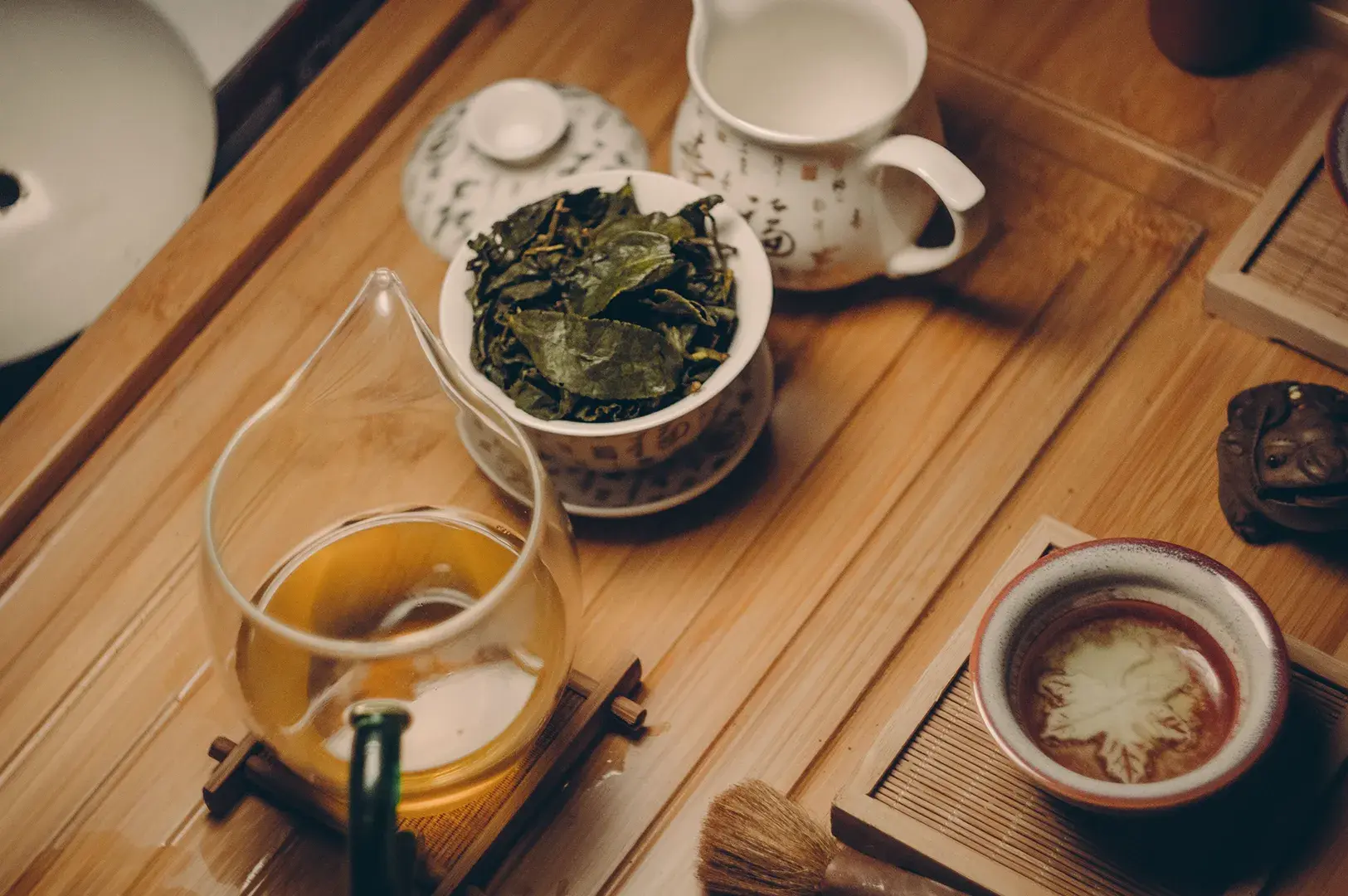
There is no single best set, only the one suited to the tea in front of you and the hour you are in.
Light, fragrant teas such as green tea, white tea, and floral oolong tend to favour neutral vessels that keep them clear, so porcelain or glass often serve them kindly. Darker, roasted teas, black tea, aged pu-erh, and heavier oolong, sit comfortably with clay that holds its heat. Scented teas usually prefer neutral surfaces that will not cling to their perfume.
Temperament matters as much as the tea leaves. If you have time and want the full, unhurried ritual, a gaiwan rewards your attention. If you would rather brew simply and steadily, a small teapot asks less of you. Learning how to use a Chinese tea set is less about rules than about noticing what suits your own pace.
Tea Experience: What the Set Is Really For
I have finished writing, and the tea set is still on the table, no longer only an ornament.
I understand it a little better now. Its beauty is real, but it was never the whole point. The small cups, the fitted lid, the clean spout, all of it exists to slow the hand and sharpen the senses, to turn a drink into an act of attention. That, more than any decoration, is what Chinese tea sets are for.
So here is a gentle invitation. Take a tea you already know well, one you usually make without thinking, and brew it instead in a gaiwan or a simple porcelain pot. Use a little more tea leaves, a shorter steep, and pour it out completely. Then do it again.
Notice the pour, the rising aroma, the warmth against your fingers, the way the leaves change from one infusion to the next. You may find the tea has not changed at all. Only your attention has. And that, quietly, is how a tea set earns its place on the table.
Tea Ware as a Thoughtful Gift
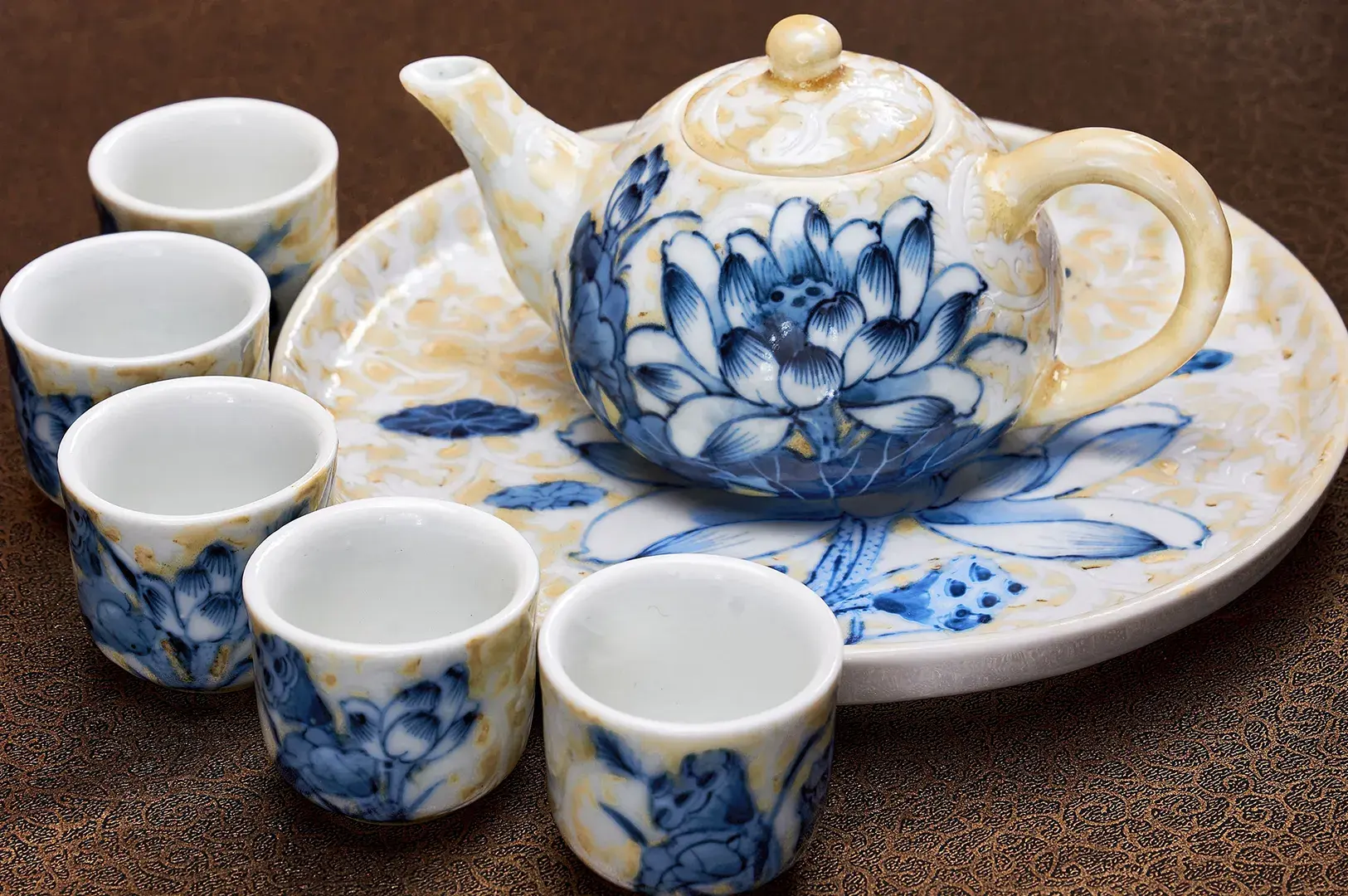
An exquisite Chinese tea set makes a thoughtful gift for tea lovers and friends who appreciate the rich tradition and elegant ritual of drinking tea. Unlike everyday gifts, a traditional tea set invites the recipient to pause, sip, and enjoy a quiet moment steeped in centuries of Chinese culture.
Whether for a special occasion or a meaningful purchase for yourself, investing in authentic teaware crafted from Yixing clay or fine porcelain ensures an enduring tea drinking experience. Complement your set with a tea towel for proper care and a pitcher for sharing tea with guests, creating a harmonious tea house atmosphere.
When considering price, remember that quality craftsmanship and the firing process influence the regular price, reflecting the time and skill invested. Such a gift is truly essential for anyone who values the art of tea preparation and the pleasure of gong fu tea.
Enjoy the rich, authentic tea experience that only a well-chosen Chinese tea set can provide.

British Tea Traditions: Beyond Cucumber Sandwiches and Modern Tea Accompaniments
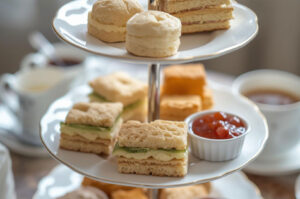
The ritual of British tea-especially the celebrated afternoon tea-conjures a very specific image: tiered cake stands laden with delicate finger sandwiches, fluffy scones, and exquisite cakes. This cherished tradition, born in the 1840s, is often attributed to Anna, the seventh Duchess of Bedford, who sought a small meal to bridge the long gap between lunch…
-
The Dance of Aroma: Appreciating Tea Through All Senses in Gongfu Cha
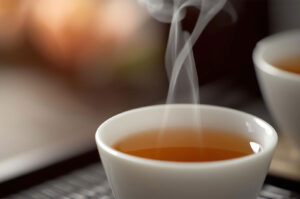
Imagine a wisp of steam carrying the scent of orchids from a tiny tea cup, a fragrance so vivid it transports you to a misty mountainside in China. This sensory immersion lies at the heart of the gongfu cha method, the traditional Chinese tea ceremony where every movement, from handling the tea leaves to pouring…
-
Japanese Tea Ceremony Principles: Harmony, Respect, Purity, and Tranquility
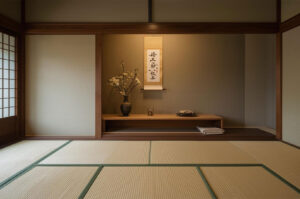
In a quiet tea room, a host moves with deliberate grace. The sound of hot water being ladled from an iron pot fills the air. This is the Japanese tea ceremony, known as Chanoyu or the Way of Tea, an art form that transforms the simple act of drinking tea into a profound experience. Far…
-
Beyond Chamomile: Exploring Lesser-Known Herbal Infusions from Around the World
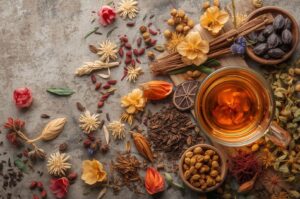
Tea is one of the most popular drinks worldwide, cherished for centuries as much for its taste as for its role in tradition and culture. While many people immediately think of green tea, black tea, or perhaps a steaming mug of mint tea, the spectrum of herbal infusions—blends using various herbs, fruits, and flowers—offers countless…
-
Raw vs. Ripe: Understanding the Two Paths of Pu Erh Processing
In the vast and ancient world of Chinese tea, few categories carry as much mystery and prestige as pu erh tea. Pu’er tea is renowned for its unique fermentation and aging techniques, which not only develop its complex flavor profiles but also contribute to its cultural significance and traditional production methods. Unlike most teas such…

From Keemun to Darjeeling: A Global Tour of Premium Black Teas
Black tea is more than just a morning ritual; it’s a global phenomenon steeped in rich history, cultural significance, and craftsmanship. From the misty mountains of India to the ancient gardens of China, each cup tells a story of its origin, flavor, and tradition. Throughout history, brewed tea has been cherished in various cultures, with…
-
Understanding Oolong Tea Oxidation Levels: The Spectrum of Oxidation in Tea Classification
When you step into the world of tea, you quickly learn about the main categories: white, green, oolong, and black. For many, green tea is fresh and vegetal, while black tea is bold and malty. But what about oolong? This category seems to defy easy definition, with some oolongs tasting light and floral like a…
-
Beyond Matcha: Exploring the Diverse World of Japanese Green Tea Varieties
Let’s be honest, when you hear “Japanese green tea,” your mind likely pictures a vibrant, frothy bowl of matcha. From trendy matcha lattes in every café to ice cream and desserts, matcha has become the undisputed global face of Japanese tea culture. And for good reason! It’s a delicious, versatile ingredient with numerous health benefits….
-
Silver Needle White Tea: The Delicate Emperor of Chinese Tea
In the vast and storied world of Chinese tea, few varieties command the reverence and prestige of Silver Needle white tea. Celebrated as Bai Hao Yin Zhen (白毫銀針)-meaning “White Hair Silver Needle”-this exceptional Chinese white tea sits atop the hierarchy of not just white tea, but among all tea types. Each slender ‘needle’ is not…
-
Thai Oolong Tea: Thailand’s Oolong Revolution in Ancient Tea Territory
In the shadowy folds of Northern Thailand’s mountains, where cool, misty air hugs the slopes and the morning dew clings to fragrant tea leaves, a revolution is steeping. Once known largely for its role in the Golden Triangle, this region now blossoms as a new epicenter for Thai oolong tea and innovative tea beverages like…