Tea drinkers rarely say this out loud.
But many have probably thought it at least once.
Sometimes an expensive tea tastes... fine.
Not extraordinary. Not life-changing. Just fine.
And yet modern tea culture often treats expensive tea as though it automatically deserves deeper admiration. A rare mountain harvest. Ancient tea trees. A tea produced in extremely small quantities. The language surrounding these teas can become surprisingly grand.
Perhaps too grand.
Of course, craftsmanship matters. Skilled farmers and tea makers deserve recognition for years of knowledge and labor. Certain teas genuinely carry remarkable depth and complexity.
But price and experience do not always move together as neatly as we pretend they do.
Some of the most enjoyable cups of tea are surprisingly ordinary. A simple roasted oolong drank regularly at home. A familiar black tea brewed slightly too strong on a rainy afternoon. Teas with no dramatic story attached to them at all.
And yet they continue to feel comforting, memorable, and complete.
Meanwhile, some expensive teas create a strange kind of pressure. People become hesitant to brew them casually. Every infusion feels as though it should reveal something profound simply because the tea costs more.
The experience becomes harder to enjoy naturally.
Perhaps this happens because tea culture sometimes confuses rarity with meaning.
But tea was never meant to function like a luxury trophy.
For centuries, tea existed as part of ordinary life. Shared during conversations. Brewed during quiet mornings. Poured without ceremony into worn cups that mattered less than the company sitting nearby.
The tea itself was important.
But so was the ease surrounding it.
This is not an argument against high-quality tea. Some teas are expensive for good reason. But perhaps tea appreciation becomes healthier when we allow ourselves to admit a quieter truth.
Not every expensive tea will move us personally.
And sometimes the tea we return to most often costs far less than the tea we feel obligated to admire.
With quiet regard,
N. P. Lim

Temperature Rules Are Overblown: The Real Brewing Variable Nobody Mentions
I used to think making tea required a thermometer. Not literally, perhaps, but almost. Every tea seemed to have a number attached to it. Green tea at this temperature. Oolong at another. Black tea a little hotter. Too hot and you had apparently ruined everything. For a while, I took these rules quite seriously. Then…
-
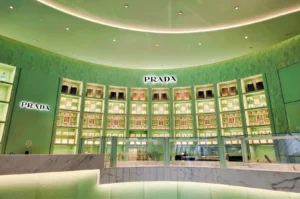
Afternoon Tea at Prada Caffè ION Orchard: A Green Room, a Pale-Blue Cup
Afternoon tea has always been about the pause for me. Not the tiers or the silverware. Just the moment when the cup is set down, the steam rises, and everything outside seems to slow a little. So I wondered what a pause would feel like inside a fashion house. One floor above Orchard Road, past…
-
A Love Letter to Oolong: The In-Between That Changed My Mind
I did not understand oolong when I first encountered it. It seemed unnecessarily complicated. Green tea was green tea. Black tea was black tea. I understood where they stood. Oolong seemed determined to remain somewhere in between. Perhaps that was what initially kept me from appreciating it. Over time, however, I began to realise that…
-
Tea from Assam: The Geography, Craft, and Character Behind the Brew
The colour arrives first. A deep amber that darkens towards red as the tea leaves give up their strength. Then comes the aroma. It is warm and rounded, often compared to malt or the crust of fresh bread. The first sip has weight. It fills the mouth with a rich body and leaves a slight,…
-
Why “No Bitterness” Is a Terrible Goal (And Makes Tea Boring)
I used to think a good tea was supposed to be smooth. No bitterness. No sharp edges. Nothing that made me pause and wonder whether I was doing something wrong. It seemed logical. We naturally gravitate toward things that are easy to enjoy. A tea that is sweet, gentle, and immediately comforting feels like a…
-
Best Tea Brands Singapore: 10 Names Worth Knowing
There’s a small sound I’ve always liked. It’s the soft knock of a teapot lid settling back into place, just before the first pour. It happens at home. It happens in old shophouses and in bright mall boutiques like those in Suntec City. The setting changes, but the pause stays the same. This list is…
-
“Rare” Tea Is Often Manufactured Scarcity: Here’s How to Tell
There is a word in tea that carries unusual power. Rare. It immediately creates curiosity. A rare harvest. A rare batch. A rare tree. A tea that may never return. The suggestion is simple: if something is difficult to obtain, it must be more valuable. Sometimes, this is true. Some teas are genuinely limited because…
-
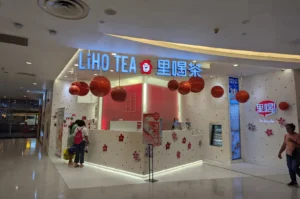
LiHO Tea Singapore: A Greeting You Can Drink
Some words carry a whole childhood inside them. Li ho. I heard it at kopitiam tables, across corridors, from uncles who never waited for a real answer. It meant “how are you,” but it also meant I see you. So when I saw that name on a tea shop sign, somewhere in the middle of…

The Myth of “Perfect” Tea: What I Stopped Chasing
For a long time, I thought I was looking for the perfect tea. I imagined there would be a moment when I found the one. The tea that made every other tea feel unnecessary. The tea I would recommend to everyone. The tea that would finally make me understand what true appreciation was supposed to…
-
Teh O: Understanding the Tea Order Behind the Name
There is a stall near where I grew up that has changed hands twice, but the tea has stayed the same. I still remember the first time I ordered teh o on my own, sometime in my early teens, mumbling the words at the counter and half-expecting to get them wrong. The uncle didn’t blink….