Most tea breaks are small things.
A kettle clicks off. Someone brings over a cup. For ten minutes, the work waits, and nobody asks very much of the tea except that it be warm.
There is another kind of tea break, though. One where you are the one brewing, measuring, pouring. Where the cup in front of you is something you made, slightly imperfect, and all the more yours for it.
That second kind of tea break sits at the centre of Teahee Singapore. Teahee SG describes itself not as a café but as a hands-on tea experience provider. Its workshops ask people to blend, shake, pull and taste. The idea, as the studio puts it, is that tea can be more than a beverage. It can be an experience shared with the people around you.
The Story Behind Teahee Singapore
According to Teahee, the business was founded in 2018 by three avid travellers. They had encountered different tea cultures on their journeys and noticed how tea seemed to bring people together, wherever they went.
The path from that idea to a workshop studio was not a straight one.
In a 2022 essay for TODAY, co-founder Jeannie Poon Wan Li described how it began. She was working as a journalist, a job she had wanted since her teens, but she found herself longing for more autonomy. She and her partners took over a bubble tea shop in the Serangoon area, with no prior experience of running a business or working in food and beverage.
It was a difficult start. Poon wrote that the shop's location had low foot traffic, and that because the partners still held full-time jobs, the business was largely left to staff. After about a year, they closed the retail shop. By her account, they had invested more than S$80,000 by then, and she went through a period of real self-doubt. Those early personal expenses and the risks of planning a small business were part of a steep learning curve.
From a closing shop to a bubble tea studio
The turning point came almost by accident.
While looking for someone to take over the remaining lease, the partners tried running bubble tea workshops in the space, hoping to cover the rent. Poon recalled that the response was overwhelming. They noticed there were plenty of cooking studios in Singapore, but few places devoted to making drinks.
So they opened a proper studio at the end of 2019. Teahee describes itself as Singapore's first bubble tea studio, a place dedicated to bubble tea making, tea blending and beverage workshops. Two months later, Covid-19 arrived, and the workshops moved onto Zoom. Over time, the classes grew to include tea blending, cocktails and mocktails. Poon also wrote about working with non-profit organisations such as Trybe and ALife to run bubble tea workshops for youths.
That account is now a few years old, and some details will have changed. Still, it explains something about the place. Teahee seems to have been built less on a grand plan than on paying attention to what people actually wanted to learn.
Tea, with a Hands-On Twist
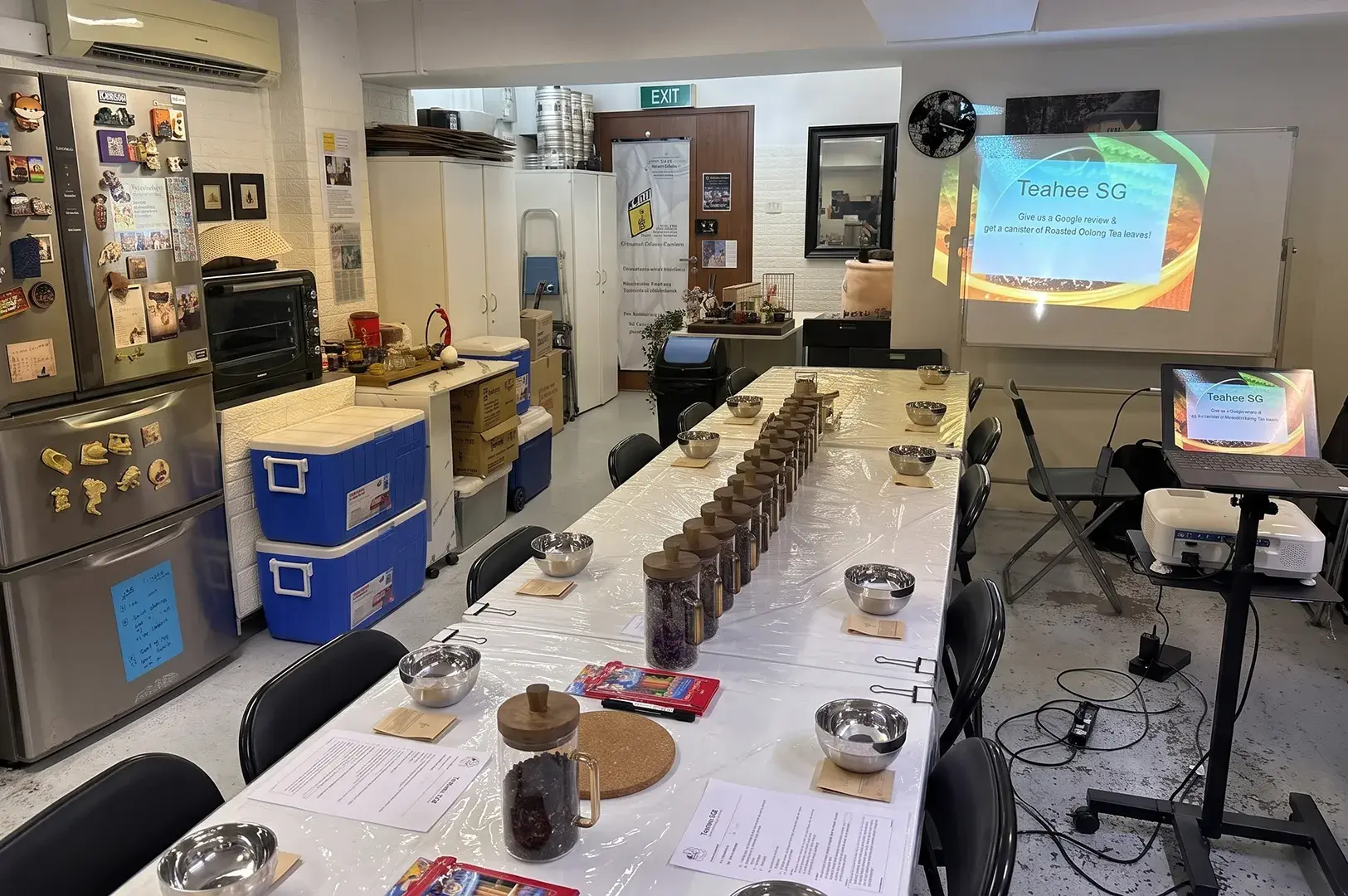
Today, Teahee's offering centres on guided tasting, tea blending and beverage making. Its programmes are aimed at corporate teams, schools and organisations, while a set of Tea Discovery workshops is described as suited to first-timers, tourists and casual tea drinkers. Whether you are planning a group outing or a trip with friends, the sessions offer a fun way to explore drinks together.
The studio frames these sessions as a low-barrier introduction to tea. There is, in its words, no right or wrong. Only exploration. A friendly barista or instructor guides participants through different types of tea and ingredients, with tips and step by step instructions along the way.
At the time of writing, the Tea Discovery workshops listed on Teahee's site include:
- Artisanal Tea Blending, listed at $48.90
- DIY Bubble Tea (Milk Tea and Fruit Tea), listed at $49.90
- Vegan Bubble Tea, listed at $59.90
- The Art of Chinese Grilled Milk Tea (灌灌烤奶), listed at $49.90
- Cocktails & Alcoholic Bubble Tea, listed at $69.90
- Travelers' Series (Mocktails Crafting), listed at $49.90
Several of these appear as sale prices, so it is worth checking the current figures before booking. Search Teahee SG's website for current services, schedules and prices; an app or booking platform may also show availability. Read recent reviews and look through photos if you want a sense of the experience, then contact the studio with questions about group arrangements or assistance. Checking details in advance can help you save time and avoid surprises.
Why a tea blending workshop matters
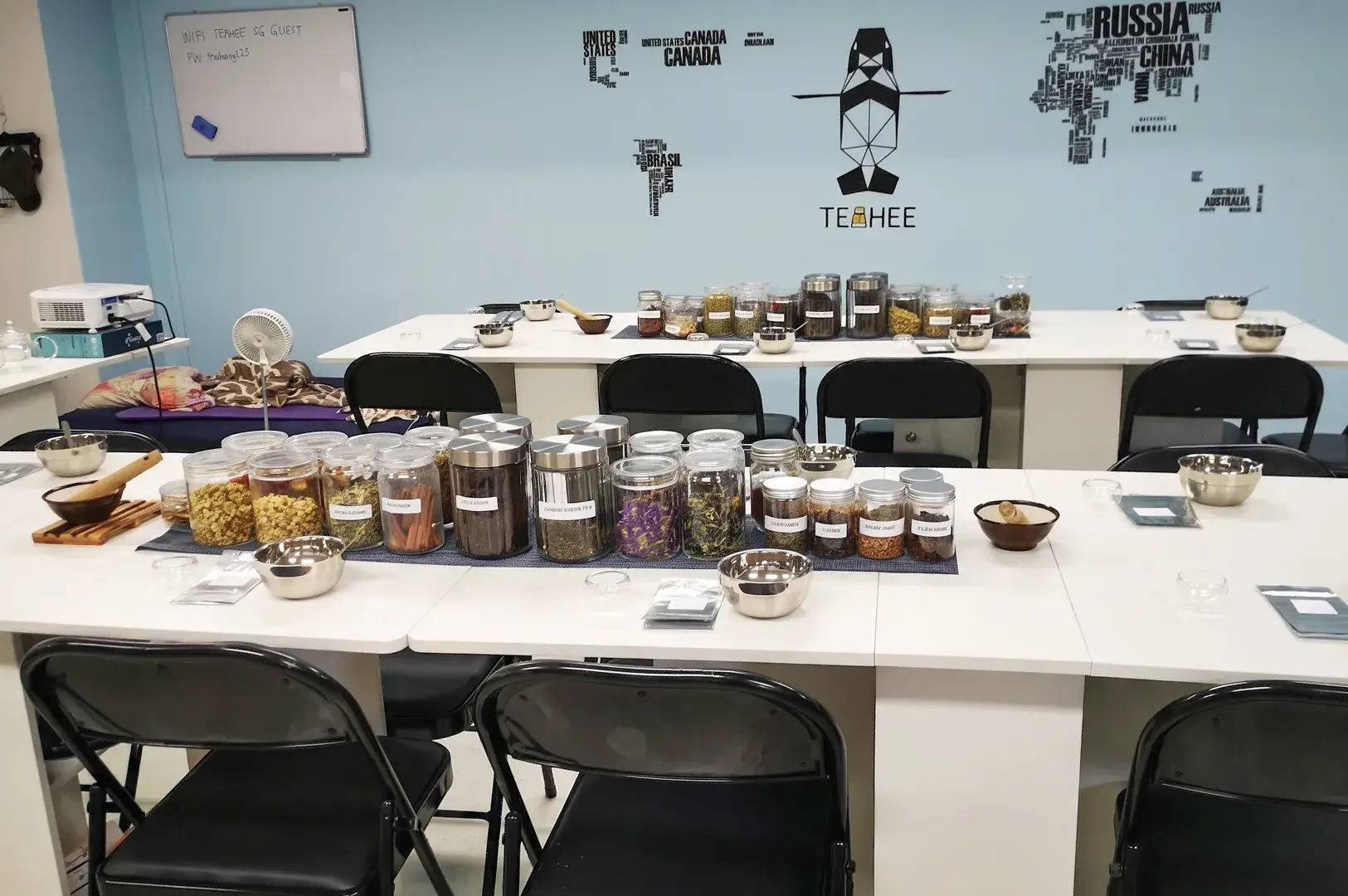
Of all these, a tea blending workshop is perhaps the most quietly revealing.
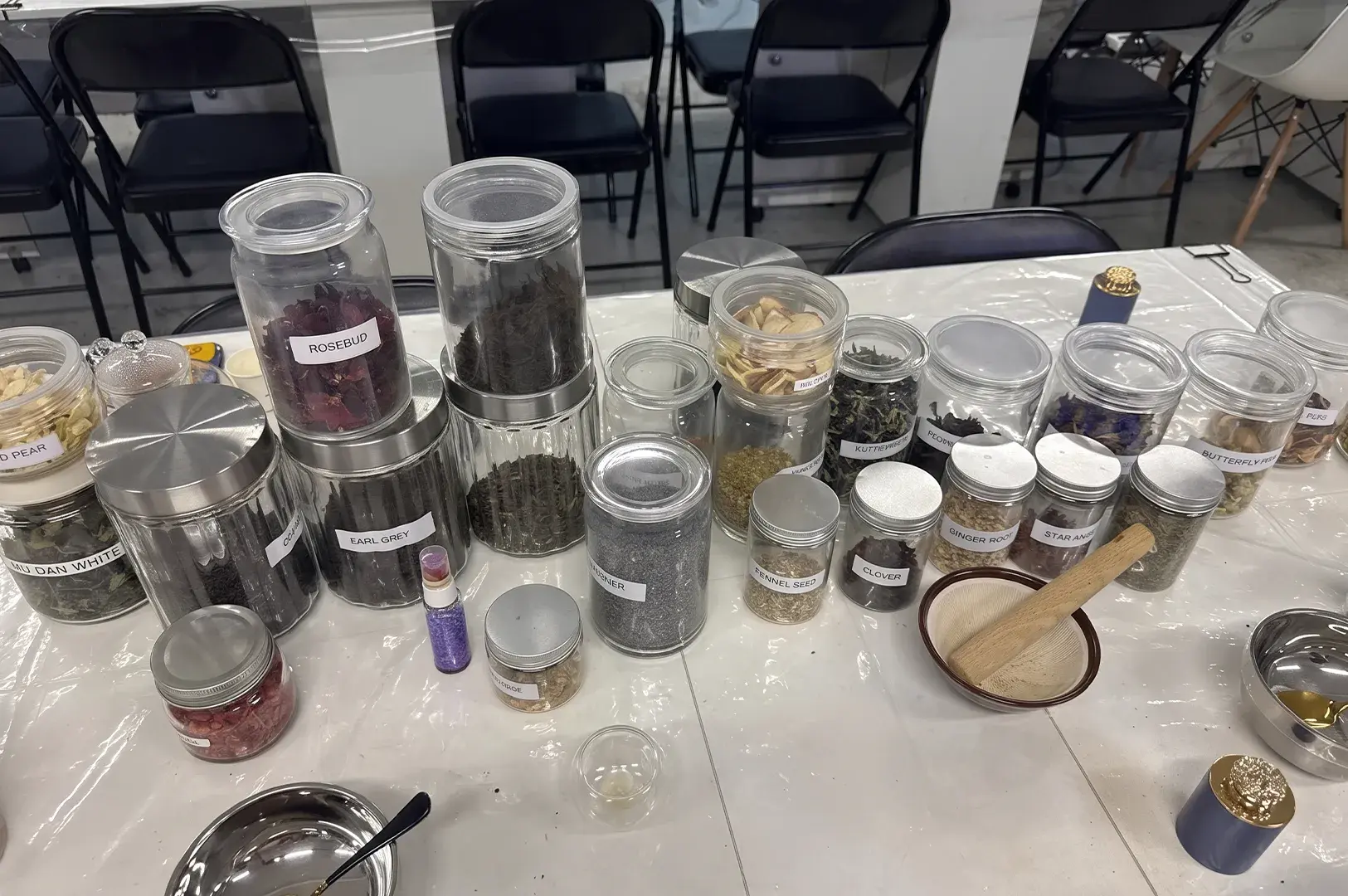
Most of us meet tea already finished. It comes in a tin, a bag, a cup handed across a counter. Blending turns that around. It asks you to consider why one leaf sits well beside another, and what you actually enjoy when you drink.
Teahee says its workshops aim to build what it calls personal taste awareness: the ability to recognise flavour, texture and balance. That is not a small skill. It is, in many ways, the beginning of tea appreciation and tea making from scratch.
The bubble tea making class as a doorway
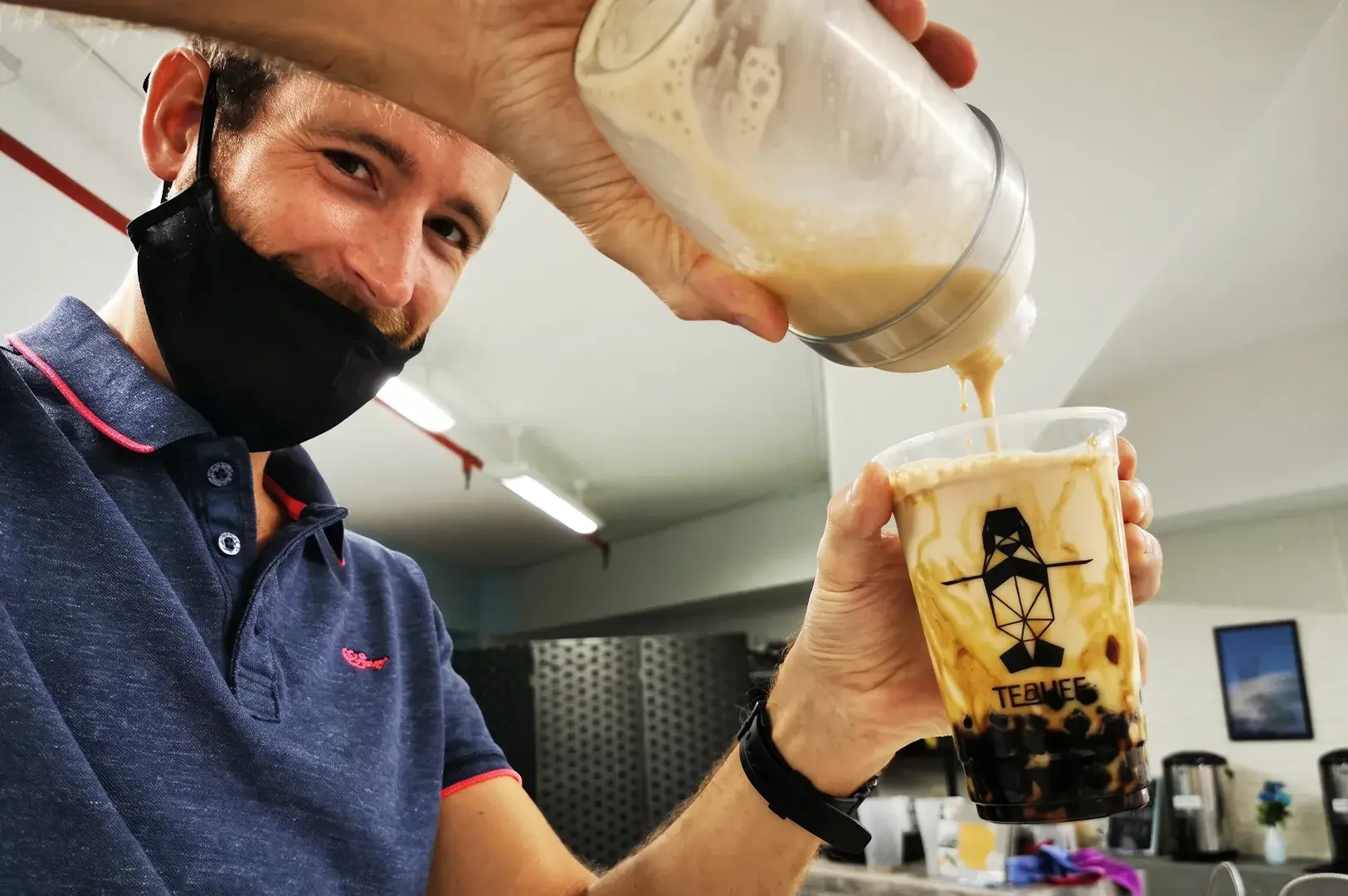
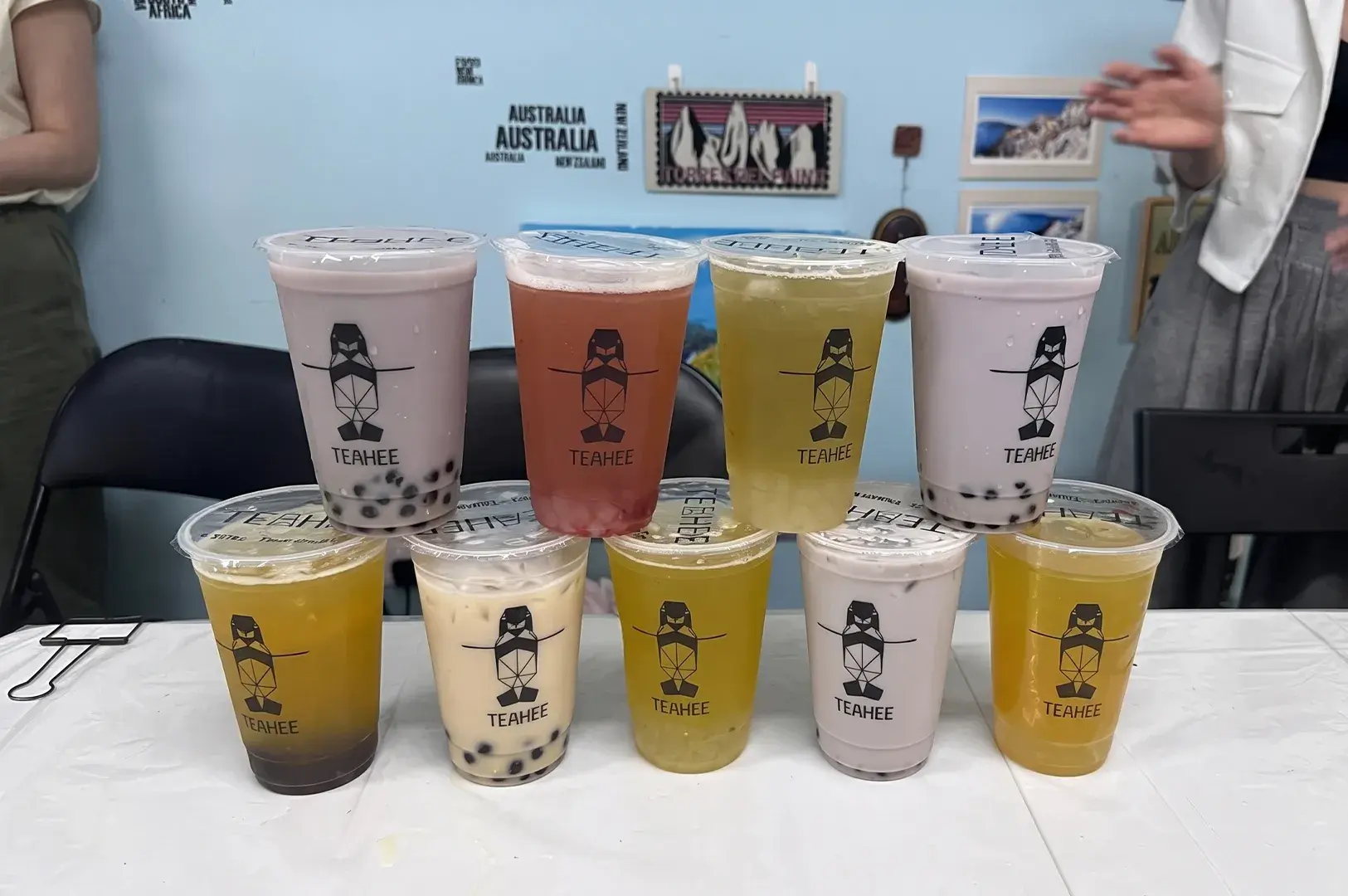
A bubble tea making class Singapore residents can join might seem lighter in spirit. It is also, for many people, the most familiar way in. In a boba tea making session, participants can learn the basics of bubble tea making and create their own milk tea, adjusting sweetness and ingredients to suit their taste.
Bubble tea is part of daily life here. Making it by hand changes the relationship a little. The drink stops being a quick purchase and becomes something with parts: the tea, the milk, the pearls, the sweetness. Each part is a choice. You can craft your own milk tea and experiment with unique flavors, including combinations that become colorful, multi layered drinks.
Participants in the Tea Discovery series receive a Teahee Tea Explorer certificate. The studio presents it as a first step, and describes the workshops as the beginning of a longer tea journey rather than a one-off activity. Classes are designed for people of all ages, from curious beginners to bubble tea fans.
A Taste of Singapore's Tea Culture
Experience Singapore Through Tea is a cultural workshop listed at $55. Teahee offers the programme for group bookings, including corporate teams, schools and community organisations. Interested groups should contact the studio to confirm session duration, participant capacity and available dates. Teahee positions it for corporate teams, schools, community groups and private organisations, and says it can customise the session for each group. Enquiries are made directly with the studio.
Many communities, one cup
The programme begins with a wider view. According to Teahee, it explores how Singapore's Chinese tea, Malay and Indian communities shaped the island's tea-drinking culture, and how tea moved from traditional brews into the drinks found in kopitiams today.
That framing matters. Singapore's tea culture does not belong to a single community. It grew at shared tables, in coffeeshops and hawker centres, through many hands.
Learning the language of the kopitiam
Part of the session focuses on kopitiam ordering. Participants learn to decode terms like teh, teh O, teh C, kosong and siew dai, along with the ingredients and brewing traditions behind them.
For anyone who has stood at a drinks stall unsure of what to say, this may be the most practical lesson of all. For those who grew up with these words, it may be a chance to finally explain them to someone else.
Pulling teh tarik, crafting teh limau
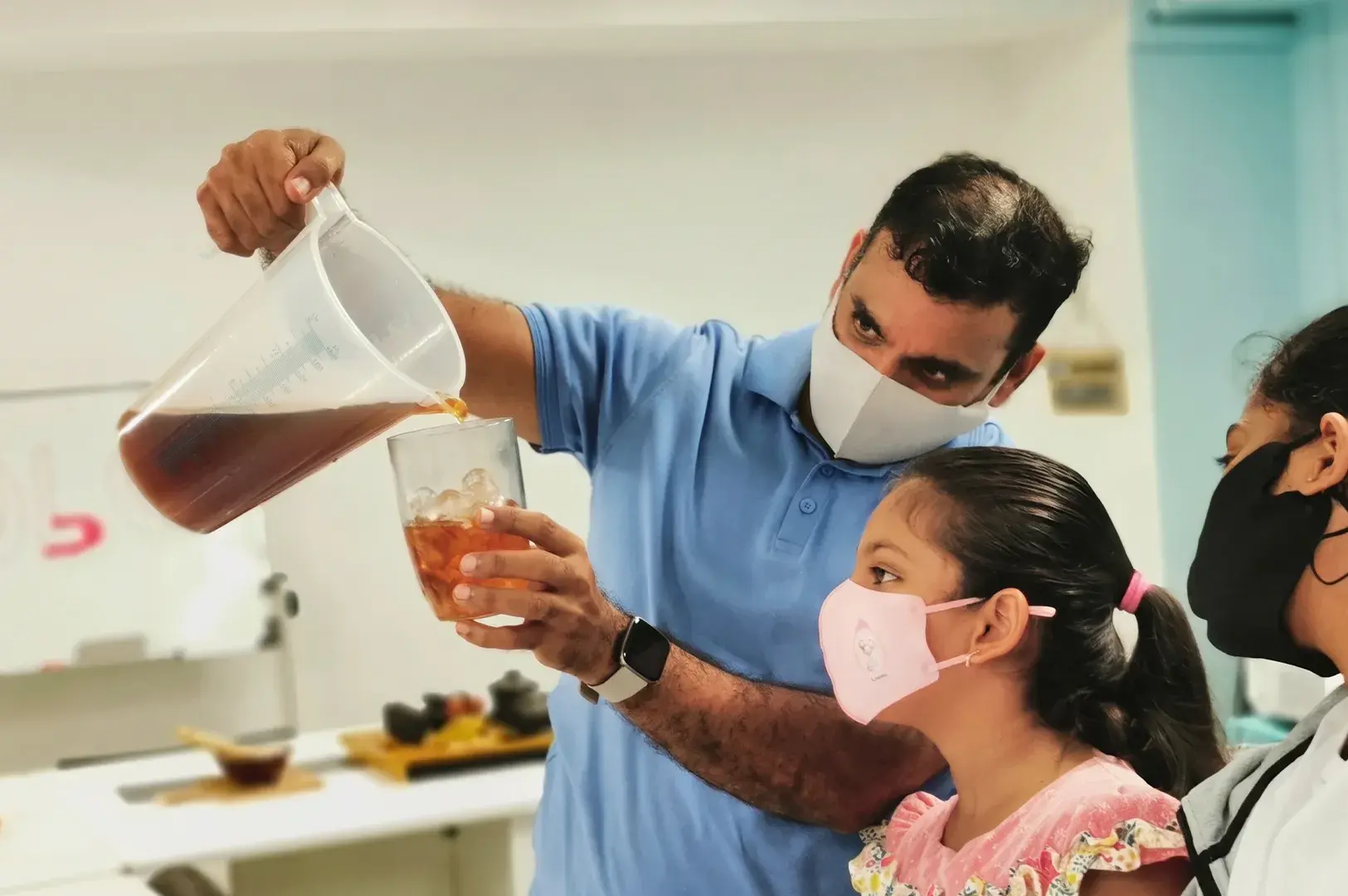
Participants also pull their own teh tarik using traditional metal pulling tins. Teahee describes how the motion aerates the tea and creates its familiar frothy texture.
Teh tarik is a drink of real skill, practised for generations at drinks stalls across the region. Trying it, even clumsily, is a good way to understand why the people who do it well deserve respect.
The programme then turns to teh limau, a lime tea, with participants adjusting the balance of brewed tea, citrus and sweetness to suit themselves. It ends with a Singapore-inspired bubble tea, combining local tea flavours with pearls and modern techniques.
Read together, the sequence tells a small story. Each drink keeps its own history. Each also shows how tea in Singapore continues to change.
Why the Experience Resonates
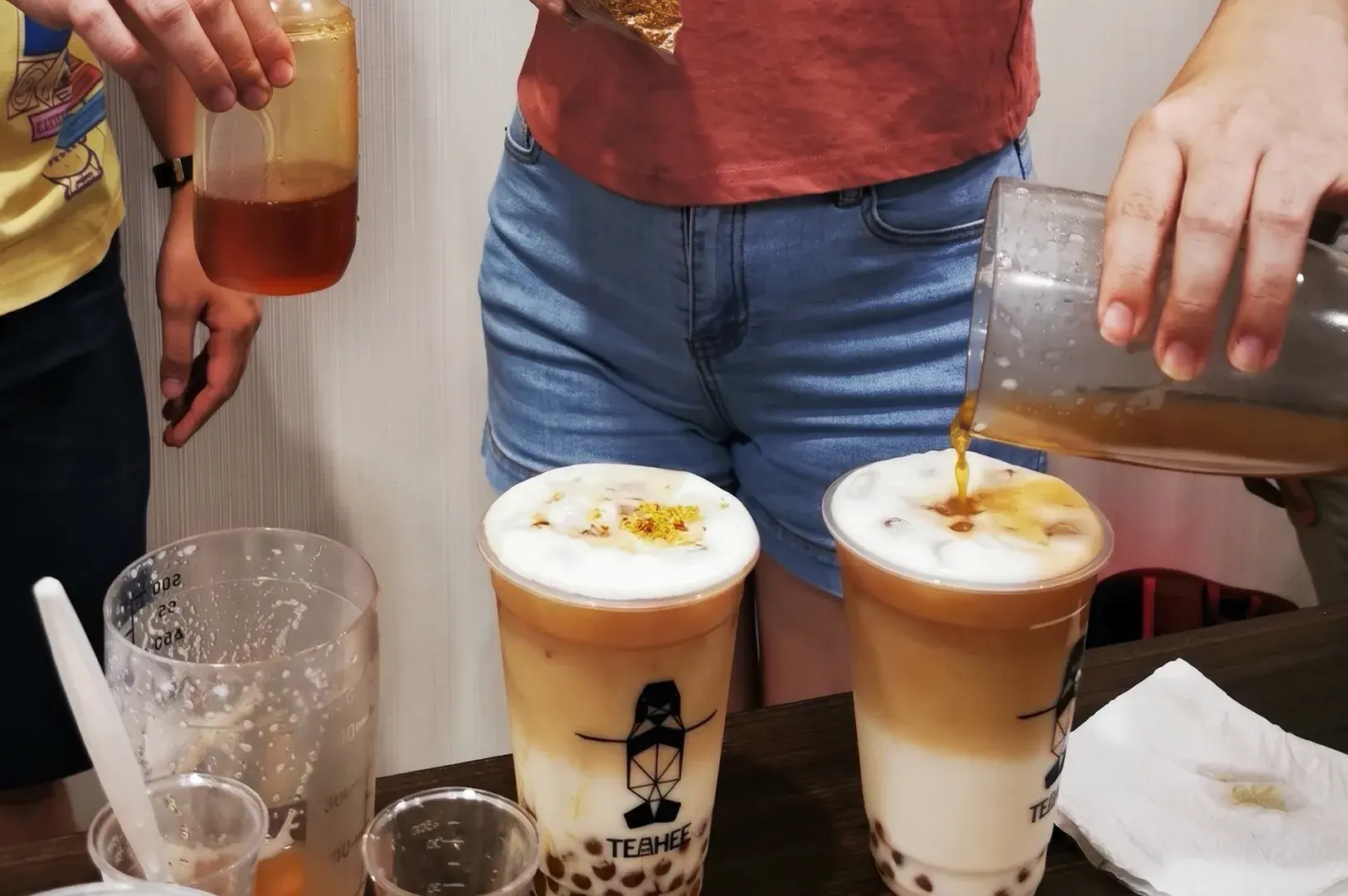
There is something honest about learning with your hands.
When you make a drink yourself, you notice things you would otherwise miss. How much sweetness is too much. How a tea changes when milk enters the cup. How long a pour should be. You can see your progress as each attempt turns into a finished drink, including the occasional spill or lopsided result.
Teahee's own description leans into this. It speaks of inviting people to slow down, explore flavours and engage their senses. It also speaks of collaboration and conversation, of people discovering new perspectives on tea and on one another.
I find that last idea the most interesting. A workshop like this is rarely about producing a perfect cup. It is about the moment a colleague laughs at their own spilled teh tarik, or a student realises they prefer less sugar than they thought.
Teahee says its approach has been featured by local media including The Straits Times, TODAY, Channel 8 and Lianhe Zaobao. Coverage is one measure. The more lasting one is simpler: whether people leave paying a little more attention to the tea in their hands.
An Invitation, Not a Prescription
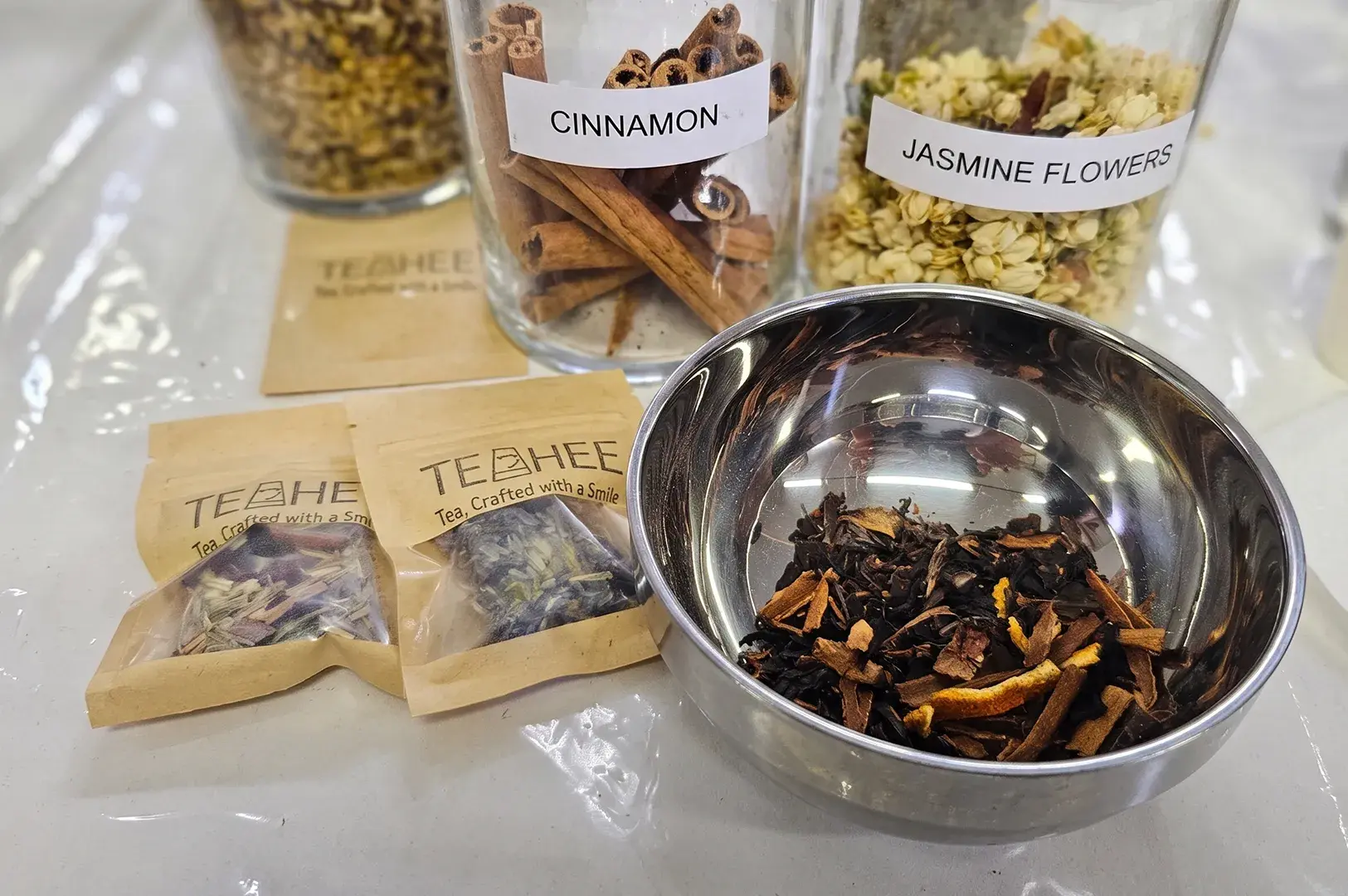
A tea break does not need a twist. Sometimes the plain cup is enough.
But if you have ever wondered what goes into your teh C, or why one bubble tea tastes balanced and another does not, a tea workshop Singapore studio like Teahee offers a gentle way to find out. Its Travellers' Series and other beverage-making workshops also offer opportunities to explore drinks beyond conventional bubble tea, and give visitors a taste of the studio's creative approach to boba tea beyond the classroom.
Visiting the Teahee SG studio at Foo Wah Industrial Building
Teahee is located at 45 Jalan Pemimpin, Foo Wah Industrial Building, #08-03, Singapore 577197. The address is convenient to note when planning a visit; confirm directions and class details with the studio before setting out. You can reach the team at teaheesg@teaheesg.com or +65 8292 8615. Workshop schedules, prices and booking details can change, so the current offerings at teaheesg.com are the best place to start.
Go with curiosity. Leave with a cup you made yourself.

The Tea We Drink for No Reason
Tea is often praised for its ritual, its mindfulness, its ability to transform ordinary moments into quiet ceremonies. And I appreciate all of that. I really do. But there is another kind of tea, one that rarely gets mentioned in articles or recommended in guides. The tea we drink for no reason at all. I…
-
A Tea Lover’s Map to Elegant Finds in the City Teaware Shop
There is a particular quiet that settles when you pour hot water over tea leaves in a pot you chose with care. The weight of the clay in your hand. The porcelain capacity that holds just the right amount of warmth. A small ritual, repeated, until it becomes yours. Singapore knows tea in many languages….
-
Why We Pretend Every Tea Moment Should Be Peaceful
There is a quiet expectation we place on tea that I’m not sure we talk about enough. We expect it to calm us. To slow us down. To make everything feel a little more intentional, a little more put together, a little more peaceful than whatever came before it. But I’ve started to wonder if…
-
The Discipline of Grace in Every Bowl: Tea Ceremony in Japan
Water begins to move in a small iron kettle. The sound is faint, almost like wind through pines, and in a quiet room lined with tatami mats, it is enough to fill the silence. A host kneels in the tea room. A guest waits. Nothing is said, yet something has already begun. This is where…
-
The Tea I Keep Drinking When I Don’t Feel Like Myself
There are days when tea feels unnecessary. Not because I stop liking it, but because I don’t feel like the version of myself who usually drinks it slowly, thoughtfully, and with attention. On those days, I still make tea anyway. Not out of ritual, but out of habit. It is never the elaborate kind of…
-
Tea Ceremony Kyoto: A Slow Dance of Bowls and Breath
The room is quiet enough to hear water. Somewhere beyond the paper screens of this traditional tea ceremony venue, a garden drips after morning rain. Inside a tea house on a tatami mat worn soft by years of kneeling, a tea master lifts a bamboo whisk and begins tea making. There is no rush in…
-
Why We Keep Romanticising Tea Moments That Never Happened
I sometimes wonder if we are drinking tea or remembering something that never really happened. A quiet morning that feels softer in memory than it ever was in real life. A perfect cup by the window that somehow always looks better in hindsight. A tea moment that feels cinematic, even though it probably lasted only…
-
Masala Chai Tea Origins: The Cultural Evolution of India’s Spiced Tea Tradition
There is a sound that belongs to mornings across India: the hiss of milk rising in a battered pot, the clink of a spoon against metal, the low murmur of a tea seller calling out to passing crowds. Before the first sip, there is the scent. Cardamom pods, fresh ginger, and cinnamon stick curling into…
-
We Are Turning Tea Into Something It Was Never Meant to Be
There is something quietly strange happening in tea culture. The more popular the tea becomes, the more it starts to resemble everything it once stood apart from. Speed. Branding. Productivity. Performance. Tea, which once belonged to unhurried moments, is increasingly being asked to do more. To energize. To optimize focus. To replace coffee. To support…
-
Sencha Green Tea vs. Matcha Powder: Understanding the Differences in Japanese Green Tea
Two tins of tea powder sit side by side on a shelf. Both hold a fine green powder. Both promise the taste of authentic Japanese tea. To the eye, they look almost identical, and that is precisely where the confusion begins. One is matcha powder, often used in matcha lattes and desserts. The other is…