There is a particular disappointment that comes with ordering tea at a café.
You see the menu. You notice the carefully written descriptions. Perhaps there is a mention of fragrant jasmine, roasted oolong, or a carefully selected blend. The presentation arrives beautifully arranged, and for a moment, there is anticipation.
Then you take the first sip.
Something feels missing.
The tea is not bad. It is warm. It is pleasant enough. Yet somehow, it lacks the depth you expected. The aroma feels distant. The flavour disappears quickly. It tastes like tea, but not quite like an experience.
I have wondered about this many times.
Why does a tea that sounds so promising sometimes feel flat?
The answer is not always the quality of the leaves.
Sometimes, it is the environment.
Tea is a sensitive drink. Unlike beverages that rely heavily on sweetness, milk, or strong flavours, tea reveals its character through subtle details. The water temperature, the brewing time, the vessel, and even the attention given during preparation all influence what eventually reaches the cup.
But there is another factor we rarely discuss.
Tea needs patience.
Many cafés operate in a world built around speed. Orders need to move quickly. Tables need to turn over. Drinks need to arrive within minutes. This rhythm works well for many beverages, but tea has always belonged to a slower pace.
A tea leaf does not rush to reveal itself.
Some teas need time to open. Some require careful handling. Some change through multiple infusions, revealing something different with each pour.
When tea is treated like a drink that simply needs to be prepared quickly, something is often lost.
This does not mean cafés cannot serve excellent tea. Many do. There are places that understand tea is not just another item on the menu but an experience that deserves attention.
But perhaps this explains why some of the most memorable cups of tea are not always found in the most impressive settings.
Sometimes they happen at home.
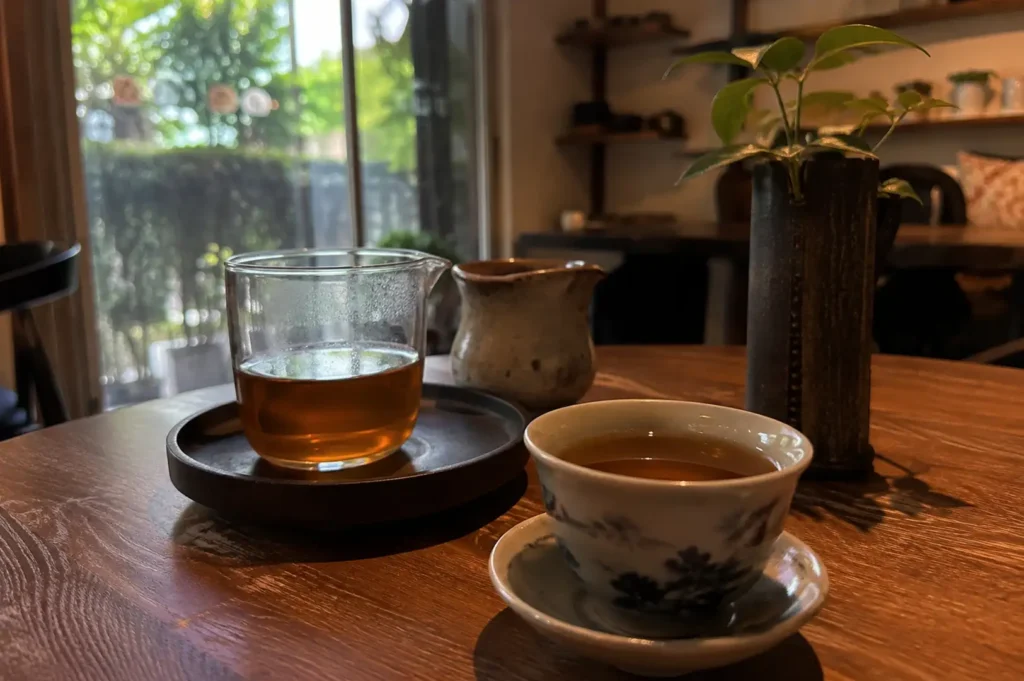
A familiar teapot.
A quiet morning.
Leaves given enough time to unfold.
There is no pressure to hurry.
The tea is allowed to become itself.
Maybe this is the difference between drinking tea and experiencing tea.
The former satisfies a need.
The latter creates a moment.
Of course, not every café cup needs to become a ceremony. Tea does not require perfection. It does not need to be complicated to be enjoyable.
But perhaps it does need one thing.
Respect for its pace.
Because tea has always had a quiet way of reminding us that some things cannot be improved by moving faster.
They simply need time.
With quiet regard,
N. P. Lim

The Dragon Well Legacy: Exploring China’s Legendary Longjing Tea
Among the world’s most revered green teas, few carry the prestige and cultural significance of China’s legendary Dragon Well. This premium tea has captivated tea enthusiasts for centuries, earning its place as an imperial favourite and modern icon alike. From its mystical origins at West Lake to its meticulous processing methods, Longjing represents the pinnacle…