I have a small habit that I never really noticed until recently.
The weather changes, and somehow, so does the tea I want.
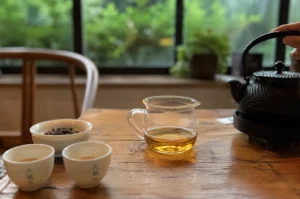
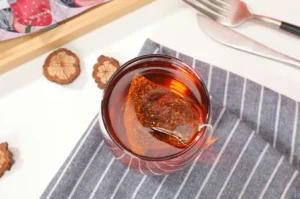
On a hot afternoon, I find myself reaching for something light and floral. When rain settles over the windows, I want something darker, warmer, perhaps a little more comforting. On those rare mornings when the air feels cooler than usual, I suddenly want a tea with more body.
It is almost as if my tea cupboard has its own weather forecast.
Of course, Singapore does not give us four neat seasons. We have heat, rain, more heat, and then rain that somehow feels even heavier. But even here, I notice these small shifts in what I want to drink.
Maybe it is not really the weather changing the tea.
Maybe it is changing me.
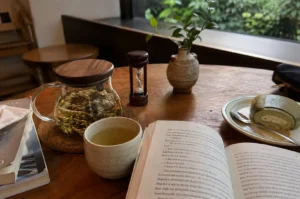
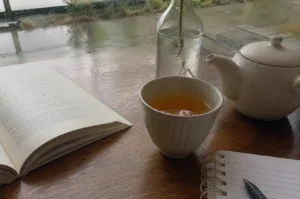
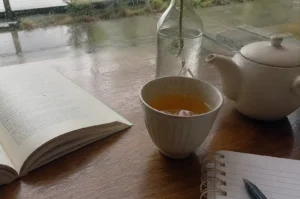
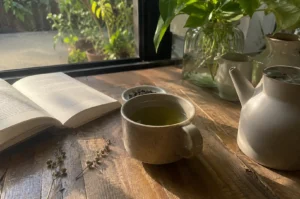
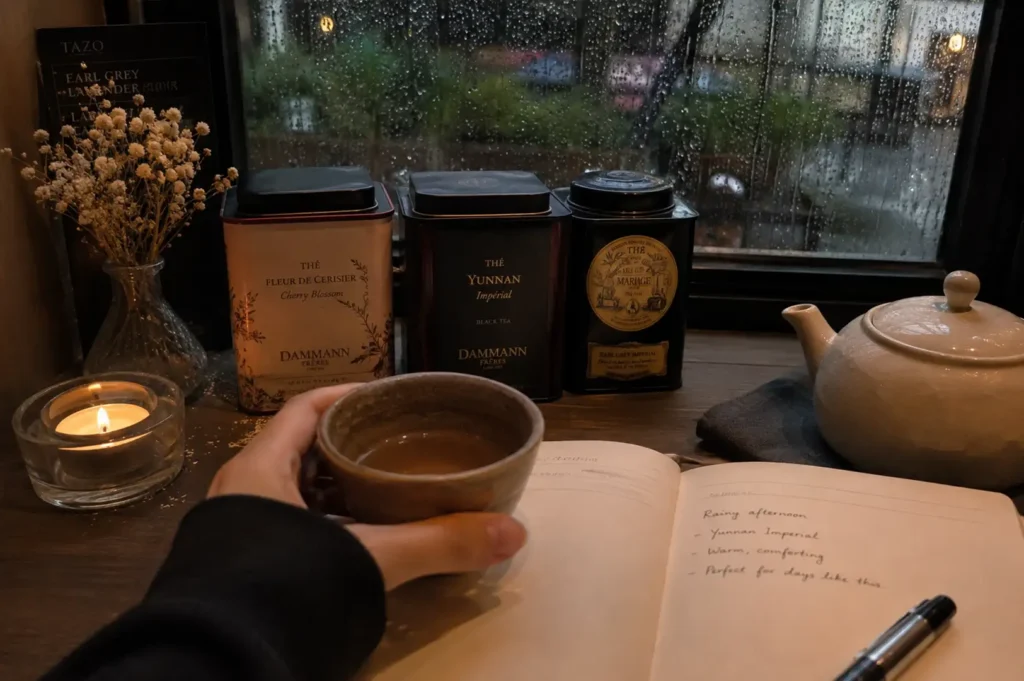
There is something about a warm cup of tea on a rainy afternoon that feels almost instinctive. The same tea I might ignore on a bright, humid day can suddenly feel exactly right when rain is tapping against the window.
And I don’t think this is entirely about temperature.
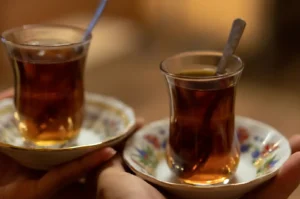
Tea carries atmosphere with it. A bright green tea can feel refreshing. A roasted oolong can feel comforting. A fragrant black tea can make an ordinary afternoon feel slightly more deliberate.
We often talk about tea in terms of flavour. Floral. Smoky. Nutty. Sweet. But I think we sometimes forget another quality that is harder to describe.
Mood.
I have teas in my cupboard that I associate with particular kinds of days. One reminds me of slow mornings. Another has somehow become my rainy-day tea. There is one I reach for when I need something familiar, even if I cannot explain why.
None of this was planned.
I certainly did not buy them thinking, “This will be my rainy afternoon tea.”
It just happened.
Perhaps that is one of the more personal sides of drinking tea. Over time, we stop choosing tea purely for what is in the leaves. We choose it for what we want the moment to feel like.
That is why I find tea collections so revealing.
Two people can own the same teas and reach for completely different tins on the same day. One person may want something bright and refreshing. Another may want something deep and comforting.
Neither is wrong.
The tea is responding to the person, not the other way around.
So lately, when I stand in front of my tea cupboard deciding what to brew, I have stopped asking which tea is technically the best.
I ask a simpler question.
What kind of day is this?
Sometimes, the answer is enough to tell me which tin to open.

The Quiet Lessons a Cup of Tea Can Teach
I have often found that the simplest cup of tea carries the most subtle lessons. Not every tea moment is dramatic, ceremonial, or picturesque. Some are ordinary, even fleeting, yet they manage to teach something quietly about patience, observation, and care. Take the leaves themselves. Watching them unfurl in hot water is a small, deliberate…
-
A Journey Through Popular Bubble Tea Brands and Shops: Bubble Tea Singapore
The first time I really tasted bubble tea, I mean actually tasted it, I was standing outside a shoppers mall in the rain, waiting for a friend who was late. I had ordered something on autopilot from one of the many bubble tea shops in Singapore. But that day, without distraction, I noticed the tea…
-
Tea in a World That Never Pauses
Scrolling through my feed this morning, I realized something. We live in a world that barely stops. Notifications pile up. Videos play automatically. Messages arrive faster than we can read them. Every surface seems to demand attention. And then there is tea. A cup of tea does not ping. It does not scroll. It does…
-
From Plantation to Cup: The Journey of Sri Lanka’s Black Tea Pekoe
Black tea pekoe is all about whole-leaf black tea made from those long leaves and buds, usually the youngest ones right near the shoot tips. And when you hear Orange Pekoe, it’s not about orange flavor at all; it’s actually the name of that grade. For tea lovers or anyone curious about quality Sri Lankan…
-
To the Tea Lovers and the Tea That Holds Us
I want to write a letter, not to anyone in particular, but to the quiet ritual that has accompanied so many of our days. To the tea in our cups and to the people who take the time to notice it. Tea is patient. It waits for us when we are rushing. It sits quietly…
-
What Is Rooibos Tea: Red Gold in Your Cup, the Science and Benefits
There is a certain hour when the day loosens its grip. The coffee has long gone cold. Black tea feels like too much. And yet the kettle still calls, because the ritual matters more than the caffeine. This is where rooibos often arrives. A deep russet red pouring into the cup, warm and unhurried, carrying…
-
The Cup I Always Return To
There is one tea I always return to, even after tasting countless others. It is not rare. It is not expensive. The leaves are ordinary, the aroma familiar. And yet, it has a way of anchoring me, no matter the day or the mood. I first drank it years ago, during a week that felt…
-
Where to Buy Turkish Tea: Finding Authentic Çay for the True Turkish Tea Experience
The first time I understood Turkish tea, I was not drinking it in a café. I was standing in a small shop, watching a man refuse to sell me the wrong thing. I had pointed at a shiny box of flavoured black tea, and he shook his head, quietly, the way someone corrects a friend…
-
Why Tea Might Be the Break You Didn’t Know You Needed
Scrolling through my feed this morning, I realized how easy it is to forget what a quiet moment feels like. Notifications, stories, messages- they all seem to arrive at once, asking for attention I don’t always want to give. And yet, in the middle of it, I poured myself a cup of tea. It wasn’t…
-
A Golden Sip of Serenity chrysanthemum tea
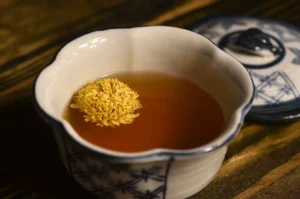
There is a pot on many kitchen tables in Singapore that no one talks about much. Pale yellow gold in the glass, with a few small chrysanthemum flowers or flower buds drifting at the bottom. It appears after a heavy meal, at a grandmother’s house, or in a hawker centre when the weather turns unbearable….