I never intended for tea to become a way of keeping track of my days.
It just happened.
There are mornings when I drink the first cup quickly, barely noticing the taste because my mind is already somewhere else. Then there are afternoons when I make tea and somehow manage to sit with it for twenty minutes without checking my phone.
Same kettle. Similar tea. Completely different pace.
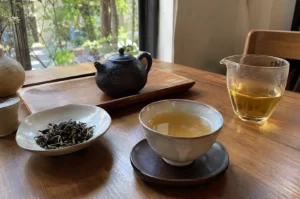
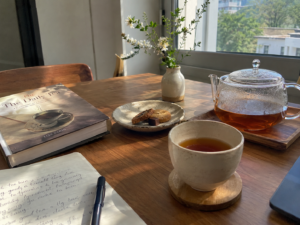
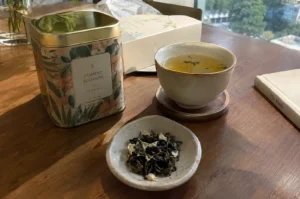
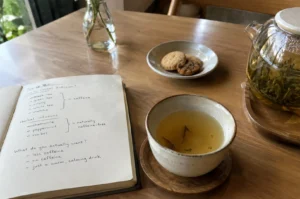
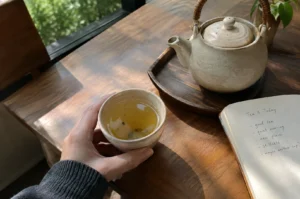
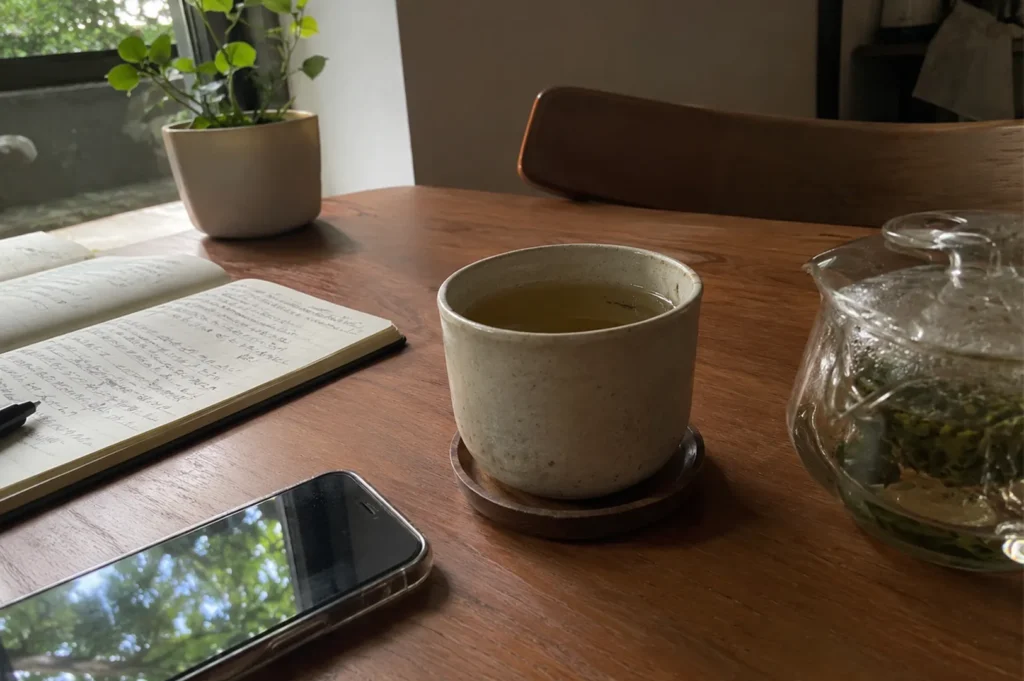
I started noticing this because of a particular cup I use almost every day. It is nothing special. It is not handmade or expensive. It simply feels right in my hands.
Over time, I began to notice something else.
The way I drink from it tells me more about my day than I expect.
When I am rushing, the tea disappears quickly. When I am tired, I let it cool beside me. When I am in a good mood, I often make another cup without even thinking about it.
Tea became a small mirror.
We often talk about tea as something that helps us slow down. I used to think that sounded a little too romantic. A cup of tea cannot magically make a busy day less busy.
But perhaps that is not what it does.
Perhaps tea simply makes us notice our pace.
The kettle takes a few minutes. The leaves need time to open. The cup stays warm for only so long. These are small reminders that not everything follows the speed of a notification or a deadline.
I have also noticed that my favourite tea is not always the one I want most.
Some days call for something light and bright. Other days seem to ask for something deeper. And sometimes, after an exhausting day, I want the most familiar tea I have.
There is something comforting about not having to think too much.
Maybe that is why I have stopped asking whether I am drinking tea the right way.
Instead, I sometimes ask a different question.
What is my tea telling me about the way I am living today?
If I am drinking too quickly, perhaps I am rushing too much.
If I keep forgetting the cup beside me, perhaps my attention is somewhere it should not be.
And if I find myself sitting quietly with a second cup, maybe I finally gave myself permission to slow down.
The tea does not judge any of it.
It simply waits.
And perhaps that is the lesson I keep returning to. We cannot always change the pace of our lives, but we can become more aware of it.
Sometimes all it takes is noticing how quickly the tea disappears.
With quiet regard,
N. P. Lim

“Rare” Tea Is Often Manufactured Scarcity: Here’s How to Tell
There is a word in tea that carries unusual power. Rare. It immediately creates curiosity. A rare harvest. A rare batch. A rare tree. A tea that may never return. The suggestion is simple: if something is difficult to obtain, it must be more valuable. Sometimes, this is true. Some teas are genuinely limited because…
-
LiHO Tea Singapore: A Greeting You Can Drink
Some words carry a whole childhood inside them. Li ho. I heard it at kopitiam tables, across corridors, from uncles who never waited for a real answer. It meant “how are you,” but it also meant I see you. So when I saw that name on a tea shop sign, somewhere in the middle of…

The Myth of “Perfect” Tea: What I Stopped Chasing
For a long time, I thought I was looking for the perfect tea. I imagined there would be a moment when I found the one. The tea that made every other tea feel unnecessary. The tea I would recommend to everyone. The tea that would finally make me understand what true appreciation was supposed to…
-
Teh O: Understanding the Tea Order Behind the Name
There is a stall near where I grew up that has changed hands twice, but the tea has stayed the same. I still remember the first time I ordered teh o on my own, sometime in my early teens, mumbling the words at the counter and half-expecting to get them wrong. The uncle didn’t blink….
-
Stop Buying Tea for the Aesthetic: How Packaging Hijacks Taste
There is something fascinating about the way we buy tea today. Before we taste the leaves, we have already formed an opinion. The box is elegant. The label is beautifully designed. The colours suggest calm, luxury, or tradition. The story feels carefully written. And before the first sip, we have already decided that the tea…
-
A Tea Table in the Clouds: The Westin Singapore High Tea Review
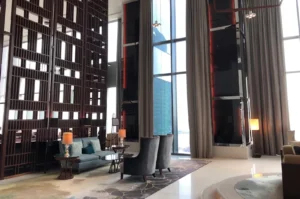
It was one of those afternoons when the city felt too loud and too fast, and I wanted to sit somewhere quiet without really explaining why. So I went up. All the way up, to Level 32 of The Westin Singapore, where the Lobby Lounge sits above the noise like it knows something the rest…
-
“Caffeine-Free Tea” Confuses Everyone—Let’s Fix the Language
I have noticed that tea conversations can become surprisingly confusing. Not because tea itself is complicated, but because we sometimes use the same words to mean completely different things. One phrase that always catches my attention is “caffeine-free tea.” It sounds simple enough. A tea without caffeine. But is that really what we mean? Because…
-
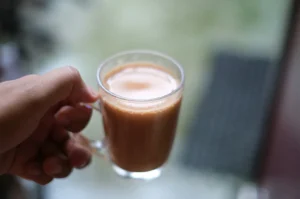
The Pull, Pour, and Ritual Behind Singapore’s Favourite Milk Tea: Teh Tarik
It starts with a sound. A long ribbon of tea, arcing from one metal mug held high to another held low. The stream catches the light. Then the froth rises, pale and soft, and the whole thing gets poured back and lifted again. Nobody at the stall looks up. This happens a hundred times a…
-
Stop Chasing Tasting Notes: Tea Isn’t Wine and That’s a Relief
I have a small confession to make. Sometimes I have absolutely no idea what I am supposed to be tasting. A tea description might promise orchid, honey, toasted nuts, stone fruit, and something wonderfully mysterious called a “long mineral finish.” I take a sip. I taste tea. And then I start wondering if everyone else…
-
Chinese Tea Sets: Beautiful on the Table, But How Do They Brew?
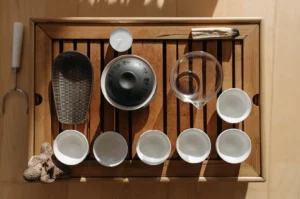
There is a small arrangement on the table this evening, and I have not touched it yet. A pale bowl with a lid resting slightly askew. A round pitcher beside it, waiting to be filled. Cups no larger than a thumb and two fingers, lined up like a quiet sentence. The surfaces catch the last…