It is easy to forget how many hands have touched a tea leaf before it reaches ours.
We speak of mountains, harvest seasons, famous gardens, and the qualities of particular cultivars. We admire the fragrance of a good Long Jing or the complexity of a carefully roasted Tie Guan Yin.
Yet the people responsible for those qualities often remain unnamed.
I find that increasingly difficult to overlook.
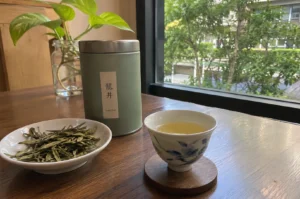
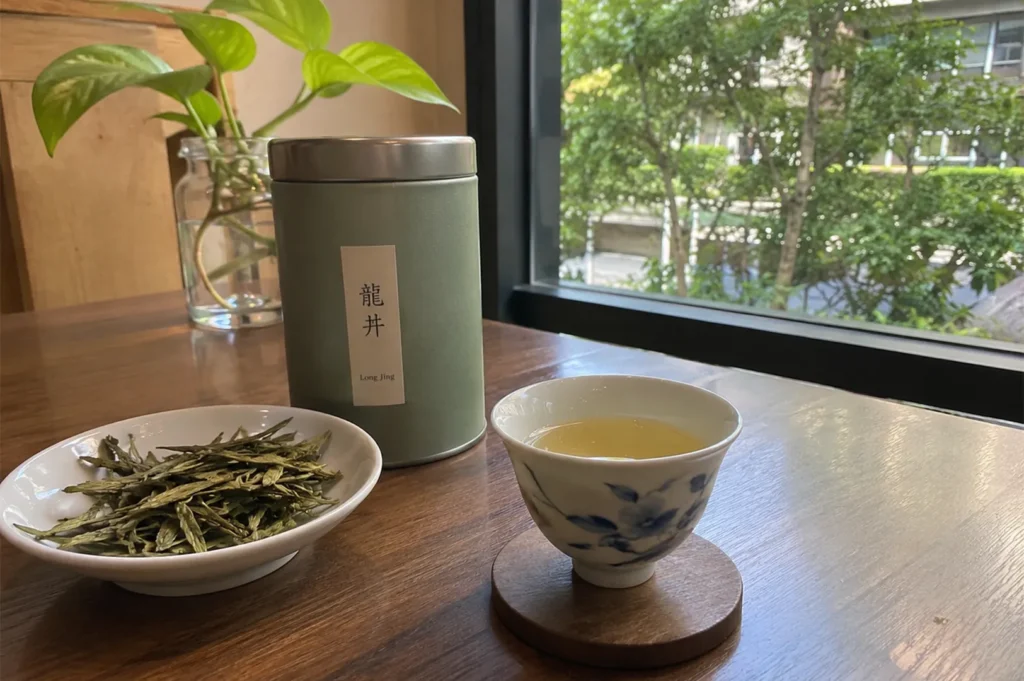
Consider Long Jing, for instance. Its distinctive flat leaves are shaped through a demanding process of pan-firing, where experience and careful judgment influence the finished tea.
Behind that familiar appearance is someone’s practiced skill.
And before the leaves reach the pan, someone must tend the plants, assess the growing conditions, and decide when the leaves are ready to be picked.
These are not romantic details added to make tea seem special.
They are work.
I think tea appreciation sometimes becomes too focused on the person drinking it. We discuss our brewing techniques, our preferred vessels, and how well we can recognise particular flavours.
There is value in developing that knowledge.
But I wonder whether we give enough attention to those who make such experiences possible.
A skilled tea maker may spend years learning to recognise changes that most of us would never notice. A farmer’s decisions may influence a harvest long before the leaves are processed.
Their contributions cannot always be understood from a tasting note.
Nor should they be reduced to a charming story printed on expensive packaging.
Gratitude, I believe, requires something more than admiration.
It asks us to become curious about provenance, working conditions, and whether the people producing our tea are treated fairly. These questions are not always easy to answer, but that does not make them less important.
I do not think every cup needs to become an exercise in ethical examination.
Sometimes tea should simply be enjoyed.
Still, I would like to remember that what feels effortless in my hands may represent considerable effort in someone else’s.
Perhaps appreciating tea more deeply begins not with learning another brewing technique, but with recognising the people whose knowledge and labour have already gone into the leaves.
The cup may belong to us.
The work behind it never did.
With quiet regard,
N. P. Lim

Tea Ceremony Outfit: Dressing for Silence, Grace, and Tradition
The room is very quiet. Someone kneels on the tatami, hands resting on their thighs, and waits. Outside, a car passes and fades. Inside, there is only the soft hiss of water warming in an iron kettle, and the faint smell of woven rush underfoot. Nobody in the room is looking at what anyone is…
-
Tea Doesn’t Have to Be Rare to Be Worth Paying Attention To
There is a curious tendency among tea enthusiasts to speak more carefully about leaves that are difficult to obtain. A limited harvest. An ageing Pu-erh cake. A Long Jing from a particularly celebrated growing area. The language changes almost immediately. We become more attentive to provenance, more patient with preparation, and more willing to search…
-
The White Label Singapore: A Quiet Look at High Tea Di Malayan
Some afternoons ask for very little. A pot of tea. A small plate of something sweet. A table near a window, and nowhere urgent to be. In Singapore, that kind of afternoon has more than one accent. There is the English idea of tea with cakes and sandwiches on tiered stands, and the kopitiam cup…
-
Why Your Favorite Café’s Tea Tastes Like Nothing (And They Know It)
I’ve always found it strange how a café can spend so much time perfecting its coffee and then serve tea that tastes like someone briefly introduced a teabag to hot water. You know the kind. Beautiful cup. Lovely presentation. Maybe even a little biscuit on the side. And then you take a sip. Nothing much…
-
The Quiet Luxury of a Fresh Spring Cup: Long Jing Green Tea
Some luxuries make a sound. Others barely announce themselves at all. A small handful of flat, pale green tea leaves. Water allowed to cool after boiling. A glass, perhaps, so the leaves can be watched as they open and drift. Nothing about it is loud. Yet a fresh cup of Long Jing green tea carries…
-
The People Behind the Tea I’m Grateful to Drink
It is easy to forget how many hands have touched a tea leaf before it reaches ours. We speak of mountains, harvest seasons, famous gardens, and the qualities of particular cultivars. We admire the fragrance of a good Long Jing or the complexity of a carefully roasted Tie Guan Yin. Yet the people responsible for…
-
Traditional Japanese Tea Ceremony in Osaka: Finding Stillness in Japan’s Most Restless City
Osaka is a city that talks back. Walk through Dotonbori in the evening and everything competes for your attention: neon signs stacked several stories high, takoyaki stalls calling out to passers-by, crowds pressing along the canal toward the next thing to eat. The city even has a word for its appetite, kuidaore, often translated as…
-
A Tea Break with a Twist: Inside Teahee Singapore
Most tea breaks are small things. A kettle clicks off. Someone brings over a cup. For ten minutes, the work waits, and nobody asks very much of the tea except that it be warm. There is another kind of tea break, though. One where you are the one brewing, measuring, pouring. Where the cup in…
-
The Teas I Keep Coming Back To—and the Ones I’ve Outgrown
I used to believe that discovering better tea meant gradually leaving ordinary preferences behind. The more I learned, the more refined my tastes were supposed to become. I would move towards rarer leaves, more complicated flavours, and teas that demanded greater attention. But taste does not always develop in a straight line. Some teas remain…
-
Best Milk Tea in Singapore: The Search for the Perfect Tea-to-Milk Ratio
A cup of milk tea is a small negotiation. Too much milk, and the leaf disappears. Too little, and the tea turns sharp and thin. Somewhere between the two is the balance people keep looking for, one plastic cup at a time. This list looks back at Singapore’s milk foam and cheese tea scene in…