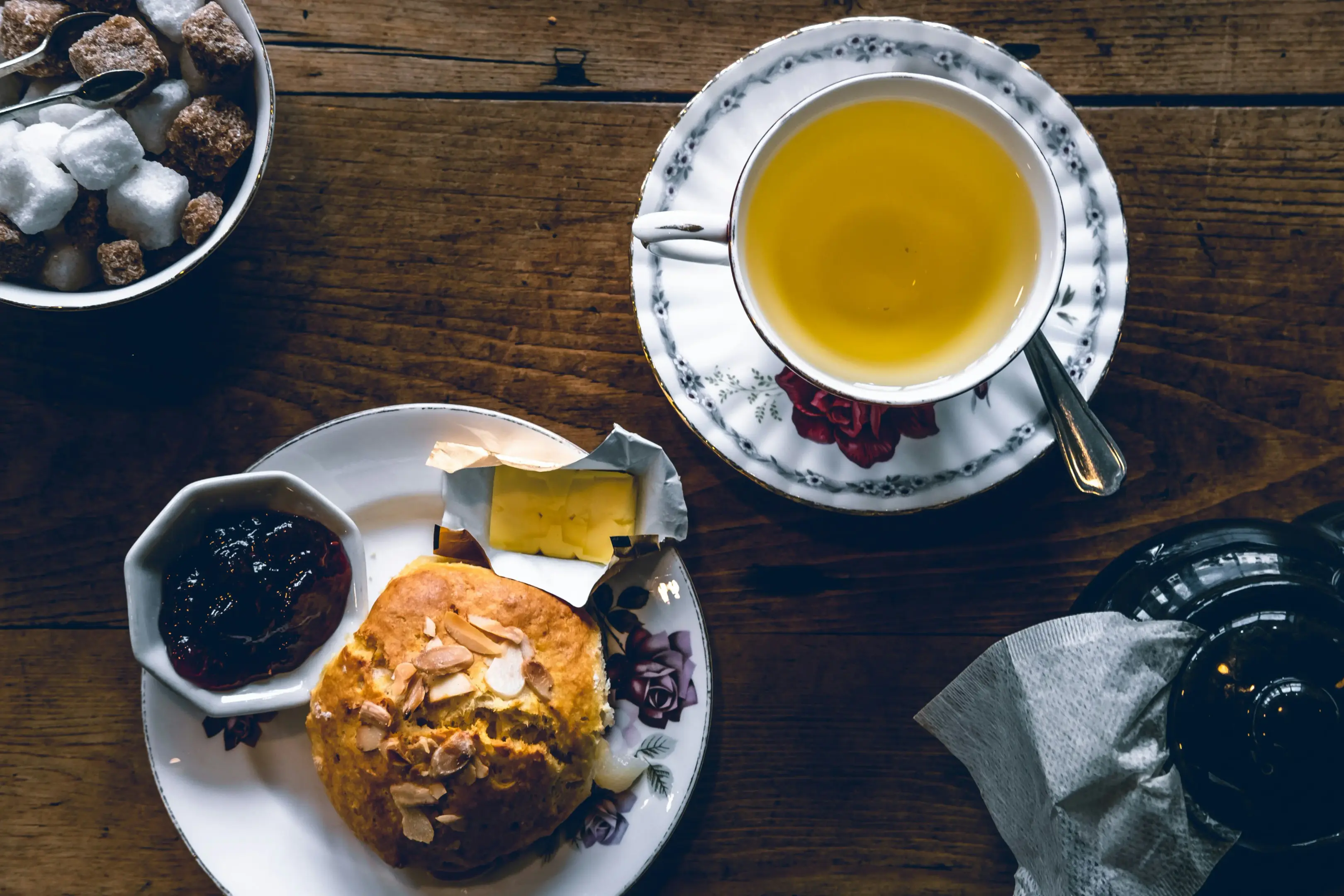
There is a difference between drinking tea and making time for it.
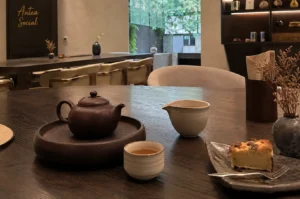
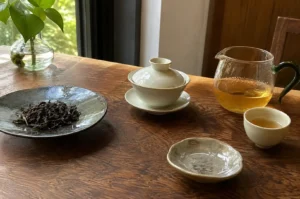
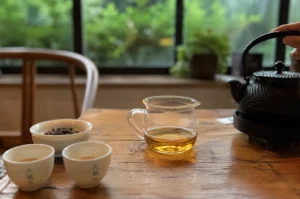
Only the best tea houses in Singapore understand this deeply. They don't treat traditional Chinese tea as decoration or a quick gesture. Instead, they create ideal conditions: a warmed pot, a quiet table often on a serene floor, premium tea leaves, and enough stillness for the aroma, texture, and flavour (with subtle floral and earthy hints) to fully reveal themselves. For tea lovers and newer tea enthusiasts, that's where true tea appreciation begins.
This list features five highly recommended places, each with distinct personalities. Some lean formal, some relaxed, some rooted in heritage, and one deeply private. All offer meaningful ways to explore Chinese tea in Singapore, whether you want a host-led experience, a heritage stop in Chinatown, or a calm place to unwind with friends over a good cup. Many spots also offer fresh, fruit-infused blends or japanese-inspired teas, sometimes paired with delicate snacks like nuts or light pastries. Some let you opt for a post-tea experience with wine or fizzy drinks, adding a modern twist to the world of tea culture, reflecting how tea is increasingly shaping contemporary café experiences in Singapore.
If you're looking for an idea of where to start your journey into tea appreciation, these tea houses provide excellent inspiration.
| Tea House | Location | Best For |
|---|---|---|
| Tea Room by Ki-setsu | 150 Orchard Road, Orchard Plaza | Privacy, premium teas, intimate luxury Chinese tea sessions |
| Tea Time Chashi | 280A South Bridge Road, Chinatown | Relaxed tea outings, unwinding with tea and snacks |
| Tea Chapter | 9 Neil Road, Chinatown | Traditional Chinese tea, cultural immersion, first-timers |
| Pek Sin Choon | 36 Mosque Street, Chinatown | Heritage tea merchant, practical tea buying, local history |
| Yixing Xuan Teahouse | 78 Tanjong Pagar Road | Guided tea appreciation, beginners, structured tea learning |
Tea Room By Ki-setsu: A Private Chinese Tea House With Tea Leaves Sourced Directly
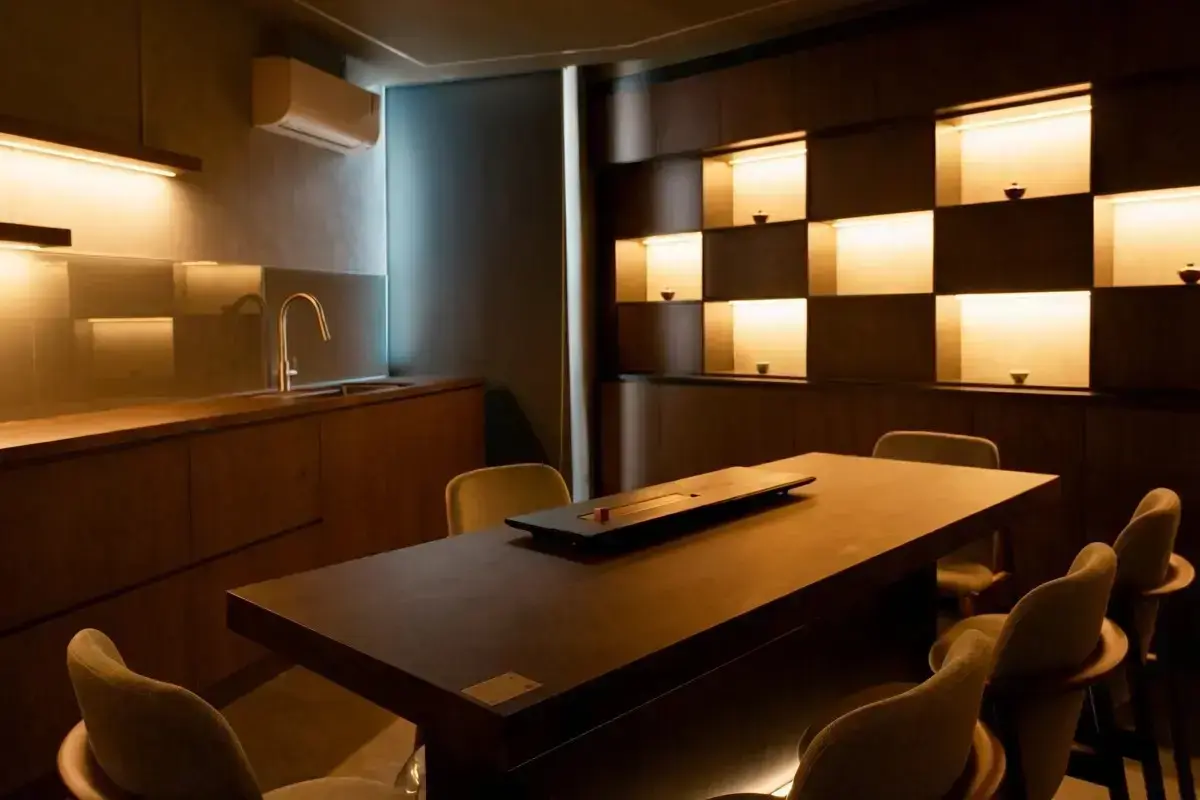
Tea Room by Ki-setsu is one of the most distinctive tea houses in Singapore because it does not operate like a normal walk-in tea house at all. It is reservation-only, located at Orchard Plaza, and positioned as a private sanctuary for intimate luxury Chinese tea sessions. The official site describes it as a no-walk-ins space built around rare Chinese teas from Bulang Mountain and Yiwu, with a strong emphasis on provenance, calm, and refined tea service.
The tea selection is also unusually focused. Tea Room by Ki-setsu sources premium Chinese teas from Bulang Mountain and Yiwu in Yunnan, China, with its collection spanning aged pu-erh, oolong and other carefully selected varieties. That matters because the experience here is less about a sprawling menu and more about depth. The room's own editorial pages also highlight premium pu-erh tea, black tea and green tea chosen with an emphasis on provenance and brewing integrity, while traditional preparation encourages guests to pay attention to how aroma, texture and flavour develop in the cup.
This is the place for those who want privacy, premium teas and a strong sense of occasion. It is not a casual cafe, and that is part of its appeal. If you care about premium tea leaves, traditional tea ware and a slower, more deliberate kind of tea appreciation, Tea Room by Ki-setsu feels like a special place that is worth planning ahead for. Its focus on carefully sourced teas and traditional brewing methods places Chinese tea culture at the centre of the experience.
The intimate setting at Orchard Plaza offers a minimalist space where blending tradition with modern comfort creates an inviting atmosphere. Tea Room by Ki-setsu's offerings include rare teas like pu erh, oolong tea, and rock tea, showcasing the diverse range of Chinese tea culture. Guests can also enjoy handmade dim sum alongside their tea, enhancing the overall food and tea pairing experience.
- Address: 150 Orchard Road, Orchard Plaza, Singapore 238841
- Nearest MRT: Somerset MRT (NS23), approximately 4 minutes' walk
- Reservation requirements: Mandatory. No walk-ins. Private sessions are for approximately 2 to 5 guests.
- Estimated visit duration: Allow around 1 to 2 hours for a private session. Treat this as an editorial planning estimate rather than an officially stated duration.
Tea Time Chashi: A Tea House For Tea Lovers Who Want To Unwind Over Tea And Snacks
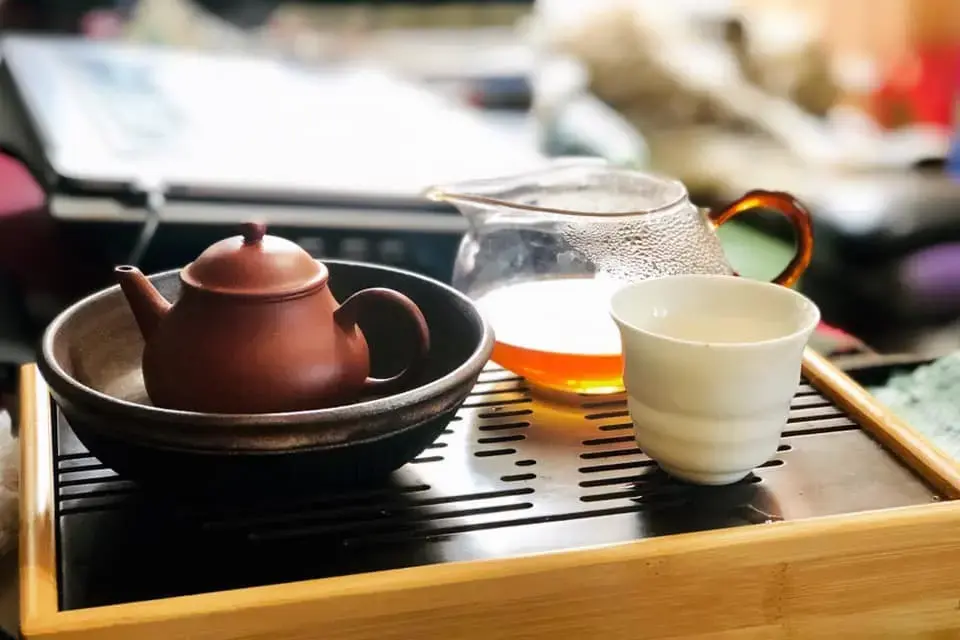
Tea Time Chashi brings a gentler, more relaxed energy to this list of tea houses in Singapore. Located in Chinatown, it offers a quieter entry point into Chinese tea, one that feels less formal than a teaching studio and less ceremonial than a private tasting room. For readers who want a tea outing that leans more toward ease, this is an interesting alternative to the more famous names.
What stands out here is the softer pace of the experience. Rather than moving through a highly structured session, guests can settle in with a pot of tea, let conversation unfold naturally, and guests can settle in with a pot of tea alongside dim sum, tea-infused snacks or something more substantial from the food menu. Some teas feel fresh and light, some carry a gentle floral character, and others reveal a deeper, more settled profile over time.
It is not the sort of place where every pour is treated as an act of formal art, but that is part of its charm. There is room here simply to sip, to notice, and to let the afternoon open gradually.
We think this makes Tea Time Chashi especially appealing for those who want to unwind with tea in a more approachable setting. It may be less widely mentioned than some of the more established venues, but it offers something valuable: a calm, modern tea house where tea appreciation can feel easy, social, and quietly pleasurable without losing touch with tradition.
- Address: 280A South Bridge Road, Singapore 058829
- Nearest MRT: Maxwell MRT, beside the Buddha Tooth Relic Temple area
- Opening hours: Daily, 11:00am to 9:00pm
- Price range: Approximately S$16 to S$45 for tea selections, before the applicable 10% service charge. Individual cups start around S$16 while many pots run around S$26 to S$45.
- Reservation requirements: Walk-ins are accepted subject to availability, but advance reservations are recommended. Workshops require advance booking.
- Estimated visit duration: About 60 to 90 minutes for an ordinary tea visit; allow longer for workshops or organised experiences.
Tea Chapter: A Chinatown Institution For Traditional Chinese Tea
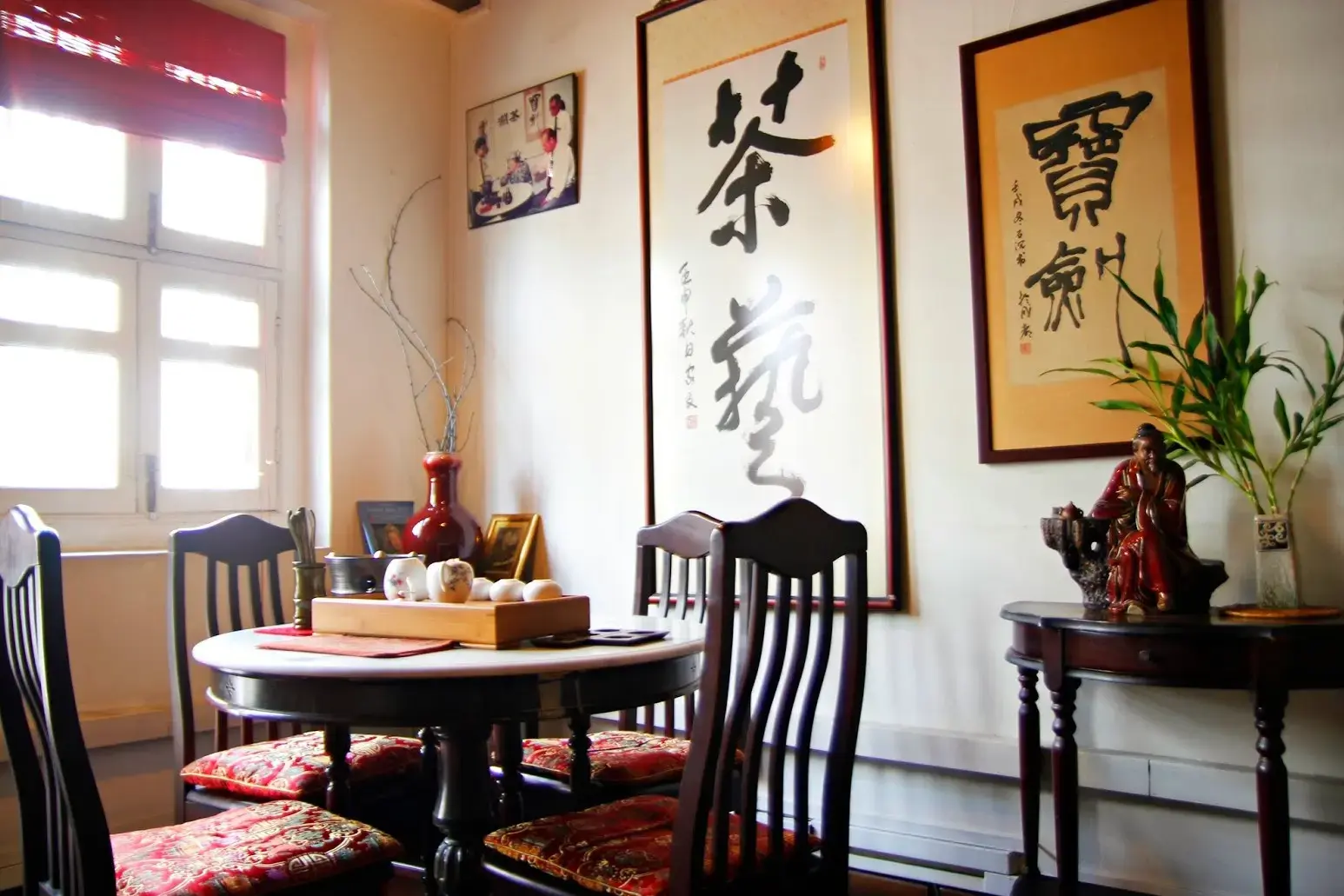
Tea Chapter continues to hold a distinctive place among the more famous tea houses in Singapore. Located near 9 Neil Road, Singapore 088808 and the wider Chinatown area, it has long offered a traditional teahouse setting that feels both established and welcoming. It is also one of those names that many visitors already know before arriving, in part because it has become such a visible part of Singapore's Chinese tea landscape, and in part because people still mention its association with Queen Elizabeth II.
What keeps Tea Chapter relevant is the balance it offers. The setting feels rooted in tradition, but not intimidating. One can settle at a table, choose from a broad menu, and spend time moving through different tea styles, from softer green expressions to deeper oolong profiles. The tea is often paired with light snacks, which gives the visit a more social rhythm and makes it easy to settle in for an unhurried afternoon. For many guests, the appeal lies in exactly that: a place where tea can still feel ceremonial, but never rigid.
We tend to see Tea Chapter as a dependable recommendation for both first-time visitors and returning tea enthusiasts. Its accessible opening hours, strong reputation and comfortable sense of hospitality make it one of the easier places to recommend to friends who want to experience traditional chinese tea in a setting that still feels rooted and sincere. It remains, quite simply, one of the cornerstones of local tea appreciation.
- Address: 9 Neil Road, Singapore 088808
- Nearest MRT: Maxwell MRT, Exit 3, roughly 2 to 3 minutes on foot
- Opening hours: Sun to Thu: 11:00am to 9:00pm Fri to Sat: 11:00am to 10:30pm
- Price range: S$10++ minimum tea charge per person, with individual teas costing more depending on selection. The current menu states a S$10++ minimum per person and applies 10% service charge plus 9% GST.
- Reservation requirements: Casual tea visits do not appear to require compulsory reservations. Private tea-appreciation workshops should be arranged in advance.
Pek Sin Choon: A Heritage Tea Merchant For Exploring Singapore's Tea History
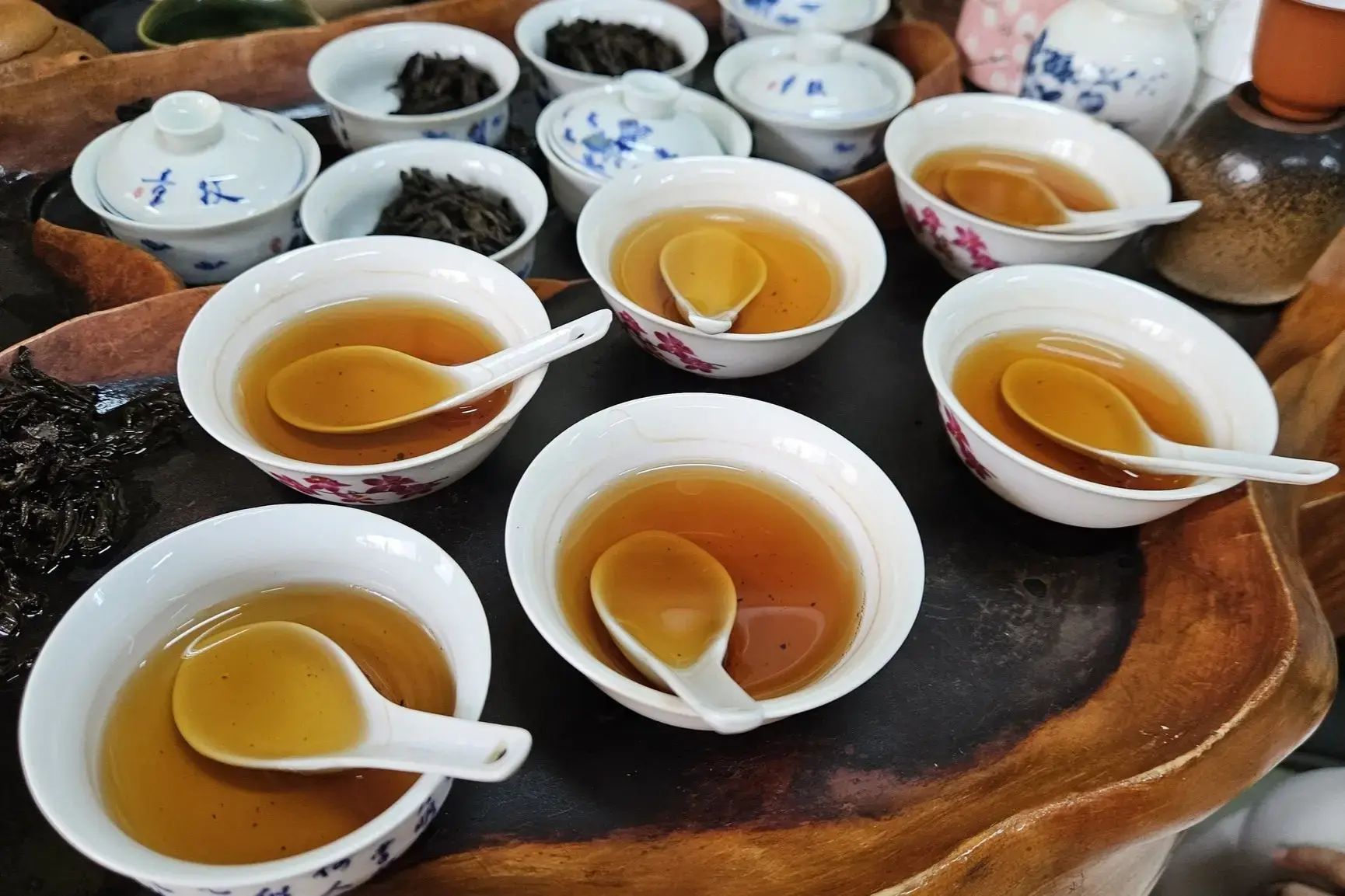
Pek Sin Choon holds a different kind of presence among tea houses in Singapore. It is not defined by atmosphere or presentation, but by continuity. Located at 36 Mosque Street in Chinatown, this century-old tea merchant has built its reputation on the quiet, consistent work of sourcing, blending, and hand-packing tea leaves. Pek Sin Choon was recognised by the National Heritage Board as a recipient of the 2024 Stewards of Intangible Cultural Heritage Award for its work in the making and sharing of tea.
Stepping into the shop, the experience shifts away from ceremony and into something more grounded. There is no structured course, no curated progression of teas. Instead, there is the presence of the leaves themselves: their aroma, their texture, their variation.
Conversations replace formal instruction. Questions are answered through experience. The teas, often slightly earthy or layered with subtle hints of nuts or dried fruit, reflect both their origins in China and their long relationship with local taste.
We see Pek Sin Choon as a place to understand tea in its most practical form. It is where many come to purchase tea for everyday brewing, or to find something thoughtful as a gift.
There is a quiet beauty in its lack of polish; a reminder that tea appreciation does not always require a refined setting. Sometimes, it begins with a simple bag of tea, a well-used pot, and the willingness to explore from there.
- Address: 36 Mosque Street, Singapore 059514
- Nearest MRT: Chinatown MRT, within a short walk
- Opening hours: Monday to Saturday, 8:30am to 6:30pm
- Price range: No admission fee for retail visits. Tea purchases vary widely, with current online products starting around S$7.50 to S$9 and premium teas reaching well above S$100
- Reservation requirements: No reservation needed for ordinary retail shopping. Workshops, organised tea education sessions or heritage experiences should be booked separately/in advance.
Yixing Xuan Teahouse: A Teahouse For Tea Lovers Seeking Tea Appreciation
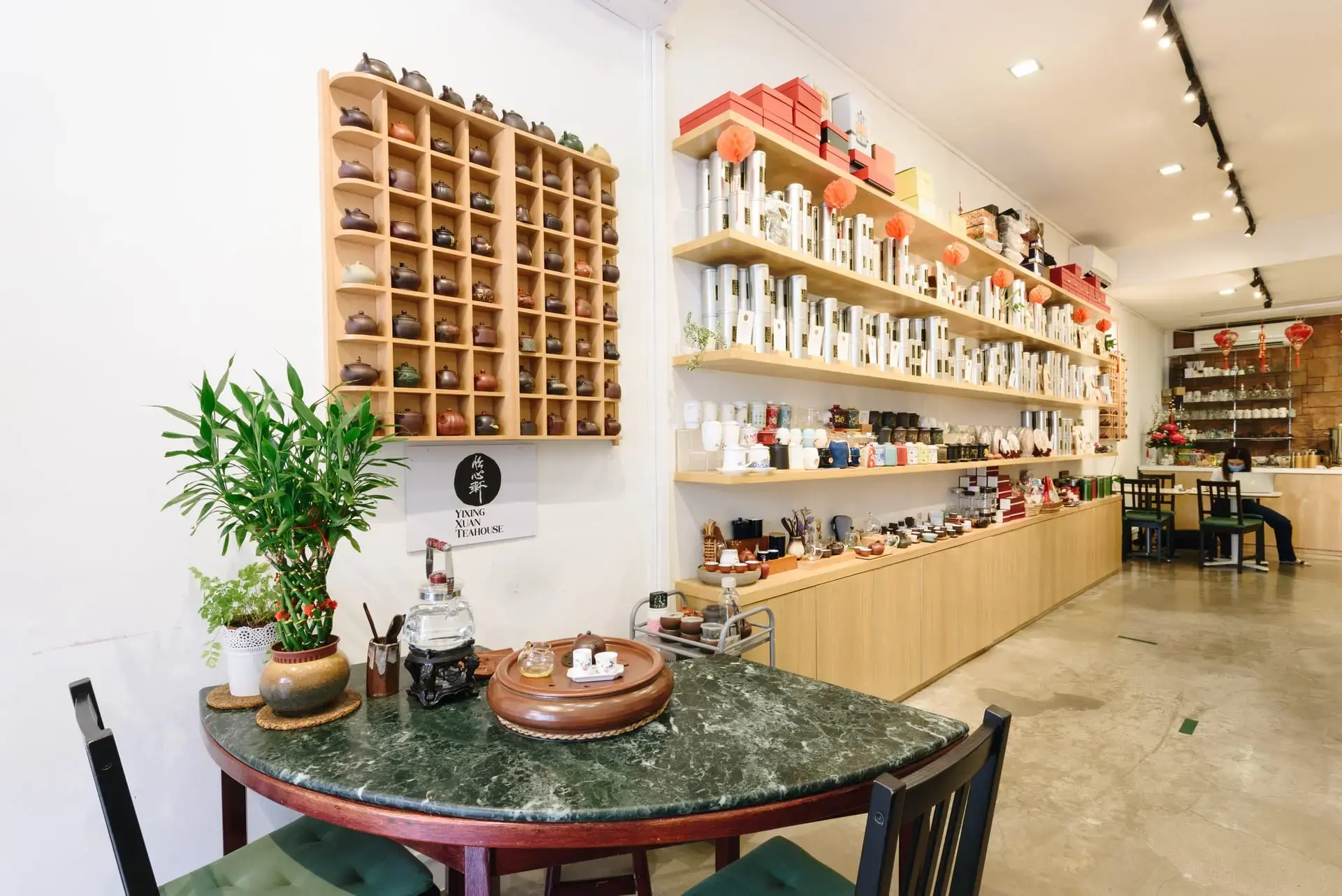
Yixing Xuan Teahouse remains one of the most recognisable names for structured tea appreciation in Singapore. It is the kind of tea house that introduces people to traditional chinese tea without making the process feel inaccessible. For many tea lovers, Yixing Xuan is where interest becomes understanding, offering a space where the world of chinese tea is explained through practice, patience, and repeated tasting rather than abstraction.
The experience here tends to feel guided in a reassuring way. Different tea leaves are introduced with care, from roasted oolong to lighter green styles, and guests are encouraged to notice the difference that temperature, timing, and brewing style make to the final taste in the cup. It is the kind of setting where even a beginner can begin to understand why a certain pot, a certain pour, or a certain sequence matters.
What makes yixing xuan teahouse so enduring is that it bridges learning and enjoyment well. One can spend time with tea, ask questions freely, and then purchase leaves or vessels to continue the practice at home. For readers who want a place that feels both grounded and highly recommended for serious beginners, this is still one of the strongest introductions to tea appreciation in the city.
- Address: 78 Tanjong Pagar Road, Singapore 088499
- Nearest MRT: Tanjong Pagar MRT, within walking distance
- Opening hours: Mon to Thu: 10:00am to 8:00pm, Fri to Sat: 10:00am to 9:30pm, and Sun & Public Holidays: 10:00am to 7:00pm
- Price range: For casual tea, approximately S$8 to S$16 per pot/standard tea selection, depending on tea and grade. There is generally a S$5 charge for an additional person sharing certain pots. Structured tea-appreciation packages run higher.
Tea Appreciation Begins With The Right Tea House
If you want unbeatable privacy and premium Chinese teas, Tea Room by Ki-setsu is the standout. If you want guided learning and a stronger educational angle, Yixing Xuan Teahouse makes sense. If you want the classic widely known answer, Tea Chapter remains the obvious pick. If heritage matters most, Pek Sin Choon is hard to beat. And if you simply want to unwind with tea and light bites in a more relaxed setting, Tea Time Chashi is a smart alternative.
The best part is that each one reveals a different side of tea culture in Singapore. Some lean toward ritual, some toward history, some toward social ease. All of them, in different ways, remind you that tea is still one of the simplest ways to slow the day down and make a small moment feel complete. Whether you spend a bit of time alone or with a person you enjoy, these tea houses offer something special for every tea lover.

A Table Set for Stillness: Inside Antea Social’s Quiet Tea Ritual
Luxury usually announces itself before we have time to question it. It arrives through marble lobbies, silver stands and tiny sandwiches placed in strict formation. Antea Social offers a quieter argument. This is not afternoon tea in the familiar hotel sense. There is no grand procession of pastries or waiter lifting a polished lid. Instead,…
-
9 High Tea in Orchard Places for Scones, Tea, and a Quiet Afternoon
There is a particular kind of tiredness that comes from Orchard Road. Not the tiredness of a hard day, but the softer sort, the ache of too many shopfronts, too much bright glass, too many people moving faster than you feel like moving. And somewhere in the middle of all that, if you know where…
-
High Tea Orchard: Why the City Still Does It Best
It is easy to dismiss high tea in Orchard as an expensive pause between shopping bags. The tiered stands are photogenic, the hotel lounges polished, and the prices increasingly difficult to defend. ome scones arrive dry. Some savouries feel like banquet food made miniature. Some desserts are designed more for cameras than appetite. Still, Orchard…
-
McDonald’s Queensway Ridout Tea Garden Review: What It Is Like Dining in a Heritage Setting
I did not expect to find quiet at a McDonald’s Queensway Ridout Tea Garden outlet. But there I was, standing outside the McDonald’s outlet at 580 Queensway, listening to the water instead of the traffic. A much loved pond sat just beyond the glass, surrounded by stone lanterns and trees leaning over it. Somewhere behind…
-
Understanding Tea Beyond the Cup
Tea is deceptively simple. A cup of hot water and leaves. And yet, it carries centuries of culture, craftsmanship, and subtlety that many of us may overlook. As tea lovers, we often focus on taste, aroma, or ritual, but there is more beneath the surface. Take the leaves themselves. Different cultivars, growing regions, and harvest…
-
Clifford Pier High Tea Review: Local Flavours by the Waterfront
I went looking for a building that no longer serves tea. The Clifford Pier still stands where it always has, at the edge of Marina Bay, its old timber trusses arching overhead like the ribs of something patient. But when I arrived, hoping to relive a Heritage Afternoon Tea I’d taken there years ago, I…
-
The Quiet Lessons a Cup of Tea Can Teach
I have often found that the simplest cup of tea carries the most subtle lessons. Not every tea moment is dramatic, ceremonial, or picturesque. Some are ordinary, even fleeting, yet they manage to teach something quietly about patience, observation, and care. Take the leaves themselves. Watching them unfurl in hot water is a small, deliberate…
-
A Journey Through Popular Bubble Tea Brands and Shops: Bubble Tea Singapore
The first time I really tasted bubble tea, I mean actually tasted it, I was standing outside a shoppers mall in the rain, waiting for a friend who was late. I had ordered something on autopilot from one of the many bubble tea shops in Singapore. But that day, without distraction, I noticed the tea…
-
Tea in a World That Never Pauses
Scrolling through my feed this morning, I realized something. We live in a world that barely stops. Notifications pile up. Videos play automatically. Messages arrive faster than we can read them. Every surface seems to demand attention. And then there is tea. A cup of tea does not ping. It does not scroll. It does…
-
From Plantation to Cup: The Journey of Sri Lanka’s Black Tea Pekoe
Black tea pekoe is all about whole-leaf black tea made from those long leaves and buds, usually the youngest ones right near the shoot tips. And when you hear Orange Pekoe, it’s not about orange flavor at all; it’s actually the name of that grade. For tea lovers or anyone curious about quality Sri Lankan…