Singapore loves its café culture.
We celebrate espresso machines. We admire single-origin beans. We debate tasting notes and extraction times like it is a sport. When someone says “Cafe Singapore,” most of us immediately picture coffee.
But look at the tea menu.
In many cafés, tea is reduced to a small corner of the page. A green tea. An English Breakfast. Maybe a herbal option. Rarely explained. Rarely curated. Almost never treated with the same pride as coffee.
That feels like a blind spot.
Tea is not foreign to Singapore. It is part of our daily rhythm. It lives in kopitiams, in family gatherings, in teh tarik pulled high and poured with flair. It has always been here. Yet in modern café spaces, it often feels like a polite extra rather than a central offering.
This is not a criticism of coffee. Coffee deserves its craft. But if cafés claim to care about experience, then that care should not stop at the espresso machine.
For a deeper perspective, Beyond Coffee: Tea Transforming Café Singapore Scene offers a thoughtful look at how tea is reclaiming its place in modern café culture.
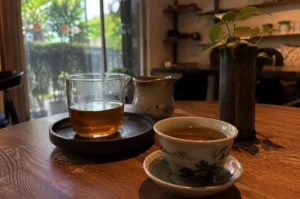
Good tea requires precision too. Water temperature matters. Steeping time matters. Leaf quality matters. A well-brewed oolong can carry layers of flavour just as complex as any pour-over. A thoughtfully prepared sencha can be as intentional as any latte art design.
When tea is treated as an afterthought, it sends a quiet message: coffee drinkers are the main audience. Tea drinkers are secondary.
That assumption no longer fits.
More people are looking for slower rituals. For cafés that feel less hurried. For drinks that invite conversation instead of quick refills. Tea naturally creates that space. It encourages staying, noticing, and talking longer than planned.
Some cafés in Singapore are beginning to recognise this. They are expanding tea menus, sourcing loose leaves, and explaining origins. When they do, the entire atmosphere shifts. The café feels less like a stopover and more like a place to remain.
Café Singapore has already mastered coffee.
Perhaps it is time to give tea the same imagination.
Because tea is not the alternative.
It is part of the culture.
And maybe the real question is not whether Singapore needs more coffee innovation, but whether it is finally ready to treat tea with equal respect.
After all, that is what’s really brewing.
— Maria Tan
Because every cup deserves attention.

Stop Calling It “Premium”: Why Most Luxury Tea Branding Is Empty
There is a word I have become increasingly cautious of in the tea world. Premium. It appears everywhere. Premium leaves. Premium harvests. Premium collections. Premium experiences. The word sounds reassuring. It suggests care, quality, and something worth paying attention to. But after seeing it attached to almost everything, I sometimes wonder whether it has started…
-
Pryce Tea: A Modern Pour with Old Tea-Room Ambitions
I visited on a weekday afternoon, around three, when the city had quieted into that particular lull between lunch and the evening rush. I’d been curious about Pryce Tea for a while, mostly because the brand keeps surfacing among people who talk about teas the way some people talk about wine. With a reputation built…
-
The Seasons in a Tin: How Weather Shapes What I Reach For
I have a small habit that I never really noticed until recently. The weather changes, and somehow, so does the tea I want. On a hot afternoon, I find myself reaching for something light and floral. When rain settles over the windows, I want something darker, warmer, perhaps a little more comforting. On those rare…
-
Ginger Lily Afternoon Tea on Orchard Road: A Floral Chapter in Singapore’s Culinary Story
I noticed the ginger lily flowers before I noticed anything else. Not real ones, exactly. A wall of them, suspended in resin, catching the light as I stepped off the lift on Level 5 at Hilton Singapore Orchard, home to Ginger Lily, a floral-themed afternoon tea lounge on Orchard Road. I stood there a second…
-
Minimalism, But Make It Warm: A Simpler Way to Drink Better Tea
There is a certain irony about tea. The more we learn about it, the easier it becomes to complicate it. A simple cup of leaves and water slowly becomes surrounded by equipment, measurements, techniques, and expectations. We begin collecting teapots, comparing brewing methods, and searching for the perfect setup. None of these things are wrong….
-
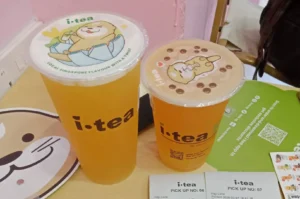
A Humble Cup in an Age of Overdesigned Drinks: iTea Review
The bubble tea I queued for last month came with a caramelized brûlée top I had to crack with the back of my spoon. It was fine. Pretty, even. But somewhere between the torched sugar and the cheese foam and the third topping I didn’t ask for, I lost the drink itself. So I went…
-
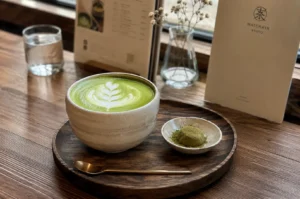
Matcha Hype Has Gone Too Far (But I Still Drink It)
I have a confession. I am slightly tired of seeing matcha everywhere. Not because I dislike matcha. In fact, I drink it quite often. But there is something amusing about watching a humble tea become the centre of every café menu, wellness conversation, and social media trend. Matcha has gone from a traditional Japanese tea…
-
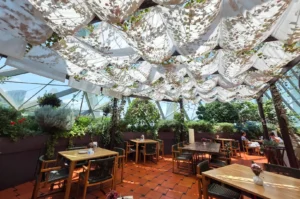
Hortus Afternoon Tea Review: When the Garden Becomes the Occasion in the Flower Dome
I forgot, for a moment, that I was indoors at Hortus, the Mediterranean restaurant nestled within the Flower Dome at Gardens by the Bay. There were trees above me, real ones, and the air held that cool, green stillness you usually find early in the morning somewhere far from the city. A leaf drifted down…
-
The Real Reason Your Tea at Cafés Tastes Flat
There is a particular disappointment that comes with ordering tea at a café. You see the menu. You notice the carefully written descriptions. Perhaps there is a mention of fragrant jasmine, roasted oolong, or a carefully selected blend. The presentation arrives beautifully arranged, and for a moment, there is anticipation. Then you take the first…
-
Herbal Tea in Chinese: A Cup Shaped by Heat, Balance, and Belief
The first sip was bitter. I was maybe seven, and my grandmother had pressed a small ceramic cup into my hands, dark liquid inside, steam curling up between us. She didn’t explain. She just said, “Drink. You’ve been too heaty.“ I made a face. She didn’t smile. She just waited until I finished. Years later,…