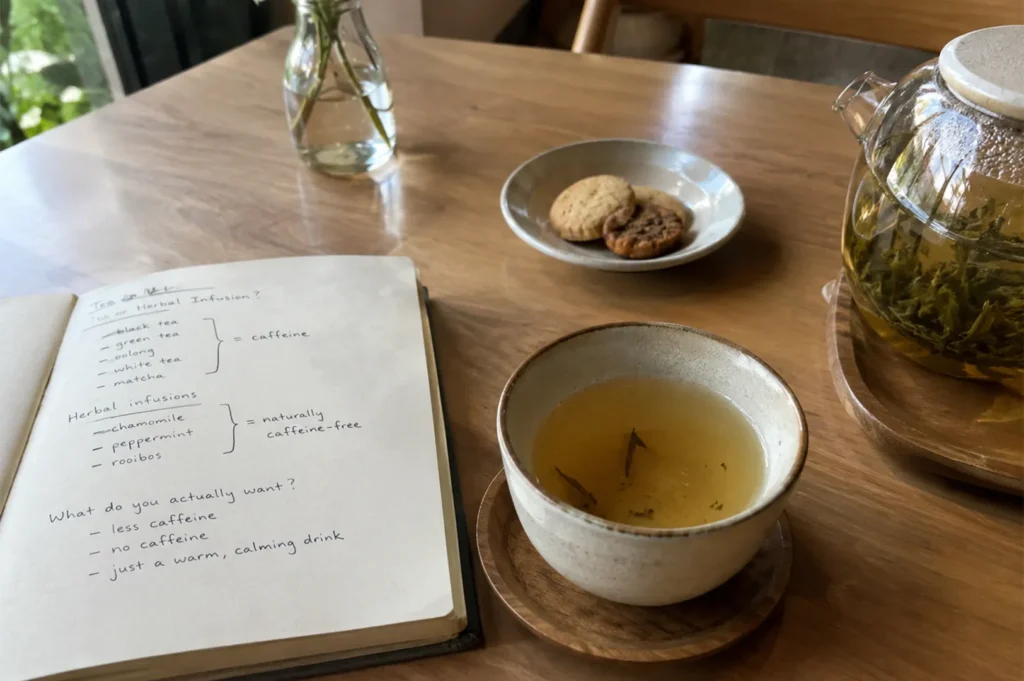
I have noticed that tea conversations can become surprisingly confusing.
Not because tea itself is complicated, but because we sometimes use the same words to mean completely different things.
One phrase that always catches my attention is “caffeine-free tea.”
It sounds simple enough.
But is that really what we mean?
Because technically, many traditional teas are not completely caffeine-free. Black tea, green tea, oolong, white tea, and matcha all naturally contain caffeine because they come from the Camellia sinensis plant.
What many people are actually looking for is something slightly different.
A tea with little or no caffeine.
Or perhaps a naturally caffeine-free herbal infusion.
The distinction seems small, but it matters.
I think part of the confusion comes from how we casually use the word “tea” for almost everything we steep in hot water. A cup of chamomile, peppermint, or rooibos is often called tea, even though they are technically herbal infusions rather than traditional tea.
And honestly, I understand why.
Language follows everyday life. Most people are not thinking about botanical categories when they are choosing a comforting drink before bed.
They simply want something warm.
Something calming.
Something that will not keep them awake.
But perhaps understanding the difference can make our choices easier.
A person looking for a naturally caffeine-free option might enjoy herbal infusions. Someone who wants the flavour and tradition of tea but less caffeine might explore lighter teas or adjust how they brew them.
Neither choice is more correct.
This is what I find interesting about tea. The more we learn about it, the more we realise how many assumptions we carry.
We think we know what tea means.
Then we discover there is another layer.
But I also think we should be careful not to make tea feel like a vocabulary lesson. At the end of the day, people are not searching for the perfect term. They are searching for a drink that fits their lives.
Sometimes that means a delicate green tea in the morning.
Sometimes it means a cup of chamomile before bed.
Sometimes it means simply knowing what is actually inside your cup.
Maybe the goal is not to correct everyone who says “caffeine-free tea.”
Maybe the goal is to make the conversation clearer.
Because tea is already interesting enough without making it harder to understand.
— Maria Tan
On tea, culture, and everyday rituals.

Buckwheat Tea Unveiled: Singapore’s Rising Caffeine-Free Wellness Beverage
Singapore’s health-conscious community is embracing buckwheat tea, a caffeine free tea known for its rich cultural heritage, unique nutty flavor, and impressive health benefits. This traditional Asian beverage, also called soba cha in Japan, offers a soothing alternative to green tea or coffee, perfect for Singapore’s tropical climate and wellness goals. Its growing popularity reflects…
-
Japanese Green Tea from Japan: Unlocking the Secrets of Authentic Varieties and Brewing
Experience the rich tradition of authentic japanese green tea from japan, a beverage refined over centuries with unique steaming methods that preserve its vibrant color, rich aroma, and delicate taste. This comprehensive guide introduces you to Japan’s most treasured green tea varieties, their extensive health benefits, and how to enjoy japanese tea perfectly brewed, whether…
-
How to Make Matcha Latte: A Step-by-Step Recipe Quest
There’s a special kind of satisfaction that comes from mastering your favorite café drink at home. When it comes to the vibrant and creamy matcha latte, the rewards are particularly sweet. Learning how to make matcha latte in your own kitchen not only saves you money but also gives you complete control over the quality,…
-
Mastering the Art of Matcha Green Tea Latte Recipe: Your Path to Perfection
There’s a unique kind of magic in crafting your own café-quality matcha green tea latte at home. It’s the satisfaction of watching vibrant green matcha swirl into creamy, frothed milk, the joy of customizing it to your exact taste, and the simple pleasure of sipping a wholesome, delicious beverage you made yourself. Beyond the significant…
-
Afternoon Tea in Singapore: Your Passport to Tradition and Modern Fusion
Imagine the gentle clink of fine china, the sight of a beautiful three-tiered stand laden with exquisite sweet and savoury treats, and the aroma of freshly brewed tea filling the air. This is the timeless allure of afternoon tea in Singapore, a ritual that feels both wonderfully indulgent and deeply comforting. In a city that…
-
Discover the Rich Flavors of Ceylonese Tea: A Complete Overview
Picture a landscape of rolling hills carpeted in a sea of green, where misty clouds kiss the mountaintops and the air is crisp and cool. This is the heartland of Sri Lanka, the island nation once known as Ceylon, and the origin of one of the world’s most celebrated teas. For over a century, the…
-
The Art of the Tea Ceremony: Experience Tradition and Tranquility
Imagine sitting in a quiet room, the scent of tatami floor mats mingling with the subtle aroma of powdered green tea. Before you, a tea master moves with deliberate, graceful motions, whisking vibrant matcha tea into a frothy jade liquid using a bamboo whisk. Every gesture, from warming the tea bowl to the final, respectful…

The Ultimate Guide to Good Tea in Singapore: Where to Find the Best Brews in 2024
Singapore’s tea culture beautifully blends centuries-old heritage with modernity, offering tea lovers a vibrant journey through exclusive tea blends, single estate varieties, and innovative local creations. Whether you seek traditional Chinese tea houses or contemporary cafés, this guide highlights the best places to sip and shop for good tea in Singapore, ensuring you find the…

The Complete Guide to Matcha for Lattes: From Bean to Cup
A perfectly crafted matcha latte isn’t just a trendy drink, it’s a centuries-old Japanese tea tradition that’s been adapted for today’s tastes. Unlike your regular green tea, where you steep the leaves and then toss them, matcha powder dissolves completely, giving you a bold flavor and a nutrient boost that coffee just can’t match. Matcha…
-
Top 7 Best Teas for Weight Loss: Evidence-Based Options Ranked
Looking for the best teas for weight loss is a popular first step for anyone starting a wellness journey. While no single tea can magically melt away body fat, some teas contain natural compounds that can help with weight loss, boost metabolism, and manage appetite. The secret is consistency, drinking tea daily as part of…