I have a confession.
I don’t think every tea lover needs to love every tea.
That sounds obvious when written down, but spend enough time around tea enthusiasts and you may start to think otherwise.
Someone discovers that you enjoy tea.
The questions begin.
Do you drink green tea?
What about pu-erh?
Have you tried aged white tea?
Sometimes it feels as though tea appreciation comes with an invisible checklist. The more teas you enjoy, the more qualified you become to call yourself a tea lover.
But I’ve never been convinced that’s how it works.
After all, we don’t apply this logic to most other things. Nobody expects a music lover to enjoy every genre of music. Nobody questions whether someone loves books because they dislike a particular author.
Yet tea seems different.
For some reason, people feel strangely guilty admitting they dislike certain teas.
Matcha might be the best example.
Its popularity has exploded in recent years. Walk into almost any café and you’ll find matcha somewhere on the menu. Social media treats it as the unofficial symbol of modern tea culture.
And yet plenty of tea drinkers simply don’t enjoy it.
The earthy flavour can be intense. The texture can feel unusual. Some people never develop a taste for it no matter how many times they try.
And that’s perfectly reasonable.
The same is true for pu-erh. Or heavily roasted oolongs. Or delicate white teas.
Liking tea and liking every tea are not the same thing.
In fact, personal preference is probably what makes tea culture interesting in the first place.
Ask ten tea drinkers about their favourite tea and you’ll likely receive ten different answers. Those differences are not evidence that someone understands tea less than another person.
They are evidence that taste is personal.
Perhaps tea culture would feel more welcoming if we talked about preferences more openly.
Not every tea needs to become your favourite.
Not every famous tea needs to impress you.
And not every tea trend needs to win you over.
Sometimes being a tea lover simply means continuing to search for the teas that feel right to you.
Even if everyone else seems to prefer something different.
— Maria Tan
On tea, culture, and everyday rituals.

Floral Teas Are Not “For Beginners”—They’re For People With Taste
There is a curious assumption in tea culture that I have never quite understood. If you are new to tea, you begin with something floral. Jasmine. Rose. Osmanthus. Lightly scented blends. Then, supposedly, you move on. You discover roasted oolongs. Aged teas. More complex leaves. Stronger flavours. Eventually, you become a “serious” tea drinker. I…
-
How to Make Cold Brew Tea: The Slow Method for a Smoother Cup
There is a jar on the top shelf of my refrigerator that I did not need this morning. I filled it last night, before the kitchen went dark. Loose tea leaves, cool water, a lid resting loosely on top. Then I closed the door and left it alone, the way you leave bread to rise…
-
Milk Tea Isn’t “Ruining” Tea—But Some Milk Tea Is Ruining Milk Tea
I have noticed that few things can start an argument among tea drinkers quite as quickly as milk. Mention adding milk to a good tea and suddenly everyone has an opinion. Some insist that milk covers the flavour of the leaves. Others will tell you that certain teas were practically made for it. I have…
-
There Are Always Good Things to Eat at The Marmalade Pantry
The afternoon rain had just eased when I climbed up to Level 4 of ION Orchard, home to the Marmalade Pantry Ion. Outside, Orchard Road was doing its usual thing: too many people, too much noise, everyone somewhere to be in the bustle of the city. Inside, at a corner table, someone was pouring tea…
-
The Teacup as a Compass: What My Daily Brew Taught Me About Pace
I never intended for tea to become a way of keeping track of my days. It just happened. There are mornings when I drink the first cup quickly, barely noticing the taste because my mind is already somewhere else. Then there are afternoons when I make tea and somehow manage to sit with it for…
-
Silk Tea Bar Review: A Quiet Climb Worth Making on Sago Street
I almost walked past it. Sago Street was loud that afternoon, the way Chinatown often is. Voices, footsteps, the clatter of a hundred small transactions. I was looking for a door and nearly missed the narrow one that led upstairs. Then I climbed. And somewhere between the ground floor and the second, the noise fell…
-
“Artisan” Doesn’t Mean Ethical: The Supply Chain Questions We Avoid
I have always been drawn to the word “artisan.” Maybe because it creates a certain image in my mind. Someone carefully working with their hands. Someone who knows their craft deeply. Someone preserving a tradition that has existed long before the rest of us discovered it. When I see “artisan tea” on a label, I…
-
A Quiet Afternoon at A Beautiful Day Café
The rain had just started when I stepped in off Paya Lebar Road. Not heavy. Just enough to soften the light and slow everyone down. Inside, someone was pouring tea, and the sound of it carried further than it should have. A small room can do that. It can make a pour feel like a…
-
The Problem With “Single-Origin” Tea Obsession
There was a time when knowing where a tea came from was enough. Now, it sometimes feels as though we need to know everything. The mountain. The village. The garden. The harvest date. The particular plot where the leaves were grown. Single-origin tea has become a mark of quality in modern tea culture. The idea…
-
Where Singapore’s Tea Traditions Still Steep: Pek Sin Choon
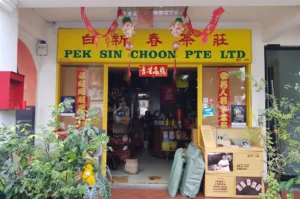
The first thing I noticed was the smell. Not perfume, not incense. Something warmer and older than both. Roasted tea leaves, drifting out onto Mosque Street before I even reached the door. It’s the kind of smell that makes you slow your steps without knowing why. Pek Sin Choon has been on this corner of…