I used to think tea had to be hot.
There was something about the ritual of it. Boiling water, warming the pot, watching the leaves open. A proper cup of tea seemed to require steam.
Then I tried cold brew tea, and I had to admit something slightly uncomfortable.
I liked it.
More than I expected.
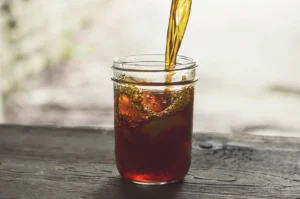
Cold brew tea does not have the drama of hot tea. There is no kettle singing in the kitchen or steam curling above the cup. You simply add tea leaves to cold water and let time do the work.
That simplicity is probably part of why some tea lovers are suspicious of it.
There is a certain idea that if tea is not prepared hot, we are somehow doing it wrong. Tea has traditions, after all, and many of those traditions place great importance on hot water and careful preparation.
But does that mean every good cup has to follow the same rules?
I am not convinced.
Cold brewing changes the experience. Without the heat, the tea can taste softer and less aggressive. Some teas reveal gentle floral or fruity notes that might be harder to notice when brewed quickly with hot water.
It can also be wonderfully refreshing, especially in Singapore.
On a humid afternoon, I sometimes want a cold glass of tea more than I want to sit beside a steaming cup. That does not make me appreciate tea any less. If anything, it makes me notice how adaptable tea really is.
And perhaps that is what I find most interesting about cold brew tea.
It challenges the idea that there is only one proper way to enjoy something.
We have already adapted tea in countless ways. We add milk. We add sugar. We serve it over ice. We turn it into lattes and desserts. We drink it in tea rooms, cafés, homes, and hawker centres.
So why should cold brewing be treated as a betrayal of tradition?
Maybe tradition is not about keeping tea frozen in time.
Maybe it is about allowing tea to continue finding its way into people’s lives.
I still love hot tea. I probably always will. There is something comforting about holding a warm cup between your hands when the day feels long.
But on certain afternoons, I want something cold, bright, and uncomplicated.
And if that makes me a tea purist’s least favourite person, I suppose I can live with that.
— Maria Tan
On tea, culture, and everyday rituals.

Stop Buying Tea for the Aesthetic: How Packaging Hijacks Taste
There is something fascinating about the way we buy tea today. Before we taste the leaves, we have already formed an opinion. The box is elegant. The label is beautifully designed. The colours suggest calm, luxury, or tradition. The story feels carefully written. And before the first sip, we have already decided that the tea…
-
A Tea Table in the Clouds: The Westin Singapore High Tea Review
It was one of those afternoons when the city felt too loud and too fast, and I wanted to sit somewhere quiet without really explaining why. So I went up. All the way up, to Level 32 of The Westin Singapore, where the Lobby Lounge sits above the noise like it knows something the rest…
-
“Caffeine-Free Tea” Confuses Everyone—Let’s Fix the Language
I have noticed that tea conversations can become surprisingly confusing. Not because tea itself is complicated, but because we sometimes use the same words to mean completely different things. One phrase that always catches my attention is “caffeine-free tea.” It sounds simple enough. A tea without caffeine. But is that really what we mean? Because…
-
The Pull, Pour, and Ritual Behind Singapore’s Favourite Milk Tea: Teh Tarik
It starts with a sound. A long ribbon of tea, arcing from one metal mug held high to another held low. The stream catches the light. Then the froth rises, pale and soft, and the whole thing gets poured back and lifted again. Nobody at the stall looks up. This happens a hundred times a…
-
Stop Chasing Tasting Notes: Tea Isn’t Wine and That’s a Relief
I have a small confession to make. Sometimes I have absolutely no idea what I am supposed to be tasting. A tea description might promise orchid, honey, toasted nuts, stone fruit, and something wonderfully mysterious called a “long mineral finish.” I take a sip. I taste tea. And then I start wondering if everyone else…
-
Chinese Tea Sets: Beautiful on the Table, But How Do They Brew?
There is a small arrangement on the table this evening, and I have not touched it yet. A pale bowl with a lid resting slightly askew. A round pitcher beside it, waiting to be filled. Cups no larger than a thumb and two fingers, lined up like a quiet sentence. The surfaces catch the last…
-
Floral Teas Are Not “For Beginners”—They’re For People With Taste
There is a curious assumption in tea culture that I have never quite understood. If you are new to tea, you begin with something floral. Jasmine. Rose. Osmanthus. Lightly scented blends. Then, supposedly, you move on. You discover roasted oolongs. Aged teas. More complex leaves. Stronger flavours. Eventually, you become a “serious” tea drinker. I…
-
How to Make Cold Brew Tea: The Slow Method for a Smoother Cup
There is a jar on the top shelf of my refrigerator that I did not need this morning. I filled it last night, before the kitchen went dark. Loose tea leaves, cool water, a lid resting loosely on top. Then I closed the door and left it alone, the way you leave bread to rise…
-
Milk Tea Isn’t “Ruining” Tea—But Some Milk Tea Is Ruining Milk Tea
I have noticed that few things can start an argument among tea drinkers quite as quickly as milk. Mention adding milk to a good tea and suddenly everyone has an opinion. Some insist that milk covers the flavour of the leaves. Others will tell you that certain teas were practically made for it. I have…
-
There Are Always Good Things to Eat at The Marmalade Pantry
The afternoon rain had just eased when I climbed up to Level 4 of ION Orchard, home to the Marmalade Pantry Ion. Outside, Orchard Road was doing its usual thing: too many people, too much noise, everyone somewhere to be in the bustle of the city. Inside, at a corner table, someone was pouring tea…