I used to think cold brew tea was cheating.
Not seriously, of course. But there was something about it that felt almost too easy. No kettle. No worrying about water temperature. No watching the clock while the leaves steep.
Just tea, cold water, and a little patience.
It seemed suspiciously effortless.
Then I actually started drinking it.
And, annoyingly, I liked it.
There is a certain attitude in tea culture that treats hot brewing as the more serious way to drink tea. I understand where that comes from. Hot water has been at the heart of tea preparation for centuries, and there is something wonderfully comforting about watching leaves open in a warm pot.
But does that mean cold brew is somehow less legitimate?
I don’t think so.
Cold brewing simply gives tea a different personality. Without hot water extracting everything so quickly, some teas can taste softer and more delicate. Floral notes can become gentler. Fruitier flavours can feel brighter. Even teas I find slightly sharp when brewed hot can become surprisingly pleasant when chilled.
And in Singapore, I have to admit, this makes a lot of sense.
There are days when the last thing I want is another steaming drink. When the weather is humid and the afternoon feels like it has been sitting under the sun for hours, a cold glass of tea sounds far more inviting.
Does that make me less of a tea lover?
I hope not.
I think we sometimes confuse tradition with rules. Just because something has been prepared one way for a long time does not mean every other method is wrong.
Tea has travelled across countries and cultures precisely because people have adapted it.
We add milk.
We add sugar.
We drink it with spices.
We serve it over ice.
We turn it into lattes.
Cold brewing feels like just another chapter in that long history of experimentation.
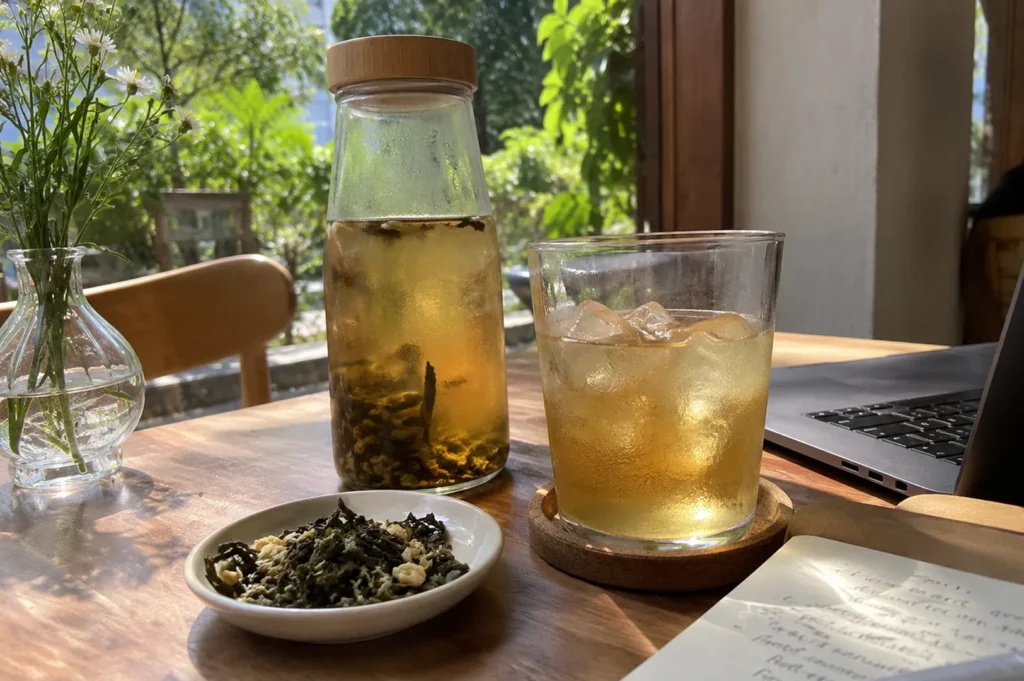
And honestly, there is something wonderfully low effort about it. You can prepare it in advance, put it in the fridge, and come back later to a drink that is ready when you are.
Maybe that is the part some tea purists dislike.
It does not look particularly impressive.
There is no elegant pouring technique. No beautiful cloud of steam. No elaborate ritual.
Just a bottle sitting quietly in the refrigerator.
But perhaps tea does not always need to look serious to be worth taking seriously.
I still love hot tea. I suspect I always will.
But I also love having a cold brew waiting for me on a hot afternoon.
So if someone tells me cold brew tea is lazy, I might agree with them.
It is easy.
It is convenient.
And it tastes good.
I am not sure why any of those things should be considered a problem.
— Maria Tan
On tea, culture, and everyday rituals.

Discovering Gryphon Tea Company’s Earl Grey in Singapore
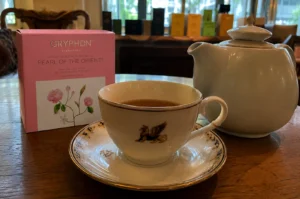
I recently tried the Earl Grey from Gryphon Tea Company Singapore, and I have to admit, it surprised me. Not because it was flawless-it wasn’t, but because it felt like a tea that knew exactly what it wanted to be. The aroma is the first thing that hits you. Bergamot is present but subtle, not…
-
Hojicha: The Roasted Japanese Green Tea With A Mellow Twist
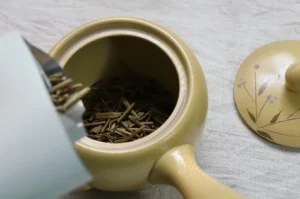
There is a moment, just after the hot water meets the hojicha tea leaves, when the kitchen fills with the aroma of something toasted. Not grassy. Not sharp. Warm, like roasted nuts or the edge of a freshly baked loaf. That moment is where hojicha begins. Hojicha (sometimes spelled houjicha) is a roasted green tea…
-
A Quiet Afternoon at Yixing Xuan Teahouse
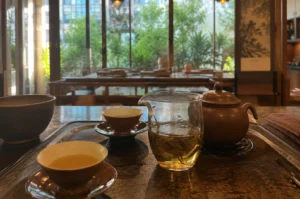
I recently spent a quiet afternoon at Yixing Xuan Teahouse, a place that feels like a pause in the city. The moment you step inside, the world seems slower. The air carries the gentle aroma of steeped leaves, and the staff move with quiet precision. I chose an oolong, simple yet familiar. Watching the leaves…
-
The Controversial Smoky Tea That Divides Enthusiasts: Lapsang Souchong Black Tea
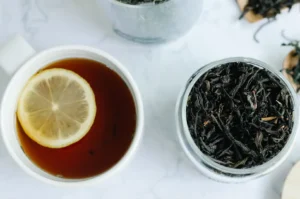
There is a tea that empties rooms and fills them in equal measure. Open a box of loose leaf lapsang souchong black tea, and someone nearby will lean in with delight while another quietly steps away. Few teas provoke such immediate, honest reactions. That divide is part of its story. This smoked lapsang souchong smells…
-
The Tea That Keeps Me Coming Back
I have a tea I return to more than any other. It is not rare. It is not expensive. In fact, most people would probably pass it by without a second thought. And yet, somehow, it has become a quiet companion over the years. I first drank it on a rainy afternoon. I had been…
-
Tie Guan Yin: The Iron Goddess of Chinese Oolong Tea
Tie Guan Yin, also known as Iron Goddess or Iron Goddess Oolong, is a celebrated Chinese oolong tea originating from Anxi County in Fujian Province, China. This tea from Anxi Fujian holds a special place among other teas due to its unique aroma, flavour, and rich cultural story. It is made from the tea plant…
-
Why Tea Shops Might Be the Last Quiet Places We Have
There is a growing habit in Singapore that I find both comforting and slightly unsettling. People are working everywhere now. Cafés, co-working spaces, neighborhood bakeries, even small corner shops. A laptop seems to turn any table into an office. And in many ways, this flexibility is impressive. It reflects how life has adapted to work,…
-
Why Not Every Tea Deserves Your Attention
Tea culture encourages curiosity. There are endless varieties, origins, and rituals to explore. Some teas are rare, some are aged, some are celebrated in distant mountains. The temptation is to try them all, to chase novelty in the hope that every cup will surprise you. But not every tea deserves your attention. I have learned…
-
Sipping Serenity: Where to Enjoy Chamomile Tea Singapore in the City
Singapore moves quickly. The trains run on time, the workdays stretch long, and the humidity outside rarely lets anyone slow down by choice. Yet within this busy rhythm, a quiet counter-current persists. People look for small pockets of stillness, and increasingly, they find one in a warm cup of chamomile tea. There is something fitting…
-
Why Some Teas Taste Better When Shared
I’ve always found that tea, more than most drinks, seems to gain something when shared. A cup alone can be comforting, quiet, even meditative. But a cup shared with someone else, whether a friend, a family member, or a stranger in a small tea house, somehow becomes richer, fuller, more alive. It’s not just the…