I have a feeling green tea has become the tea we’re all supposed to love.
It’s everywhere. Wellness conversations, morning routines, skincare trends, and those beautiful matcha drinks that somehow make an ordinary afternoon look more interesting.
And honestly, I get it.
Green tea can be wonderful. Fresh, grassy, sometimes sweet. But I’ve started wondering why we talk about it as though it’s the obvious choice, while darker teas barely get a mention.
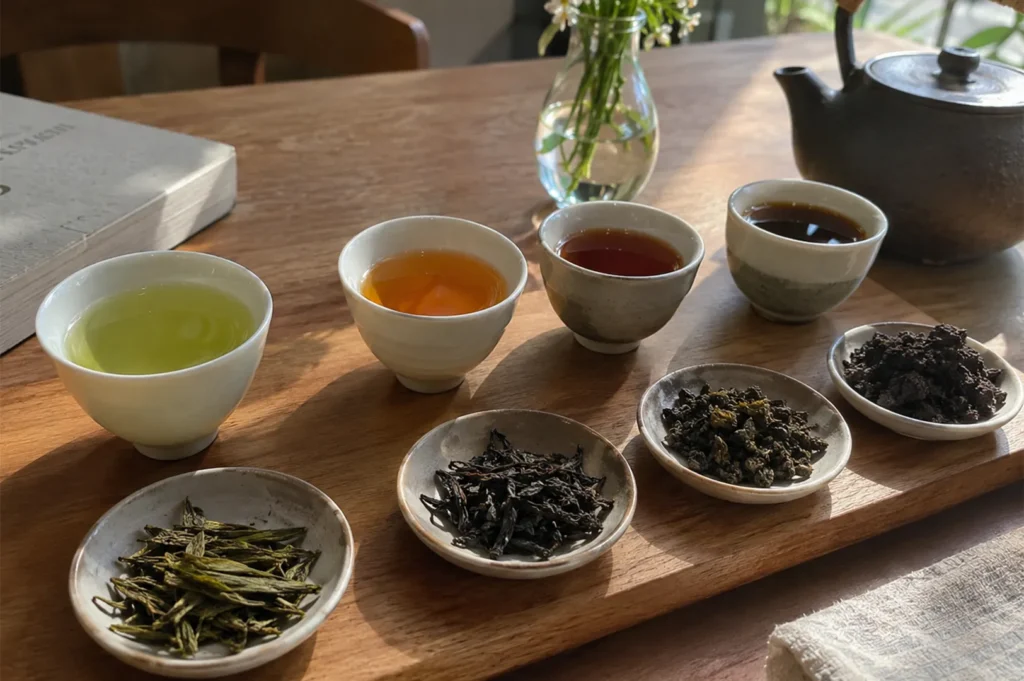
Because what about a rich black tea? Or a roasted oolong? Or a Pu-erh that develops an entirely different character with age?
I think we’re missing quite a lot.
Somewhere along the way, green tea became associated with being healthier and more refined. Its antioxidants receive plenty of attention, while darker teas sometimes get treated as though processing has made them less valuable.
But tea isn’t quite that simple.
Black tea undergoes extensive oxidation, while oolong can fall anywhere across a broad spectrum. These processes change the leaves’ chemistry and flavour, but they don’t automatically make one tea better than another.
And personally, I’d rather choose my tea based on what I enjoy drinking.
There’s something lovely about the malty richness of Assam, the roasted depth of certain oolongs, or the earthy character of ripe Pu-erh. They’re different experiences, and not everyone will enjoy them equally.
That’s perfectly fine.
What bothers me is how easily trends become rules. We discover something popular, convince ourselves it’s the best option, and forget there’s an entire world beyond it.
Maybe that’s why I think the green tea obsession deserves a little questioning.
Not because green tea is overrated in itself, but because no single tea should define what good tea looks like.
Some days, a light green tea might be exactly what I want. Other days, something darker and fuller sounds much more appealing.
I don’t think we need to choose sides.
Green tea can keep its popularity.
I’d just like us to remember that some of the most interesting cups aren’t green at all.
— Maria Tan
On tea, culture, and everyday rituals.

The Tea I Keep Drinking When I Don’t Feel Like Myself
There are days when tea feels unnecessary. Not because I stop liking it, but because I don’t feel like the version of myself who usually drinks it slowly, thoughtfully, and with attention. On those days, I still make tea anyway. Not out of ritual, but out of habit. It is never the elaborate kind of…
-
Tea Ceremony Kyoto: A Slow Dance of Bowls and Breath
The room is quiet enough to hear water. Somewhere beyond the paper screens of this traditional tea ceremony venue, a garden drips after morning rain. Inside a tea house on a tatami mat worn soft by years of kneeling, a tea master lifts a bamboo whisk and begins tea making. There is no rush in…
-
Why We Keep Romanticising Tea Moments That Never Happened
I sometimes wonder if we are drinking tea or remembering something that never really happened. A quiet morning that feels softer in memory than it ever was in real life. A perfect cup by the window that somehow always looks better in hindsight. A tea moment that feels cinematic, even though it probably lasted only…
-
Masala Chai Tea Origins: The Cultural Evolution of India’s Spiced Tea Tradition
There is a sound that belongs to mornings across India: the hiss of milk rising in a battered pot, the clink of a spoon against metal, the low murmur of a tea seller calling out to passing crowds. Before the first sip, there is the scent. Cardamom pods, fresh ginger, and cinnamon stick curling into…
-
We Are Turning Tea Into Something It Was Never Meant to Be
There is something quietly strange happening in tea culture. The more popular the tea becomes, the more it starts to resemble everything it once stood apart from. Speed. Branding. Productivity. Performance. Tea, which once belonged to unhurried moments, is increasingly being asked to do more. To energize. To optimize focus. To replace coffee. To support…
-
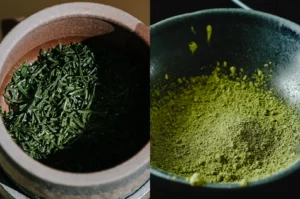
Sencha Green Tea vs. Matcha Powder: Understanding the Differences in Japanese Green Tea
Two tins of tea powder sit side by side on a shelf. Both hold a fine green powder. Both promise the taste of authentic Japanese tea. To the eye, they look almost identical, and that is precisely where the confusion begins. One is matcha powder, often used in matcha lattes and desserts. The other is…
-
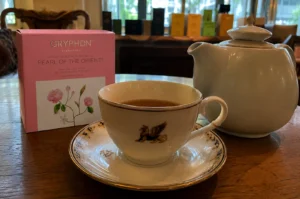
Discovering Gryphon Tea Company’s Earl Grey in Singapore
I recently tried the Earl Grey from Gryphon Tea Company Singapore, and I have to admit, it surprised me. Not because it was flawless-it wasn’t, but because it felt like a tea that knew exactly what it wanted to be. The aroma is the first thing that hits you. Bergamot is present but subtle, not…
-
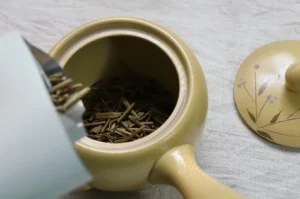
Hojicha: The Roasted Japanese Green Tea With A Mellow Twist
There is a moment, just after the hot water meets the hojicha tea leaves, when the kitchen fills with the aroma of something toasted. Not grassy. Not sharp. Warm, like roasted nuts or the edge of a freshly baked loaf. That moment is where hojicha begins. Hojicha (sometimes spelled houjicha) is a roasted green tea…
-
A Quiet Afternoon at Yixing Xuan Teahouse
I recently spent a quiet afternoon at Yixing Xuan Teahouse, a place that feels like a pause in the city. The moment you step inside, the world seems slower. The air carries the gentle aroma of steeped leaves, and the staff move with quiet precision. I chose an oolong, simple yet familiar. Watching the leaves…
-
The Controversial Smoky Tea That Divides Enthusiasts: Lapsang Souchong Black Tea
There is a tea that empties rooms and fills them in equal measure. Open a box of loose leaf lapsang souchong black tea, and someone nearby will lean in with delight while another quietly steps away. Few teas provoke such immediate, honest reactions. That divide is part of its story. This smoked lapsang souchong smells…