Picture a sticky afternoon in Singapore. The kind where the air sits heavy on your shoulders and the walk from the MRT feels longer than it should.
You reach for something cold. Maybe a teh peng from the drinks stall, ice clinking in a plastic cup. Maybe a bottle of green tea from the convenience store fridge.
And then, somewhere in the back of your mind, a small voice: Isn't tea a diuretic? Am I actually making myself more thirsty? This question about tea dehydrate effects often comes up when people are mindful of their caffeine consumption and staying hydrated.
I think many adults have heard this at some point. From a parent, a colleague, a passing comment online. It's one of those ideas that gets repeated so often it starts to feel like fact, especially when people are concerned about their health.
But what if the truth is gentler than the warning? Let's sit with the question properly.
Drinking Tea: Understanding Tea's Diuretic Properties and Hydration Benefits
Some teas can have natural diuretics properties due to caffeine ingestion. That part is true.
But the effect is usually small. In moderate amounts, even caffeinated tea is unlikely to dehydrate you, and it can still count toward your daily fluid intake alongside drinking water and other hydrating options like sparkling water or juice.
So the honest answer sits somewhere in the middle. Tea isn't a dehydration trap. It also isn't exactly the same as plain water in every situation. The details matter, and they're worth understanding.
What Gives Tea Its Diuretic Effect? Caffeine Compared to Other Drinks
The key ingredient here is caffeine.
Caffeine is a natural stimulant found in coffee, chocolate, energy drinks, soda, and many teas. It's one of the most common food and beverage ingredients in the world.
Once you drink it, caffeine moves from your gut into your bloodstream and then to your liver, where it's broken down into compounds that affect how your organs work. In your brain, that shows up as alertness. In your kidneys, it can show up as increased urine production, contributing to fluid loss.
Here's how it works. A diuretic is anything that causes your body to produce more urine. Caffeine can influence how the kidneys handle sodium and water, partly by blocking adenosine receptors and reducing sodium reabsorption. This can lead to a temporary increase in urine production, although the effect depends on the dose and the individual.
That's where the reputation comes from. More trips to the bathroom can feel like losing fluid. And in a city where we're often already sweating through our shirts, that worry makes sense.
But feeling like something is happening and it meaningfully affecting your fluid balance are two different things.
Different Teas, Different Effects: Regular Tea Versus Herbal Options
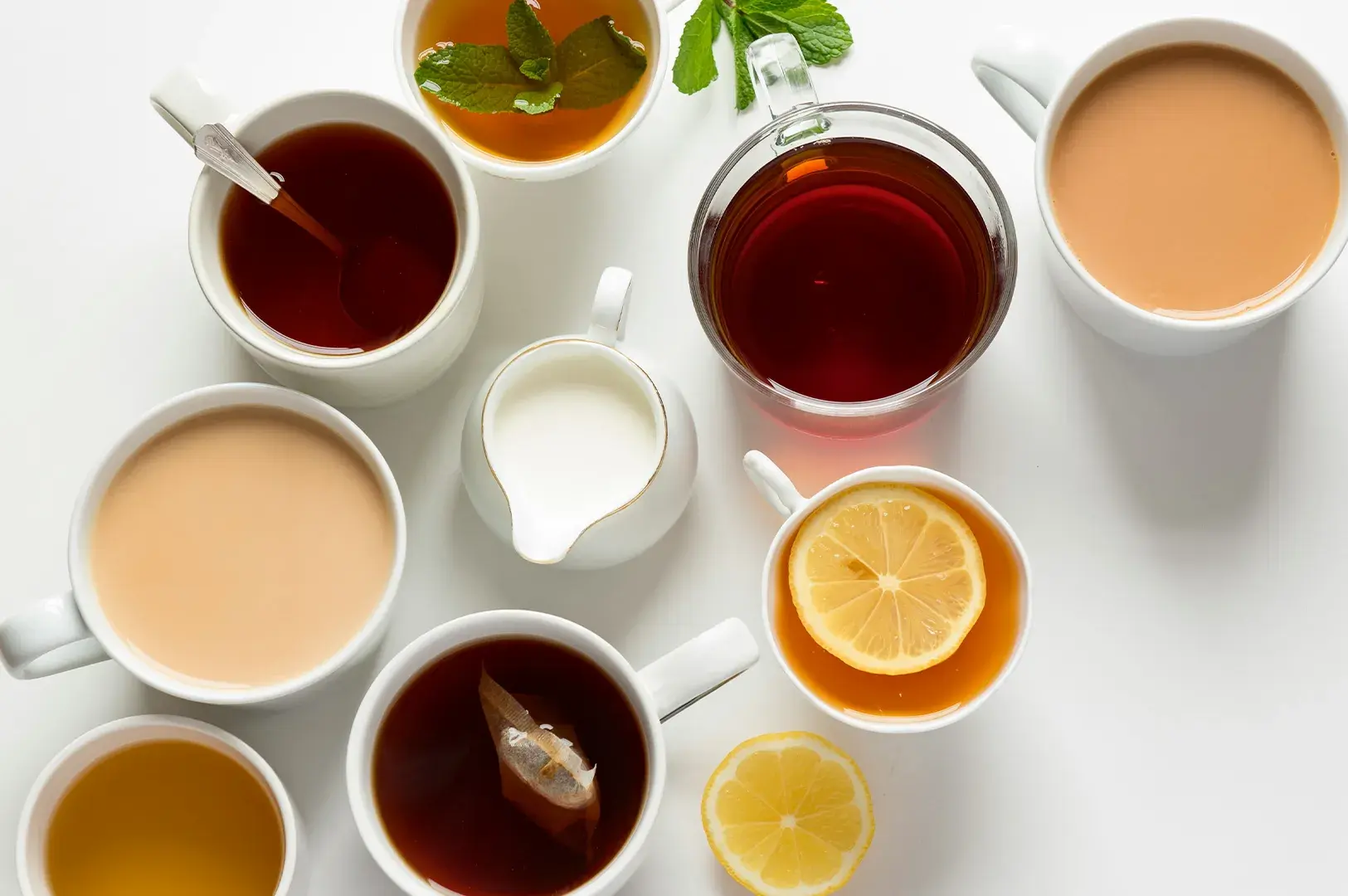
Not every cup carries the same amount of caffeine. This is where it helps to slow down and look at what's actually in your cup.
Black Tea, Green Tea, Oolong Tea, and White Tea
These are the "true" teas. Black tea, green tea, oolong tea, and white tea all come from the leaves of the Camellia sinensis plant, and they all contain caffeine.
Black, green, oolong and white teas all contain caffeine, but the amount that ends up in your cup varies with the leaves and brewing method. A typical cup may contain several dozen milligrams, although stronger preparations can contain considerably more. Tea colour or category alone is not a reliable way to predict caffeine content.
Black tea contains caffeine, but its amount varies by product and brewing method. Research suggests that moderate black tea consumption can provide hydration comparable to water
That said, caffeine content can vary from batch to batch. Some cups can reach as much as 120 mg. Brewing time matters too. The longer your tea steeps, the more caffeine it may contain.
For perspective, a cup of coffee of the same size usually has 102 to 200 mg of caffeine. Many adults who drinks coffee often experience higher caffeine ingestion compared to tea drinkers. An energy drink can have up to 160 mg. So regular tea is generally lighter than many other caffeinated beverages, even if it isn't caffeine free.
Herbal Options and Caffeine-Free Teas
Herbal teas are a different story.
Chamomile, peppermint, rosehip, and similar blends are made from the leaves, stems, flowers, seeds, roots, or fruits of various herbs. Because they don't use Camellia sinensis leaves, they're technically herbal infusions rather than tea.
Most herbal options are generally caffeine free and unlikely to have any dehydrating effect on your body. Rooibos tea, often sold as a naturally caffeine free option, falls into this broader herbal infusion family too.
If you love the ritual of a warm cup in the evening but want to skip caffeine, caffeine free teas like these are an easy, gentle choice.
The Exceptions Worth Knowing
Not every herbal-style drink is caffeine free, though.
Yerba mate, a traditional South American drink, contains about 85 mg of caffeine per cup on average. That's a bit more than a cup of tea, but less than coffee. Infusions made with guayusa, yaupon, guarana, or coffee leaves are also likely to contain caffeine.
So if a blend feels more energizing than you expected, it's worth checking the ingredients.
What About Decaf Tea?
Decaf tea has had most of its caffeine removed, though usually not all of it. For many people, it offers the familiar flavor of black or green tea with far less caffeine. If you're sensitive to caffeine, or simply drinking tea late in the day, decaf tea can be a comfortable middle ground.
How Much Tea Can You Drink? Safe Limits and Hydration Guidance

This is the part I find quietly reassuring.
Higher doses of caffeine can increase urine production, but there is no single threshold at which tea suddenly becomes dehydrating. Research suggests that moderate caffeine consumption usually has only a small effect on fluid balance, particularly among regular caffeine consumers.
Most of us aren't drinking that much in one go.
Researchers have looked at this closely. In one small study, 21 healthy men drank either 4 or 6 cups of black tea, or the same amount of boiled water, over 12 hours. There was no difference in urine production or hydration levels between the two. The researchers concluded that black tea seems to be as hydrating as water when you drink up to 6 cups a day.
Another study followed 50 heavy coffee drinkers who had either 800 ml of coffee or the same amount of water daily for three days. Again, no difference in hydration markers.
A meta-analysis of 16 studies, involving caffeine doses with a median of 300 mg, found an average increase in urine production of approximately 109 ml compared with non-caffeinated conditions. The effect was more noticeable at rest and smaller during exercise.
That's a mild diuretic effect. At typical tea-drinking levels, the fluid consumed generally outweighs the small increase in urine production associated with caffeine.
Interestingly, the effect may be even smaller in men and in people who regularly consume caffeine.
Does Tea Dehydrate or Tea Hydrate? Counting Tea Toward Your Water Intake
Yes. In moderate amounts, tea can count toward your daily fluid intake.
I think this is where the old warning starts to soften. Tea is mostly water, after all. When you drink a reasonable amount, the fluid you take in outweighs the small extra amount your kidneys might release.
So does tea hydrate you? For the average person drinking normal amounts, the answer leans toward yes. Tea can be an interesting alternative to plain water when it comes to reaching your daily fluid needs, especially if you want more flavor without added sugar or the sodium found in soda.
But here's a soft counterpoint. Just because tea counts doesn't mean it has to replace water entirely. Maybe the better way to think about it is variety. Water as the steady base. Tea as a preferred source of hydration benefits, flavor, and a little ritual to the day.
Practical Hydration Guidance for Tea Lovers with Overactive Bladder or Blood Pressure Concerns
None of this needs to feel like a rulebook. Still, a few gentle considerations might help.
Pay attention to how much you drink at once. Drinking less than about 3.5 to 8 cups of tea in one sitting is unlikely to dehydrate you. Spreading your cups across the day is a simple way to stay well within that range.
Notice your brewing habits. Longer steeping can mean more caffeine. If you tend to leave your tea bag in for ages, you might be getting a stronger cup than you realize.
Know what's in your blend. Herbal teas are generally caffeine free, but blends with yerba mate, guarana, or similar ingredients aren't. A quick look at the label can save you a restless evening.
Keep drinking water in the picture. Especially on hot days or after exercise, plain water is still a simple, reliable way to support adequate hydration. Tea can sit alongside it. Sparkling water or juice with electrolytes can also be good choices.
Listen to your body. If caffeine makes you feel jittery, affects your blood pressure, or sends you to the bathroom often due to an overactive bladder, switching some cups to decaf tea or caffeine free herbal options might feel better.
Mind added sugar and milk. Some people add sugar or milk to their tea. While these can enhance flavor, be mindful of how much sugar or sodium you consume overall.
FAQ: Common Questions About Tea and Hydration
Is green tea a diuretic?
Green tea contains caffeine, so it can have a mild diuretic effect. In moderate amounts, though, it's unlikely to dehydrate you and can still contribute to your fluid intake.
Is black tea more dehydrating than other teas?
Black and oolong tea tend to contain slightly more caffeine than other true teas. But research suggests black tea is as hydrating as water at up to 6 cups a day.
Do herbal teas count as hydrating?
Most herbal teas, like chamomile and peppermint, are generally caffeine free and considered hydrating. Just watch for blends containing caffeinated ingredients.
How much tea is too much for hydration?
Very high caffeine intakes can increase urine production, but the effect depends on the amount of caffeine rather than a fixed number of tea cups. Moderate tea consumption generally contributes to hydration.
Is coffee more of a diuretic than tea?
Coffee usually contains more caffeine per cup than tea. Even so, studies suggest moderate coffee drinking doesn't affect hydration markers much either.
A Gentler Way to Think About Your Cup
It's funny how a single word like "diuretic" can make us second-guess something so ordinary.
A cup of tea after lunch. A cold glass on a humid afternoon. A warm mug of chamomile before bed.
The science suggests that, for most of us, these moments aren't working against our bodies. Tea has a mild diuretic effect, yes. But in normal amounts, it still hydrates, still counts, still belongs in the day.
Maybe the real question was never is tea a diuretic? Maybe it's how do I want to drink it? With a little attention. With water close by. With enough curiosity to notice what's in the cup.
So pour your next one without the worry. Just notice it a little more.

A Table Set for Stillness: Inside Antea Social’s Quiet Tea Ritual
Luxury usually announces itself before we have time to question it. It arrives through marble lobbies, silver stands and tiny sandwiches placed in strict formation. Antea Social offers a quieter argument. This is not afternoon tea in the familiar hotel sense. There is no grand procession of pastries or waiter lifting a polished lid. Instead,…
-
9 High Tea in Orchard Places for Scones, Tea, and a Quiet Afternoon
There is a particular kind of tiredness that comes from Orchard Road. Not the tiredness of a hard day, but the softer sort, the ache of too many shopfronts, too much bright glass, too many people moving faster than you feel like moving. And somewhere in the middle of all that, if you know where…
-
High Tea Orchard: Why the City Still Does It Best
It is easy to dismiss high tea in Orchard as an expensive pause between shopping bags. The tiered stands are photogenic, the hotel lounges polished, and the prices increasingly difficult to defend. ome scones arrive dry. Some savouries feel like banquet food made miniature. Some desserts are designed more for cameras than appetite. Still, Orchard…
-
McDonald’s Queensway Ridout Tea Garden Review: What It Is Like Dining in a Heritage Setting
I did not expect to find quiet at a McDonald’s Queensway Ridout Tea Garden outlet. But there I was, standing outside the McDonald’s outlet at 580 Queensway, listening to the water instead of the traffic. A much loved pond sat just beyond the glass, surrounded by stone lanterns and trees leaning over it. Somewhere behind…
-
Understanding Tea Beyond the Cup
Tea is deceptively simple. A cup of hot water and leaves. And yet, it carries centuries of culture, craftsmanship, and subtlety that many of us may overlook. As tea lovers, we often focus on taste, aroma, or ritual, but there is more beneath the surface. Take the leaves themselves. Different cultivars, growing regions, and harvest…
-
Clifford Pier High Tea Review: Local Flavours by the Waterfront
I went looking for a building that no longer serves tea. The Clifford Pier still stands where it always has, at the edge of Marina Bay, its old timber trusses arching overhead like the ribs of something patient. But when I arrived, hoping to relive a Heritage Afternoon Tea I’d taken there years ago, I…
-
The Quiet Lessons a Cup of Tea Can Teach
I have often found that the simplest cup of tea carries the most subtle lessons. Not every tea moment is dramatic, ceremonial, or picturesque. Some are ordinary, even fleeting, yet they manage to teach something quietly about patience, observation, and care. Take the leaves themselves. Watching them unfurl in hot water is a small, deliberate…
-
A Journey Through Popular Bubble Tea Brands and Shops: Bubble Tea Singapore
The first time I really tasted bubble tea, I mean actually tasted it, I was standing outside a shoppers mall in the rain, waiting for a friend who was late. I had ordered something on autopilot from one of the many bubble tea shops in Singapore. But that day, without distraction, I noticed the tea…
-
Tea in a World That Never Pauses
Scrolling through my feed this morning, I realized something. We live in a world that barely stops. Notifications pile up. Videos play automatically. Messages arrive faster than we can read them. Every surface seems to demand attention. And then there is tea. A cup of tea does not ping. It does not scroll. It does…
-
From Plantation to Cup: The Journey of Sri Lanka’s Black Tea Pekoe
Black tea pekoe is all about whole-leaf black tea made from those long leaves and buds, usually the youngest ones right near the shoot tips. And when you hear Orange Pekoe, it’s not about orange flavor at all; it’s actually the name of that grade. For tea lovers or anyone curious about quality Sri Lankan…