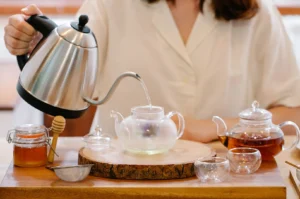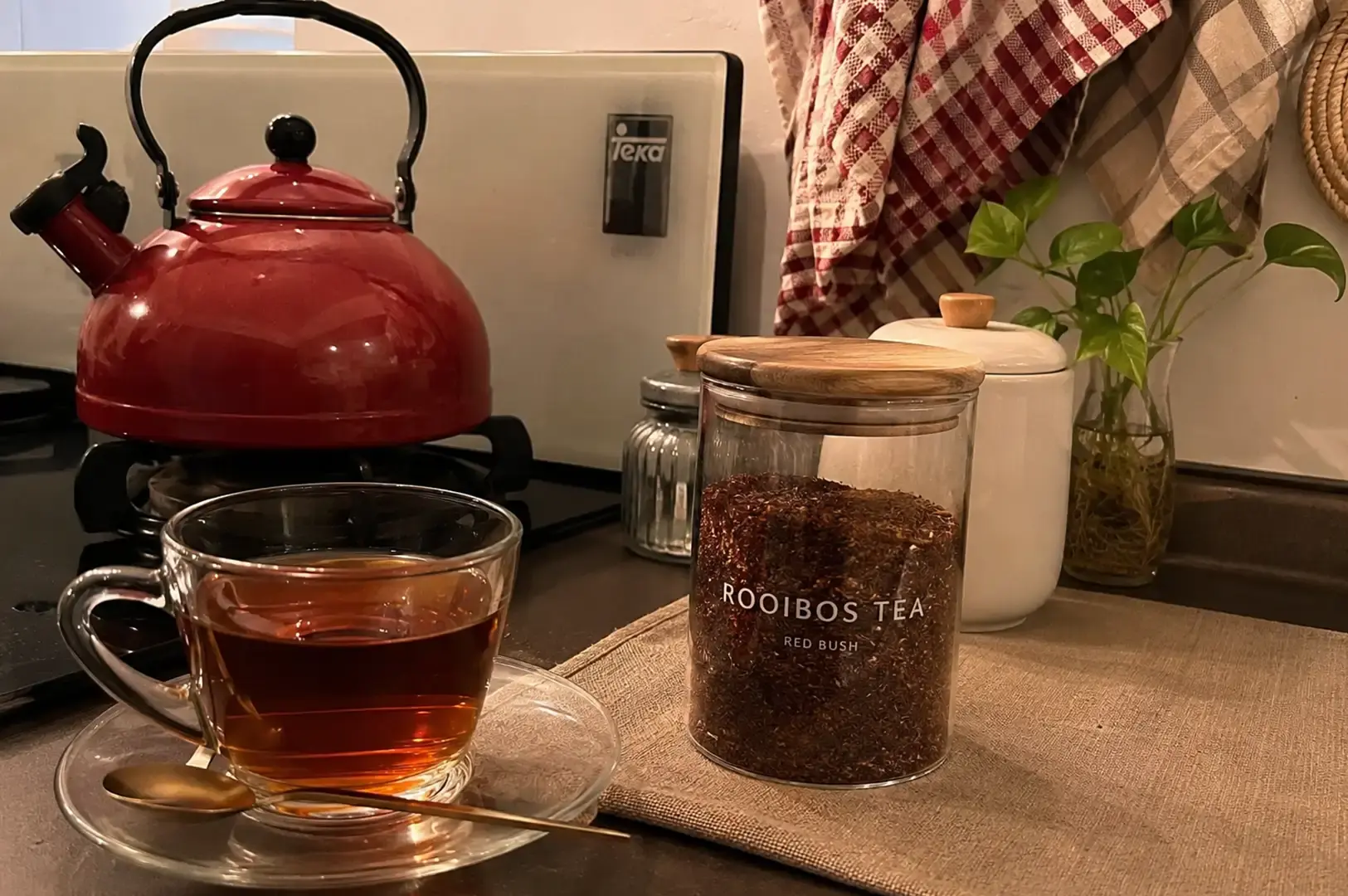
There is a red pot in my mother's kitchen that only comes out in the evening.
By then the coffee has done its work and gone quiet. The day has loosened. She fills the kettle, drops in a spoonful of something the colour of dried autumn, and lets it sit while she tidies the last of the dishes. The kitchen fills slowly with a soft, sweetish aroma, warm and a little woody.
That drink was rooibos, also referred to as red bush tea: a naturally caffeine free herbal tea made from the leaves of Aspalathus linearis, a South African plant native to the Cederberg region of South Africa, brewed into a deep reddish brown cup with a sweet, slightly nutty flavour.
For tea lovers looking for a healthy, flavourful alternative to black or green tea, and for anyone curious about South African tea culture and herbal infusions, rooibos offers both comfort and character.
What Red Bush Tea Actually Is: Discovering the Rooibos Plant

Rooibos comes from a fine, needle like leaves shrub that grows exclusively in the Cederberg region of South Africa. The plant is adorned with small yellow flowers and thrives in the mineral-rich, sandy soil of this unique ecosystem.
At harvest, the leaf and stems are cut, then oxidised for red rooibos to create the distinctive reddish brown colour and deepen the rooibos tea taste; historically, in 1904, Benjamin Ginsberg cured rooibos using fermentation techniques. This infusion is rich in antioxidants and vitamin C, making it a healthy and beneficial beverage choice.
Unlike traditional rooibos, green rooibos tea is crafted by halting oxidation early, preserving the green colour and producing a lighter, grassier flavour akin to green tea. Both types offer a unique taste that tea lovers appreciate, whether consumed hot or as iced tea.
Why We Still Call It Tea: The Tradition and Popularity of Red Tea
Though rooibos is technically an herbal tea and not derived from the tea plant Camellia sinensis like black tea, green tea, or white tea, it is brewed and enjoyed like tea in countless homes.
The popularity of rooibos, or red tea, has grown beyond South Africa to the world stage, where its sweet, nutty flavour and caffeine free profile provide a refreshing alternative to traditional teas. It is often consumed with milk and sugar, enhancing its rich aroma and flavour.
The South African Heritage of Rooibos: Growing Rooibos in the Cederberg Region

The Cederberg region is the only place in the world that produces rooibos, making it a treasured South African plant. Growing rooibos requires specific conditions, sandy, acidic soil and a climate with hot summers and cool winters, which preserve the quality and nutrients of the plant.
The rooibos bush has been harvested and consumed for centuries in Southern Africa, where it is a symbol of tradition and hospitality. The plant’s needle-like leaves and yellow flowers are iconic features of this unique tea. Indigenous Khoisan people of the region have long harvested rooibos, using traditional methods that reflect a deep connection to the land. Rooibos tea is a national drink in South Africa and is often brewed in large pots for sharing, symbolizing warm hospitality in social settings.
This breakthrough enabled farmers to cultivate rooibos on a larger scale, ensuring its availability beyond wild harvesting. Today, rooibos production remains exclusive to the Cederberg region, maintaining its unique terroir and quality.
The plant thrives in its natural ecosystem, part of the Cape Floristic Region's fynbos biome, which supports a diverse array of endemic flora and fauna. Sustainable farming practices are essential to protect this delicate environment while supporting the rooibos industry, which plays a vital role in the local economy and culture.
The Flavour and Character of Rooibos Tea Taste: A Rich and Sweet Aroma
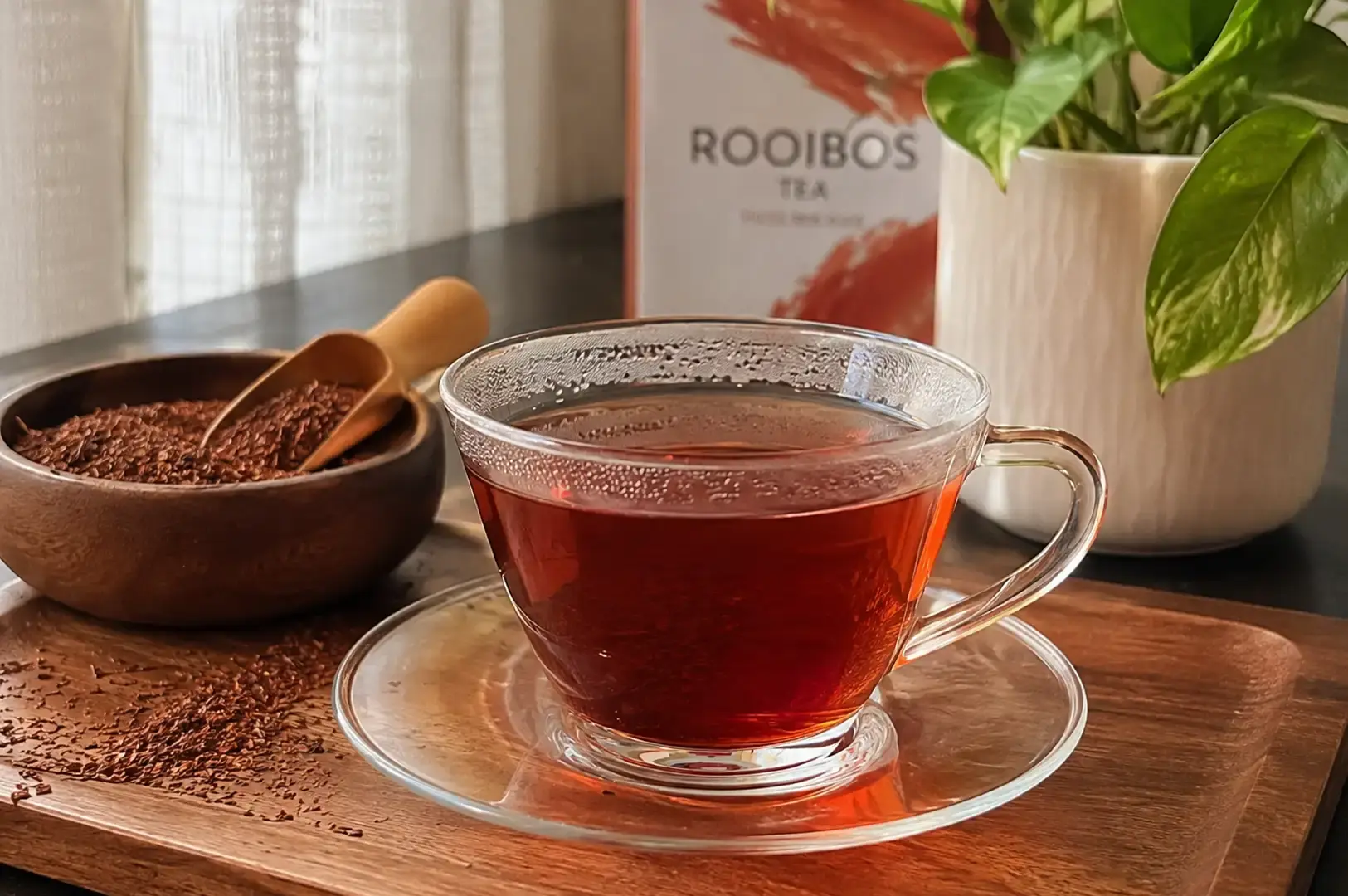
Rooibos tea has this naturally sweet and nutty taste that’s really comforting, with earthy undertones and subtle hints of honey and spices that can vary depending on the blend you choose. Its beautiful reddish-brown color makes it look just as inviting as it tastes.
What’s really great about rooibos is that, unlike black or Chinese teas like Ceylon, it doesn’t turn bitter no matter how long you steep it. That means you can enjoy a smooth, rich flavor from start to finish without worrying about bitterness creeping in. Plus, it’s caffeine-free, packed with antioxidants and minerals, making it a delicious and healthy choice any time of day.
If you’re used to traditional teas, rooibos offers a refreshing change, it’s gentle on the palate but full of character. And because it’s naturally low in tannins, it’s easier on your iron absorption compared to black tea. So, whether you’re sipping it hot on a cozy evening or iced on a warm afternoon, rooibos brings a unique flavor and wellness boost that’s hard to beat.
Red and Green Rooibos: Two Moods of a South African Plant
Traditional rooibos, oxidised fully, produces the classic red bush tea with its warm, sweet flavour. Green rooibos, by contrast, preserves the leaf’s green colour and delivers a lighter, more refreshing taste reminiscent of green tea or white tea.
Both varieties are made to keep the plant’s nutrients and vitamins intact, giving tea lovers the choice between a rich, comforting brew and a bright, refreshing cup. The oxidation process in traditional rooibos is a lot like the fermentation used in Ceylon and Chinese teas, which helps bring out the tea’s flavor and color. Plus, rooibos leaves naturally ferment, developing that signature reddish-brown color and deep aroma.
Rooibos is grown only in South Africa’s Cederberg region, where the special climate and soil really shape its unique character. The seeds need a bit of special treatment, scarification, before they can be planted in the sandy, acidic soil. This technique, developed through early 20th-century farming research, helps make sure the plants grow strong. Thanks to this careful cultivation, rooibos stands out for its consistent quality and health benefits, setting it apart from other herbal teas around the world.
Why Caffeine-Free Does Not Mean Less Interesting: The Benefits of Rooibos
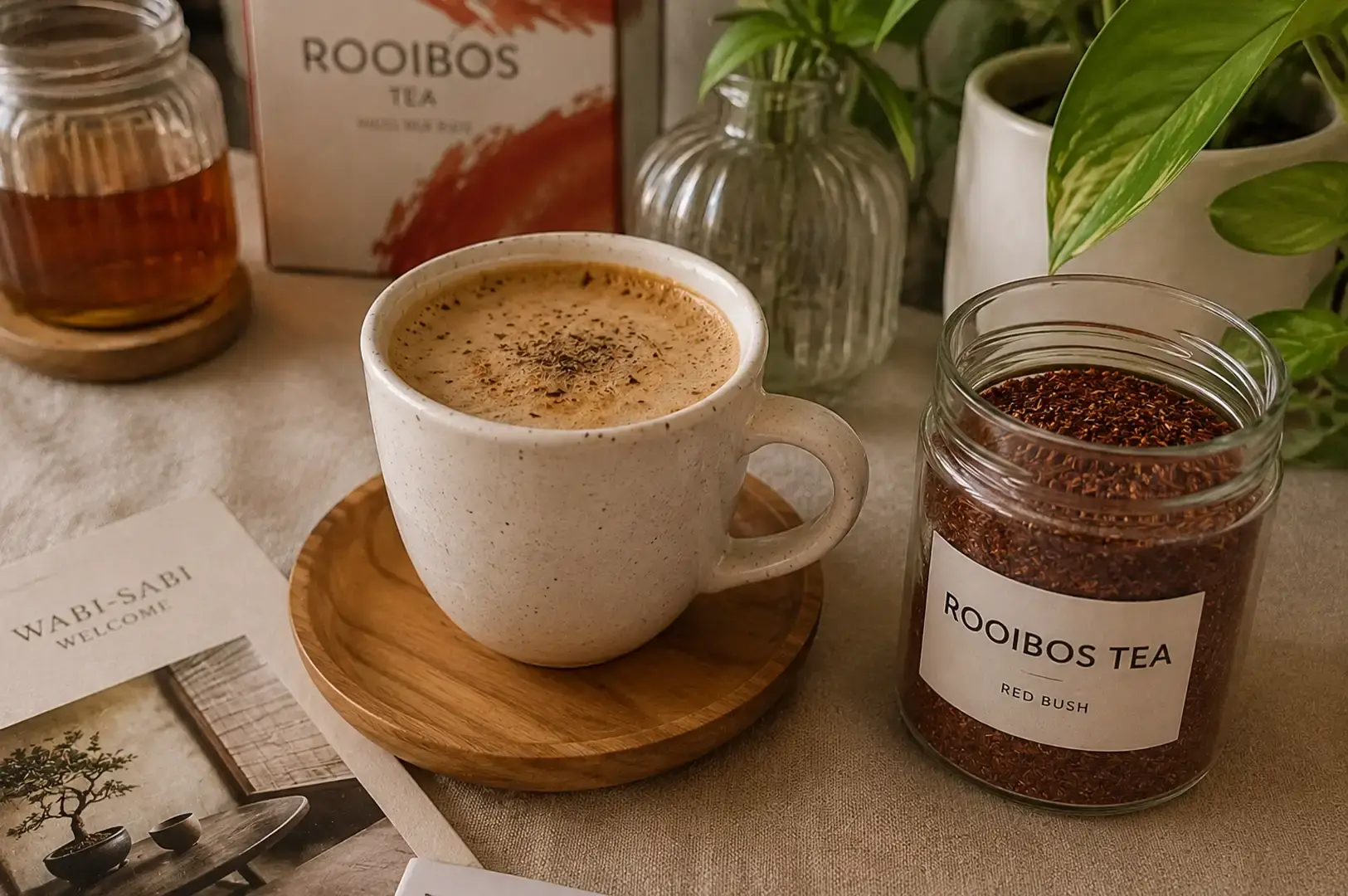
Rooibos is naturally caffeine free, which makes it a fantastic choice if you’re looking for a healthy, low-calorie drink without the buzz you get from black or green tea. It’s packed with antioxidants and vitamins that are great for your health.
Many people enjoy rooibos in the evening to wind down, or as a refreshing iced tea when it’s warm outside. Its sweet, nutty flavor and rich aroma make it a comforting alternative for tea lovers who want to enjoy a tasty cup without messing up their sleep. Plus, because it’s low in tannins, it won’t interfere with your body’s iron absorption like black tea can.
What’s really cool about rooibos is that it contains unique antioxidants like aspalathin and nothofagin. These might help keep your blood sugar steady and support heart health by improving cholesterol and lowering blood pressure. And with less than 4 calories per cup and almost no oxalic acid, it’s a gentle, healthy choice that fits well with many diets.
If you’re a coffee fan who wants to cut back on caffeine, rooibos can be brewed stronger to make red espresso, a caffeine-free coffee alternative that you can enjoy as a latte or cappuccino. This versatility is part of what makes rooibos such a beloved herbal tea, blending South African tradition with modern tea culture in a way that’s easy to love.
How Rooibos Fits Into Modern Tea Culture: Blends and Brewing
Rooibos tea is versatile and can be brewed like traditional tea, using about one teaspoon of rooibos leaves per cup of boiling water. It can be enjoyed plain or enhanced with milk, honey, sugar, or warming spices to create delicious blends.
Its natural sweetness and distinctive colour make it a popular choice for iced tea, preserving its refreshing qualities. Tea lovers around the world have embraced rooibos, appreciating its unique taste and cultural heritage.
Why Its Quietness Is the Point: The Essence of Red Bush Tea
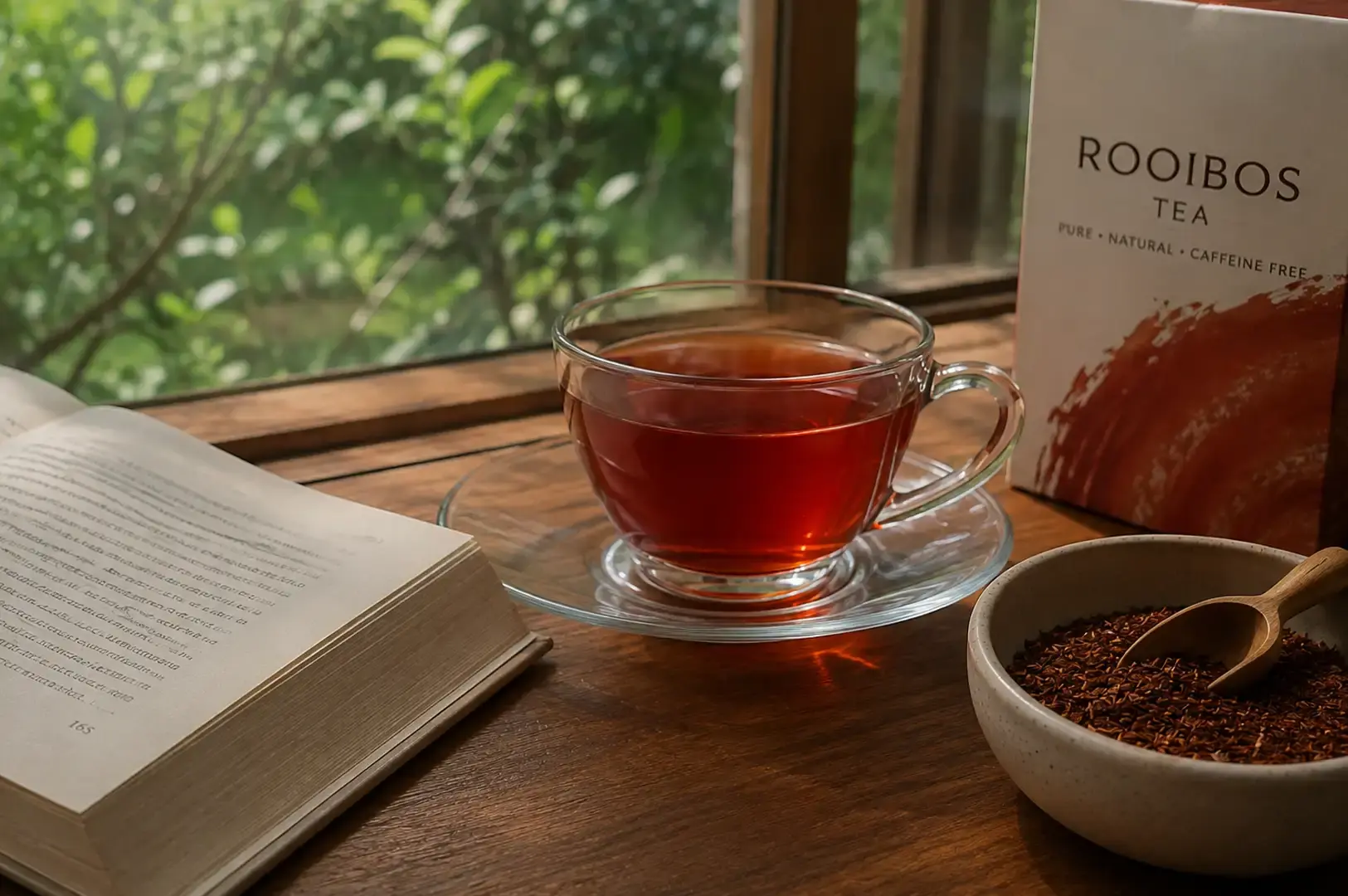
Rooibos tea, with its rich history in South Africa and distinctive flavour, does not shout for attention. It quietly enhances moments of relaxation and tradition with its bright colour, sweet aroma, and smooth taste.
For centuries, this South African plant has been crafted into a beverage that preserves the essence of its place of origin and invites tea lovers everywhere to discover the calm and comfort it offers in every cup.
If you have only ever known rooibos as a caffeine-free afterthought, I invite you to brew a pot with care. Watch the colour deepen, notice the sweet and nutty aroma, and savour the unique taste of red bush tea, a beverage truly crafted by nature and tradition.

Cold Brew Tea Isn’t Lazy, Hot Purists Just Don’t Like Being Wrong
I used to think cold brew tea was cheating. Not seriously, of course. But there was something about it that felt almost too easy. No kettle. No worrying about water temperature. No watching the clock while the leaves steep. Just tea, cold water, and a little patience. It seemed suspiciously effortless. Then I actually started…
-
A Taste of Taiwan in Every Pour: Yi Fang Taiwan Fruit Tea
There are drinks that catch your eye before you even take a sip. A tall cup, fruit pressed gently against the plastic, tea glowing amber underneath. Something about it feels right for a warm afternoon. Light. A little cheerful. Easy to carry. But if you slow down for a moment, some of those cups have…
-
Your Tea Isn’t Bitter—You’re Overbrewing It (And It’s Not Your Fault)
There is a particular disappointment that comes from making a cup of tea that tastes bitter. You choose the leaves carefully. You heat the water. You wait. Then the first sip arrives, and something feels wrong. For a long time, I assumed bitterness meant the tea itself was not very good. Perhaps the leaves were…
-
When Tea Meets Tropical: 5 Fruit Teas in Singapore to Try
There’s a specific kind of Singapore afternoon. The air feels thick, your shirt clings a little, and every mall entrance feels like a reward. On days like that, I don’t want anything heavy. I want something cold, bright, and full of fruit, but still recognizably tea. That’s where fruit teas come in. In Singapore, they’ve…
-
Temperature Rules Are Overblown: The Real Brewing Variable Nobody Mentions
I used to think making tea required a thermometer. Not literally, perhaps, but almost. Every tea seemed to have a number attached to it. Green tea at this temperature. Oolong at another. Black tea a little hotter. Too hot and you had apparently ruined everything. For a while, I took these rules quite seriously. Then…
-
Afternoon Tea at Prada Caffè ION Orchard: A Green Room, a Pale-Blue Cup
Afternoon tea has always been about the pause for me. Not the tiers or the silverware. Just the moment when the cup is set down, the steam rises, and everything outside seems to slow a little. So I wondered what a pause would feel like inside a fashion house. One floor above Orchard Road, past…
-
A Love Letter to Oolong: The In-Between That Changed My Mind
I did not understand oolong when I first encountered it. It seemed unnecessarily complicated. Green tea was green tea. Black tea was black tea. I understood where they stood. Oolong seemed determined to remain somewhere in between. Perhaps that was what initially kept me from appreciating it. Over time, however, I began to realise that…
-
Tea from Assam: The Geography, Craft, and Character Behind the Brew
The colour arrives first. A deep amber that darkens towards red as the tea leaves give up their strength. Then comes the aroma. It is warm and rounded, often compared to malt or the crust of fresh bread. The first sip has weight. It fills the mouth with a rich body and leaves a slight,…
-
Why “No Bitterness” Is a Terrible Goal (And Makes Tea Boring)
I used to think a good tea was supposed to be smooth. No bitterness. No sharp edges. Nothing that made me pause and wonder whether I was doing something wrong. It seemed logical. We naturally gravitate toward things that are easy to enjoy. A tea that is sweet, gentle, and immediately comforting feels like a…
-
Best Tea Brands Singapore: 10 Names Worth Knowing
There’s a small sound I’ve always liked. It’s the soft knock of a teapot lid settling back into place, just before the first pour. It happens at home. It happens in old shophouses and in bright mall boutiques like those in Suntec City. The setting changes, but the pause stays the same. This list is…