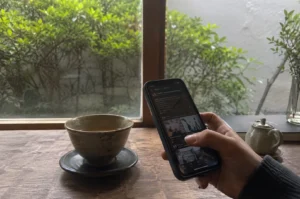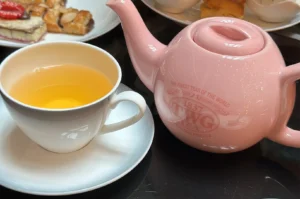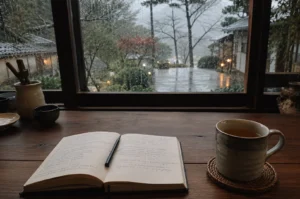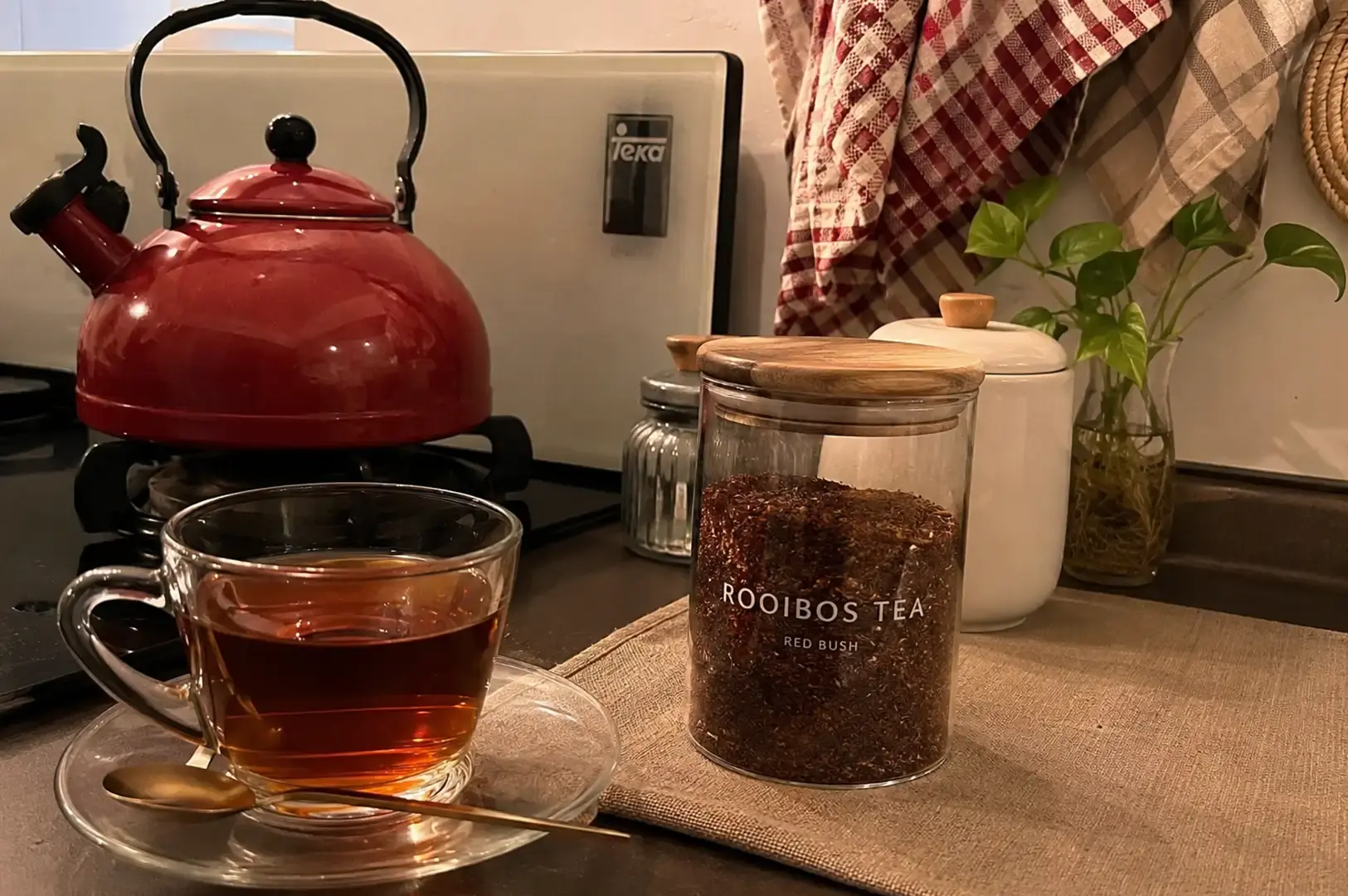
There is a red pot in my mother's kitchen that only comes out in the evening.
By then the coffee has done its work and gone quiet. The day has loosened. She fills the kettle, drops in a spoonful of something the colour of dried autumn, and lets it sit while she tidies the last of the dishes. The kitchen fills slowly with a soft, sweetish aroma, warm and a little woody.
That drink was rooibos, also referred to as red bush tea: a naturally caffeine free herbal tea made from the leaves of Aspalathus linearis, a South African plant native to the Cederberg region of South Africa, brewed into a deep reddish brown cup with a sweet, slightly nutty flavour.
For tea lovers looking for a healthy, flavourful alternative to black or green tea, and for anyone curious about South African tea culture and herbal infusions, rooibos offers both comfort and character.
What Red Bush Tea Actually Is: Discovering the Rooibos Plant

Rooibos comes from a fine, needle like leaves shrub that grows exclusively in the Cederberg region of South Africa. The plant is adorned with small yellow flowers and thrives in the mineral-rich, sandy soil of this unique ecosystem.
At harvest, the leaf and stems are cut, then oxidised for red rooibos to create the distinctive reddish brown colour and deepen the rooibos tea taste; historically, in 1904, Benjamin Ginsberg cured rooibos using fermentation techniques. This infusion is rich in antioxidants and vitamin C, making it a healthy and beneficial beverage choice.
Unlike traditional rooibos, green rooibos tea is crafted by halting oxidation early, preserving the green colour and producing a lighter, grassier flavour akin to green tea. Both types offer a unique taste that tea lovers appreciate, whether consumed hot or as iced tea.
Why We Still Call It Tea: The Tradition and Popularity of Red Tea
Though rooibos is technically an herbal tea and not derived from the tea plant Camellia sinensis like black tea, green tea, or white tea, it is brewed and enjoyed like tea in countless homes.
The popularity of rooibos, or red tea, has grown beyond South Africa to the world stage, where its sweet, nutty flavour and caffeine free profile provide a refreshing alternative to traditional teas. It is often consumed with milk and sugar, enhancing its rich aroma and flavour.
The South African Heritage of Rooibos: Growing Rooibos in the Cederberg Region

The Cederberg region is the only place in the world that produces rooibos, making it a treasured South African plant. Growing rooibos requires specific conditions, sandy, acidic soil and a climate with hot summers and cool winters, which preserve the quality and nutrients of the plant.
The rooibos bush has been harvested and consumed for centuries in Southern Africa, where it is a symbol of tradition and hospitality. The plant’s needle-like leaves and yellow flowers are iconic features of this unique tea. Indigenous Khoisan people of the region have long harvested rooibos, using traditional methods that reflect a deep connection to the land. Rooibos tea is a national drink in South Africa and is often brewed in large pots for sharing, symbolizing warm hospitality in social settings.
This breakthrough enabled farmers to cultivate rooibos on a larger scale, ensuring its availability beyond wild harvesting. Today, rooibos production remains exclusive to the Cederberg region, maintaining its unique terroir and quality.
The plant thrives in its natural ecosystem, part of the Cape Floristic Region's fynbos biome, which supports a diverse array of endemic flora and fauna. Sustainable farming practices are essential to protect this delicate environment while supporting the rooibos industry, which plays a vital role in the local economy and culture.
The Flavour and Character of Rooibos Tea Taste: A Rich and Sweet Aroma
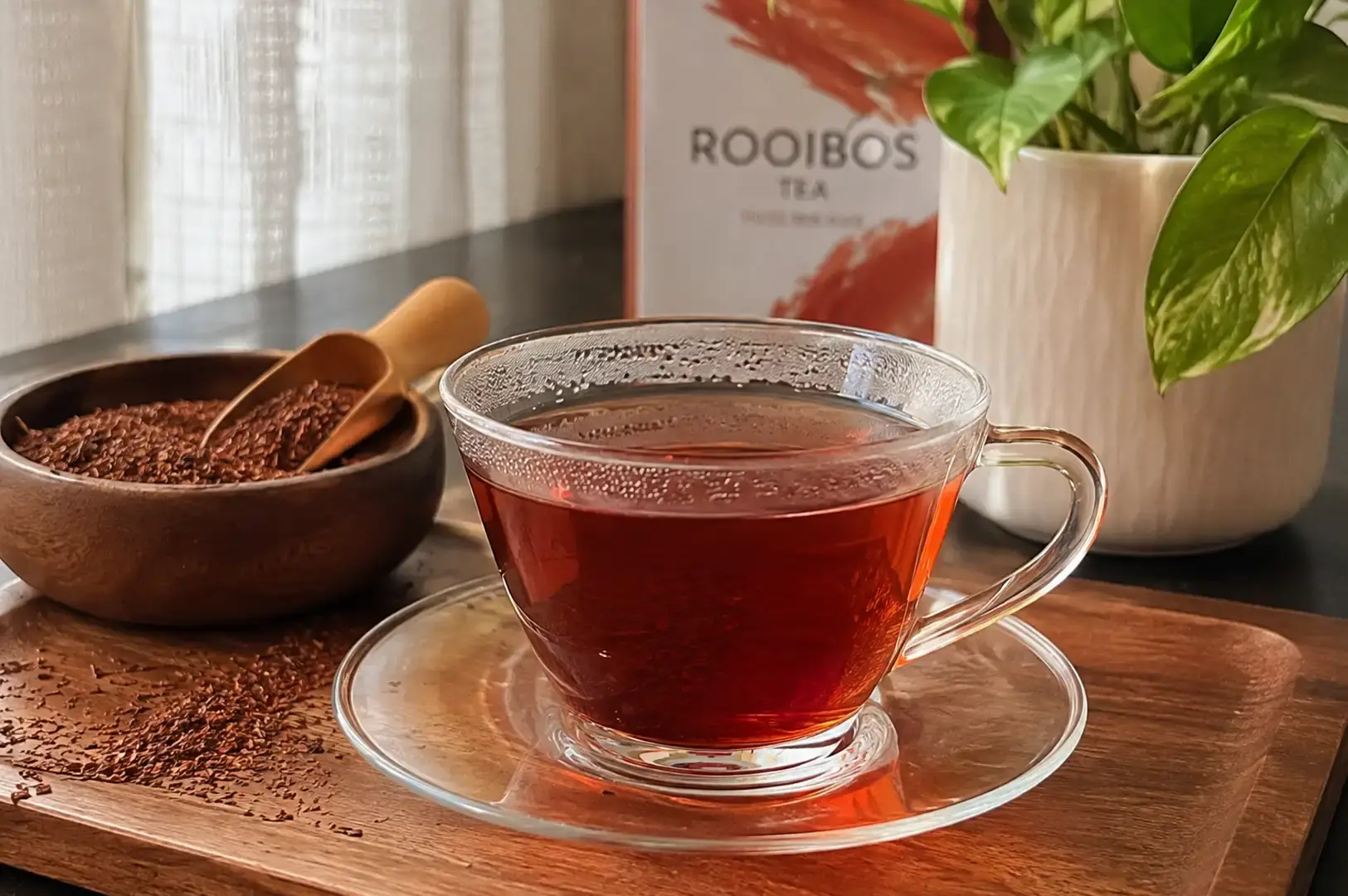
Rooibos tea has this naturally sweet and nutty taste that’s really comforting, with earthy undertones and subtle hints of honey and spices that can vary depending on the blend you choose. Its beautiful reddish-brown color makes it look just as inviting as it tastes.
What’s really great about rooibos is that, unlike black or Chinese teas like Ceylon, it doesn’t turn bitter no matter how long you steep it. That means you can enjoy a smooth, rich flavor from start to finish without worrying about bitterness creeping in. Plus, it’s caffeine-free, packed with antioxidants and minerals, making it a delicious and healthy choice any time of day.
If you’re used to traditional teas, rooibos offers a refreshing change, it’s gentle on the palate but full of character. And because it’s naturally low in tannins, it’s easier on your iron absorption compared to black tea. So, whether you’re sipping it hot on a cozy evening or iced on a warm afternoon, rooibos brings a unique flavor and wellness boost that’s hard to beat.
Red and Green Rooibos: Two Moods of a South African Plant
Traditional rooibos, oxidised fully, produces the classic red bush tea with its warm, sweet flavour. Green rooibos, by contrast, preserves the leaf’s green colour and delivers a lighter, more refreshing taste reminiscent of green tea or white tea.
Both varieties are made to keep the plant’s nutrients and vitamins intact, giving tea lovers the choice between a rich, comforting brew and a bright, refreshing cup. The oxidation process in traditional rooibos is a lot like the fermentation used in Ceylon and Chinese teas, which helps bring out the tea’s flavor and color. Plus, rooibos leaves naturally ferment, developing that signature reddish-brown color and deep aroma.
Rooibos is grown only in South Africa’s Cederberg region, where the special climate and soil really shape its unique character. The seeds need a bit of special treatment, scarification, before they can be planted in the sandy, acidic soil. This technique, developed through early 20th-century farming research, helps make sure the plants grow strong. Thanks to this careful cultivation, rooibos stands out for its consistent quality and health benefits, setting it apart from other herbal teas around the world.
Why Caffeine-Free Does Not Mean Less Interesting: The Benefits of Rooibos
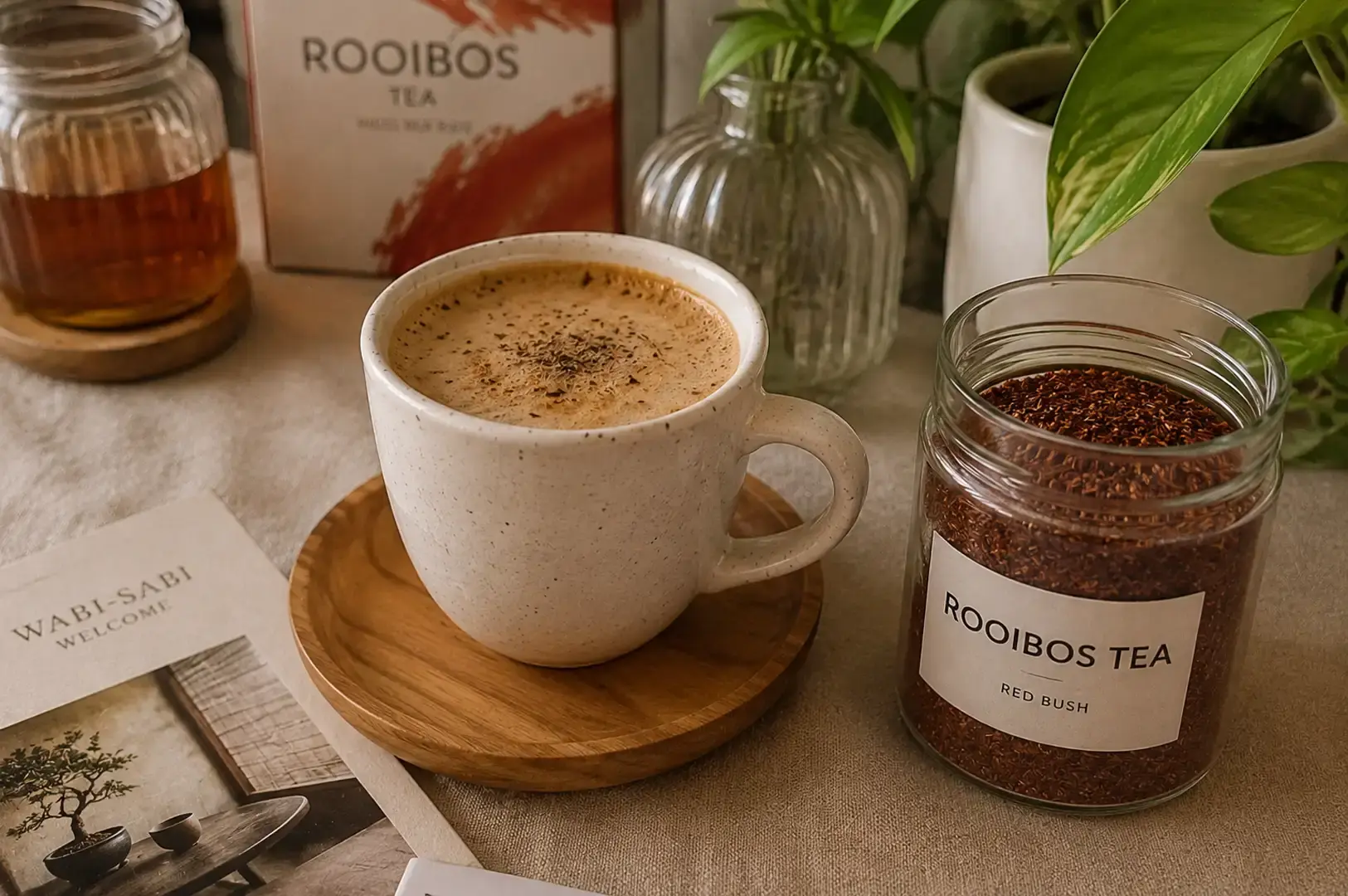
Rooibos is naturally caffeine free, which makes it a fantastic choice if you’re looking for a healthy, low-calorie drink without the buzz you get from black or green tea. It’s packed with antioxidants and vitamins that are great for your health.
Many people enjoy rooibos in the evening to wind down, or as a refreshing iced tea when it’s warm outside. Its sweet, nutty flavor and rich aroma make it a comforting alternative for tea lovers who want to enjoy a tasty cup without messing up their sleep. Plus, because it’s low in tannins, it won’t interfere with your body’s iron absorption like black tea can.
What’s really cool about rooibos is that it contains unique antioxidants like aspalathin and nothofagin. These might help keep your blood sugar steady and support heart health by improving cholesterol and lowering blood pressure. And with less than 4 calories per cup and almost no oxalic acid, it’s a gentle, healthy choice that fits well with many diets.
If you’re a coffee fan who wants to cut back on caffeine, rooibos can be brewed stronger to make red espresso, a caffeine-free coffee alternative that you can enjoy as a latte or cappuccino. This versatility is part of what makes rooibos such a beloved herbal tea, blending South African tradition with modern tea culture in a way that’s easy to love.
How Rooibos Fits Into Modern Tea Culture: Blends and Brewing
Rooibos tea is versatile and can be brewed like traditional tea, using about one teaspoon of rooibos leaves per cup of boiling water. It can be enjoyed plain or enhanced with milk, honey, sugar, or warming spices to create delicious blends.
Its natural sweetness and distinctive colour make it a popular choice for iced tea, preserving its refreshing qualities. Tea lovers around the world have embraced rooibos, appreciating its unique taste and cultural heritage.
Why Its Quietness Is the Point: The Essence of Red Bush Tea
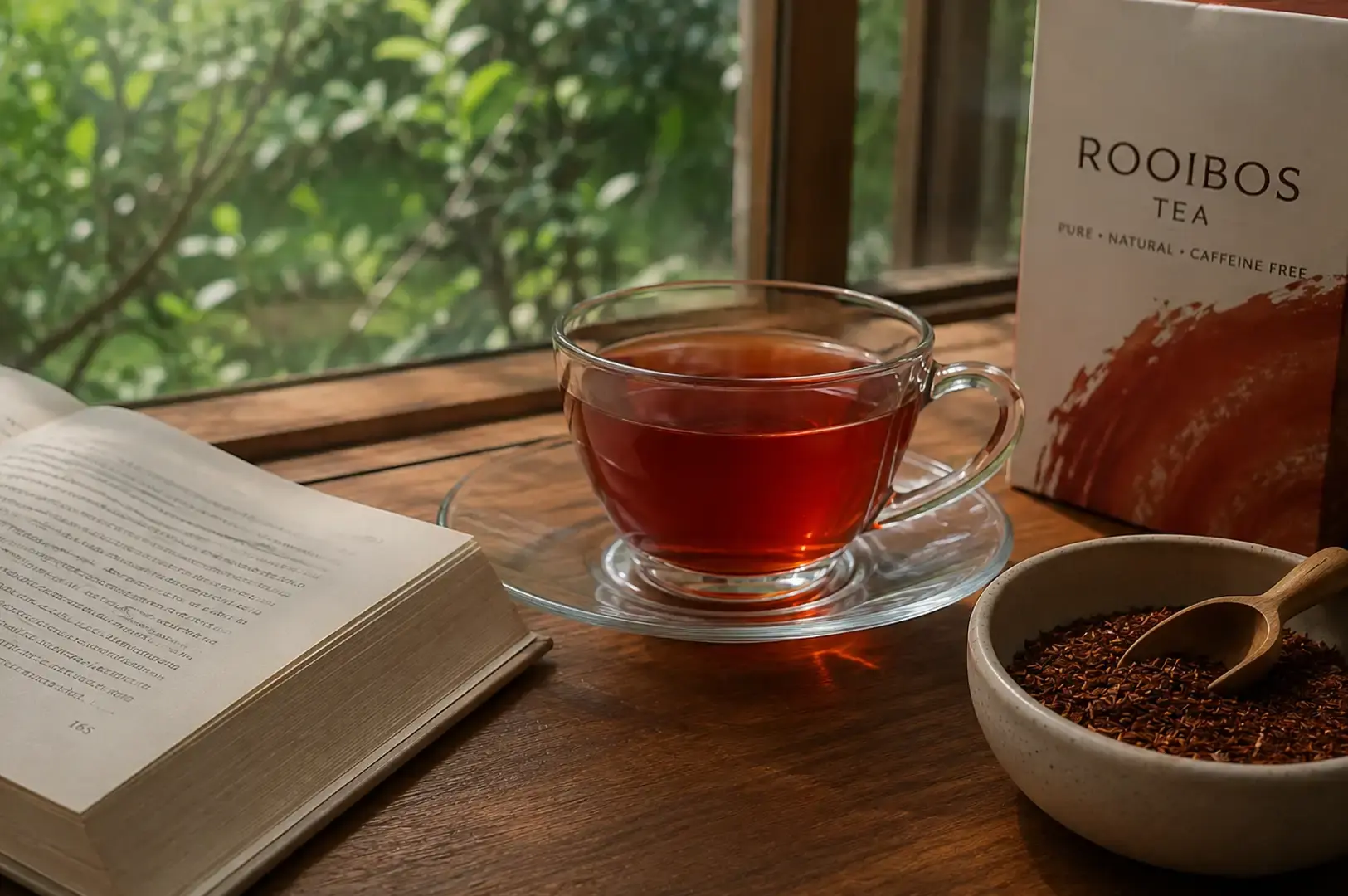
Rooibos tea, with its rich history in South Africa and distinctive flavour, does not shout for attention. It quietly enhances moments of relaxation and tradition with its bright colour, sweet aroma, and smooth taste.
For centuries, this South African plant has been crafted into a beverage that preserves the essence of its place of origin and invites tea lovers everywhere to discover the calm and comfort it offers in every cup.
If you have only ever known rooibos as a caffeine-free afterthought, I invite you to brew a pot with care. Watch the colour deepen, notice the sweet and nutty aroma, and savour the unique taste of red bush tea, a beverage truly crafted by nature and tradition.

Tea in a Scrollable World
I often think about how tea fits into a world that moves as fast as ours does. Every day, there are notifications, updates, trends, and posts competing for attention. Memes, videos, tweets, they all demand a response, a like, a share. It is a constant motion that leaves very little space for pause. And then…
-
Marriott High Tea 1 for 1: Indulge in Luxury at Singapore Marriott Tang Plaza Hotel
I almost didn’t go. Hotel afternoon tea always felt like something you did for a birthday or a special occasion with loved ones, or when a relative flew in and you wanted to seem like you had your life together. Expensive. A little performative. The kind of thing you photograph more than you eat. If…
-
Why Some Teas Feel Like Company
I’ve always thought of tea as a companion of sorts. Not a person, not a friend, but something that sits quietly beside you while the day moves forward. A cup of tea doesn’t interrupt your thoughts. It doesn’t demand attention. It simply exists, warm and steady, while you figure out what comes next. Some teas…
-
A Refined Afternoon Tea Experience at the Pan Pacific Atrium High Tea
Pan Pacific Atrium High Tea is the afternoon tea experience at the Atrium Lounge in Pan Pacific Singapore: a refined, unhurried sitting with TWG tea or Lavazza coffee, elegant seating pods above the reflection pool, and a menu that pairs classic English tea traditions with Peranakan flavours. For couples, friends, families, and tea lovers looking…
-
The Tea We Drink for No Reason
Tea is often praised for its ritual, its mindfulness, its ability to transform ordinary moments into quiet ceremonies. And I appreciate all of that. I really do. But there is another kind of tea, one that rarely gets mentioned in articles or recommended in guides. The tea we drink for no reason at all. I…
-
A Tea Lover’s Map to Elegant Finds in the City Teaware Shop
There is a particular quiet that settles when you pour hot water over tea leaves in a pot you chose with care. The weight of the clay in your hand. The porcelain capacity that holds just the right amount of warmth. A small ritual, repeated, until it becomes yours. Singapore knows tea in many languages….
-
Why We Pretend Every Tea Moment Should Be Peaceful
There is a quiet expectation we place on tea that I’m not sure we talk about enough. We expect it to calm us. To slow us down. To make everything feel a little more intentional, a little more put together, a little more peaceful than whatever came before it. But I’ve started to wonder if…
-
The Discipline of Grace in Every Bowl: Tea Ceremony in Japan
Water begins to move in a small iron kettle. The sound is faint, almost like wind through pines, and in a quiet room lined with tatami mats, it is enough to fill the silence. A host kneels in the tea room. A guest waits. Nothing is said, yet something has already begun. This is where…
-
The Tea I Keep Drinking When I Don’t Feel Like Myself
There are days when tea feels unnecessary. Not because I stop liking it, but because I don’t feel like the version of myself who usually drinks it slowly, thoughtfully, and with attention. On those days, I still make tea anyway. Not out of ritual, but out of habit. It is never the elaborate kind of…
-
Tea Ceremony Kyoto: A Slow Dance of Bowls and Breath
The room is quiet enough to hear water. Somewhere beyond the paper screens of this traditional tea ceremony venue, a garden drips after morning rain. Inside a tea house on a tatami mat worn soft by years of kneeling, a tea master lifts a bamboo whisk and begins tea making. There is no rush in…