I never thought much about music in tea shops, until I started noticing patterns.
The tea is brewed, the cups are warm, and the aroma drifts through the room. But then the music starts, and suddenly, the entire experience changes.
Some shops play classical or soft jazz. Conversations linger. Sips are slow. Even the tea seems to taste better somehow. Others have upbeat pop or electronic tracks. The tea is still good, but there’s an energy in the room that nudges you to move faster, drink quicker, and perhaps leave sooner.
It’s strange, how a background playlist can affect the perception of something as simple as tea. And yet, as someone who spends a lot of time exploring tea spaces, I’ve caught myself making snap judgments about shops before I’ve even taken a sip.
Is the music too loud? Too quirky? Too quiet? Does it match the kind of tea I was expecting to enjoy here? And maybe most importantly, does it make the tea feel like it belongs in this space?
I’ve realized this “judgment” isn’t really about music alone. It’s about how the environment frames the tea experience. Tea is meant to slow us down, but everything around it contributes to whether that slowing feels natural or forced. Music is one of those invisible cues.
The funny part is that this is something tea drinkers rarely admit. We talk endlessly about leaves, water, and brewing methods. But the playlist? That’s quietly shaping our memory of the tea, whether we like it or not.
Perhaps this is what makes tea spaces so fascinating. They are small laboratories of mood, scent, and sound. And if music can subtly influence how we enjoy a cup, what else in the environment is quietly guiding our experience?
I’ve learned to notice it, and sometimes even embrace it. There’s a charm in realizing that tea is more than flavor; it is the full sensory experience, shaped by the shop, the company, and yes, the music drifting overhead.
Next time you pick a tea shop, pay attention to the playlist. It might tell you more about the space than the menu ever could.
— Maria Tan
On tea, culture, and everyday rituals.

Maybe Your Favourite Tea Is Not Your Best Tea
I have a tea sitting in my cupboard that I would never call my “best” tea. It is not the rarest. It is not the most expensive. It does not come with an impressive story about ancient tea trees, remote mountains, or a limited harvest. And yet, I drink it more often than almost anything…
-
Clipper Tea Review: Does the Packaging Match the Pour?
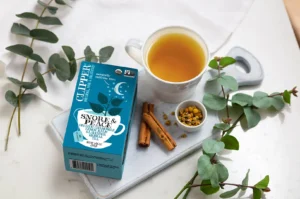
There’s a box of Clipper Tea that’s lived in my cupboard longer than most of my mugs. I didn’t plan to buy it. I was standing in the tea aisle, tired, half-decided on something familiar, when the colour caught me. Bright, cheerful, a little hand-drawn looking. So I brought it home. And I’ve been drinking…
-
Hear Me Out, Tea Does Not Need to Be Serious All the Time
There is something I have noticed about tea culture. We take tea very seriously. Perhaps too seriously. We discuss origins, processing methods, brewing temperatures, and the history behind every leaf. We debate whether a tea should be enjoyed in a certain way. We carefully consider the correct vessel, the right water, and the ideal environment….
-
Red Bush Tea: The Tea That Does Not Need to Shout
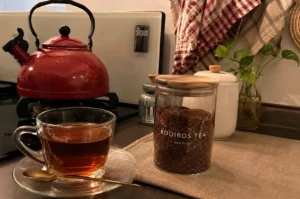
There is a red pot in my mother’s kitchen that only comes out in the evening. By then the coffee has done its work and gone quiet. The day has loosened. She fills the kettle, drops in a spoonful of something the colour of dried autumn, and lets it sit while she tidies the last…
-
Hear Me Out: High Tea Is Overrated
Hear me out: high tea is one of the most convincing ways we have found to make snacking feel important. I understand the appeal. The room is polished, the cups are delicate, and everything arrives in miniature. There is something satisfying about sitting down in the middle of the afternoon and behaving as though time…
-
Where Tea Is Given Time to Speak: Anteasocial Review
I almost walked past it. Owen Road Singapore doesn’t announce much. A quiet stretch, low buildings, the kind of road you pass through on the way to somewhere louder. Then there it was, unassuming, just numbers on a wall: 117. Anteasocial is a contemporary Oriental specialty teahouse in Singapore, and if you’re looking for a…
-
A Table Set for Stillness: Inside Antea Social’s Quiet Tea Ritual
Luxury usually announces itself before we have time to question it. It arrives through marble lobbies, silver stands and tiny sandwiches placed in strict formation. Antea Social offers a quieter argument. This is not afternoon tea in the familiar hotel sense. There is no grand procession of pastries or waiter lifting a polished lid. Instead,…
-
9 High Tea in Orchard Places for Scones, Tea, and a Quiet Afternoon
There is a particular kind of tiredness that comes from Orchard Road. Not the tiredness of a hard day, but the softer sort, the ache of too many shopfronts, too much bright glass, too many people moving faster than you feel like moving. And somewhere in the middle of all that, if you know where…
-
High Tea Orchard: Why the City Still Does It Best
It is easy to dismiss high tea in Orchard as an expensive pause between shopping bags. The tiered stands are photogenic, the hotel lounges polished, and the prices increasingly difficult to defend. ome scones arrive dry. Some savouries feel like banquet food made miniature. Some desserts are designed more for cameras than appetite. Still, Orchard…
-
McDonald’s Queensway Ridout Tea Garden Review: What It Is Like Dining in a Heritage Setting
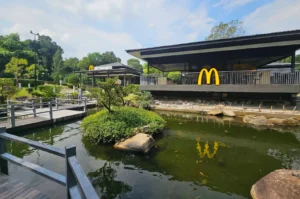
I did not expect to find quiet at a McDonald’s Queensway Ridout Tea Garden outlet. But there I was, standing outside the McDonald’s outlet at 580 Queensway, listening to the water instead of the traffic. A much loved pond sat just beyond the glass, surrounded by stone lanterns and trees leaning over it. Somewhere behind…