I almost walked past it.
Sago Street was loud that afternoon, the way Chinatown often is. Voices, footsteps, the clatter of a hundred small transactions. I was looking for a door and nearly missed the narrow one that led upstairs.
Then I climbed. And somewhere between the ground floor and the second, the noise fell away.
A Chinese Tea Teahouse You Have to Look For
SILK Tea Bar sits on the second floor of a shophouse at 26A Sago Street, tucked above the street rather than beside it. That small climb does something. By the time you reach the top, you've already left the rush behind.
This is not the SILK Tea Bar some people expect. It isn't inside Chinatown Point. It's here, on Sago Street, folded into the older bones of the neighbourhood, a short walk from Chinatown MRT.
I liked that it made me work a little to find it. The best rooms often do.
First Impressions From the Second Floor: A Warm, Present Moment
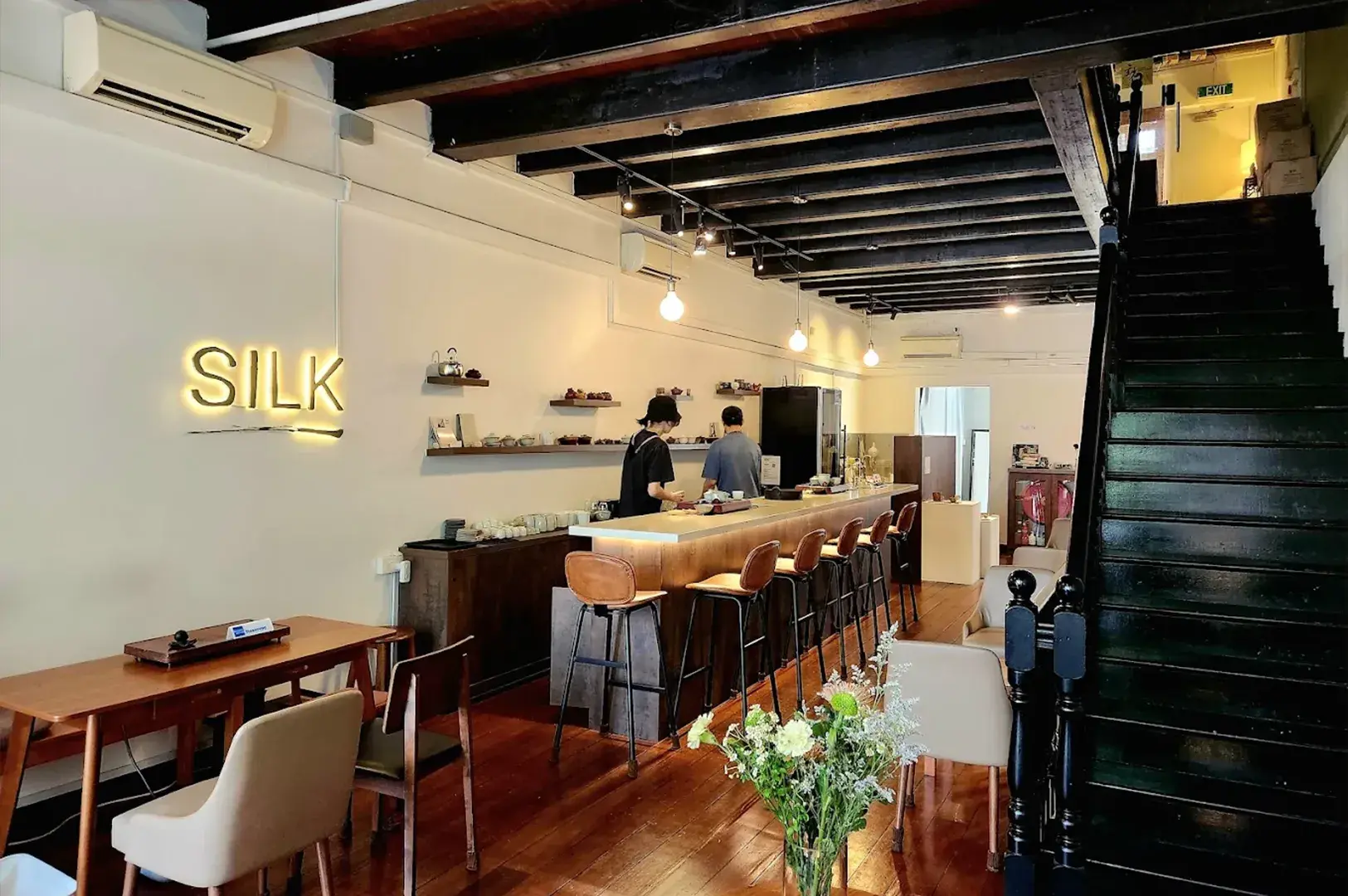
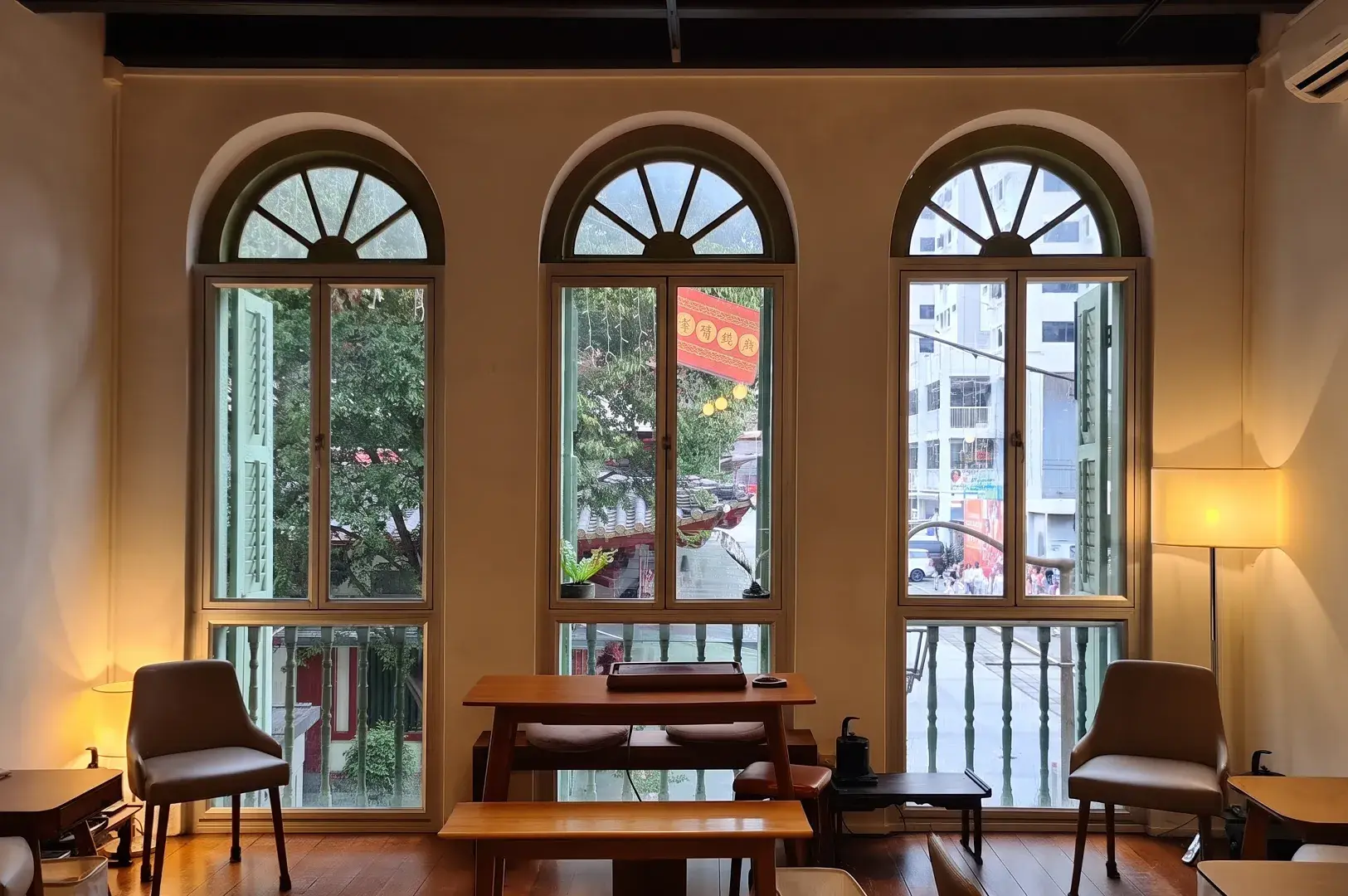
The space upstairs is calm in a way that feels intentional, not empty. Light comes in soft. Sound stays low. You lower your voice without being asked to.
I found a seat at a table and let my shoulders drop. There's a particular stillness to a teahouse that takes its tea seriously, and I felt it here before I'd ordered anything.
What struck me most was the honesty of the place. Nothing was styled to be photographed. It was simply a room for tea and conversation, and it seemed content to be exactly that.
The Tea: Where SILK Actually Speaks in Flavours and Philosophy
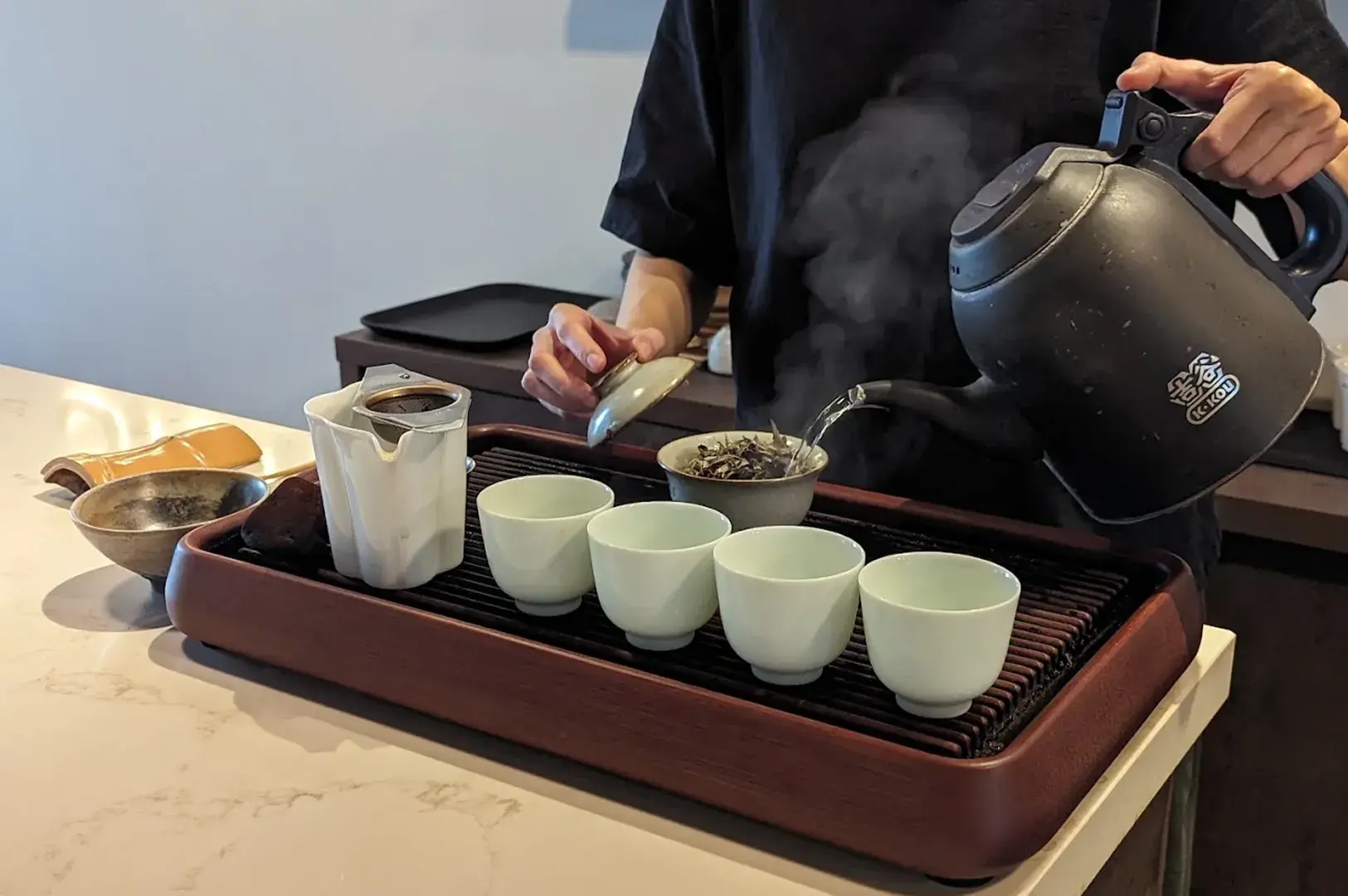
Because this is a tea bar first, I let the tea lead.
SILK offers both single-serving teas and multi-steep tea sessions, alongside reservation-based hosted tea flights. SILK uses natural spring water for its tea service, which sounds like a small detail until you taste what it does. Softer water, cleaner tea. The leaf comes through without anything muddying it.
I appreciated that you can choose your depth. Some afternoons you want to sit with one leaf and follow it. Other days you want the arc of a session, watching a tea change as it opens.
Multi-Steep Teas and the Process of the Second Steep
The multi-steep teas are where the tea bar shows its patience.
A progressive brew asks you to stay a while. The first steep tells you one thing. The second steep tells you something else, often quieter, sometimes deeper. You start to notice how a tea shifts, how it rounds out or softens as the leaves give more of themselves.
I've always thought the second steep is where a Chinese tea stops performing and starts confiding. Here, you're given room to notice that. No rush. No one clearing your cup before it's had its say.
Single-Serving Teas, Hot or Cold
If a full flight feels like too much, the single-serving teas are a gentler entry.
A hot brew on a grey day. A cold brew when Chinatown turns humid and close. It's the kind of choice that meets you where you are rather than asking you to arrive somewhere first.
For anyone newer to Chinese tea, this is an easy, welcoming way in. You don't need to know the language of it. You just need to be willing to sit and taste.
Oolong Tea, White Tea, and Learning to Slow Down in Life
The range leans into the teas worth lingering over. An oolong tea, with its long, folded character. A white tea, lighter, more whispered. These aren't drinks to gulp.
What I valued was how unintimidating it all felt. Tea culture can sometimes wear its knowledge heavily, as if you need to earn your seat. SILK didn't do that. It simply set good tea in front of me and let it speak for itself.
That's rarer than it sounds. A place can be serious about its craft and still leave the door open. This one does.
The Tea Wares, Quietly on Display: A Sign of Tradition and Business
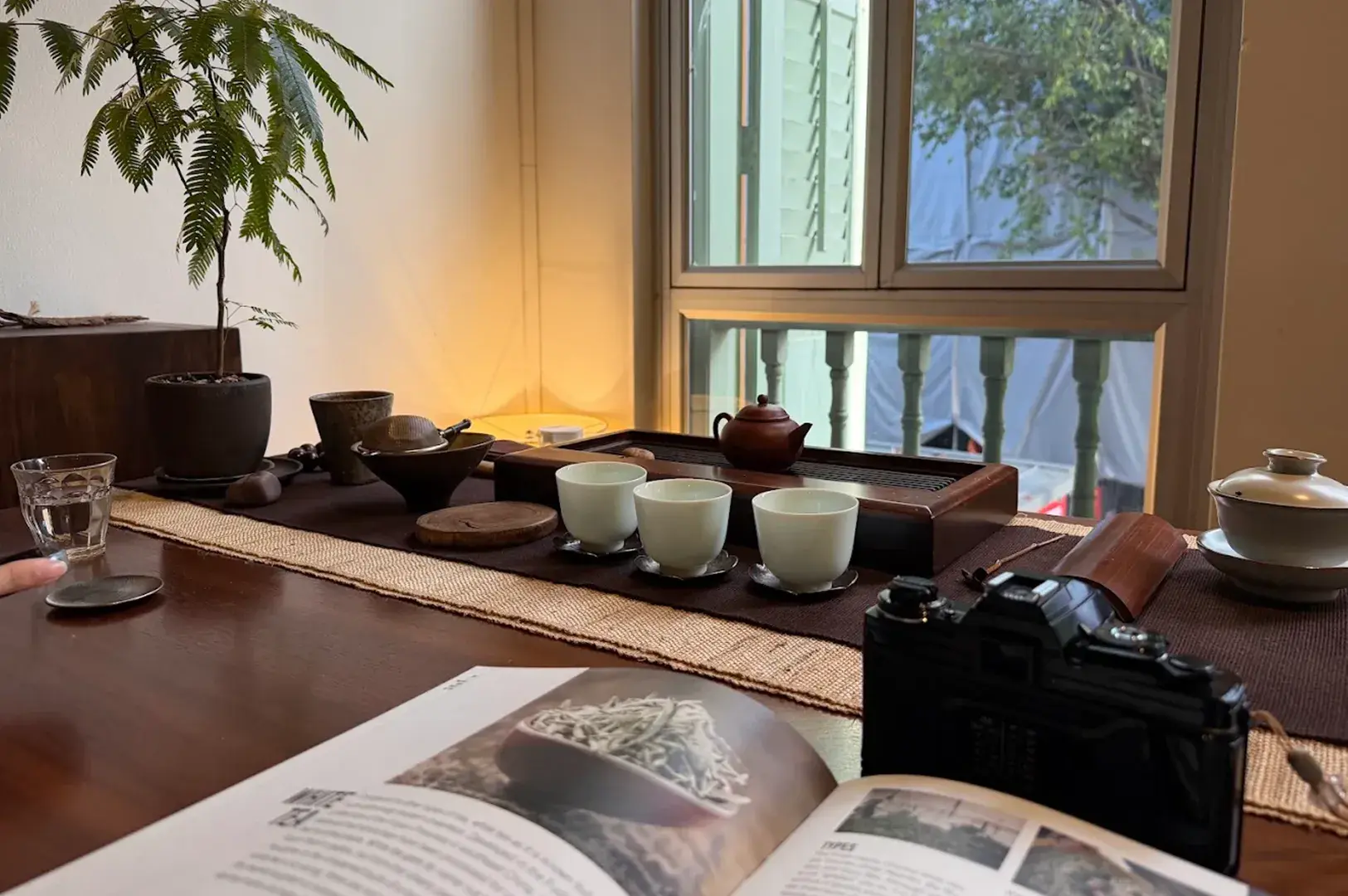
SILK also keeps a small collection of tea wares, and they're worth a slow look even if you came only to drink.
There's a certain kind of object made for actual use rather than display, and these lean that way. The Purion "Prosperity" Teapot, for instance, starts from SGD 275. Not an impulse buy, and it doesn't pretend to be. It's the sort of piece you'd choose once and keep for years, letting it season with the teas you return to.
I didn't leave with one. But I understood the pull. When tea becomes part of your rhythm, the vessel starts to matter too.
Service That Trusts the Tea and Invites You to Join
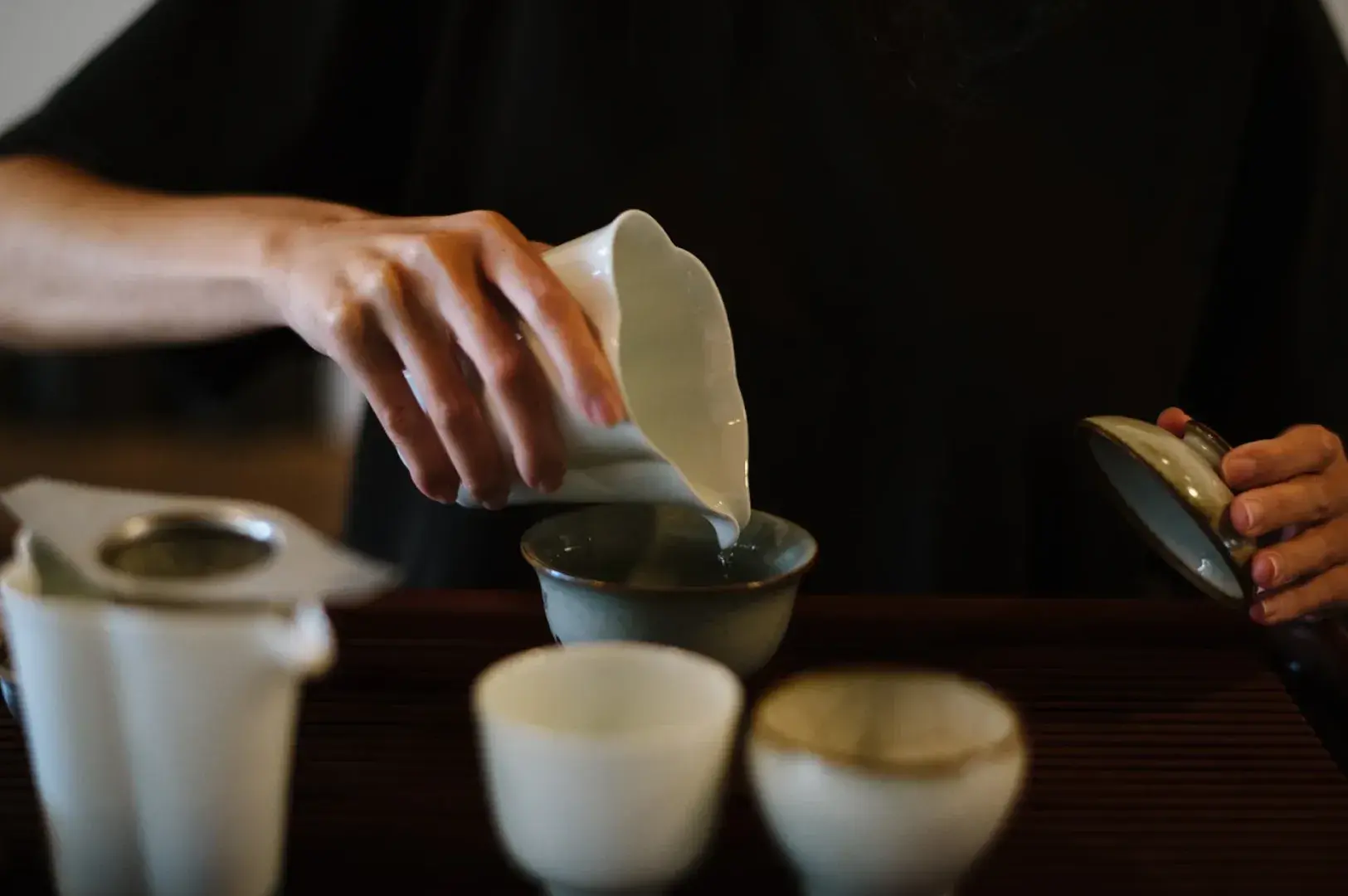
The service here doesn't hover, and I mean that as praise.
Tea was set down with care and then given space. No one performed the ceremony at me. No one narrated every note I was supposed to find. I was trusted to taste for myself, and that trust is its own kind of hospitality.
If you have questions, there's clearly knowledge to draw on from the owners, Melody and Xian, the duo behind the business. But it's offered, not imposed. That balance is hard to strike, and SILK strikes it quietly.
Practical Things Worth Knowing: Check the Ala Carte Menu and Plan Your Visit
A few notes before you go, because the hours here take a little planning.
- Where: 26A Sago Street, #02-01, Singapore 059021, on the second floor. Nearest MRT is Chinatown.
- Walk-ins: Available Tuesday to Sunday. Current daily hours should be checked before visiting, as SILK directs guests to its latest Google listing.
Reservations: Required for hosted tea flights and guided experiences, but Not for an ordinary walk-in tea session. Reservations are required for hosted tea flights and other guided tea experiences - Closed Mondays, so plan around that.
- Hosted tea flights are available by reservation if you want a guided session rather than a casual drop-in.
If it's your first visit, I'd come as a walk-in on a weekday afternoon. The room is calmer then, and there's no better way to meet a tea bar than unhurried.
What I'd Be Honest About: Not a Meal Spot, But Perfect for Rest and Light Snacks
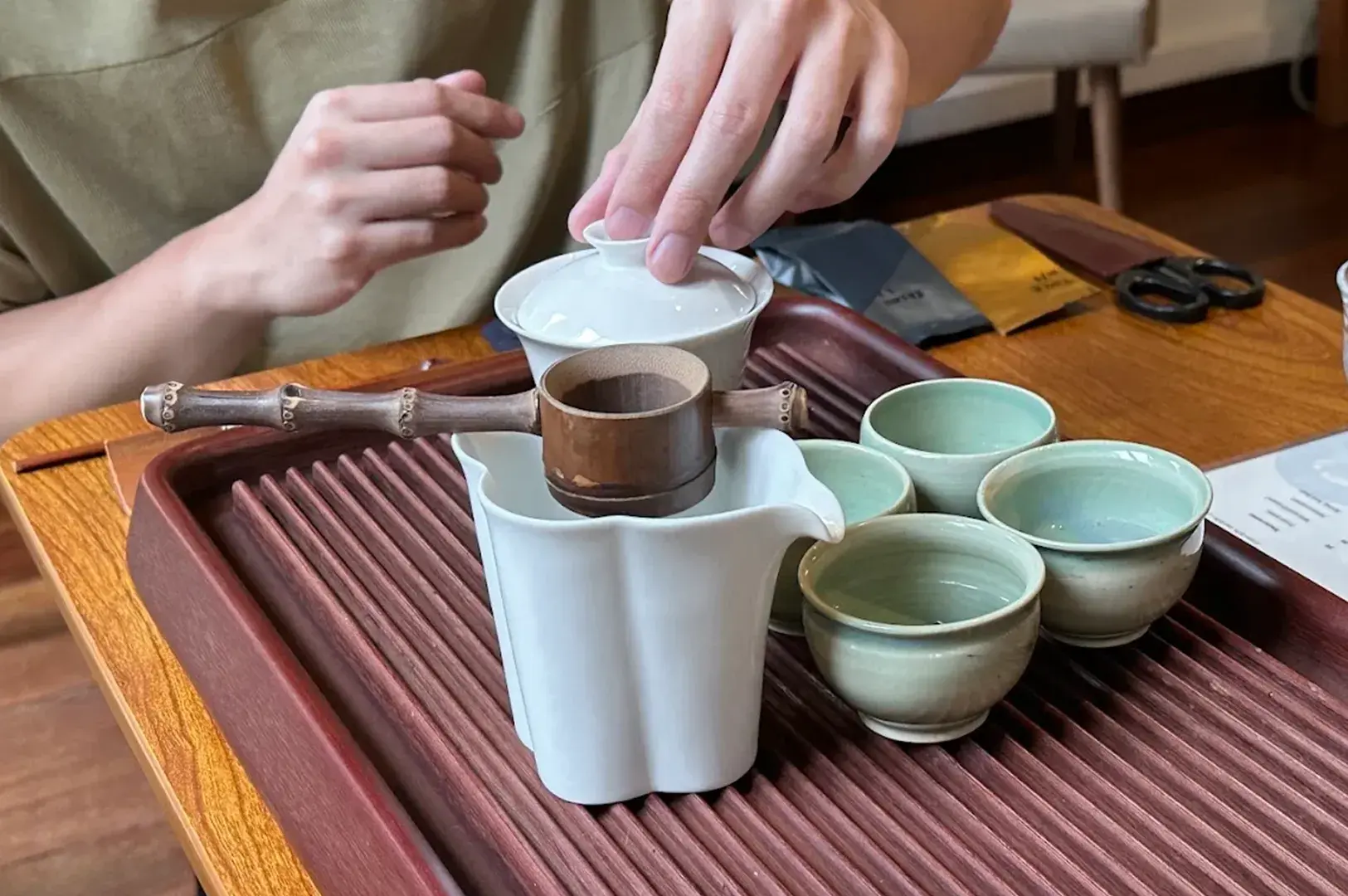
It isn't a place for everyone, and I don't think it wants to be.
If you're hungry for a meal, look elsewhere first. This is a tea bar, not a kitchen. The food, where it appears, sits gently in the background as light snacks rather than the reason you came.
In a world today bombarded by fast food and sugary beverages, SILK Tea Bar offers a quiet alternative where tea is not an afterthought or merely a companion to dessert but a main event to be savoured.
The menu pairs well with simple snacks, and the experience is perfect for catching up with friends or enjoying a moment alone.
The younger crowd, often intimidated by traditional tea culture, might find SILK a welcoming place where their interest in quality beverages can grow without pressure.
The hours can also catch you out. SILK accepts walk-ins from Tuesday to Sunday. Daily hours vary, so check the latest Google listing before visiting. Reservations are required for hosted tea flights and guided experiences
And the second-floor setting, lovely as it is, means it won't call out to you from the street. You have to want to find it. For some, that's a barrier. For me, it was part of the charm.
Would I Climb Those Stairs Again? Yes, to Enjoy the Warm Flavours and Philosophy of SILK
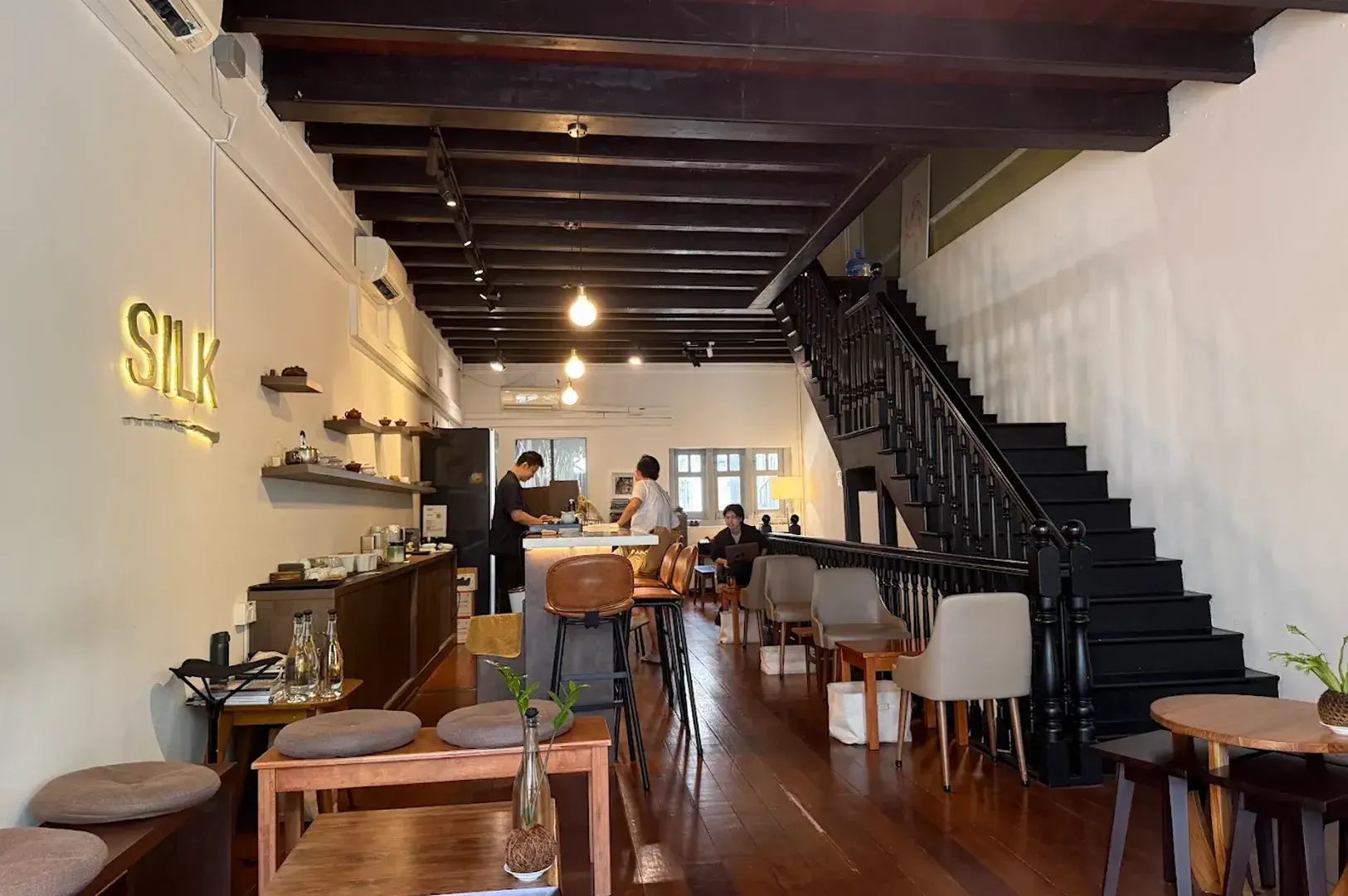
By the time I left, the light had shifted and my cup had long gone cool.
I'd sat far longer than I meant to, which is usually how I know a place has reached me. SILK Tea Bar didn't try to impress me. It just poured carefully, using water it had thought about, and let me find my own way into the leaf.
I'd return for the multi-steep teas, for that unhurried second steep where the tea finally softens and tells you something true. But more than any single cup, I'd return for the quiet. For a room that asks you to climb a little, then rewards you by slowing everything down.
Some places serve tea. This one makes room for it. And in the middle of Sago Street's noise, that felt like a small, welcome kind of grace.
FAQ
Where is SILK Tea Bar located?
On the second floor of a shophouse at 26A Sago Street, #02-01, Singapore 059021. It's on Sago Street itself, not inside Chinatown Point, and the nearest MRT is Chinatown.
What are the opening hours?
SILK accepts walk-ins Tuesday to Sunday. Daily hours can vary, so check its latest Google listing before visiting. It is closed on Mondays.
Do I need a reservation?
For casual walk-ins during weekday hours, no. Ordinary tea sessions are available for walk-ins. Reservations are required for hosted tea flights and other guided tea experiences.
Can I buy tea wares there?
You can. SILK keeps a selection of tea wares made for real use, including pieces like the Purion "Prosperity" Teapot, which starts from SGD 275.
Is it beginner-friendly?
Yes. The tea is treated seriously but shared without pretension. A single-serving tea is an easy introduction, while SILK's multi-steep selections and hosted tea flights suit those who want to explore more deeply.

Why We Keep Romanticising Tea Moments That Never Happened
I sometimes wonder if we are drinking tea or remembering something that never really happened. A quiet morning that feels softer in memory than it ever was in real life. A perfect cup by the window that somehow always looks better in hindsight. A tea moment that feels cinematic, even though it probably lasted only…
-
Masala Chai Tea Origins: The Cultural Evolution of India’s Spiced Tea Tradition
There is a sound that belongs to mornings across India: the hiss of milk rising in a battered pot, the clink of a spoon against metal, the low murmur of a tea seller calling out to passing crowds. Before the first sip, there is the scent. Cardamom pods, fresh ginger, and cinnamon stick curling into…
-
We Are Turning Tea Into Something It Was Never Meant to Be
There is something quietly strange happening in tea culture. The more popular the tea becomes, the more it starts to resemble everything it once stood apart from. Speed. Branding. Productivity. Performance. Tea, which once belonged to unhurried moments, is increasingly being asked to do more. To energize. To optimize focus. To replace coffee. To support…
-
Sencha Green Tea vs. Matcha Powder: Understanding the Differences in Japanese Green Tea
Two tins of tea powder sit side by side on a shelf. Both hold a fine green powder. Both promise the taste of authentic Japanese tea. To the eye, they look almost identical, and that is precisely where the confusion begins. One is matcha powder, often used in matcha lattes and desserts. The other is…
-
Discovering Gryphon Tea Company’s Earl Grey in Singapore
I recently tried the Earl Grey from Gryphon Tea Company Singapore, and I have to admit, it surprised me. Not because it was flawless-it wasn’t, but because it felt like a tea that knew exactly what it wanted to be. The aroma is the first thing that hits you. Bergamot is present but subtle, not…
-
Hojicha: The Roasted Japanese Green Tea With A Mellow Twist
There is a moment, just after the hot water meets the hojicha tea leaves, when the kitchen fills with the aroma of something toasted. Not grassy. Not sharp. Warm, like roasted nuts or the edge of a freshly baked loaf. That moment is where hojicha begins. Hojicha (sometimes spelled houjicha) is a roasted green tea…
-
A Quiet Afternoon at Yixing Xuan Teahouse
I recently spent a quiet afternoon at Yixing Xuan Teahouse, a place that feels like a pause in the city. The moment you step inside, the world seems slower. The air carries the gentle aroma of steeped leaves, and the staff move with quiet precision. I chose an oolong, simple yet familiar. Watching the leaves…
-
The Controversial Smoky Tea That Divides Enthusiasts: Lapsang Souchong Black Tea
There is a tea that empties rooms and fills them in equal measure. Open a box of loose leaf lapsang souchong black tea, and someone nearby will lean in with delight while another quietly steps away. Few teas provoke such immediate, honest reactions. That divide is part of its story. This smoked lapsang souchong smells…
-
The Tea That Keeps Me Coming Back
I have a tea I return to more than any other. It is not rare. It is not expensive. In fact, most people would probably pass it by without a second thought. And yet, somehow, it has become a quiet companion over the years. I first drank it on a rainy afternoon. I had been…
-
Tie Guan Yin: The Iron Goddess of Chinese Oolong Tea
Tie Guan Yin, also known as Iron Goddess or Iron Goddess Oolong, is a celebrated Chinese oolong tea originating from Anxi County in Fujian Province, China. This tea from Anxi Fujian holds a special place among other teas due to its unique aroma, flavour, and rich cultural story. It is made from the tea plant…