There is something fascinating about the way we buy tea today.
Before we taste the leaves, we have already formed an opinion.
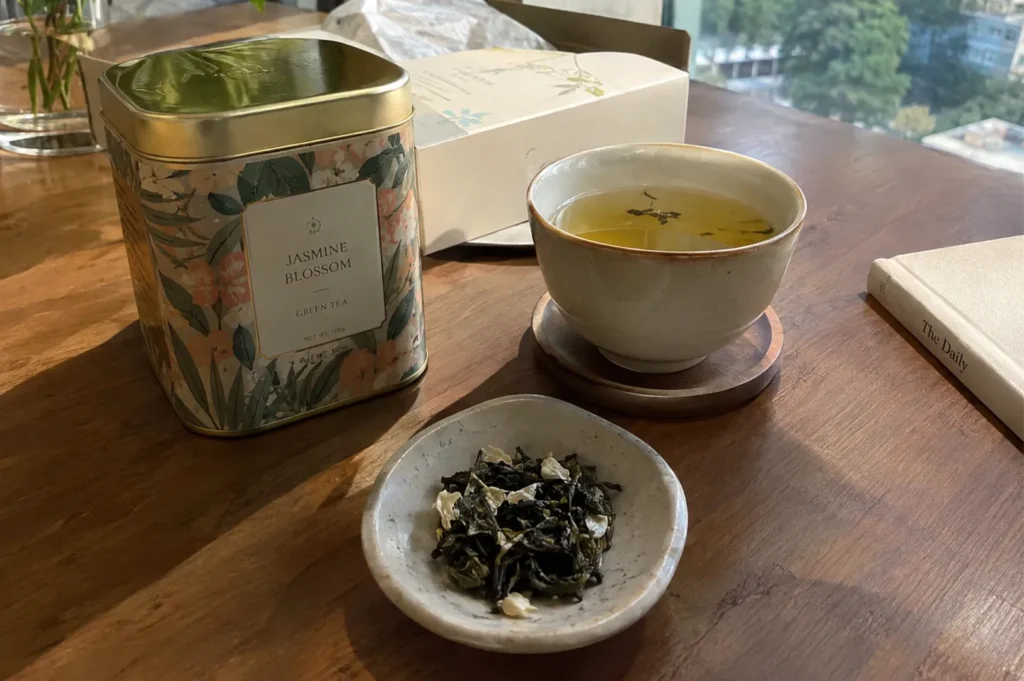
The box is elegant.
The label is beautifully designed.
The colours suggest calm, luxury, or tradition.
The story feels carefully written.
And before the first sip, we have already decided that the tea must be special.
This is not surprising. Humans are drawn to beauty. Presentation influences how we experience almost everything, including food and drink.
A beautifully designed tea package can create curiosity. It can introduce us to a producer we may never have discovered otherwise.
But I sometimes wonder whether we have allowed the packaging to become louder than the tea itself.
A tea tin cannot tell us how the tea will actually taste.
It cannot tell us whether the leaves were suited to our preferences.
It cannot tell us whether the tea will become part of our daily life or simply become another forgotten item on a shelf.
Yet we often buy tea based on the promise before we experience the reality.
I have made this mistake myself.
There have been teas I purchased because the presentation was beautiful. The packaging suggested something thoughtful, refined, perhaps even memorable.
Then I brewed it.
Sometimes, the tea was excellent.
Other times, I found myself admiring the container more than the contents.
Perhaps this is one of the quiet challenges of modern tea culture. We are surrounded by beautiful objects, and sometimes we confuse beauty with value.
But tea is not meant to be displayed forever.
It is meant to be opened.
The leaves are meant to meet water. The aroma is meant to fill the room. The cup is meant to be held.
A simple package containing a tea we return to often may offer more value than an elaborate box that rarely leaves the shelf.
This does not mean packaging is unimportant. Good design can honour the tea. It can reflect the care behind the product and create a meaningful first impression.
But the first impression should not become the final judgement.
Tea reveals itself differently.
Not through appearance.
Through experience.
Perhaps the next time we choose a tea, we should pause before asking whether the package belongs on our shelf.
A better question might be:
Will I want to open this tomorrow morning?
Because the true beauty of tea is not found in how it looks before it is brewed.
It is found in what remains after the cup is empty.
With quiet regard,
N. P. Lim

The Quiet Lessons a Cup of Tea Can Teach
I have often found that the simplest cup of tea carries the most subtle lessons. Not every tea moment is dramatic, ceremonial, or picturesque. Some are ordinary, even fleeting, yet they manage to teach something quietly about patience, observation, and care. Take the leaves themselves. Watching them unfurl in hot water is a small, deliberate…
-
A Journey Through Popular Bubble Tea Brands and Shops: Bubble Tea Singapore
The first time I really tasted bubble tea, I mean actually tasted it, I was standing outside a shoppers mall in the rain, waiting for a friend who was late. I had ordered something on autopilot from one of the many bubble tea shops in Singapore. But that day, without distraction, I noticed the tea…
-
Tea in a World That Never Pauses
Scrolling through my feed this morning, I realized something. We live in a world that barely stops. Notifications pile up. Videos play automatically. Messages arrive faster than we can read them. Every surface seems to demand attention. And then there is tea. A cup of tea does not ping. It does not scroll. It does…
-
From Plantation to Cup: The Journey of Sri Lanka’s Black Tea Pekoe
Black tea pekoe is all about whole-leaf black tea made from those long leaves and buds, usually the youngest ones right near the shoot tips. And when you hear Orange Pekoe, it’s not about orange flavor at all; it’s actually the name of that grade. For tea lovers or anyone curious about quality Sri Lankan…
-
To the Tea Lovers and the Tea That Holds Us
I want to write a letter, not to anyone in particular, but to the quiet ritual that has accompanied so many of our days. To the tea in our cups and to the people who take the time to notice it. Tea is patient. It waits for us when we are rushing. It sits quietly…
-
What Is Rooibos Tea: Red Gold in Your Cup, the Science and Benefits
There is a certain hour when the day loosens its grip. The coffee has long gone cold. Black tea feels like too much. And yet the kettle still calls, because the ritual matters more than the caffeine. This is where rooibos often arrives. A deep russet red pouring into the cup, warm and unhurried, carrying…
-
The Cup I Always Return To
There is one tea I always return to, even after tasting countless others. It is not rare. It is not expensive. The leaves are ordinary, the aroma familiar. And yet, it has a way of anchoring me, no matter the day or the mood. I first drank it years ago, during a week that felt…
-
Where to Buy Turkish Tea: Finding Authentic Çay for the True Turkish Tea Experience
The first time I understood Turkish tea, I was not drinking it in a café. I was standing in a small shop, watching a man refuse to sell me the wrong thing. I had pointed at a shiny box of flavoured black tea, and he shook his head, quietly, the way someone corrects a friend…
-
Why Tea Might Be the Break You Didn’t Know You Needed
Scrolling through my feed this morning, I realized how easy it is to forget what a quiet moment feels like. Notifications, stories, messages- they all seem to arrive at once, asking for attention I don’t always want to give. And yet, in the middle of it, I poured myself a cup of tea. It wasn’t…
-
A Golden Sip of Serenity chrysanthemum tea
There is a pot on many kitchen tables in Singapore that no one talks about much. Pale yellow gold in the glass, with a few small chrysanthemum flowers or flower buds drifting at the bottom. It appears after a heavy meal, at a grandmother’s house, or in a hawker centre when the weather turns unbearable….