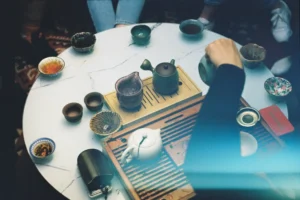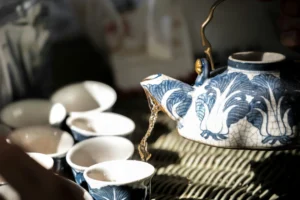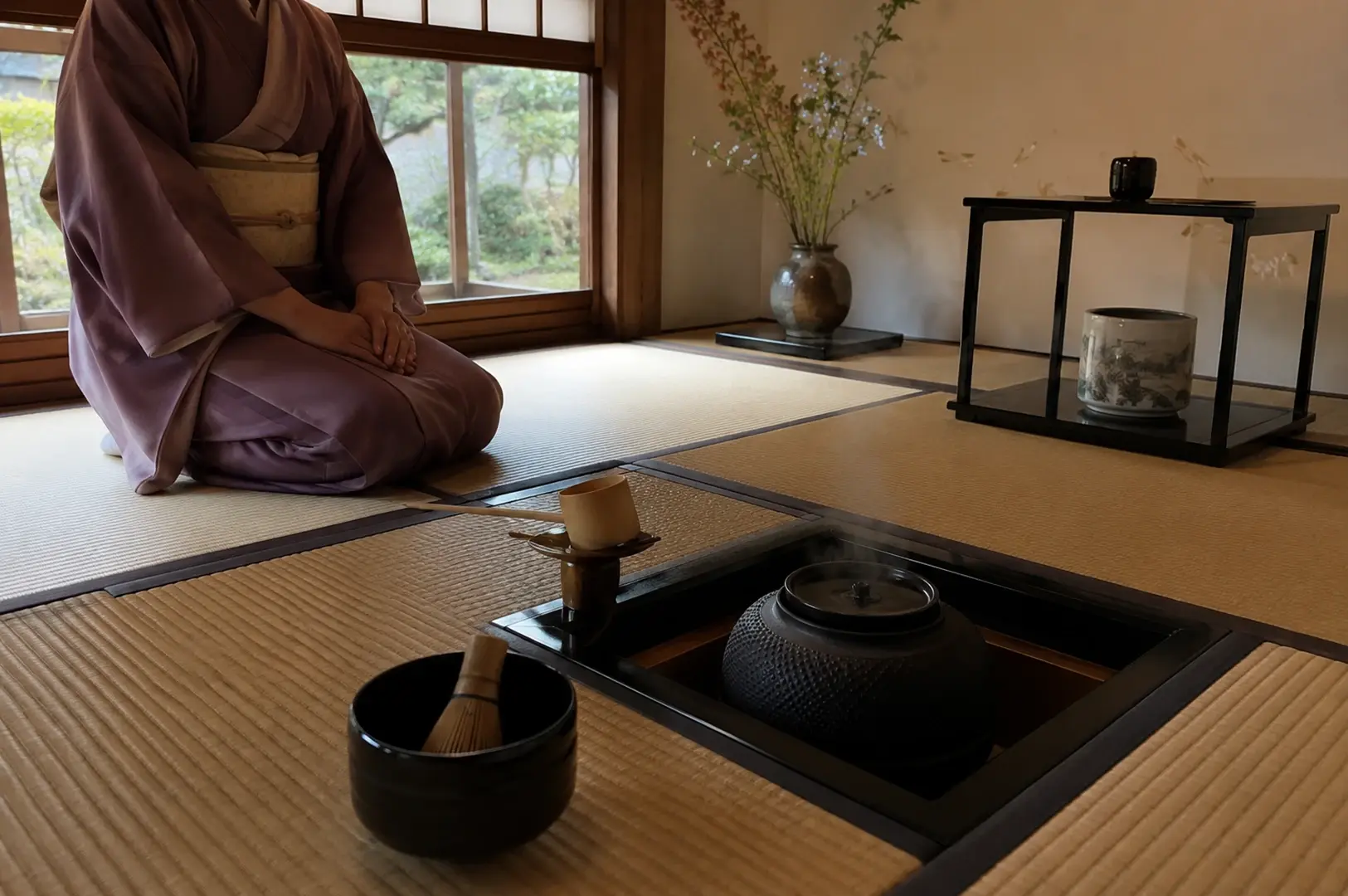
Water begins to move in a small iron kettle. The sound is faint, almost like wind through pines, and in a quiet room lined with tatami mats, it is enough to fill the silence.
A host kneels in the tea room. A guest waits. Nothing is said, yet something has already begun.
This is where the tea ceremony in Japan lives, in the space before the first sip. It is a practice known by several names, and each one hints at a different truth held within the same bowl.
More Than the Making of Japanese Tea: The Traditional Tea Ceremony
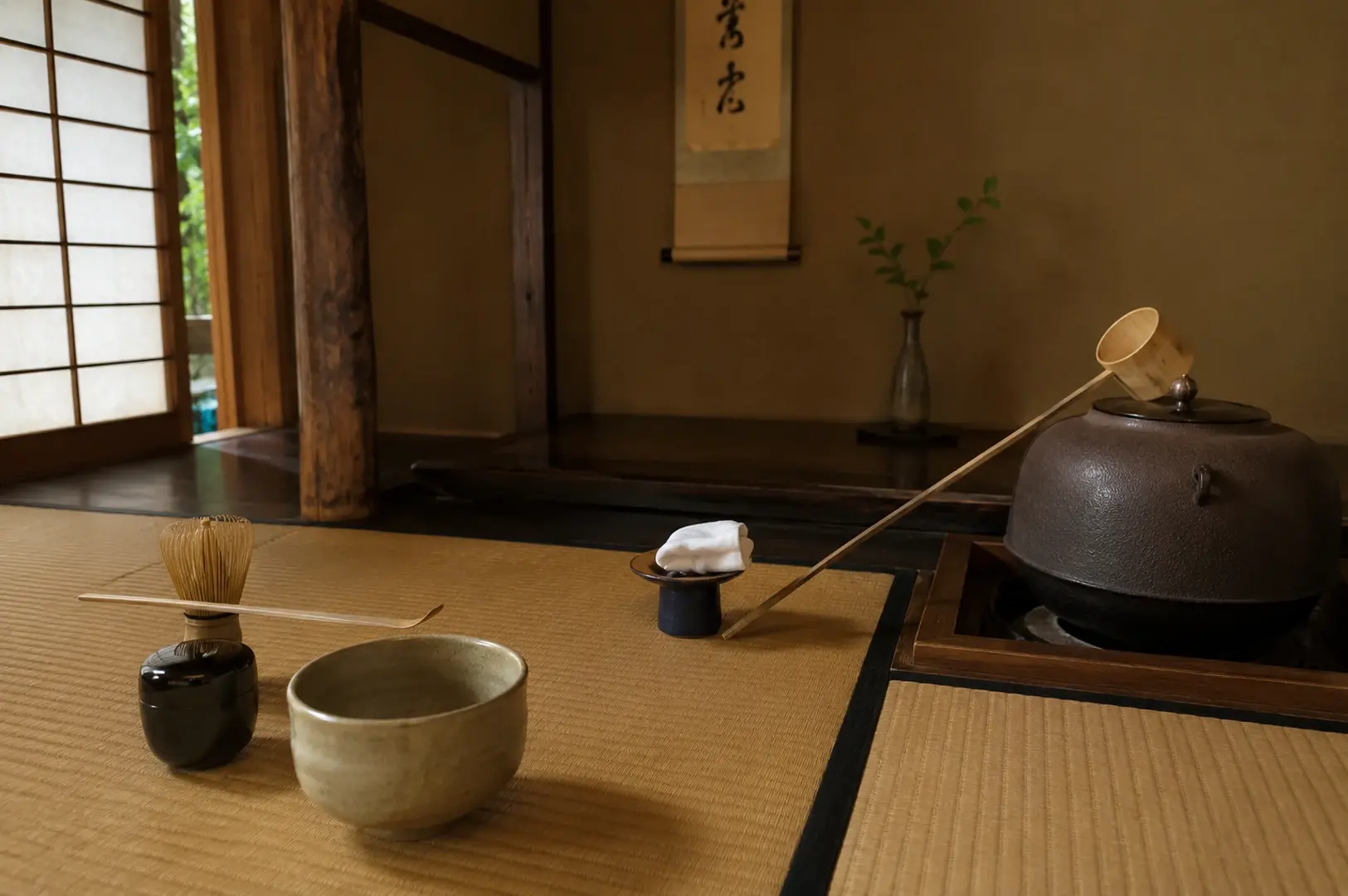
The Japanese tea ceremony is often described as the preparation of matcha tea, but that description barely reaches its surface. What unfolds is a disciplined act of hospitality, aesthetics, and attention, refined over centuries into something quietly profound.
It is called chanoyu, which means hot water for tea. It is also called sado or chado, the way of tea, a phrase that carries the weight of a lifelong path rather than a single event.
The naming matters. To call it a way is to admit that tea, here, is not the destination. It is the road one walks to arrive somewhere less visible.
How a Simple Drink Became a Discipline: History and Practice
Tea leaves were introduced to Japan from China in the 8th century, initially enjoyed by Buddhist monks who used powdered green tea to stay awake during long meditation sessions. Over time, the practice spread, and by the Muromachi period, tea drinking became popular among various social classes, including the samurai class.
Sen no Rikyu, the revered tea master of the 16th century, is credited with shaping the traditional tea ceremony into its enduring form. He emphasized wabi-sabi, the beauty of imperfection and simplicity—and introduced the four core principles of harmony, respect, purity, and tranquility. These values remain central to most tea ceremonies today.
The Kyoto Tea Ceremony: Heart of Japanese Culture
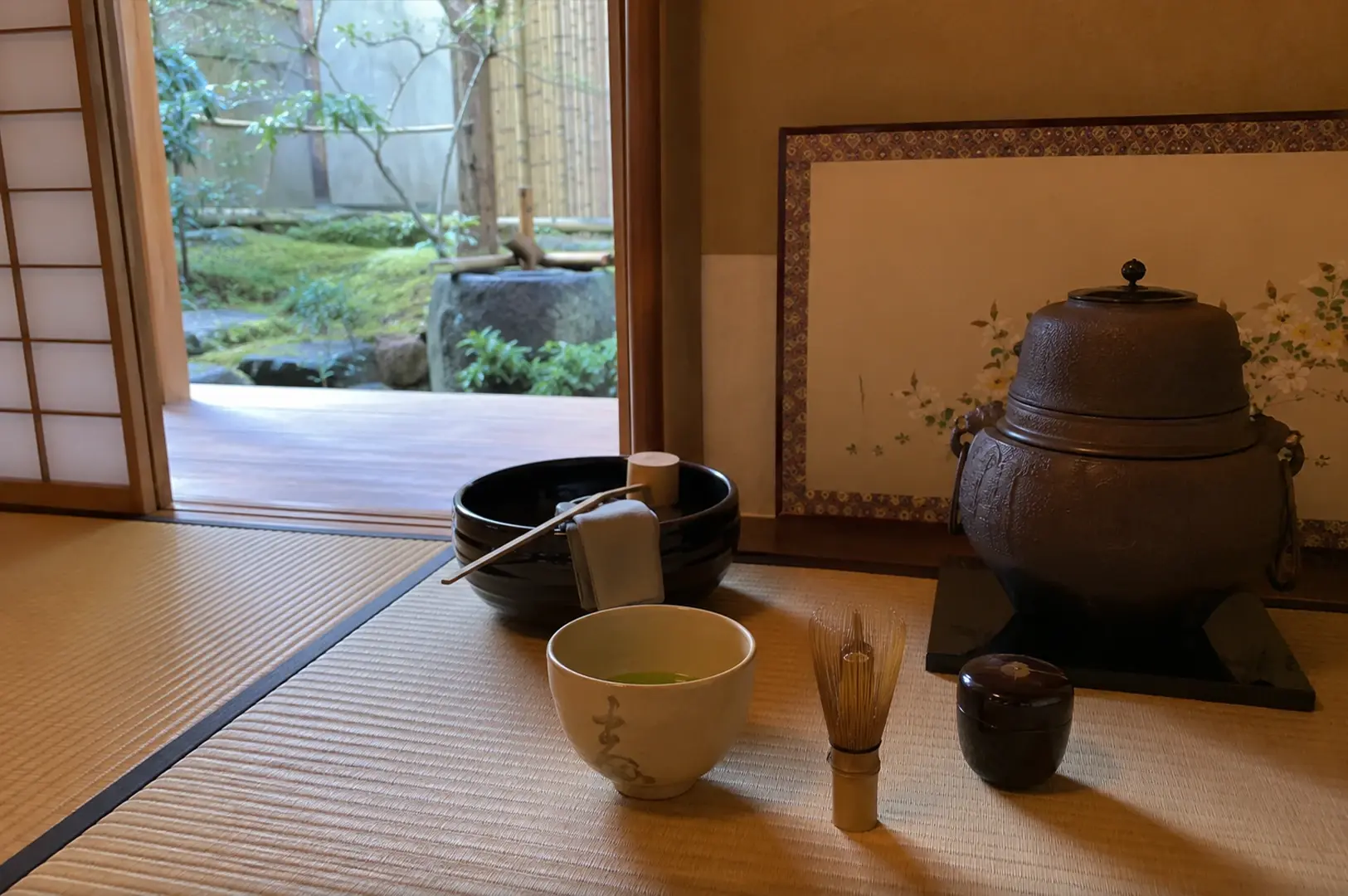
Kyoto city, especially the Higashiyama ku district, remains the cultural center of the Japanese tea ceremony. The Kyoto tea ceremony is known for its authentic style, practiced in historic tea ceremony venues surrounded by tranquil tea gardens. The tea room, often with a tatami floor, is designed to create a meditative atmosphere enhanced by seasonal flowers and traditional sweets.
Three main schools of tea ceremony are based in Kyoto, each preserving the art with subtle stylistic differences. Visitors to Kyoto can experience tea ceremonies that include a formal meal, such as a kaiseki lunch, followed by tea drinking that features both thick tea (koicha) and thin tea (usucha).
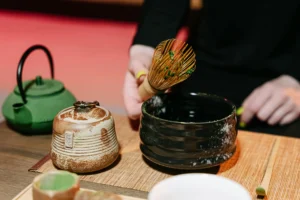
The preparation and serving of tea in Kyoto’s ceremonies strictly follow the principles laid down by Sen no Rikyu, the legendary tea master who shaped the tea ceremony into a refined spiritual practice. Every movement, from scooping the powdered tea with the chashaku to whisking it into a frothy cup with the chasen, is performed with deliberate grace.
The tea itself, known as matcha, is a finely ground powdered green tea that is whisked with hot water to create a vibrant, frothy beverage served in a carefully chosen tea bowl (chawan). The choice of the tea bowl is significant; its shape, texture, and even imperfections are appreciated as part of the ceremony’s aesthetic.
In Kyoto, the tea ceremony is not only about drinking tea but about the entire experience, the sound of boiling water, the aroma of the tea, the tactile sensation of the cup, and the quiet appreciation of the moment. The host’s skill in preparing the tea and the guest’s mindful reception of the cup embody the spirit of harmony and respect central to the tradition.
Moreover, Kyoto’s tea ceremonies often emphasize the seasonal aspect of tea, with the type and presentation of tea adjusting to reflect the time of year. This seasonal mindfulness connects participants deeply with nature and the passage of time, reinforcing the wabi-sabi philosophy of beauty in imperfection and transience.
Thus, the Kyoto tea ceremony offers an immersive experience into the authentic tea culture of Japan, where the simple act of sharing a cup of tea becomes a profound ritual of connection, mindfulness, and artistry.
The Tea Room and Tea Equipment: Tools of the Art
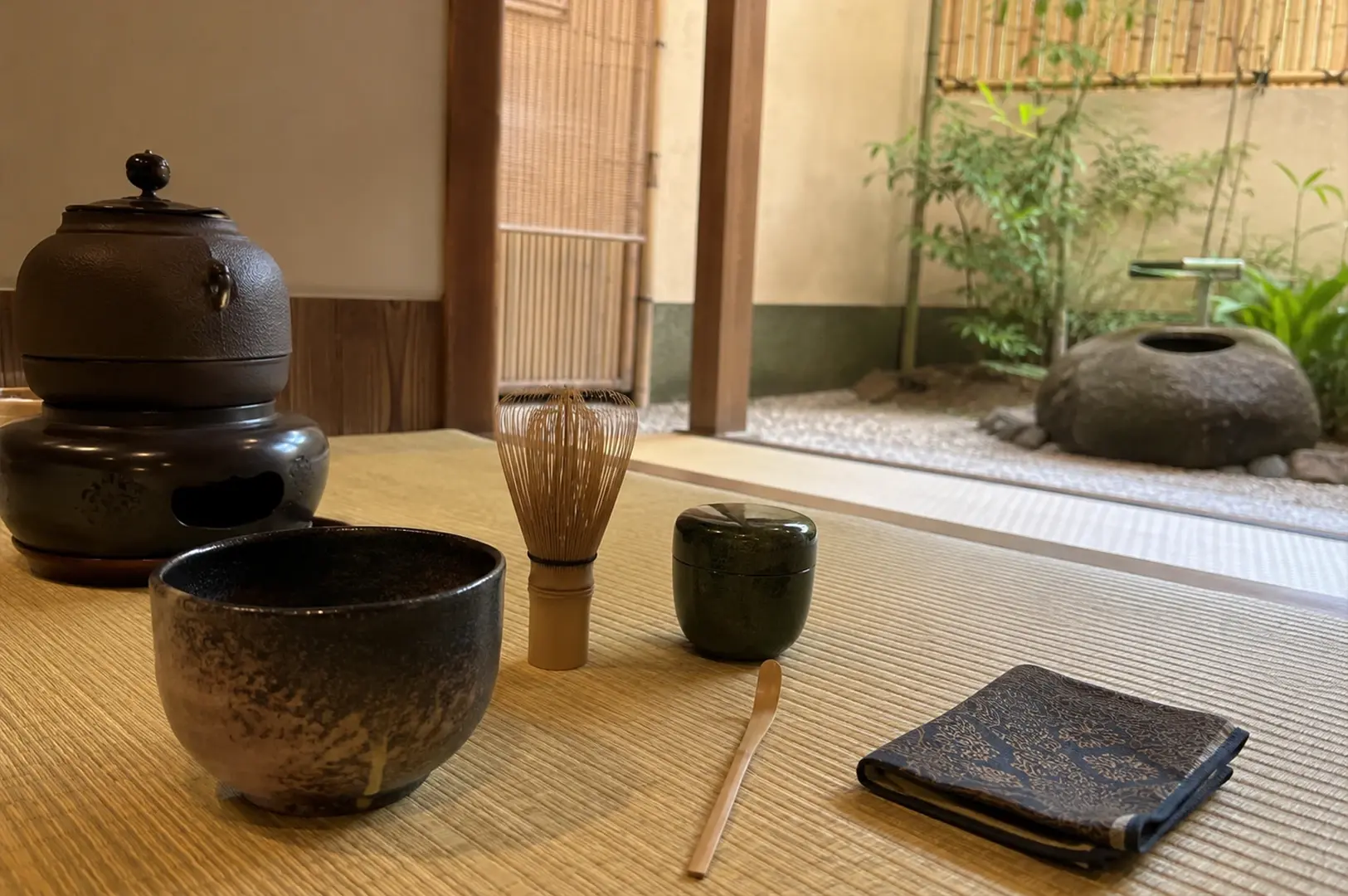
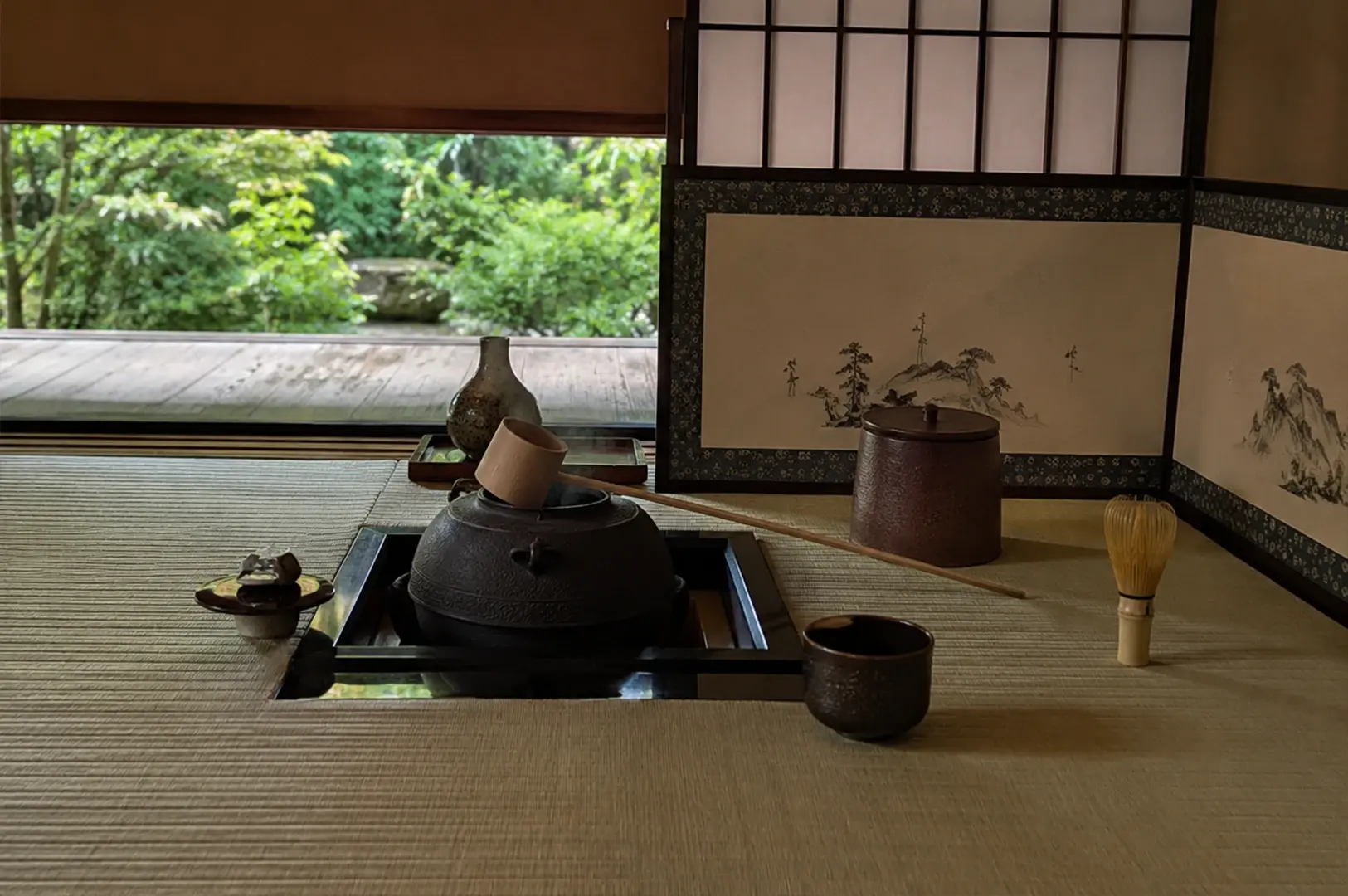
The tea room is a simple, uncluttered space where every item is chosen with intention. The tea equipment includes the tea bowl (chawan), tea whisk (chasen), tea scoop (chashaku), tea caddy (natsume), and the iron kettle.
The host carefully prepares the powdered green tea, whisking it into a frothy bowl of matcha tea. The tea scoop measures the highest quality tea leaves, and the tea utensils are handled with reverence. The stone basin near the entrance of the tea garden is used by guests to purify their hands before entering, symbolizing cleansing and readiness.
Drinking Tea: The Art of Thin Tea and Thick Tea
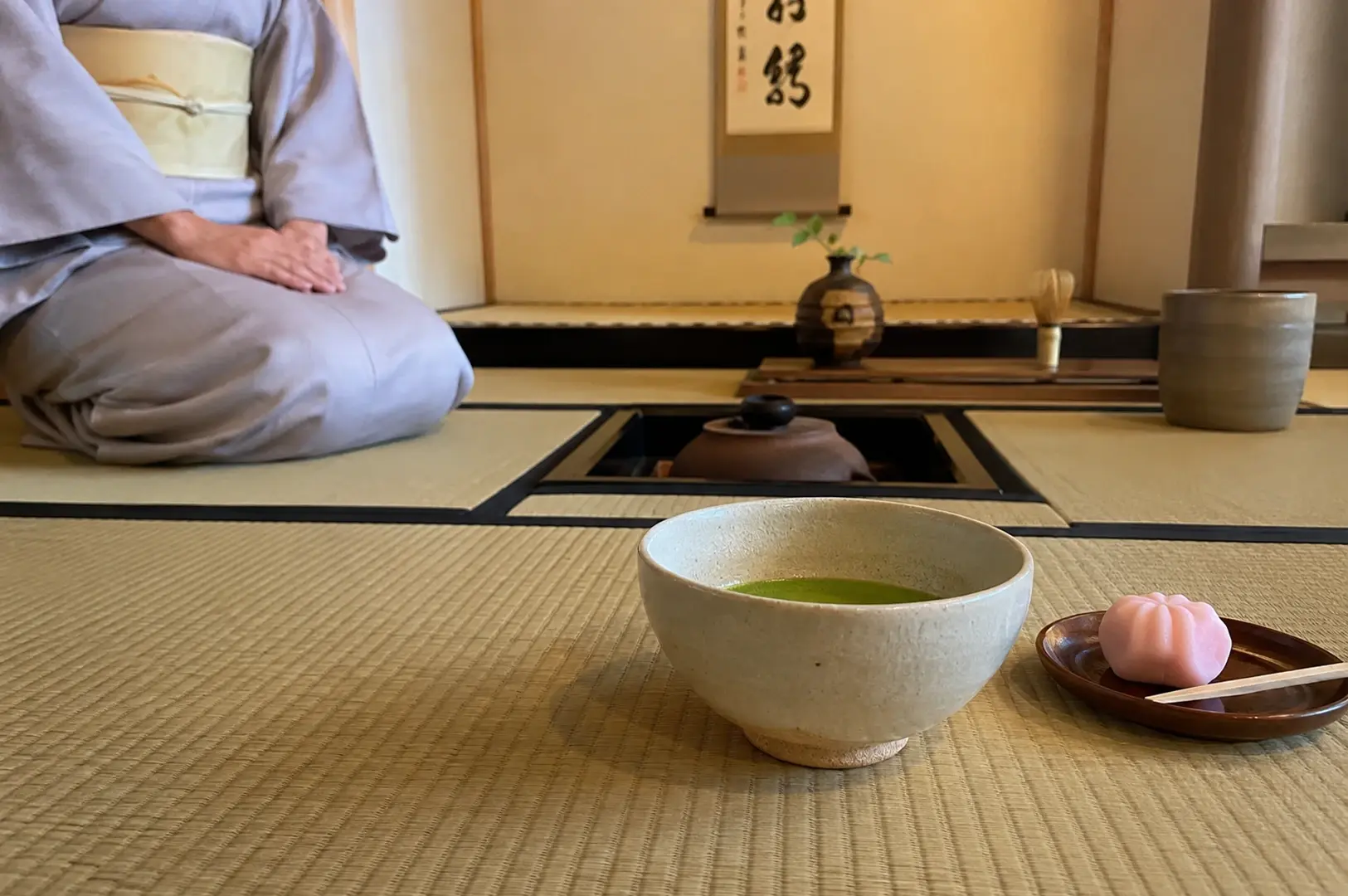
Most tea ceremonies serve two types of tea: thick tea and thin tea. Thick tea uses a higher concentration of powdered green tea and is shared from a single bowl among participants, emphasizing unity. Thin tea is lighter and served individually, often enjoyed after traditional Japanese sweets.
Guests are expected to sit on tatami mats, bow respectfully to the host, and receive the tea bowl with both hands. Drinking tea involves turning the bowl slightly before taking a few sips, appreciating the warmth and flavor while embracing the quiet atmosphere.
Japanese Sweets and Seasonal Flowers: Enhancing the Experience
Traditional sweets, or wagashi, are served before the tea to complement the bitterness of the matcha. These sweets vary by season, reflecting the natural beauty of spring, autumn, or other times of the year, and are often accompanied by carefully arranged seasonal flowers that adorn the tea room.
The combination of tea, sweets, and flowers creates a harmonious experience that embodies Japanese life and culture, inviting participants to slow down and savor the moment.
Zen Buddhism and the Tea Ceremony: Meditation in Motion
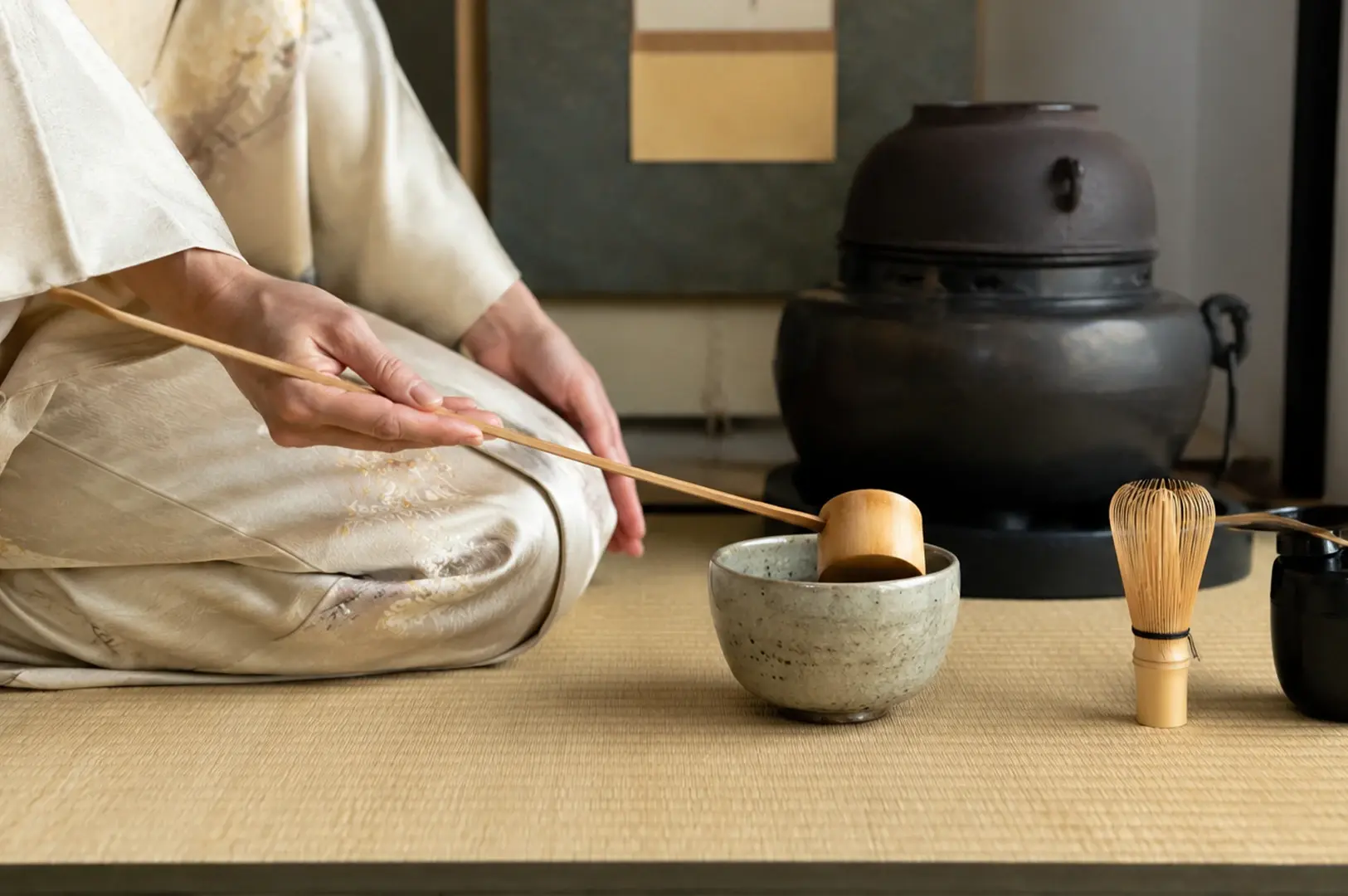
Rooted deeply in Zen Buddhism, the tea ceremony is more than an art—it is a form of meditation. The deliberate actions of the tea master and the quiet participation of guests foster mindfulness and tranquility.
The practice encourages presence, echoing the philosophy of ichi-go ichi-e, or "one meeting, one chance," reminding everyone that each tea ceremony is a unique, unrepeatable moment to be cherished.
The Formal Tea Ceremony: Etiquette and Atmosphere
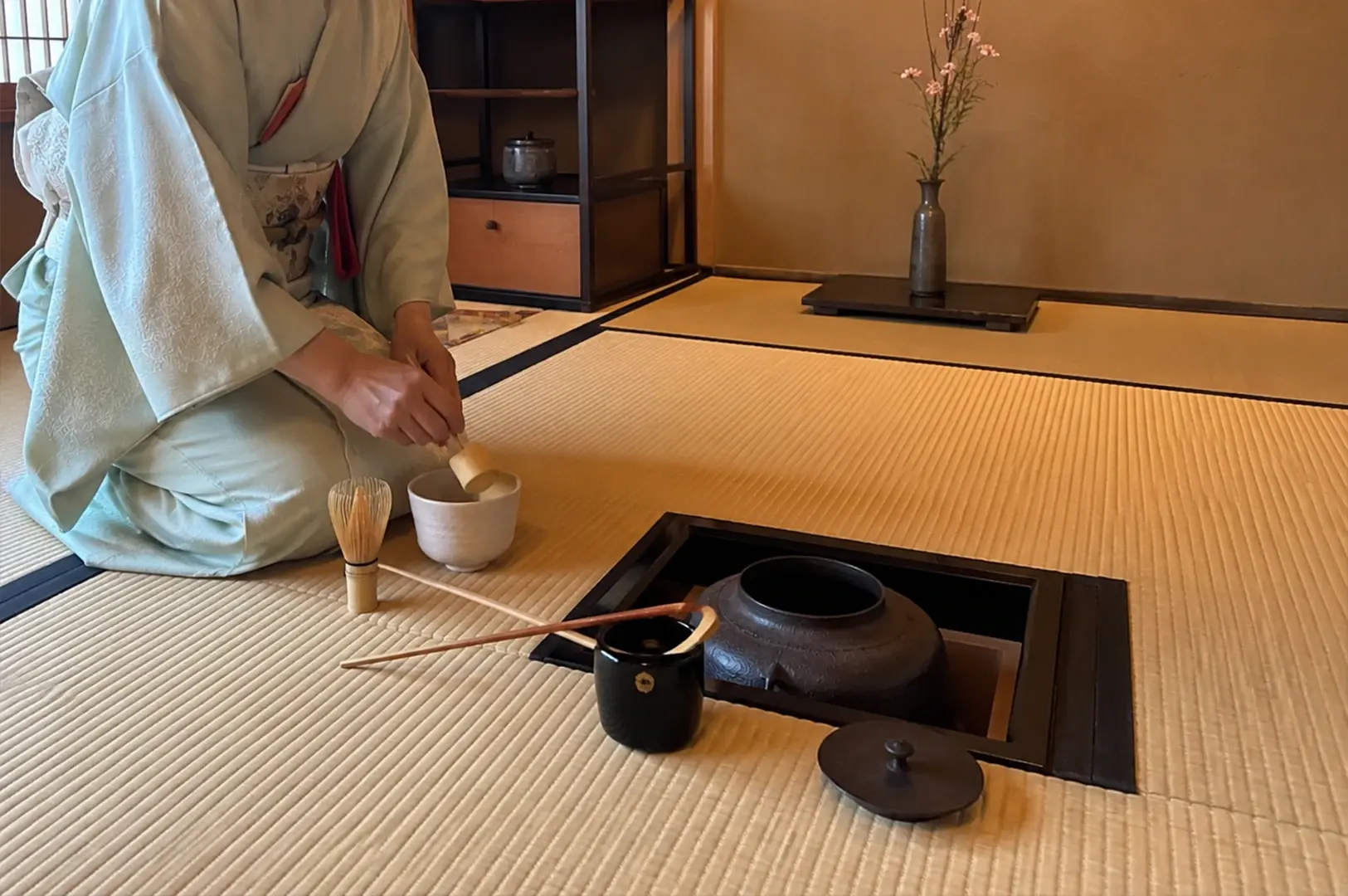
A formal tea ceremony can last up to four hours, beginning with a meal and culminating in the preparation and serving of both thick and thin tea. Participants are expected to wear traditional Japanese clothing such as a kimono or modest attire, remove their shoes before entering the tea room, and observe specific etiquette, including bowing and respectful conversation centered on the ceremony and seasonal changes.
The atmosphere is intentionally serene, designed to foster a sense of harmony and respect among guests and host alike.
Embracing the Tradition: The Enduring Art of the Tea Ceremony in Japan
The tea ceremony in Japan remains a living tradition that connects past and present. It is a practice that embodies the essence of Japanese culture, discipline, grace, and the celebration of impermanence.
Whether experienced in Kyoto, Tokyo, or elsewhere, the tea ceremony invites all who participate to slow down, appreciate the beauty in simplicity, and find peace in a single bowl of matcha tea.

A Guide to the Best Tea Singapore Has to Offer
Introduction In a city known for its vibrant food culture, tea quietly holds its own place among Singapore’s favourite indulgences. While coffee often dominates cafe conversations, many tea lovers know that the search for the best tea Singapore offers leads to a surprisingly diverse world of flavours, traditions, and carefully crafted blends. Across the city,…
-
A Tea Lover’s Guide to the Best Japanese Restaurant Singapore Dining Experiences
Searching for the best Japanese restaurant Singapore offers usually leads people toward sushi counters, omakase menus, or beautifully plated sashimi. Those elements certainly define much of the appeal of Japanese cuisine, but anyone who has spent time dining in Japan knows that the experience rarely ends with the food alone. Tea quietly accompanies the meal….

Why Tea Conversations Always Last Longer Than Expected
There is a small pattern I have started to notice about tea. Whenever tea is involved, conversations tend to last longer than planned. Someone says they will only stay for a short while. A kettle is placed on the stove. Tea is poured into a few cups, and suddenly the conversation begins to stretch in…
-
White Tea: The Most Delicate Expression of Chinese Tea
Introduction Among the many tea types that have emerged from centuries of tea cultivation, white tea often stands apart for its quiet character. It is light in colour, gentle in aroma, and remarkably simple in its making. Yet behind this softness lies a long tradition of craftsmanship that has shaped some of the most refined…
-
The Quiet Discipline of Brewing Tea
There is a quiet discipline that lives inside the act of brewing tea. It is not something that announces itself loudly. There are no strict rules written on the wall, no visible signs that something significant is taking place. From the outside, the process appears simple enough. Water is heated. Leaves are placed into a…
-
Understanding the Six Types of Chinese Tea and What Makes Each Unique
Introduction Across centuries of Chinese culture, tea has held a place of quiet importance. It appears in homes, markets, and tea houses across China, where the simple act of sharing a cup reflects patience, hospitality, and tradition. For many people, Chinese tea is not only a beverage. It is a moment of reflection and a…
-
Stepping Into a Tea Shop Singapore: A World of Leaves, Craft, and Calm
Introduction A good tea shop Singapore offers is not simply a place to buy tea. It is a place where flavour, craft, and tradition meet. In a city known for speed and convenience, a proper tea house offers something different. It invites people to slow down, pay attention, and actually taste what is in their…
-
When Tea Becomes Too Beautiful to Drink
I recently saw a photograph of a tea session online that looked almost too perfect. The teapot sat neatly on a polished tray. The cups were aligned in a way that suggested someone had carefully adjusted them, perhaps more than once. A small branch of flowers leaned gently toward the tea set as if it…

How Tea in Singapore Traveled From Colonial Tables to Modern Teahouses
Tea in Singapore moves quietly through the day, carrying within its steam the gentle convergence of traditions that have found their way to this island over generations. In the soft morning light of hawker centers, the rhythmic pour of teh tarik creates small moments of pause, while afternoon finds its way into tranquil tea rooms…

Are We Drinking Tea or Just Collecting It?
There was a time when buying tea meant something simple. You chose a tea you liked, brought it home, and brewed it. The leaves were meant for hot water, not long-term storage. Yet something has quietly changed. Today it is not unusual to meet tea drinkers with shelves filled with sealed cakes, tins, and packets…