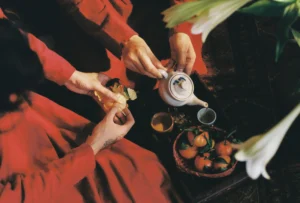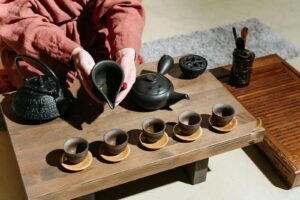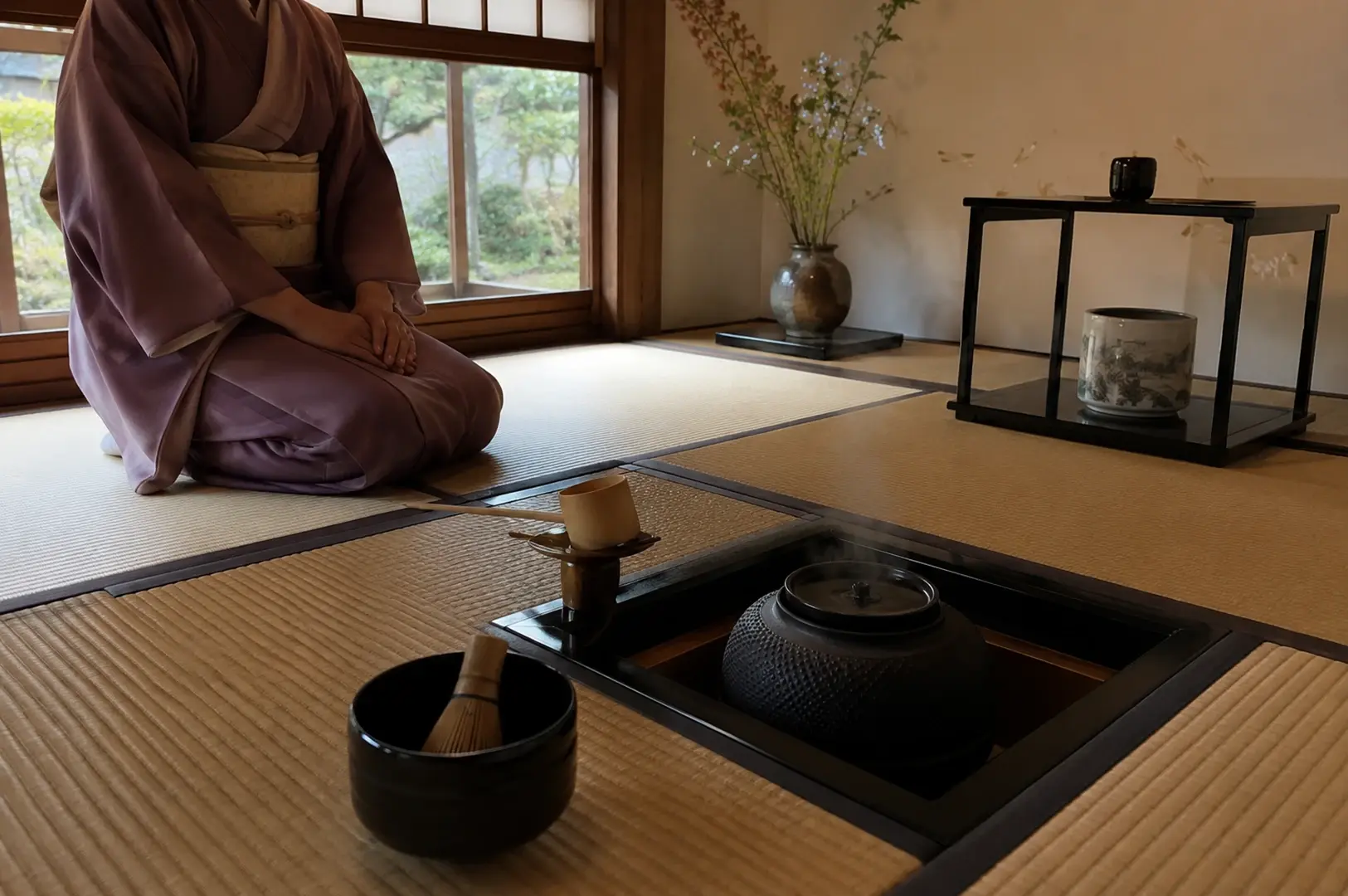
Water begins to move in a small iron kettle. The sound is faint, almost like wind through pines, and in a quiet room lined with tatami mats, it is enough to fill the silence.
A host kneels in the tea room. A guest waits. Nothing is said, yet something has already begun.
This is where the tea ceremony in Japan lives, in the space before the first sip. It is a practice known by several names, and each one hints at a different truth held within the same bowl.
More Than the Making of Japanese Tea: The Traditional Tea Ceremony
The Japanese tea ceremony is often described as the preparation of matcha tea, but that description barely reaches its surface. What unfolds is a disciplined act of hospitality, aesthetics, and attention, refined over centuries into something quietly profound.
It is called chanoyu, which means hot water for tea. It is also called sado or chado, the way of tea, a phrase that carries the weight of a lifelong path rather than a single event.
The naming matters. To call it a way is to admit that tea, here, is not the destination. It is the road one walks to arrive somewhere less visible.
How a Simple Drink Became a Discipline: History and Practice
Tea leaves were introduced to Japan from China in the 8th century, initially enjoyed by Buddhist monks who used powdered green tea to stay awake during long meditation sessions. Over time, the practice spread, and by the Muromachi period, tea drinking became popular among various social classes, including the samurai class.
Sen no Rikyu, the revered tea master of the 16th century, is credited with shaping the traditional tea ceremony into its enduring form. He emphasized wabi-sabi, the beauty of imperfection and simplicity—and introduced the four core principles of harmony, respect, purity, and tranquility. These values remain central to most tea ceremonies today.
The Kyoto Tea Ceremony: Heart of Japanese Culture
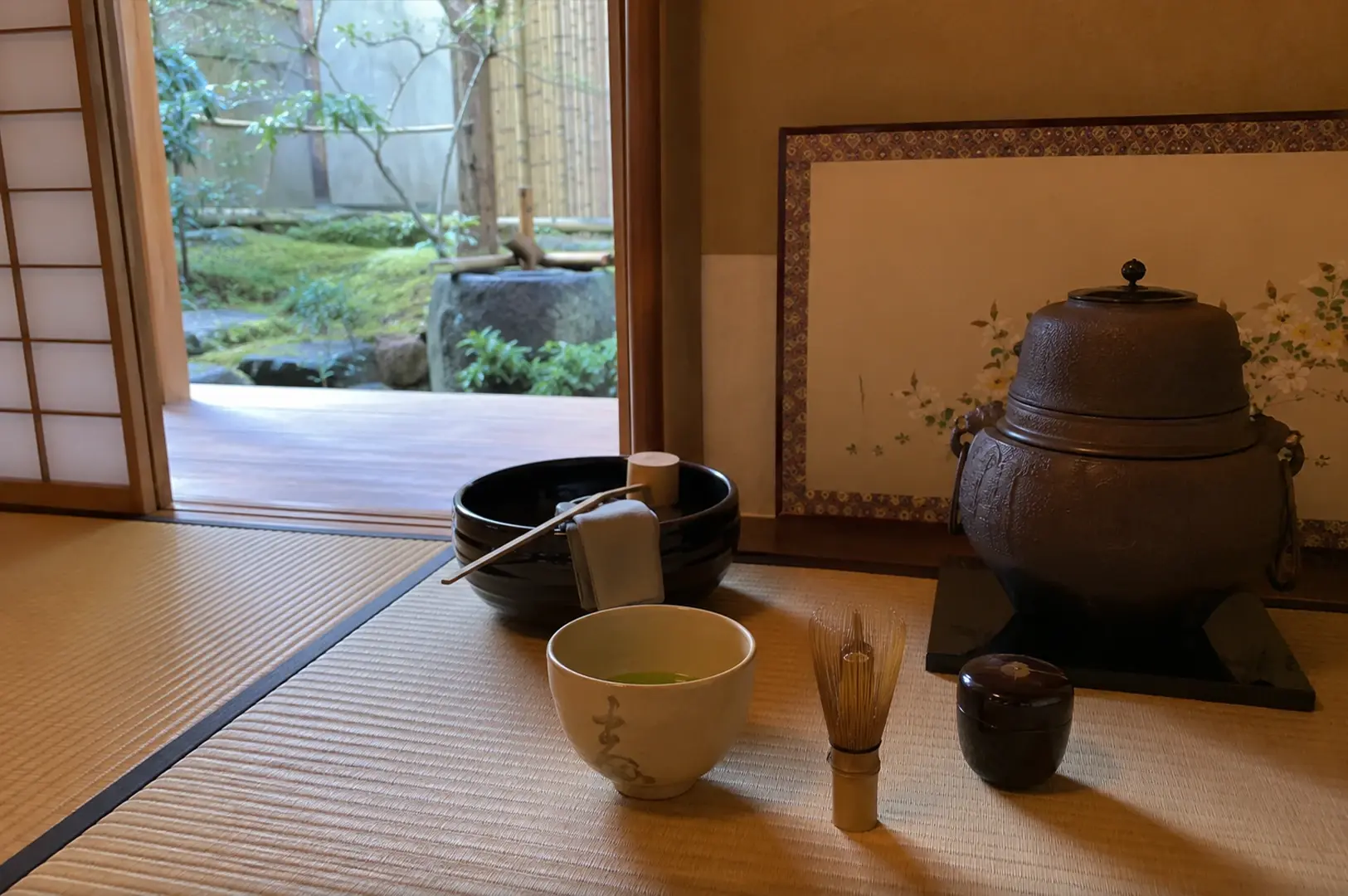
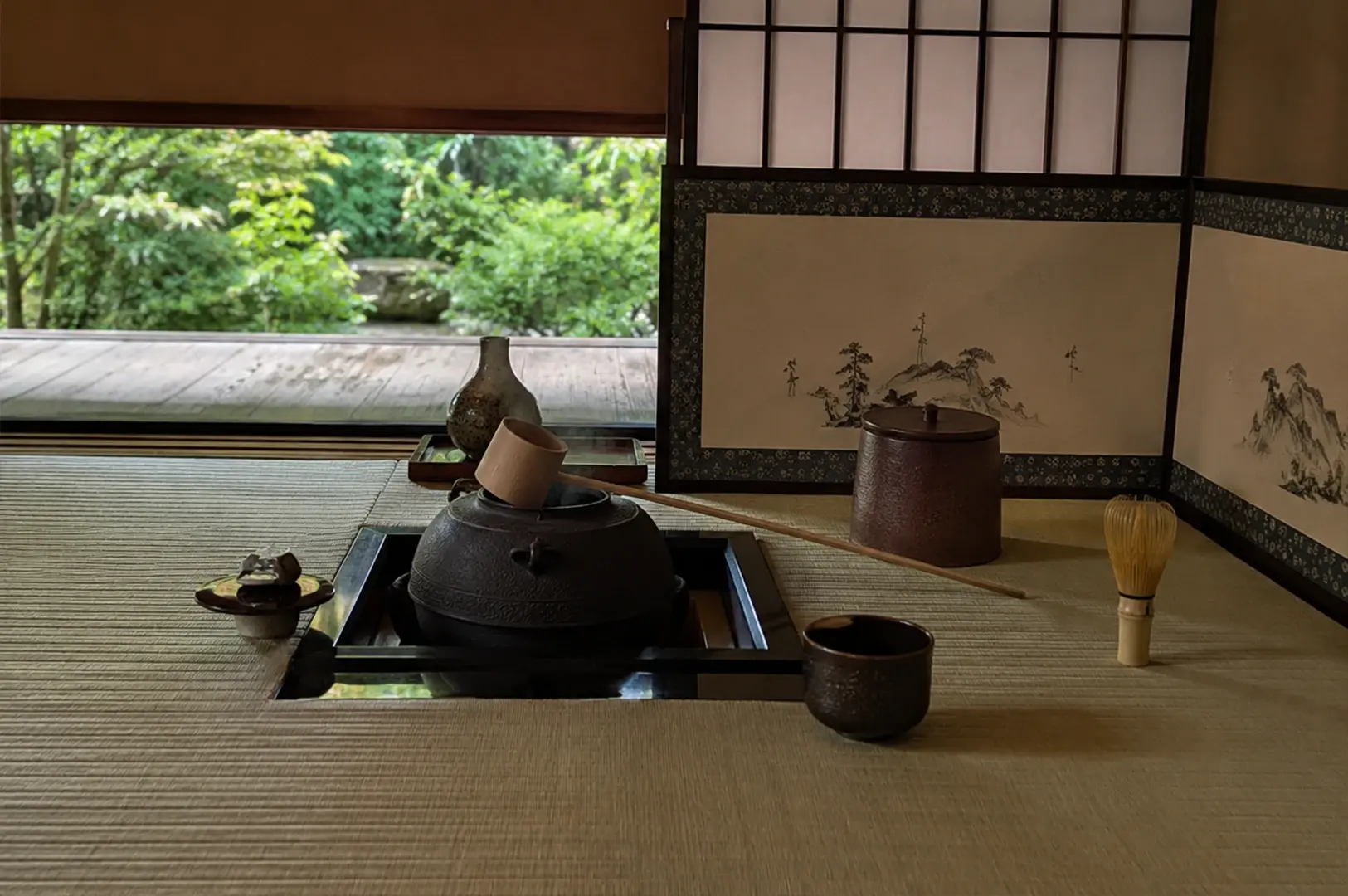
Kyoto city, especially the Higashiyama ku district, remains the cultural center of the Japanese tea ceremony. The Kyoto tea ceremony is known for its authentic style, practiced in historic tea ceremony venues surrounded by tranquil tea gardens. The tea room, often with a tatami floor, is designed to create a meditative atmosphere enhanced by seasonal flowers and traditional sweets.
Three main schools of tea ceremony are based in Kyoto, each preserving the art with subtle stylistic differences. Visitors to Kyoto can experience tea ceremonies that include a formal meal, such as a kaiseki lunch, followed by tea drinking that features both thick tea (koicha) and thin tea (usucha).
The preparation and serving of tea in Kyoto’s ceremonies strictly follow the principles laid down by Sen no Rikyu, the legendary tea master who shaped the tea ceremony into a refined spiritual practice. Every movement, from scooping the powdered tea with the chashaku to whisking it into a frothy cup with the chasen, is performed with deliberate grace.
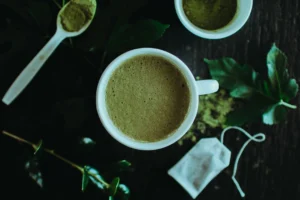
The tea itself, known as matcha, is a finely ground powdered green tea that is whisked with hot water to create a vibrant, frothy beverage served in a carefully chosen tea bowl (chawan). The choice of the tea bowl is significant; its shape, texture, and even imperfections are appreciated as part of the ceremony’s aesthetic.
In Kyoto, the tea ceremony is not only about drinking tea but about the entire experience, the sound of boiling water, the aroma of the tea, the tactile sensation of the cup, and the quiet appreciation of the moment. The host’s skill in preparing the tea and the guest’s mindful reception of the cup embody the spirit of harmony and respect central to the tradition.
Moreover, Kyoto’s tea ceremonies often emphasize the seasonal aspect of tea, with the type and presentation of tea adjusting to reflect the time of year. This seasonal mindfulness connects participants deeply with nature and the passage of time, reinforcing the wabi-sabi philosophy of beauty in imperfection and transience.
Thus, the Kyoto tea ceremony offers an immersive experience into the authentic tea culture of Japan, where the simple act of sharing a cup of tea becomes a profound ritual of connection, mindfulness, and artistry.
The Tea Room and Tea Equipment: Tools of the Art
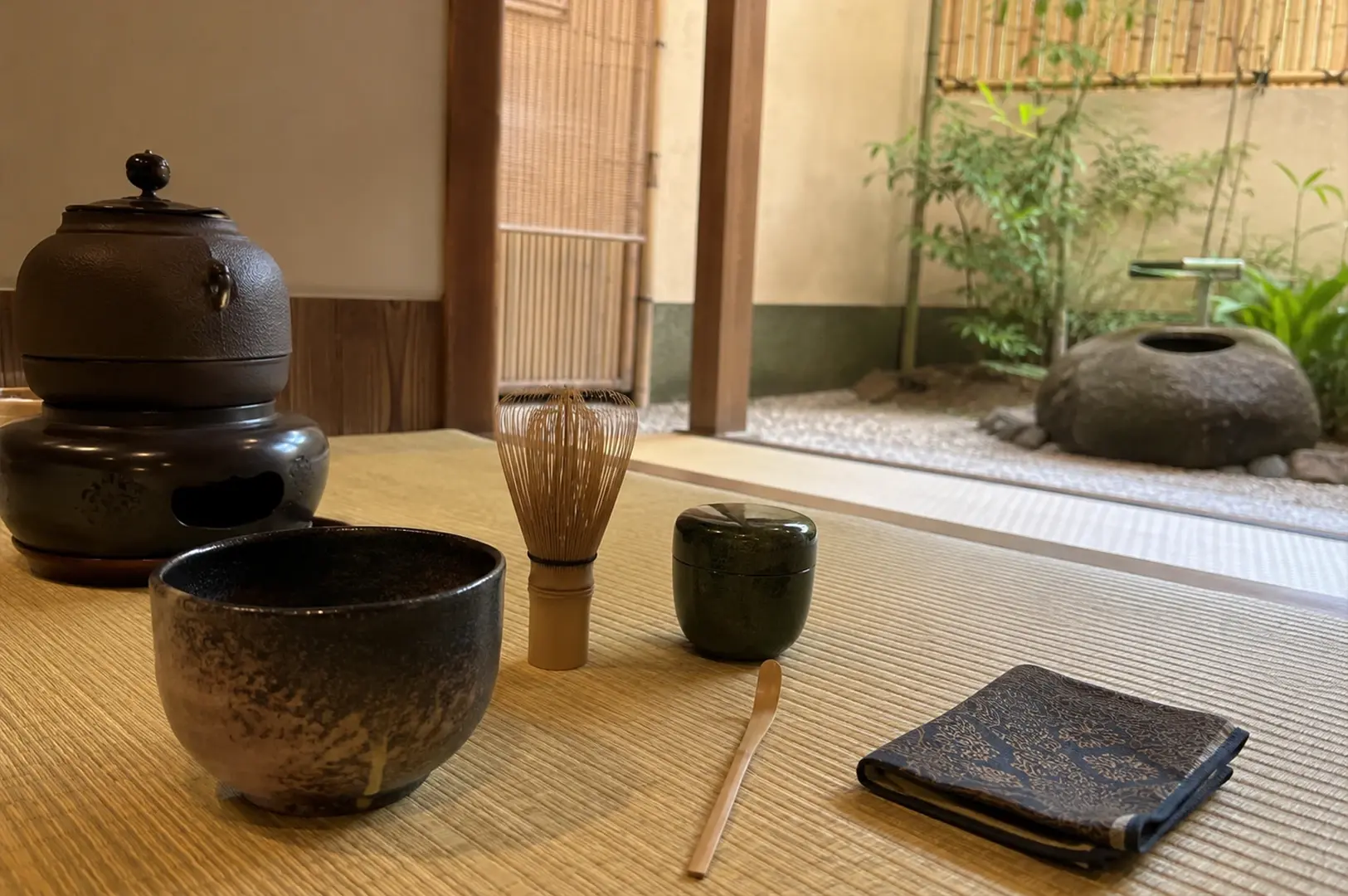
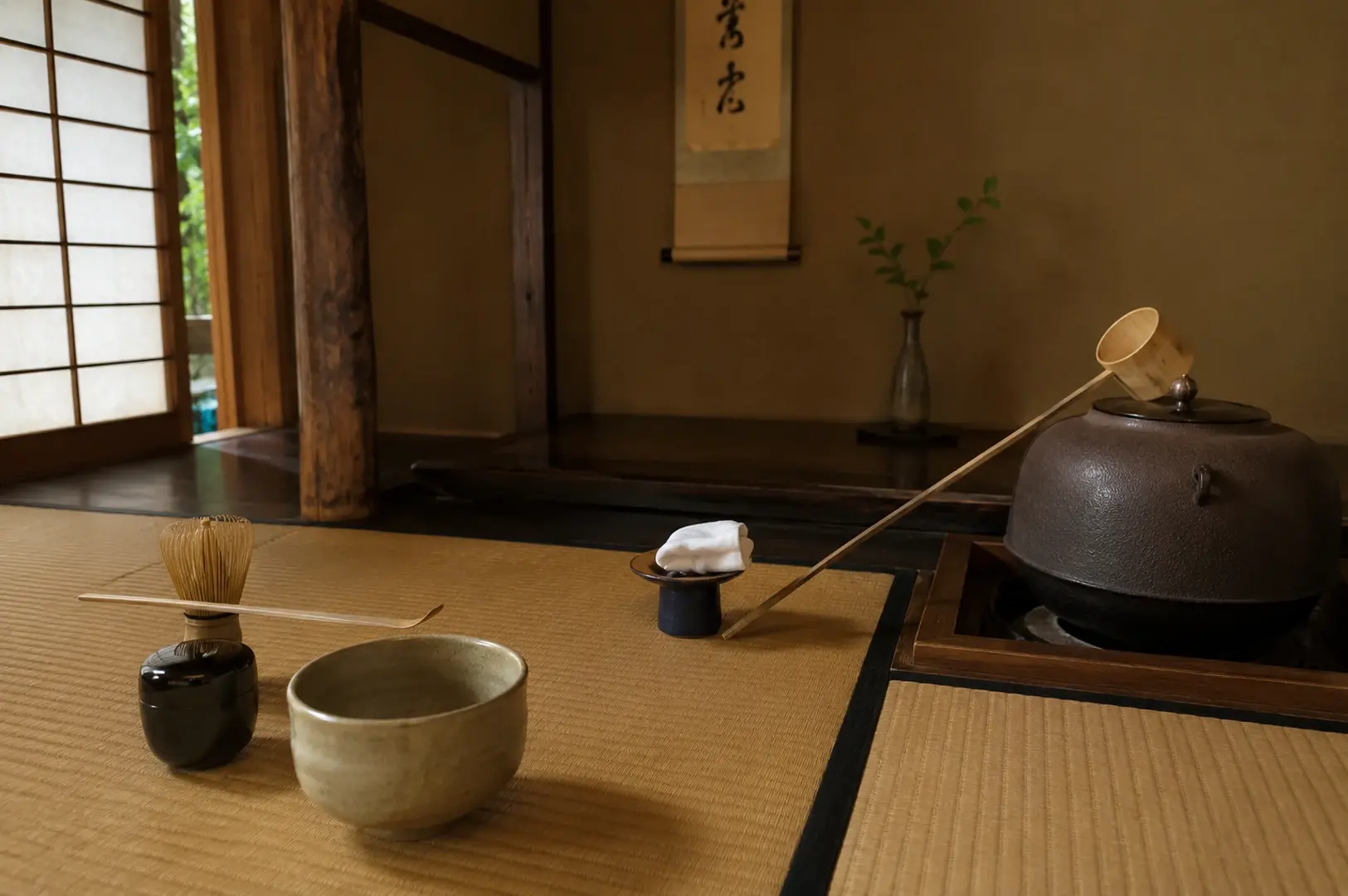
The tea room is a simple, uncluttered space where every item is chosen with intention. The tea equipment includes the tea bowl (chawan), tea whisk (chasen), tea scoop (chashaku), tea caddy (natsume), and the iron kettle.
The host carefully prepares the powdered green tea, whisking it into a frothy bowl of matcha tea. The tea scoop measures the highest quality tea leaves, and the tea utensils are handled with reverence. The stone basin near the entrance of the tea garden is used by guests to purify their hands before entering, symbolizing cleansing and readiness.
Drinking Tea: The Art of Thin Tea and Thick Tea
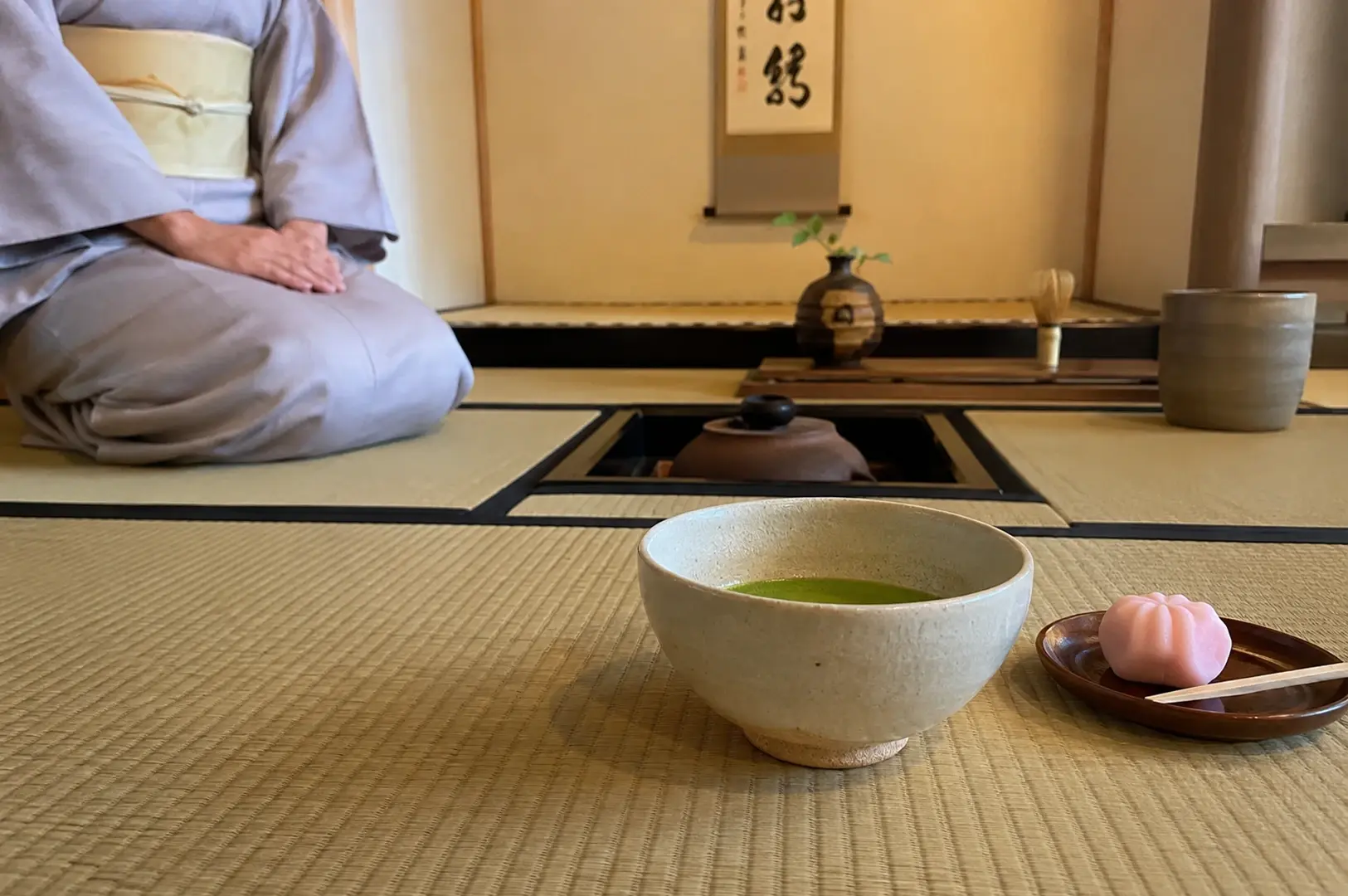
Most tea ceremonies serve two types of tea: thick tea and thin tea. Thick tea uses a higher concentration of powdered green tea and is shared from a single bowl among participants, emphasizing unity. Thin tea is lighter and served individually, often enjoyed after traditional Japanese sweets.
Guests are expected to sit on tatami mats, bow respectfully to the host, and receive the tea bowl with both hands. Drinking tea involves turning the bowl slightly before taking a few sips, appreciating the warmth and flavor while embracing the quiet atmosphere.
Japanese Sweets and Seasonal Flowers: Enhancing the Experience
Traditional sweets, or wagashi, are served before the tea to complement the bitterness of the matcha. These sweets vary by season, reflecting the natural beauty of spring, autumn, or other times of the year, and are often accompanied by carefully arranged seasonal flowers that adorn the tea room.
The combination of tea, sweets, and flowers creates a harmonious experience that embodies Japanese life and culture, inviting participants to slow down and savor the moment.
Zen Buddhism and the Tea Ceremony: Meditation in Motion
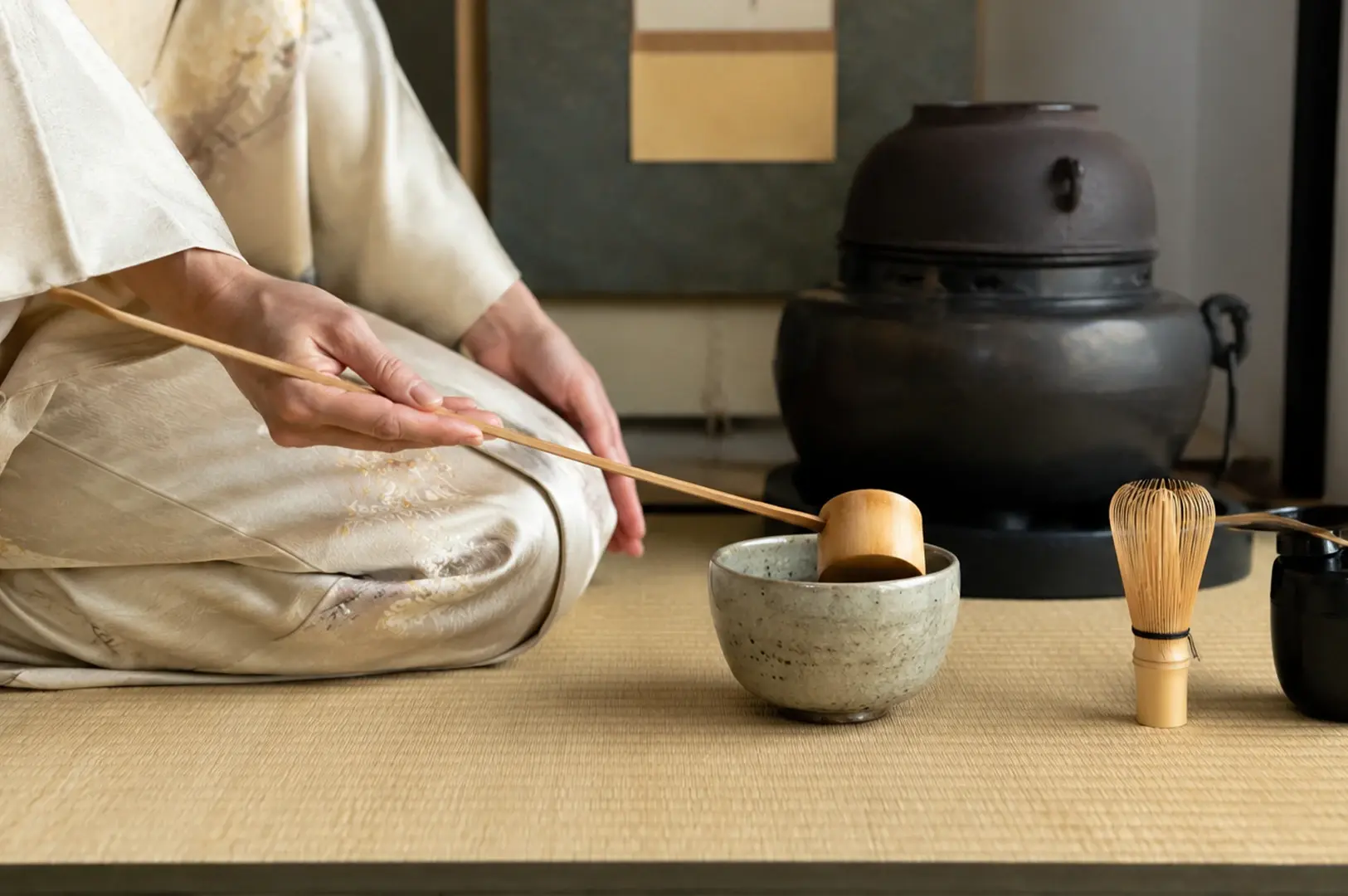
Rooted deeply in Zen Buddhism, the tea ceremony is more than an art—it is a form of meditation. The deliberate actions of the tea master and the quiet participation of guests foster mindfulness and tranquility.
The practice encourages presence, echoing the philosophy of ichi-go ichi-e, or "one meeting, one chance," reminding everyone that each tea ceremony is a unique, unrepeatable moment to be cherished.
The Formal Tea Ceremony: Etiquette and Atmosphere
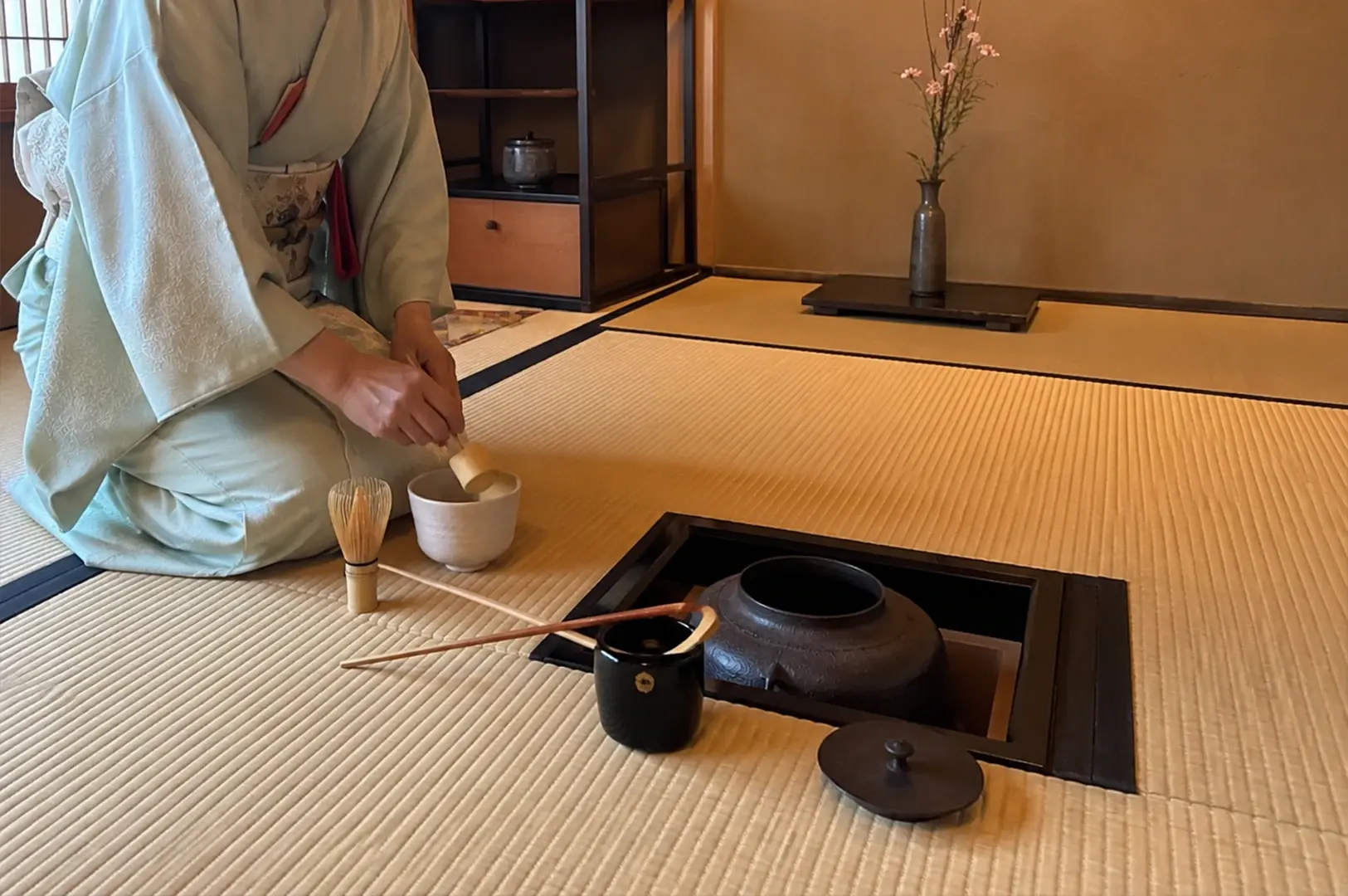
A formal tea ceremony can last up to four hours, beginning with a meal and culminating in the preparation and serving of both thick and thin tea. Participants are expected to wear traditional Japanese clothing such as a kimono or modest attire, remove their shoes before entering the tea room, and observe specific etiquette, including bowing and respectful conversation centered on the ceremony and seasonal changes.
The atmosphere is intentionally serene, designed to foster a sense of harmony and respect among guests and host alike.
Embracing the Tradition: The Enduring Art of the Tea Ceremony in Japan
The tea ceremony in Japan remains a living tradition that connects past and present. It is a practice that embodies the essence of Japanese culture, discipline, grace, and the celebration of impermanence.
Whether experienced in Kyoto, Tokyo, or elsewhere, the tea ceremony invites all who participate to slow down, appreciate the beauty in simplicity, and find peace in a single bowl of matcha tea.

The Soul of Tea: Unveiling the Beauty of Traditional Tea Ceremonies
Tea is more than just a drink, isn’t it? It is a quiet moment in the middle of a busy day, a small ritual that grounds us. We are not just drinking tea; we are experiencing something far more profound, a glimpse into the centuries-old traditions of cultures that revere this simple beverage. Whether in…

The Matcha Latte and the Tea It Came From
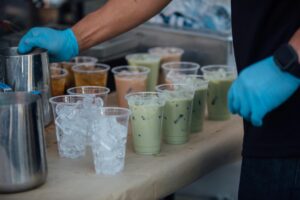
The matcha latte drink has become one of the most recognizable tea-based beverages in modern cafés. From Starbucks menus to independent tea bars, it is served hot in ceramic mugs or as iced matcha lattes layered in a glass with cold milk and ice. It is marketed as a healthy drink. It is praised for…

We Are Drinking Tea Too Quickly
There is something ironic about rushing tea. We order it to relax. We call it calming. We describe it as grounding. And yet, more often than not, we drink it the same way we drink everything else — between emails, between meetings, between scrolling. Tea has become background noise. A mug beside the laptop. A…
-
Where Tea Meets Cuppage Plaza Food: Restaurants That Serve Both Well
Walk into Cuppage Plaza Singapore and you immediately feel the shift. Just a short walk from Somerset MRT Station, Cuppage Plaza is a go-to spot for anyone craving authentic Japanese cuisine. Sure, Orchard Road is just outside, all shiny and bustling, but once you step inside this older building, the vibe totally shifts. The hallways…
-
Milk Tea Is Not Tea
This is not an argument about preference. It is a question about naming. Milk tea is everywhere now. It travels in oversized cups, sealed with plastic film. It arrives layered with foam, syrup, pearls, jelly, whipped cream. It is photographed before it is tasted. It is queued for. It is branded. It is loved. But…
-
A Journey into Herbal Teas: Exploring Nature’s Finest Infusions
Imagine cupping your hands around a warm mug, inhaling the sweet, floral scent of chamomile tea or the invigorating peppermint tea aroma from the peppermint plant. As you take the first sip, you feel a sense of calm and comfort wash over you. This soothing experience is the magic of herbal teas, a diverse and…
-
Singapore Tea for Every Palate and Every Ritual
What draws us to seek something deeper in a simple cup of tea? In Singapore, where countless cultures have settled like leaves steeping in warm water, the answer unfolds quietly in the spaces between tradition and modernity. Good tea emerges from patient sourcing, from the steady hands of those who understand its language, from leaves…
-
Where to Find Private Room Singapore Spaces for Tea Rituals
In a city that never truly rests, quiet becomes something you have to choose. You feel it when you’re weaving through Orchard Road in the middle of the day, or squeezing past crowds in the Central Business District at lunch hour. The lights are bright, the notifications keep coming, and even when you sit down, your…
-
Tea Is Losing Its Ceremony — And We Let It Happen
No one announced it. There was no collective decision, no moment of cultural shift. And yet, the ceremony has quietly receded from everyday tea. What was once deliberate has become automatic. Tea used to require attention. Water temperature mattered. Leaves were measured with care. The cup was chosen, not grabbed. Even in the absence of…

The Art of Aging: Understanding Authentic Yunnan Pu-erh Tea
Among the world’s most revered fermented dark teas, few types evoke as much intrigue and respect as Yunnan pu erh tea (普洱). Crafted from ancient tea trees in Yunnan province, this tea produced by traditional methods is a living testament to China’s rich beverage heritage. Unlike most loose leaf tea or black teas, high-quality pu…