There is a curious tendency among tea enthusiasts to speak more carefully about leaves that are difficult to obtain.
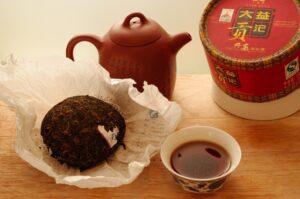
A limited harvest. An ageing Pu-erh cake. A Long Jing from a particularly celebrated growing area.
The language changes almost immediately.
We become more attentive to provenance, more patient with preparation, and more willing to search for qualities that might otherwise escape us.
I understand this instinct.
Scarcity can make something interesting. A tea produced in small quantities may reflect particular growing conditions or skills that deserve recognition.
But I have never been entirely comfortable with the idea that rarity should determine how much attention a tea receives.
Consider an ordinary Tie Guan Yin.
Not an exceptional competition-grade example, nor a particularly expensive harvest. Simply a well-made oolong that can be enjoyed regularly.
Its floral character, gentle sweetness, and changing expression across infusions are no less real because the tea is widely available.
Yet we sometimes approach familiar teas with less curiosity.
We assume we already understand them.
I think this is where appreciation quietly becomes confused with prestige.
There is a difference between recognising exceptional craftsmanship and believing that only exceptional things deserve careful attention.
A modest black tea can reveal considerable complexity. An everyday roasted oolong can offer warmth and familiarity that a rare tea, however impressive, may not provide.
Neither experience needs to compete with the other.
I have also come to question what we mean when we describe a tea as valuable.
Price can reflect genuine factors such as labour, production costs, quality, and limited supply. But it can also reflect reputation, demand, and the desire to possess something uncommon.
Those are not necessarily measures of enjoyment.
Perhaps the more revealing question is whether we would still appreciate a tea if we knew nothing about its price or reputation.
Would we give it the same patience?
Would we notice the same details?
There is nothing wrong with seeking rare leaves. Discovery remains one of tea’s enduring pleasures.
But I would rather not become so occupied with finding extraordinary tea that I overlook the ordinary cup already before me.
Attention, after all, is something we choose to give.
And a tea does not need to be rare to deserve it.
With quiet regard,
N. P. Lim

A Journey into Herbal Teas: Exploring Nature’s Finest Infusions
Imagine cupping your hands around a warm mug, inhaling the sweet, floral scent of chamomile tea or the invigorating peppermint tea aroma from the peppermint plant. As you take the first sip, you feel a sense of calm and comfort wash over you. This soothing experience is the magic of herbal teas, a diverse and…
-
Singapore Tea for Every Palate and Every Ritual
What draws us to seek something deeper in a simple cup of tea? In Singapore, where countless cultures have settled like leaves steeping in warm water, the answer unfolds quietly in the spaces between tradition and modernity. Good tea emerges from patient sourcing, from the steady hands of those who understand its language, from leaves…
-
Where to Find Private Room Singapore Spaces for Tea Rituals
In a city that never truly rests, quiet becomes something you have to choose. You feel it when you’re weaving through Orchard Road in the middle of the day, or squeezing past crowds in the Central Business District at lunch hour. The lights are bright, the notifications keep coming, and even when you sit down, your…
-
Tea Is Losing Its Ceremony — And We Let It Happen
No one announced it. There was no collective decision, no moment of cultural shift. And yet, the ceremony has quietly receded from everyday tea. What was once deliberate has become automatic. Tea used to require attention. Water temperature mattered. Leaves were measured with care. The cup was chosen, not grabbed. Even in the absence of…

The Art of Aging: Understanding Authentic Yunnan Pu-erh Tea
Among the world’s most revered fermented dark teas, few types evoke as much intrigue and respect as Yunnan pu erh tea (普洱). Crafted from ancient tea trees in Yunnan province, this tea produced by traditional methods is a living testament to China’s rich beverage heritage. Unlike most loose leaf tea or black teas, high-quality pu…
-
Cafe Singapore Says It Values Craft. So Why Is Tea an Afterthought?
Singapore loves its café culture. We celebrate espresso machines. We admire single-origin beans. We debate tasting notes and extraction times like it is a sport. When someone says “Cafe Singapore,” most of us immediately picture coffee. But look at the tea menu. In many cafés, tea is reduced to a small corner of the page….
-
Tea from Japan: A Journey Through Culture, History, and Varieties
In Japan, tea is not merely a drink; it is a cultural cornerstone, a spiritual discipline, and an integral part of daily life. Tea is an important part of Japanese food culture, traditional ceremonies, and daily routines, reflecting its deep-rooted presence in society. The simple act of preparing and drinking Japanese tea is imbued with…
-
Sobacha: Exploring the Japanese Tradition of Roasted Buckwheat Tea (Sobacha)
Beyond the celebrated world of Japanese green tea lies a treasure trove of comforting, traditional beverages. Among the most beloved is sobacha (そば茶), a nutty and wholesome roasted buckwheat tea. It’s a staple in Japanese households and restaurants, cherished not just for its delightful flavor but for its deep connection to Japanese culinary culture and…
-
Ginger Tea Singapore: A Practical Journey to Finding and Enjoying This Wellness Beverage
Ginger tea is more than just a comforting beverage in Singapore; it’s a staple of modern wellness, a go-to remedy for chasing away the chill of an air-conditioned office, and a familiar taste of home across many cultures. The gentle warmth of ginger tea provides a soothing and invigorating sensory experience, evoking feelings of coziness…
-
Beyond Coffee: Cafe Singapore Cafes Worth Visiting for Their Tea
Author’s Note: I made just a few tweaks here and there to smooth out the flow and make your reading experience as enjoyable as possible. Hope you enjoy the read as much as I enjoyed fine-tuning it for you! If you close your eyes and imagine a typical cafe Singapore scene, you’d likely hear the…