It starts so small that you could almost miss it.
A dry, tight bundle sits at the bottom of a clear glass. It is about the size of a large marble, dull green and a little rough. There is nothing to suggest what might happen next.
Then the hot water goes in, and everyone at the table leans a little closer.
A tea flower in bloom tends to make people go quiet. I understand why. It feels a bit like watching a garden grow in fast motion, right there between the teacups.
That quiet makes me curious, though. Once the bloom has opened and the photos have been taken, what is left? Is a blooming tea just something lovely to look at, or is there more in the glass?
What Is a Tea Flower? A Guide to Blooming Tea
The term causes some confusion, so let's untangle it first.
When most people say “tea flower”, they usually mean blooming tea, also called flowering tea or display tea. This is a hand-tied bundle of tea leaves, usually white or green tea, with one or more dried edible flowers tucked inside. Common choices include jasmine, lily, osmanthus, hibiscus and amaranth. The bundle is sewn together with food-safe cotton thread and opens as it steeps.
There is a second meaning, and it surprises many tea lovers.
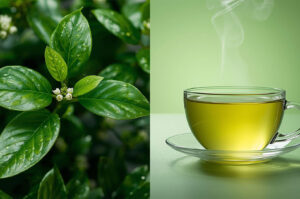
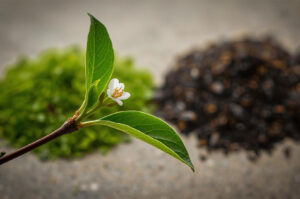
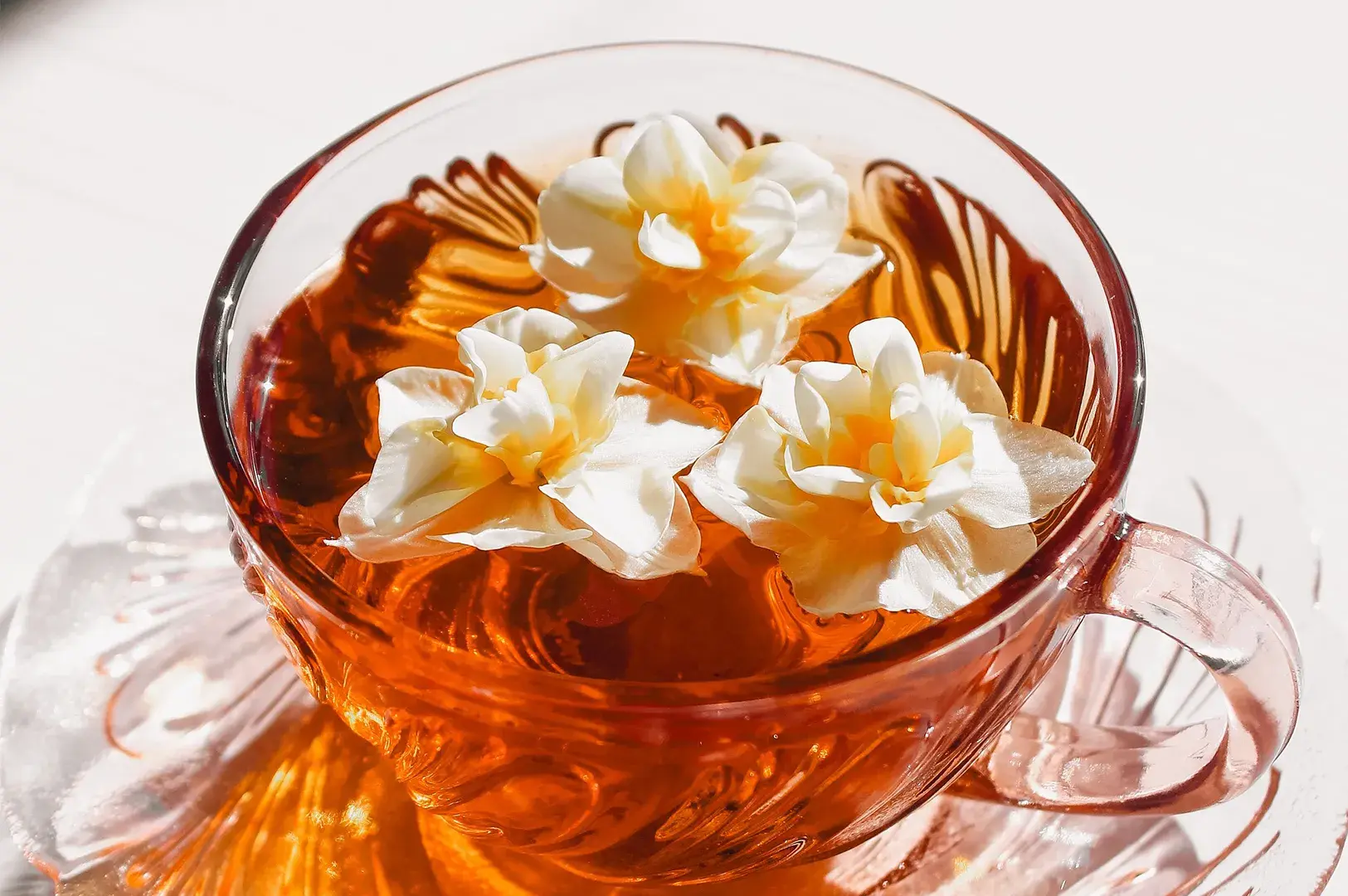
The tea plant, Camellia sinensis, has flowers of its own. They are small and white or faintly cream, with a dense centre of yellow stamens and a mild scent. They are pollinated by insects, and in most producing regions they appear in autumn rather than spring.
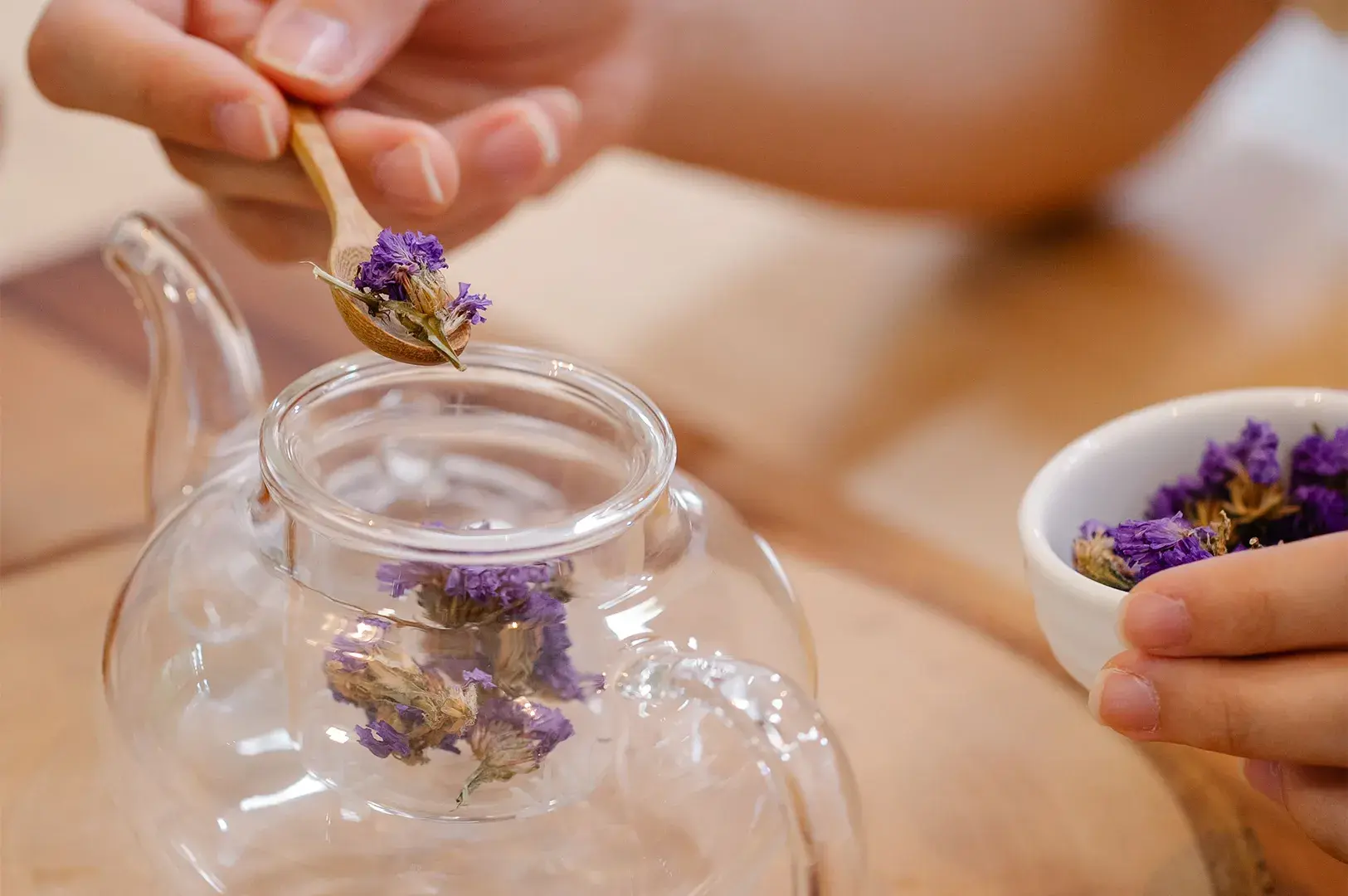
Growers generally prefer that their plants don't flower much. Making a flower uses energy the bush would otherwise put into new shoots, and those shoots are the harvest. Regular plucking and pruning keep flowering light on a well-managed tea field.
Even so, dried tea plant flowers are sometimes collected and infused, often blended with tea leaf, mostly in Chinese and Taiwanese products. They remain a small, niche part of the world of tea, with rare teas and specialist tea collections offering unusual ways to discover this subtle essence.
So here is the gentle twist: most flowering teas don't contain tea flowers at all. They contain tea leaves wrapped around the flower of another plant.
Then there is the third kind: flower tea made from petals and blossoms alone. Think of a cup of chrysanthemum from a drinks stall, or a floral tea bomb. These infusions contain no tea leaves. Many are caffeine-free, but it is always worth checking what's in the bag before assuming. Such drinks are generally classed as herbal tea, or a tisane made from flowers, herbs, spices and other plant materials.
Three different things, all sharing overlapping names. Tea is rarely as simple as its labels. The distinction can help you discover the perfect cup, suited to your taste and every mood.
The Craft Behind the Bloom
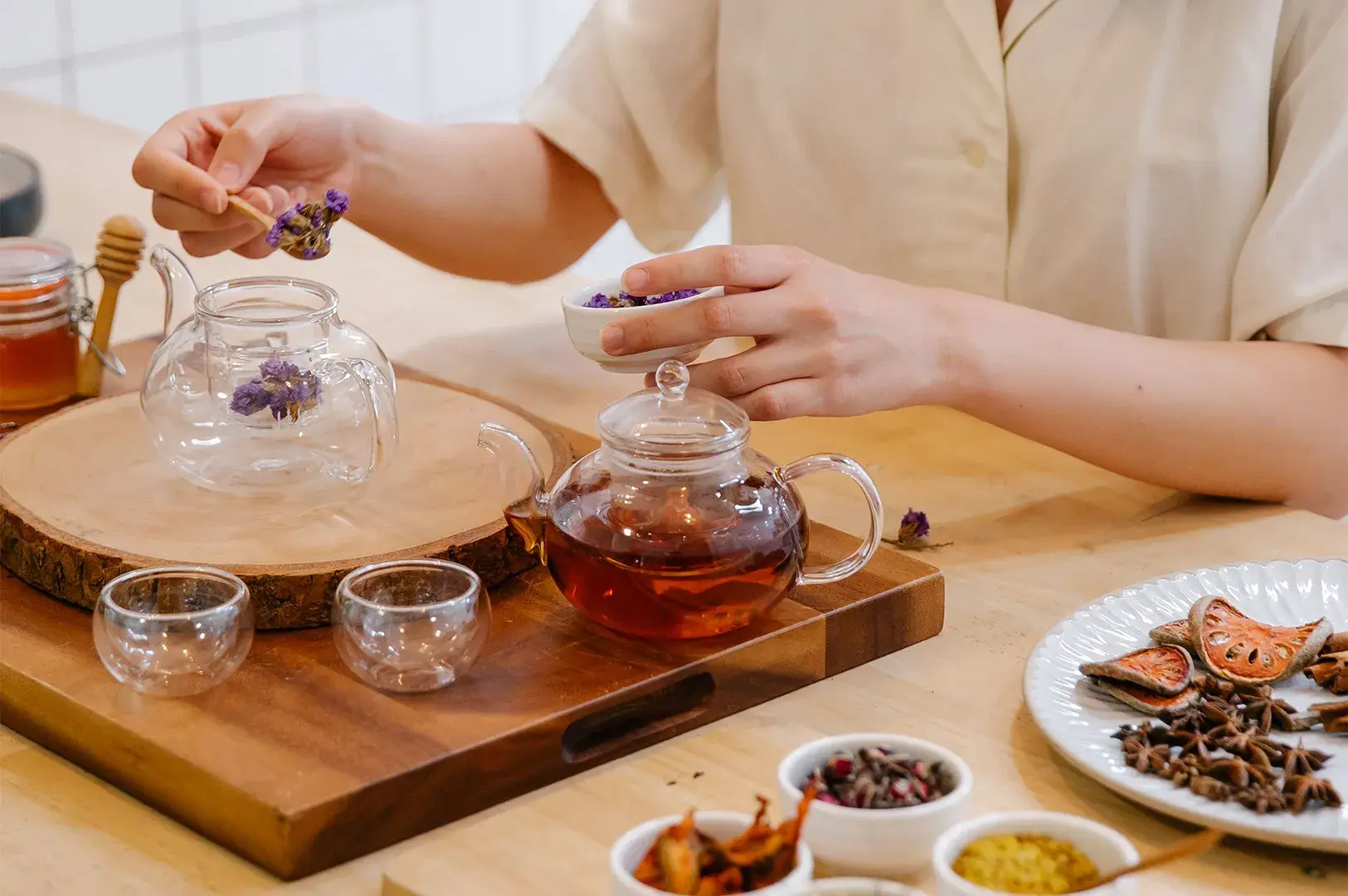
It's easy to watch a blooming tea open and think only of the moment. But that moment was decided long before the water was poured.
Someone selects long, flexible leaves and arranges them by hand around a dried flower. The leaves are then gathered and secured with cotton thread. If the bundle is tied too loosely, it may fall apart before it ever reaches your glass. If it is tied too tightly, the leaves can struggle to open, and the flower stays half hidden.
After tying, the bundle is dried slowly so it holds its shape until hot water wakes it up. Careful drying helps preserve freshness, aroma and the elegant form of the finished tea.
There's a reason white and green teas are the usual choice. Their leaves tend to be long and supple enough to wrap without snapping. Oolong appears now and then. Black tea is rare, as its leaves are usually less flexible and harder to tie.
What I find quietly moving is the patience in all of this. Every bloom that rises in the glass was once a pair of hands, a length of thread and a careful knot. The craft can transform simple materials into a small performance, made with intention.
Green Tea, Flower Tea and Health Benefits
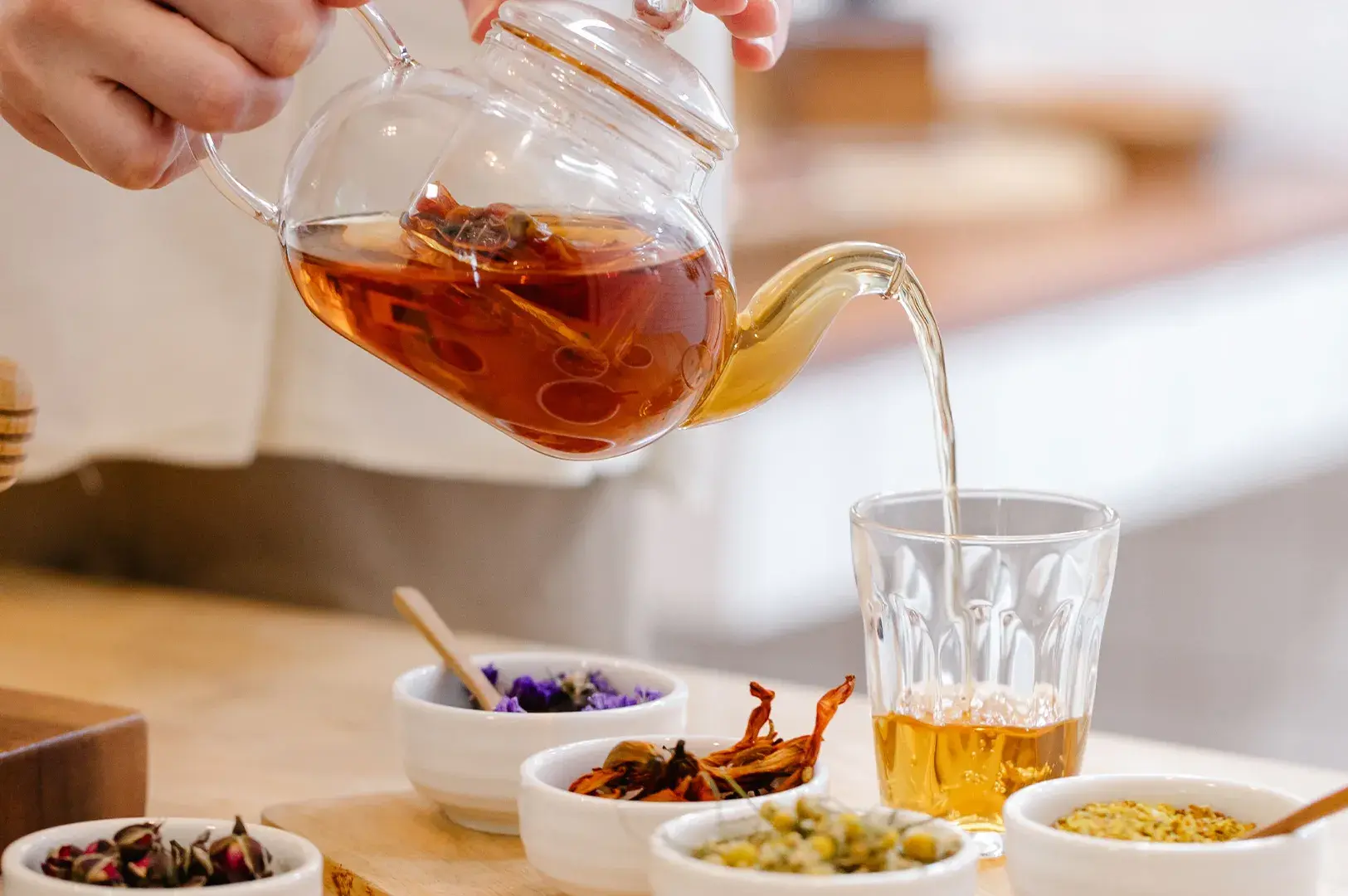
Here is where I want to question something we often assume.
A beautiful bloom feels like it should mean a beautiful cup. But appearance alone doesn't guarantee quality. A flawless display can sit on top of tired leaves, and a modest-looking bundle might brew something lovely.
Under the petals, a flowering tea is still real tea from Camellia sinensis. That means the base leaf naturally contains caffeine, unless it has been decaffeinated. The amount varies, but it isn't zero. Green tea is a common base, and it contains antioxidants; however, flowering tea is a drink to enjoy, not a medicine or a substitute for healthcare.
Claims about health benefits can be tempting. Tea and flowers may contain compounds studied for health, but the amount in a cup varies, and evidence for specific effects is not a guarantee. A floral infusion should not be relied on to improve lung health, liver function, the immune system or overall health. Nor should a cup be treated as a cure for bad breath, anxiety or sleep problems. If you have a health concern, speak with a qualified healthcare professional rather than relying on traditional claims.
The base leaf also shapes much of the taste. Tea company Art of Tea, which sells blooming teas, describes the flowers as contributing more to aroma than to flavour. That seems a useful way to think about it. The flower may be the reason you notice the glass. The leaf is often the reason you finish it.
So what if we treated a blooming tea the way we treat any other tea? Notice the colour of the liquor. Notice how the scent changes as the glass cools. Ask what the leaf is, and where it came from. The bloom then becomes an invitation to pay attention, not a substitute for it.
Flowers and Tea in Cultural Context
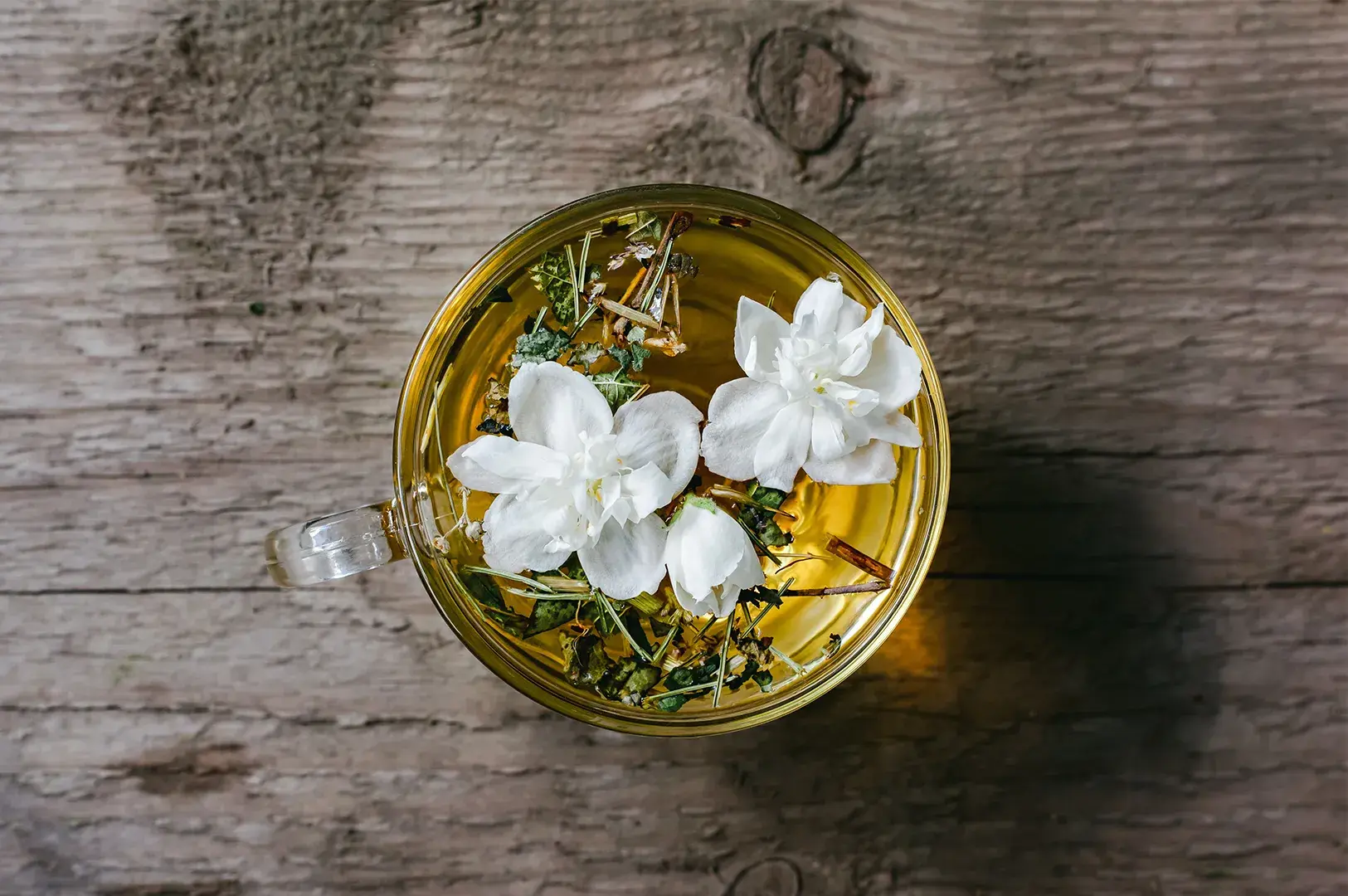
Flowers and tea have kept each other company for a long time, especially in China.
Jasmine is the familiar example. Jasmine-scented tea has deep roots in Chinese tea culture, which may be part of why flowering teas feel both new and somehow familiar. Many of us in Singapore grew up with jasmine tea poured at dim sum tables, or chrysanthemum bought cold in a plastic cup on a hot afternoon.
But it is worth being careful here. Not every floral tea is a blooming tea. Jasmine-scented green tea is a different tradition. A chrysanthemum infusion is a flower tea without tea leaves. A blooming tea is its own particular craft. Floral tea blends can vary widely, with some combining blossoms and loose tea, while others contain only flowers.
What does seem clear is the shape of it: an old relationship between tea and flowers, given a modern form by skilled hands. In some traditions, flowers suggest purity, harmony and the changing seasons; the ritual can invite people to savor a pause and connect with nature's rhythms.
Herbal Tea, Tea Collections and a Singapore Ritual
Blooming tea Singapore drinkers can find today often comes with a story attached.
Pétale Tea, a Singapore brand founded in 2018 by Rosemary Kwa, builds its range around hand-sewn blooming teas. As reported by The Straits Times, its Gratitude tin contains blooming tea balls made of lily and gomphrena, another name for globe amaranth, hand-sewn with cotton string to green tea leaves. Alongside them is a loose-leaf blend inspired by ondeh ondeh, with black Ceylon tea, mint, coconut bits and pandan extract.
I like that detail very much. Ondeh ondeh, those small green kueh with gula melaka hidden inside, is a taste many people here carry from childhood. Seeing it reimagined beside a blooming flower feels like two worlds sitting at the same table. You might serve a floral infusion plain, with a little honey, or chilled as iced tea, depending on your preference.
The brand's Growth tin pairs carnation and jasmine flowers with green tea leaves. Its message, the paper noted, is about how growth happens gradually, just as a tea bud slowly unfurls.
That idea of slowness may be the real reason blooming tea endures.
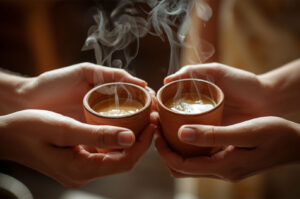
In a city where so much moves quickly, a flowering tea asks you to wait. You can't hurry it. You pour the water, and then you watch. If you're with friends, everyone watches together. For a few minutes, nobody is checking their phone. The unfolding can soothe the senses and lift the mood, not through a promised health benefit but through the pleasure of a shared moment.
The Straits Times has observed that floral and herbal infusions, along with tea balls, are gaining popularity in Singapore. Tea sellers may present a signature collection, a signature collection features particular blends or seasonal designs, or a tea chest with a scoop for loose tea.
Whether browsing tea collections or choosing a single bag, read the ingredients and choose with care. You can explore different aromas, create a simple tasting ritual and find a cup that feels right for every mood.
How to Discover the Perfect Blooming Tea for Every Mood
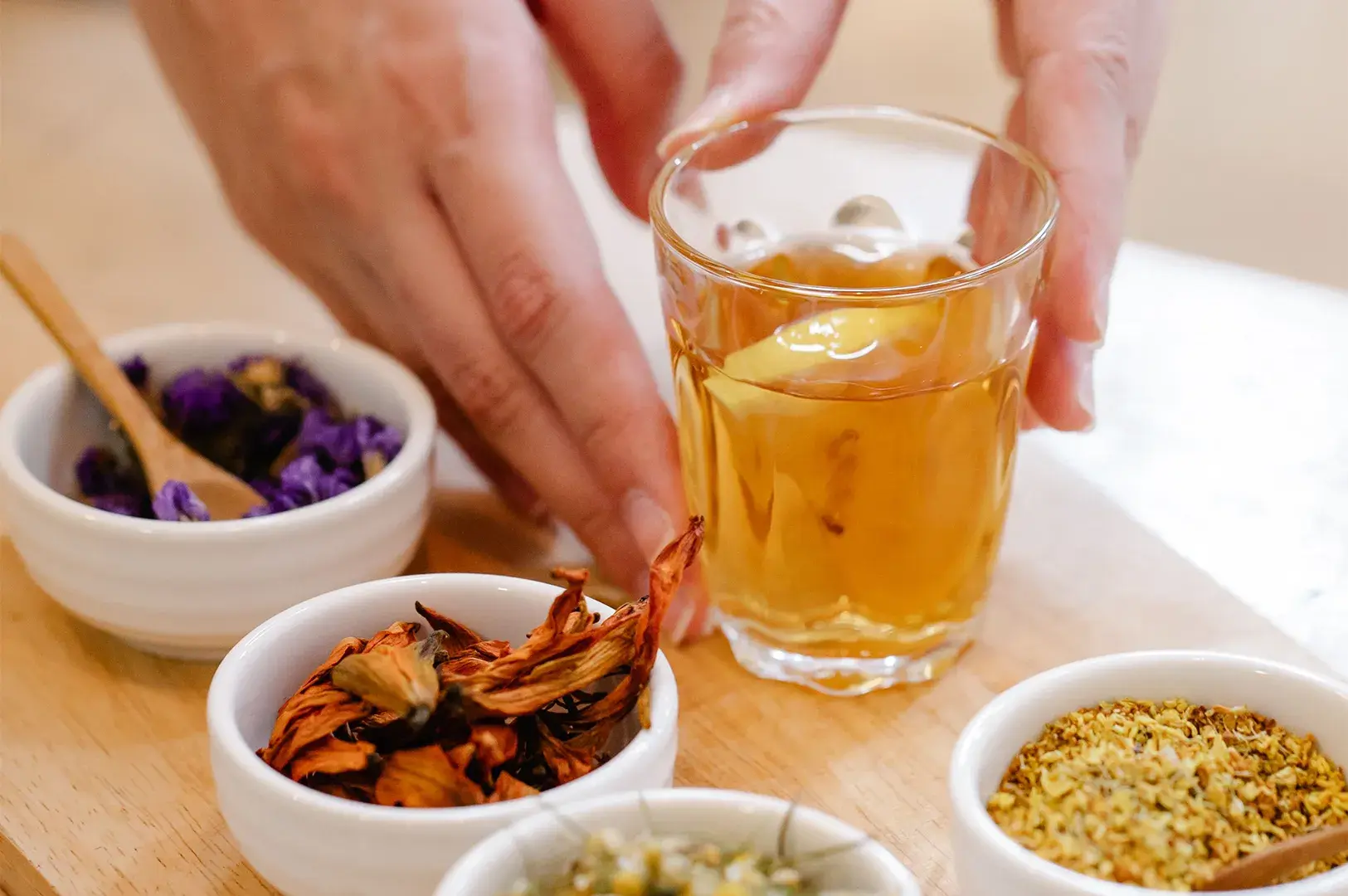
For the clearest view, place a flowering tea ball in a glass teapot or heat-safe glass vessel and pour in hot water. Watch the flower unfurl; the liquor is often light golden or yellowish. Follow the supplier's instructions for water temperature and steeping time, since leaves and flowers differ. Many bundles can be steeped again, though each infusion may taste lighter.
Choose a plain cup if you want to notice the leaf's character, or add a little honey if you prefer sweetness. Some tea drinkers enjoy the flower's changing appearance as much as its aroma; others care most about a rich, balanced taste. There is no single correct way to enjoy it.
If you are selecting a gift or starting a collection, look for clear ingredient information and packaging that protects freshness. Consider whether the recipient prefers green tea, caffeine-free herbal tea, loose tea or a ready-to-steep bloom. The best choice is the one suited to the person, rather than the most elaborate box.
A Bloom Worth Watching, a Tea Worth Tasting
A tea flower is easy to admire and just as easy to underestimate.
On the surface, it is a pretty thing: a bundle that opens into a small garden. Look a little closer, though, and you find more. A tea plant with its own quiet autumn blossoms. A long friendship between flowers and tea. Patient hands tying each knot. And a cup that is still, at heart, real tea worth tasting.
So the next time you drop a blooming tea into hot water, watch the flower rise. Then take a sip, and ask what the leaves are telling you too. Let the aroma, colour and taste engage your senses; let the ritual be its own small pleasure, rather than expecting it to transform your health.
If this has made you curious about the stories behind your cup, there is plenty more to discover across Tea Manor. Pour something warm, and stay a while.

Does Diet Tea Work? Comparing Options for Safe and Effective Weight Management
The term diet tea has become one of the most searched phrases among people eager to lose weight naturally. For many, losing weight is the primary motivation behind trying these teas. Yet behind its popularity lies a maze of confusion. The market overflows with everything from authentic teas like green tea and oolong to questionable…
-
Does Green Tea Help To Lose Weight? The Role of Green Tea Extract, Drinking Green Tea, and Green Tea Preparations in Weight Management
For thousands of years, green tea has been revered in Asian cultures for its health-promoting properties. But can this ancient beverage actually help you lose weight, or is it just another overhyped health trend? The answer lies somewhere between the marketing hype and scientific reality. While green tea won’t magically melt away pounds overnight, decades…
-
Is Green Tea Caffeine? Everything You Need to Know
Green tea has long been celebrated for its health benefits and calming properties. It is a popular tea worldwide, known for its cultural significance and widespread consumption. Both green tea and black tea are made from the Camellia sinensis plant, also known as the tea plant. These teas come from the same plant, camellia sinensis,…
-
Is Green Tea Healthy? 7 Science-Backed Advantages of Green Tea
Is green tea healthy? The short answer is a resounding yes. For thousands of years, this beverage from the Camellia sinensis plant has been celebrated not only for its soothing taste but also for its numerous health benefits. Modern research continues to validate what tradition long suggested: drinking green tea regularly offers powerful advantages for…
-
The Complete Guide to Drinking Green Tea: Health Benefits, Brewing Techniques, and Cultural Traditions
For over 4,000 years, drinking green tea has been more than just a beverage choice-it’s been a pathway to wellness, mindfulness, and cultural connection. A cup of green tea offers a range of possible health benefits, supported by a growing body of scientific research exploring green tea benefits. Today, drinking green tea has become one…
-
Butter Tea Nutrition: Survival Through Tea in High Altitudes
Imagine waking up to a world where the air is thin and every breath feels like an effort. The wind outside is sharp, cutting across snow-covered peaks that stretch endlessly toward the sky. This is life at high altitudes-where the human body must constantly adapt to reduced oxygen levels, cold climatic conditions, and intense physical…
-
From Street Corners to Family Homes: The Social Geography and Cultural Significance of Indian Chai Culture
The air hangs thick with the sweet, spicy aroma of cardamom, ginger, and cloves mingling with the robust scent of boiling black tea and milk. The rhythmic clinking of glass against metal, the hiss of the gas stove, and the low hum of conversation create a familiar soundtrack. This is the sensory world of Indian…
-
Seasonal Aesthetics in the Korean Tea Ceremony: Reflecting Nature’s Rhythm and Subtle Beauty
Imagine sitting in a quiet, sunlit hanok-a traditional Korean house-its polished wooden floors warm beneath you. Before you rests a simple tea tray adorned with earthenware cups and a graceful teapot, each featuring intricate designs that showcase the detailed craftsmanship and artistry of Korean teaware. Outside, a soft breeze carries the aroma of blossoming flowers….
-
The Samovar’s Role in Russian Tea Culture: How This Unique Device Shaped Russian Tea Tradition
Picture a cozy room in the heart of a Russian winter, snow blanketing the world outside. Inside, at the center of a family table, stands a gleaming metal urn, steam gently puffing from its chimney. This is the samovar-the traditional self-boiler that has shaped Russian tea culture for centuries. More than a tool to heat…
-
The Art of Pouring: Height, Froth, and Hospitality in Moroccan Tea Service
Imagine this: you’re seated on low cushions in a Marrakech riad, surrounded by patterned tiles and the scent of spices wafting through the air. Your host approaches with a polished silver teapot, or berrad, holding it high above a small glass. A thin stream of steaming green tea flows gracefully, landing perfectly in an ornate…