It starts so small that you could almost miss it.
A dry, tight bundle sits at the bottom of a clear glass. It is about the size of a large marble, dull green and a little rough. There is nothing to suggest what might happen next.
Then the hot water goes in, and everyone at the table leans a little closer.
A tea flower in bloom tends to make people go quiet. I understand why. It feels a bit like watching a garden grow in fast motion, right there between the teacups.
That quiet makes me curious, though. Once the bloom has opened and the photos have been taken, what is left? Is a blooming tea just something lovely to look at, or is there more in the glass?
What Is a Tea Flower? A Guide to Blooming Tea
The term causes some confusion, so let's untangle it first.
When most people say “tea flower”, they usually mean blooming tea, also called flowering tea or display tea. This is a hand-tied bundle of tea leaves, usually white or green tea, with one or more dried edible flowers tucked inside. Common choices include jasmine, lily, osmanthus, hibiscus and amaranth. The bundle is sewn together with food-safe cotton thread and opens as it steeps.
There is a second meaning, and it surprises many tea lovers.
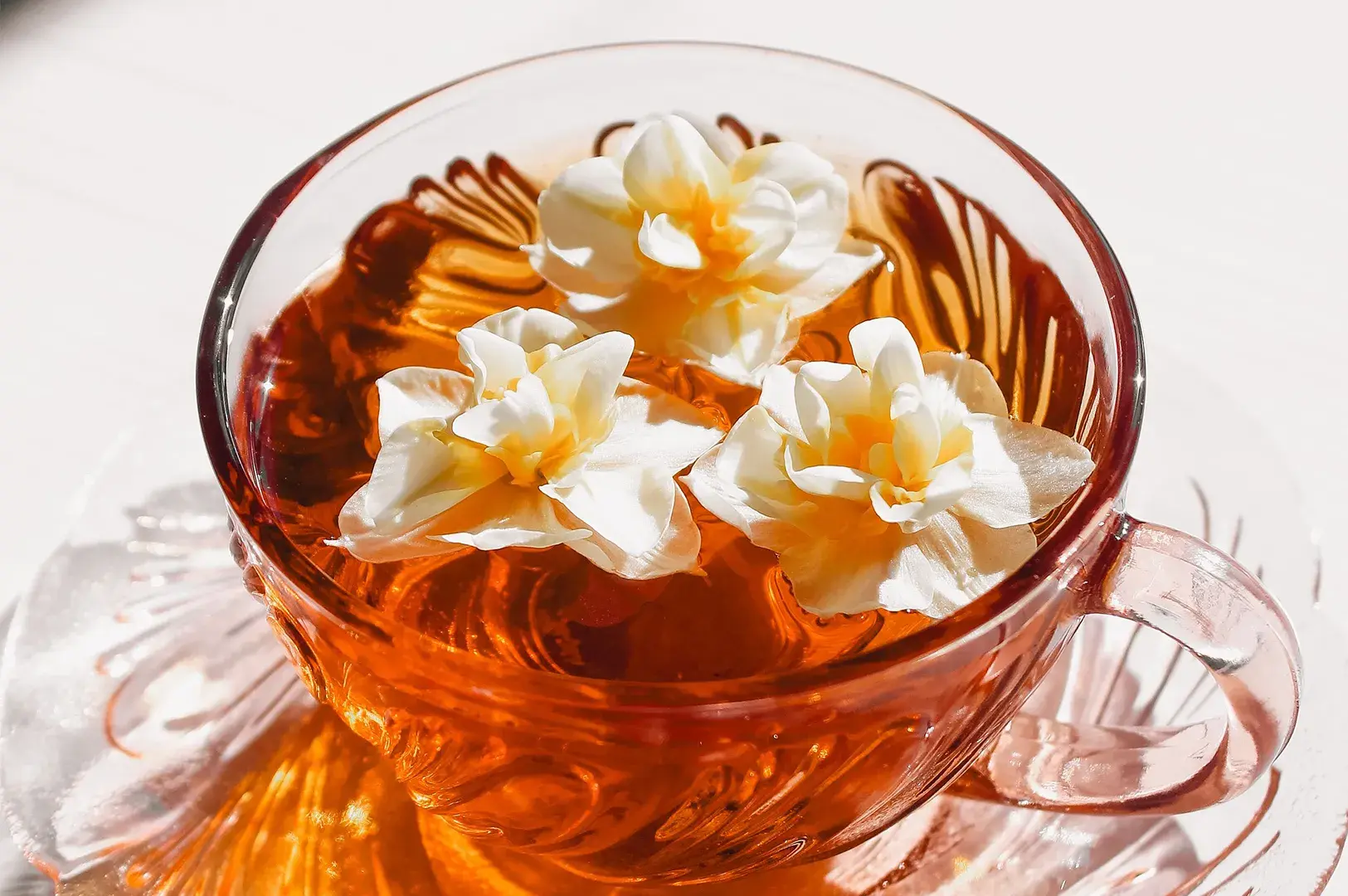
The tea plant, Camellia sinensis, has flowers of its own. They are small and white or faintly cream, with a dense centre of yellow stamens and a mild scent. They are pollinated by insects, and in most producing regions they appear in autumn rather than spring.
Growers generally prefer that their plants don't flower much. Making a flower uses energy the bush would otherwise put into new shoots, and those shoots are the harvest. Regular plucking and pruning keep flowering light on a well-managed tea field.
Even so, dried tea plant flowers are sometimes collected and infused, often blended with tea leaf, mostly in Chinese and Taiwanese products. They remain a small, niche part of the world of tea, with rare teas and specialist tea collections offering unusual ways to discover this subtle essence.
So here is the gentle twist: most flowering teas don't contain tea flowers at all. They contain tea leaves wrapped around the flower of another plant.
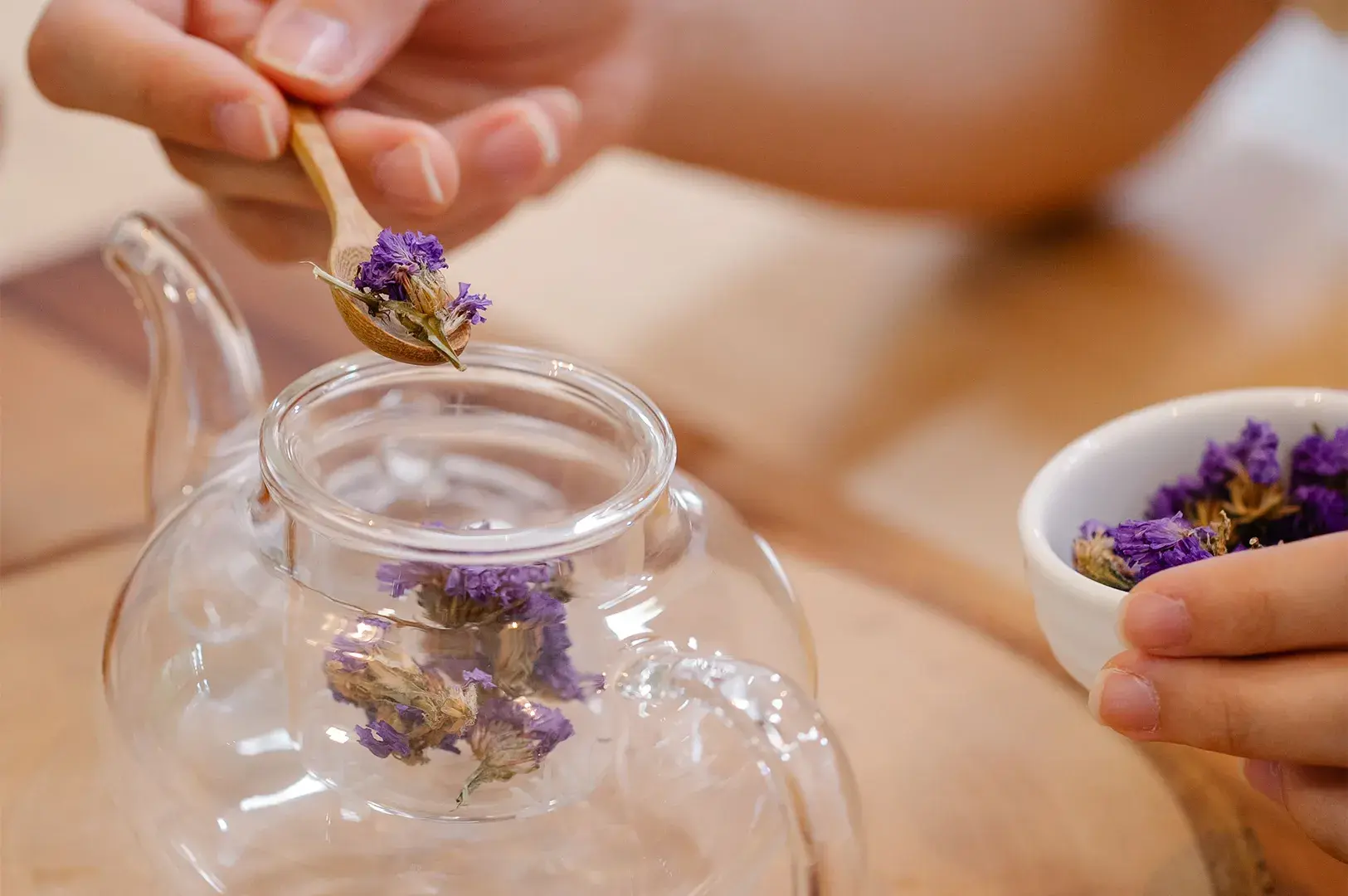
Then there is the third kind: flower tea made from petals and blossoms alone. Think of a cup of chrysanthemum from a drinks stall, or a floral tea bomb. These infusions contain no tea leaves. Many are caffeine-free, but it is always worth checking what's in the bag before assuming. Such drinks are generally classed as herbal tea, or a tisane made from flowers, herbs, spices and other plant materials.
Three different things, all sharing overlapping names. Tea is rarely as simple as its labels. The distinction can help you discover the perfect cup, suited to your taste and every mood.
The Craft Behind the Bloom
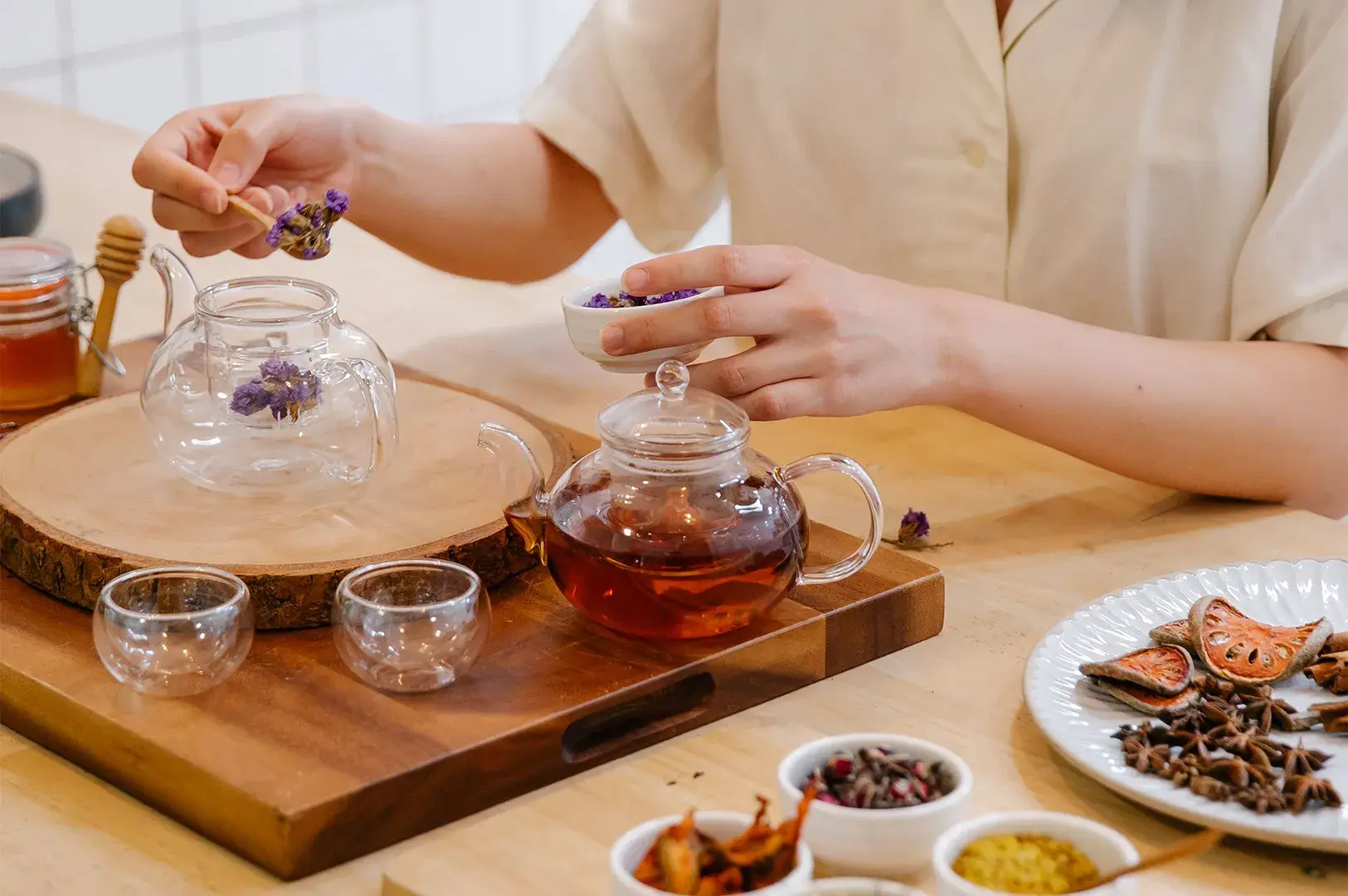
It's easy to watch a blooming tea open and think only of the moment. But that moment was decided long before the water was poured.
Someone selects long, flexible leaves and arranges them by hand around a dried flower. The leaves are then gathered and secured with cotton thread. If the bundle is tied too loosely, it may fall apart before it ever reaches your glass. If it is tied too tightly, the leaves can struggle to open, and the flower stays half hidden.
After tying, the bundle is dried slowly so it holds its shape until hot water wakes it up. Careful drying helps preserve freshness, aroma and the elegant form of the finished tea.
There's a reason white and green teas are the usual choice. Their leaves tend to be long and supple enough to wrap without snapping. Oolong appears now and then. Black tea is rare, as its leaves are usually less flexible and harder to tie.
What I find quietly moving is the patience in all of this. Every bloom that rises in the glass was once a pair of hands, a length of thread and a careful knot. The craft can transform simple materials into a small performance, made with intention.
Green Tea, Flower Tea and Health Benefits
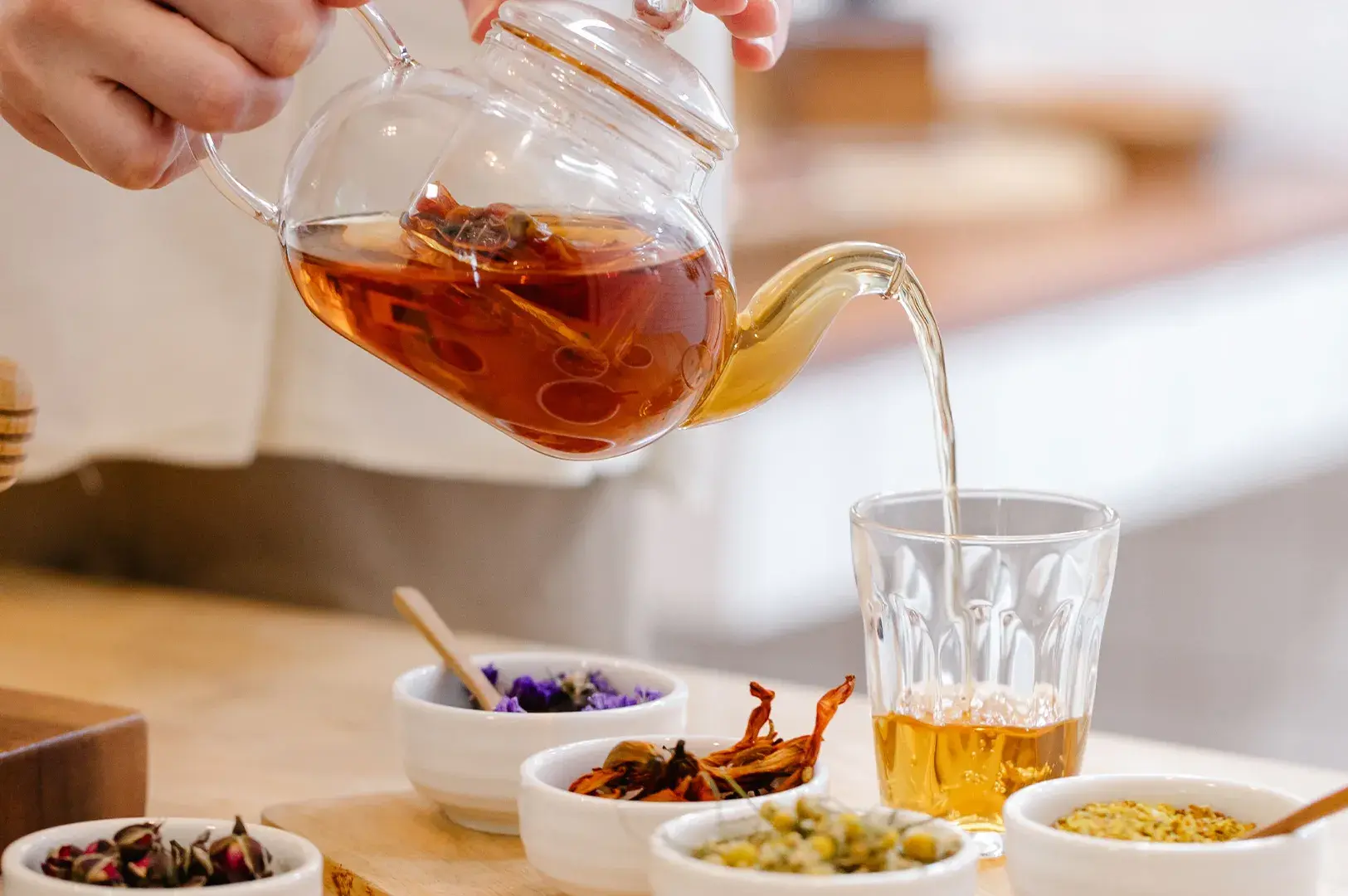
Here is where I want to question something we often assume.
A beautiful bloom feels like it should mean a beautiful cup. But appearance alone doesn't guarantee quality. A flawless display can sit on top of tired leaves, and a modest-looking bundle might brew something lovely.
Under the petals, a flowering tea is still real tea from Camellia sinensis. That means the base leaf naturally contains caffeine, unless it has been decaffeinated. The amount varies, but it isn't zero. Green tea is a common base, and it contains antioxidants; however, flowering tea is a drink to enjoy, not a medicine or a substitute for healthcare.
Claims about health benefits can be tempting. Tea and flowers may contain compounds studied for health, but the amount in a cup varies, and evidence for specific effects is not a guarantee. A floral infusion should not be relied on to improve lung health, liver function, the immune system or overall health. Nor should a cup be treated as a cure for bad breath, anxiety or sleep problems. If you have a health concern, speak with a qualified healthcare professional rather than relying on traditional claims.
The base leaf also shapes much of the taste. Tea company Art of Tea, which sells blooming teas, describes the flowers as contributing more to aroma than to flavour. That seems a useful way to think about it. The flower may be the reason you notice the glass. The leaf is often the reason you finish it.
So what if we treated a blooming tea the way we treat any other tea? Notice the colour of the liquor. Notice how the scent changes as the glass cools. Ask what the leaf is, and where it came from. The bloom then becomes an invitation to pay attention, not a substitute for it.
Flowers and Tea in Cultural Context
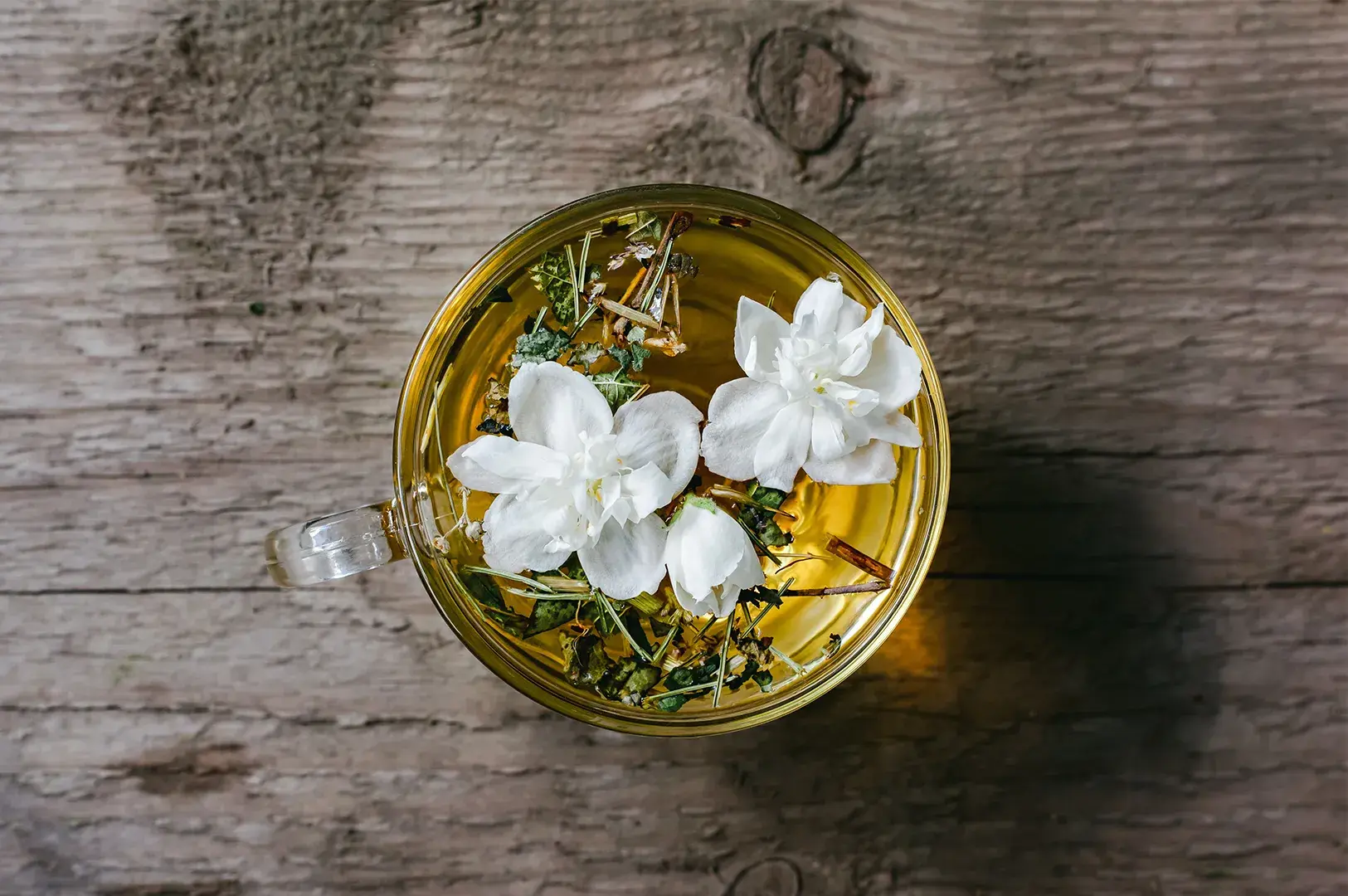
Flowers and tea have kept each other company for a long time, especially in China.
Jasmine is the familiar example. Jasmine-scented tea has deep roots in Chinese tea culture, which may be part of why flowering teas feel both new and somehow familiar. Many of us in Singapore grew up with jasmine tea poured at dim sum tables, or chrysanthemum bought cold in a plastic cup on a hot afternoon.
But it is worth being careful here. Not every floral tea is a blooming tea. Jasmine-scented green tea is a different tradition. A chrysanthemum infusion is a flower tea without tea leaves. A blooming tea is its own particular craft. Floral tea blends can vary widely, with some combining blossoms and loose tea, while others contain only flowers.
What does seem clear is the shape of it: an old relationship between tea and flowers, given a modern form by skilled hands. In some traditions, flowers suggest purity, harmony and the changing seasons; the ritual can invite people to savor a pause and connect with nature's rhythms.
Herbal Tea, Tea Collections and a Singapore Ritual
Blooming tea Singapore drinkers can find today often comes with a story attached.
Pétale Tea, a Singapore brand founded in 2018 by Rosemary Kwa, builds its range around hand-sewn blooming teas. As reported by The Straits Times, its Gratitude tin contains blooming tea balls made of lily and gomphrena, another name for globe amaranth, hand-sewn with cotton string to green tea leaves. Alongside them is a loose-leaf blend inspired by ondeh ondeh, with black Ceylon tea, mint, coconut bits and pandan extract.
I like that detail very much. Ondeh ondeh, those small green kueh with gula melaka hidden inside, is a taste many people here carry from childhood. Seeing it reimagined beside a blooming flower feels like two worlds sitting at the same table. You might serve a floral infusion plain, with a little honey, or chilled as iced tea, depending on your preference.
The brand's Growth tin pairs carnation and jasmine flowers with green tea leaves. Its message, the paper noted, is about how growth happens gradually, just as a tea bud slowly unfurls.
That idea of slowness may be the real reason blooming tea endures.
In a city where so much moves quickly, a flowering tea asks you to wait. You can't hurry it. You pour the water, and then you watch. If you're with friends, everyone watches together. For a few minutes, nobody is checking their phone. The unfolding can soothe the senses and lift the mood, not through a promised health benefit but through the pleasure of a shared moment.
The Straits Times has observed that floral and herbal infusions, along with tea balls, are gaining popularity in Singapore. Tea sellers may present a signature collection, a signature collection features particular blends or seasonal designs, or a tea chest with a scoop for loose tea.
Whether browsing tea collections or choosing a single bag, read the ingredients and choose with care. You can explore different aromas, create a simple tasting ritual and find a cup that feels right for every mood.
How to Discover the Perfect Blooming Tea for Every Mood
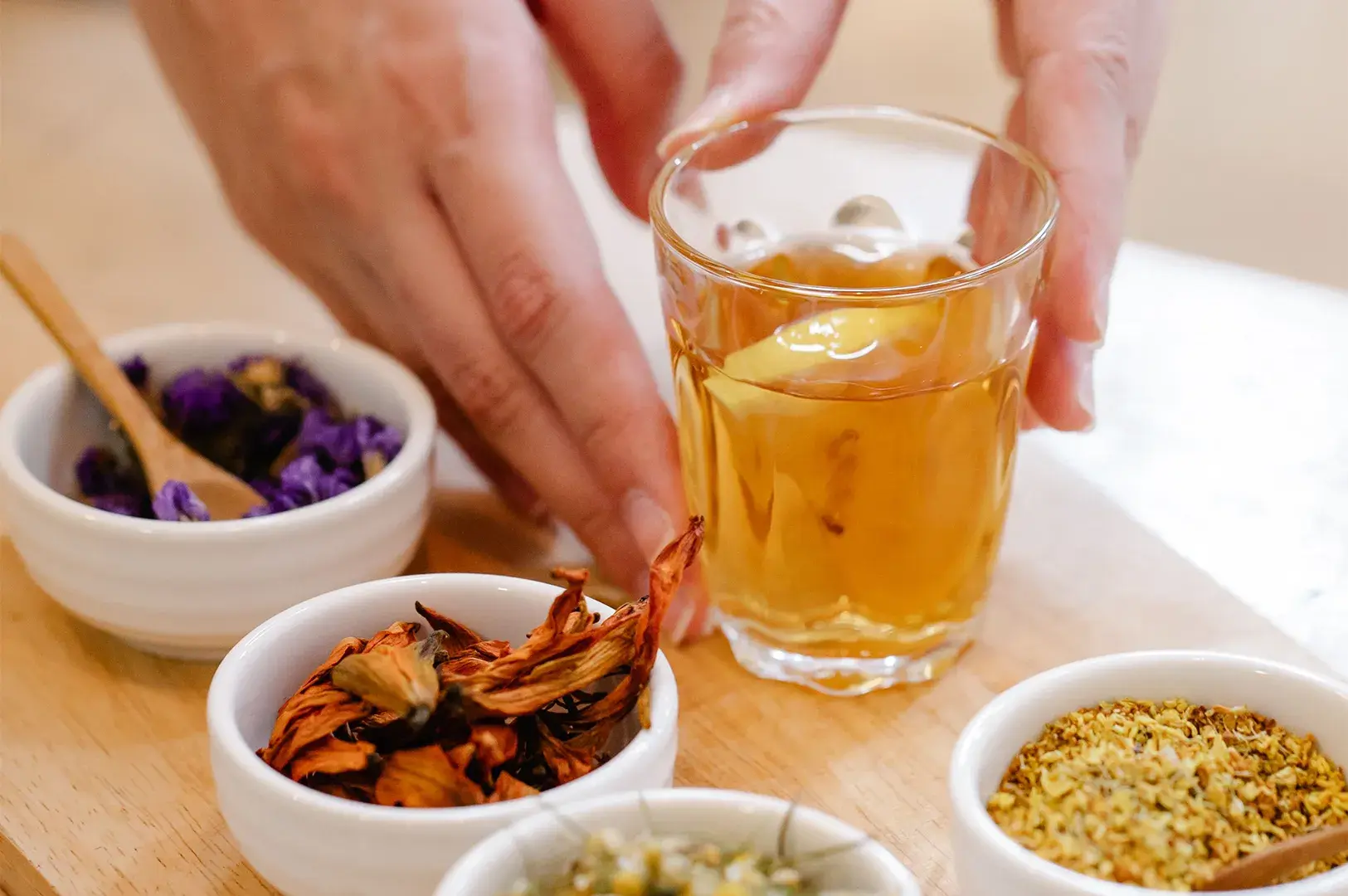
For the clearest view, place a flowering tea ball in a glass teapot or heat-safe glass vessel and pour in hot water. Watch the flower unfurl; the liquor is often light golden or yellowish. Follow the supplier's instructions for water temperature and steeping time, since leaves and flowers differ. Many bundles can be steeped again, though each infusion may taste lighter.
Choose a plain cup if you want to notice the leaf's character, or add a little honey if you prefer sweetness. Some tea drinkers enjoy the flower's changing appearance as much as its aroma; others care most about a rich, balanced taste. There is no single correct way to enjoy it.
If you are selecting a gift or starting a collection, look for clear ingredient information and packaging that protects freshness. Consider whether the recipient prefers green tea, caffeine-free herbal tea, loose tea or a ready-to-steep bloom. The best choice is the one suited to the person, rather than the most elaborate box.
A Bloom Worth Watching, a Tea Worth Tasting
A tea flower is easy to admire and just as easy to underestimate.
On the surface, it is a pretty thing: a bundle that opens into a small garden. Look a little closer, though, and you find more. A tea plant with its own quiet autumn blossoms. A long friendship between flowers and tea. Patient hands tying each knot. And a cup that is still, at heart, real tea worth tasting.
So the next time you drop a blooming tea into hot water, watch the flower rise. Then take a sip, and ask what the leaves are telling you too. Let the aroma, colour and taste engage your senses; let the ritual be its own small pleasure, rather than expecting it to transform your health.
If this has made you curious about the stories behind your cup, there is plenty more to discover across Tea Manor. Pour something warm, and stay a while.

Expensive Tea Doesn’t Guarantee a Better Cup, Here’s Why
There is a belief in tea that we rarely question. If something costs more, it must be better. It is an understandable assumption. A rare tea from a respected region, carefully harvested and beautifully packaged, naturally creates expectations. We associate price with effort, craftsmanship, and quality. And often, that connection is justified. But not always….
-
SUN with MOON Singapore at Wheelock Place: A Unique Tea Dining Cafe Experience on Orchard Road
The lunch crowd had gone. Dinner hadn’t arrived yet. I came in during that strange, in-between hour, a little after three on a weekday, when the escalators at Wheelock Place hum quietly and Orchard Road feels almost gentle. Most people were still at their desks. I wasn’t. I wanted tea, and I wanted to sit…
-
Cold Brew Tea Is Underrated (And Hot Purists Are Missing Out)
I used to think tea had to be hot. There was something about the ritual of it. Boiling water, warming the pot, watching the leaves open. A proper cup of tea seemed to require steam. Then I tried cold brew tea, and I had to admit something slightly uncomfortable. I liked it. More than I…
-
All Things Delicious Review: The Quiet Pleasure of Tea and Cake.
There’s a particular kind of afternoon that asks for tea, and All Things Delicious answers it with a quiet, comforting tea-and-cake experience on Arab Street: handmade sweet treats, warm approachable teas, and a room that makes simple pleasures feel like enough. Not coffee, with its urgency. Tea. The slow kind, poured while the conversation drifts…
-
Wellness Tea Is a Scam, but Tea Can Still Be Good for You
There is a strange contradiction in the way we talk about tea today. For centuries, tea was appreciated for its taste, its rituals, and the moments it created. Today, it is often sold as something else entirely. A solution. A promise. A shortcut. The language surrounding wellness tea has become increasingly familiar. Detox tea. Cleansing…
-
Camellia Tea: A Blossom, A Leaf, A Legacy Rooted in Camellia Sinensis
My grandmother kept her camellia tea in a battered tin that had once held biscuits. She never called it anything fancy. It was just cha, brewed strong in the mornings using fresh tea leaves from the tea plant, poured into small cups that had lost their matching saucers years ago. I didn’t know then that…
-
Why “Caffeine-Free Tea” Marketing Should Be Regulated (Seriously)
Hear me out: we have become far too comfortable with the phrase “caffeine-free tea.” It appears on beautiful packaging, wellness websites, and café menus with the confidence of a health guarantee. The words suggest calm evenings, better sleep, and a gentler relationship with what we drink. But there is a problem. The phrase sounds clearer…
-
The Forgotten Luxury of Sitting Still at Japanese Tea House
You stoop to enter the traditional japanese tea house. That is the first thing the tea house asks of you, before the tea, before the talk, before anything at all. The doorway is low, deliberately so, and even the tall must bow to pass through it. In that small act of folding the body, something…
-
Stop Calling It “Premium”: Why Most Luxury Tea Branding Is Empty
There is a word I have become increasingly cautious of in the tea world. Premium. It appears everywhere. Premium leaves. Premium harvests. Premium collections. Premium experiences. The word sounds reassuring. It suggests care, quality, and something worth paying attention to. But after seeing it attached to almost everything, I sometimes wonder whether it has started…
-
Pryce Tea: A Modern Pour with Old Tea-Room Ambitions
I visited on a weekday afternoon, around three, when the city had quieted into that particular lull between lunch and the evening rush. I’d been curious about Pryce Tea for a while, mostly because the brand keeps surfacing among people who talk about teas the way some people talk about wine. With a reputation built…