There is a particular moment that has become increasingly familiar in modern tea culture.
A tea is presented.
Before the first sip, we are introduced to its story.
The region. The altitude. The history. The carefully chosen words that describe its character.
Perhaps there are notes of wildflowers, distant forests, roasted grains, or forgotten memories.
The language is beautiful.
Sometimes, almost too beautiful.
And I find myself wondering whether we are tasting the tea itself or the story surrounding it.
This is not a criticism of knowledge. Understanding tea requires patience, experience, and years of learning. A skilled tea professional can reveal details that many of us would overlook. They can guide us toward new experiences and help us appreciate the work behind each leaf.
That knowledge has value.
But there is a difference between helping someone understand tea and creating an expectation they feel obligated to experience.
Sometimes the description arrives before the tea.
We are told what we should notice.
We search for the floral notes because they were mentioned. We look for the sweetness because it was promised. We convince ourselves that the tea is extraordinary because the story says it should be.
And somewhere in that process, our own experience becomes secondary.
Tea is unique because it cannot be separated from the person drinking it.
The same tea can feel completely different depending on the moment. A highly praised tea may leave one person unmoved, while an ordinary tea may become unforgettable because it was shared with someone meaningful.
No description can predict that.
Perhaps this is where we need to be careful with the idea of expertise.
A tea sommelier should not be someone who tells us what to feel.
They should be someone who helps us notice what is already there.
There is a quiet difference between guidance and influence.
One opens the door.
The other tells us what we should find inside.
The beauty of tea has always been its ability to create a personal relationship between leaf and drinker. It is not a performance where everyone reaches the same conclusion.
It is a conversation.
So the next time someone describes a tea with perfect words and promises an unforgettable experience, perhaps pause before searching for those promised flavours.
Taste first.
Think later.
Because the most honest relationship with tea begins when we trust our own cup.
With quiet regard,
N. P. Lim

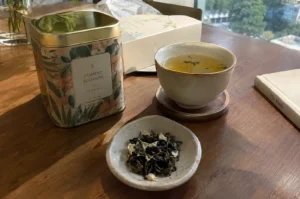
Stop Buying Tea for the Aesthetic: How Packaging Hijacks Taste
There is something fascinating about the way we buy tea today. Before we taste the leaves, we have already formed an opinion. The box is elegant. The label is beautifully designed. The colours suggest calm, luxury, or tradition. The story feels carefully written. And before the first sip, we have already decided that the tea…
-
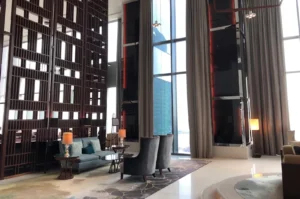
A Tea Table in the Clouds: The Westin Singapore High Tea Review
It was one of those afternoons when the city felt too loud and too fast, and I wanted to sit somewhere quiet without really explaining why. So I went up. All the way up, to Level 32 of The Westin Singapore, where the Lobby Lounge sits above the noise like it knows something the rest…
-
“Caffeine-Free Tea” Confuses Everyone—Let’s Fix the Language
I have noticed that tea conversations can become surprisingly confusing. Not because tea itself is complicated, but because we sometimes use the same words to mean completely different things. One phrase that always catches my attention is “caffeine-free tea.” It sounds simple enough. A tea without caffeine. But is that really what we mean? Because…
-
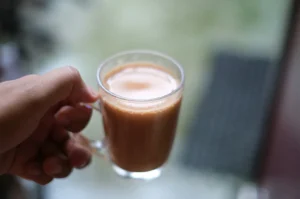
The Pull, Pour, and Ritual Behind Singapore’s Favourite Milk Tea: Teh Tarik
It starts with a sound. A long ribbon of tea, arcing from one metal mug held high to another held low. The stream catches the light. Then the froth rises, pale and soft, and the whole thing gets poured back and lifted again. Nobody at the stall looks up. This happens a hundred times a…
-
Stop Chasing Tasting Notes: Tea Isn’t Wine and That’s a Relief
I have a small confession to make. Sometimes I have absolutely no idea what I am supposed to be tasting. A tea description might promise orchid, honey, toasted nuts, stone fruit, and something wonderfully mysterious called a “long mineral finish.” I take a sip. I taste tea. And then I start wondering if everyone else…
-
Chinese Tea Sets: Beautiful on the Table, But How Do They Brew?
There is a small arrangement on the table this evening, and I have not touched it yet. A pale bowl with a lid resting slightly askew. A round pitcher beside it, waiting to be filled. Cups no larger than a thumb and two fingers, lined up like a quiet sentence. The surfaces catch the last…
-
Floral Teas Are Not “For Beginners”—They’re For People With Taste
There is a curious assumption in tea culture that I have never quite understood. If you are new to tea, you begin with something floral. Jasmine. Rose. Osmanthus. Lightly scented blends. Then, supposedly, you move on. You discover roasted oolongs. Aged teas. More complex leaves. Stronger flavours. Eventually, you become a “serious” tea drinker. I…
-
How to Make Cold Brew Tea: The Slow Method for a Smoother Cup
There is a jar on the top shelf of my refrigerator that I did not need this morning. I filled it last night, before the kitchen went dark. Loose tea leaves, cool water, a lid resting loosely on top. Then I closed the door and left it alone, the way you leave bread to rise…
-
Milk Tea Isn’t “Ruining” Tea—But Some Milk Tea Is Ruining Milk Tea
I have noticed that few things can start an argument among tea drinkers quite as quickly as milk. Mention adding milk to a good tea and suddenly everyone has an opinion. Some insist that milk covers the flavour of the leaves. Others will tell you that certain teas were practically made for it. I have…
-
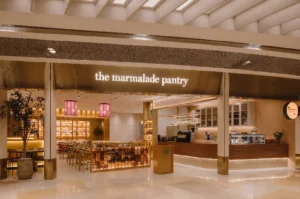
There Are Always Good Things to Eat at The Marmalade Pantry
The afternoon rain had just eased when I climbed up to Level 4 of ION Orchard, home to the Marmalade Pantry Ion. Outside, Orchard Road was doing its usual thing: too many people, too much noise, everyone somewhere to be in the bustle of the city. Inside, at a corner table, someone was pouring tea…