I used to believe that discovering better tea meant gradually leaving ordinary preferences behind.
The more I learned, the more refined my tastes were supposed to become. I would move towards rarer leaves, more complicated flavours, and teas that demanded greater attention.
But taste does not always develop in a straight line.
Some teas remain with us. Others gradually lose their appeal.
And I have come to think there is nothing unfortunate about that.
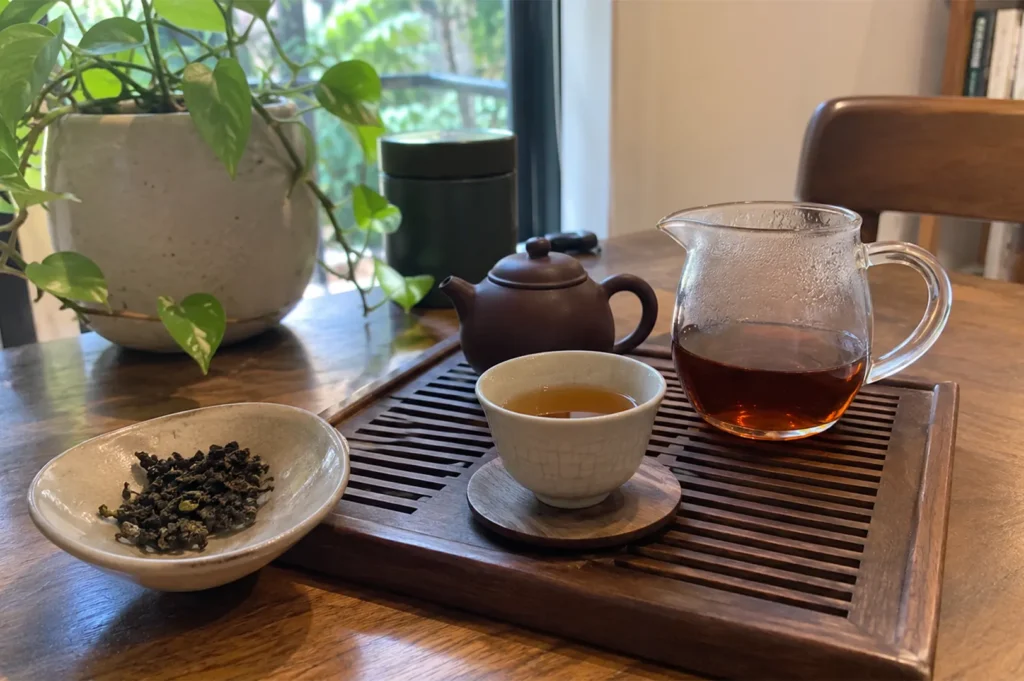
Dong Ding oolong is the kind of tea I find myself returning to. Particularly the traditionally roasted styles from Taiwan, where the warmth of the roast sits alongside a gentle sweetness.
It offers complexity without demanding that I analyse every infusion.
There is comfort in that familiarity.
I feel something similar about ripe Pu-erh, or shou Pu-erh. Its earthy, mellow character can seem unremarkable to those searching for bright aromas and dramatic flavours.
But I increasingly appreciate teas that do not need to announce themselves.
Not every cup needs to surprise me.
Then there are teas I have gradually outgrown.
Japanese sencha once represented much of what I admired about tea. Its grassy freshness, savoury character, and sometimes sharp finish seemed to reward careful preparation.
I still recognise those qualities.
Yet I no longer reach for that particular flavour as often. What once felt exciting can now feel less suited to the way I prefer to drink tea.
That does not make sencha inferior.
It simply means my preferences have changed.
I think tea enthusiasts sometimes struggle with this distinction. We become attached to the idea that our taste should continuously advance towards something more sophisticated.
But perhaps developing a palate is not about climbing a hierarchy.
Perhaps it is about becoming more honest with ourselves.
A tea we once loved can remain excellent even when we no longer desire it. And a familiar, inexpensive tea can continue to offer pleasure long after we have encountered supposedly finer alternatives.
There is no need to defend either choice.
I no longer want my tea collection to represent how much I have learned.
I want it to reflect what I genuinely enjoy drinking.
The difference, I think, is worth keeping.
With quiet regard,
N. P. Lim

To the Tea Lovers and the Tea That Holds Us
I want to write a letter, not to anyone in particular, but to the quiet ritual that has accompanied so many of our days. To the tea in our cups and to the people who take the time to notice it. Tea is patient. It waits for us when we are rushing. It sits quietly…
-
What Is Rooibos Tea: Red Gold in Your Cup, the Science and Benefits
There is a certain hour when the day loosens its grip. The coffee has long gone cold. Black tea feels like too much. And yet the kettle still calls, because the ritual matters more than the caffeine. This is where rooibos often arrives. A deep russet red pouring into the cup, warm and unhurried, carrying…
-
The Cup I Always Return To
There is one tea I always return to, even after tasting countless others. It is not rare. It is not expensive. The leaves are ordinary, the aroma familiar. And yet, it has a way of anchoring me, no matter the day or the mood. I first drank it years ago, during a week that felt…
-
Where to Buy Turkish Tea: Finding Authentic Çay for the True Turkish Tea Experience
The first time I understood Turkish tea, I was not drinking it in a café. I was standing in a small shop, watching a man refuse to sell me the wrong thing. I had pointed at a shiny box of flavoured black tea, and he shook his head, quietly, the way someone corrects a friend…
-
Why Tea Might Be the Break You Didn’t Know You Needed
Scrolling through my feed this morning, I realized how easy it is to forget what a quiet moment feels like. Notifications, stories, messages- they all seem to arrive at once, asking for attention I don’t always want to give. And yet, in the middle of it, I poured myself a cup of tea. It wasn’t…
-
A Golden Sip of Serenity chrysanthemum tea
There is a pot on many kitchen tables in Singapore that no one talks about much. Pale yellow gold in the glass, with a few small chrysanthemum flowers or flower buds drifting at the bottom. It appears after a heavy meal, at a grandmother’s house, or in a hawker centre when the weather turns unbearable….
-
Tea in a Scrollable World
I often think about how tea fits into a world that moves as fast as ours does. Every day, there are notifications, updates, trends, and posts competing for attention. Memes, videos, tweets, they all demand a response, a like, a share. It is a constant motion that leaves very little space for pause. And then…
-
Marriott High Tea 1 for 1: Indulge in Luxury at Singapore Marriott Tang Plaza Hotel
I almost didn’t go. Hotel afternoon tea always felt like something you did for a birthday or a special occasion with loved ones, or when a relative flew in and you wanted to seem like you had your life together. Expensive. A little performative. The kind of thing you photograph more than you eat. If…
-
Why Some Teas Feel Like Company
I’ve always thought of tea as a companion of sorts. Not a person, not a friend, but something that sits quietly beside you while the day moves forward. A cup of tea doesn’t interrupt your thoughts. It doesn’t demand attention. It simply exists, warm and steady, while you figure out what comes next. Some teas…
-
A Refined Afternoon Tea Experience at the Pan Pacific Atrium High Tea
Pan Pacific Atrium High Tea is the afternoon tea experience at the Atrium Lounge in Pan Pacific Singapore: a refined, unhurried sitting with TWG tea or Lavazza coffee, elegant seating pods above the reflection pool, and a menu that pairs classic English tea traditions with Peranakan flavours. For couples, friends, families, and tea lovers looking…