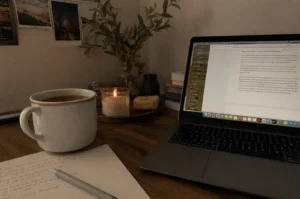
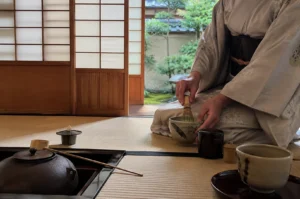
There is a quiet discipline that lives inside the act of brewing tea.
It is not something that announces itself loudly. There are no strict rules written on the wall, no visible signs that something significant is taking place. From the outside, the process appears simple enough. Water is heated. Leaves are placed into a pot. Tea is poured.
Yet within this ordinary sequence of actions lies something more subtle.
Brewing tea asks for attention.
Not intense concentration, but a kind of gentle awareness. The temperature of the water. The way the leaves unfold. The aroma that rises before the first sip is taken.
These small observations rarely demand words. They simply ask that we notice them.
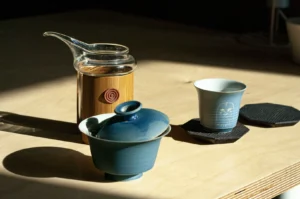
In many ways, this quiet attention is what has shaped traditional tea practices for centuries. Even in gatherings such as the Chinese tea ceremony, the focus is not on performance but on presence. Each step of preparation invites the person brewing tea to slow down and remain attentive to the moment.
Over time, this simple discipline begins to change the way we experience tea.
Instead of rushing toward the first sip, the process itself becomes meaningful. The act of pouring water, waiting, and sharing tea with others gradually becomes part of the experience rather than a step before it.
Modern life often moves in the opposite direction. Speed is rewarded. Efficiency becomes the goal. Even something as simple as tea can turn into a quick habit rather than a quiet ritual.
But tea still carries the possibility of something slower.
A kettle heating quietly on the stove.
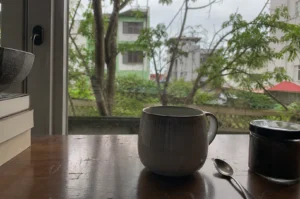
Steam rising from the cup.
The first sip taken without urgency.
None of these moments are dramatic. They do not announce themselves as important.
And yet they are often the moments when tea feels most complete.
Perhaps this is why tea has endured for so long across different cultures and centuries. Not because it is complicated, but because it quietly invites us to pay attention.
And in a world that rarely slows down, that invitation still feels surprisingly rare.
With quiet regard,
N. P. Lim

Tea in a Scrollable World
I often think about how tea fits into a world that moves as fast as ours does. Every day, there are notifications, updates, trends, and posts competing for attention. Memes, videos, tweets, they all demand a response, a like, a share. It is a constant motion that leaves very little space for pause. And then…
-
Marriott High Tea 1 for 1: Indulge in Luxury at Singapore Marriott Tang Plaza Hotel
I almost didn’t go. Hotel afternoon tea always felt like something you did for a birthday or a special occasion with loved ones, or when a relative flew in and you wanted to seem like you had your life together. Expensive. A little performative. The kind of thing you photograph more than you eat. If…
-
Why Some Teas Feel Like Company
I’ve always thought of tea as a companion of sorts. Not a person, not a friend, but something that sits quietly beside you while the day moves forward. A cup of tea doesn’t interrupt your thoughts. It doesn’t demand attention. It simply exists, warm and steady, while you figure out what comes next. Some teas…
-
A Refined Afternoon Tea Experience at the Pan Pacific Atrium High Tea
Pan Pacific Atrium High Tea is the afternoon tea experience at the Atrium Lounge in Pan Pacific Singapore: a refined, unhurried sitting with TWG tea or Lavazza coffee, elegant seating pods above the reflection pool, and a menu that pairs classic English tea traditions with Peranakan flavours. For couples, friends, families, and tea lovers looking…
-
The Tea We Drink for No Reason
Tea is often praised for its ritual, its mindfulness, its ability to transform ordinary moments into quiet ceremonies. And I appreciate all of that. I really do. But there is another kind of tea, one that rarely gets mentioned in articles or recommended in guides. The tea we drink for no reason at all. I…
-
A Tea Lover’s Map to Elegant Finds in the City Teaware Shop
There is a particular quiet that settles when you pour hot water over tea leaves in a pot you chose with care. The weight of the clay in your hand. The porcelain capacity that holds just the right amount of warmth. A small ritual, repeated, until it becomes yours. Singapore knows tea in many languages….
-
Why We Pretend Every Tea Moment Should Be Peaceful
There is a quiet expectation we place on tea that I’m not sure we talk about enough. We expect it to calm us. To slow us down. To make everything feel a little more intentional, a little more put together, a little more peaceful than whatever came before it. But I’ve started to wonder if…
-
The Discipline of Grace in Every Bowl: Tea Ceremony in Japan
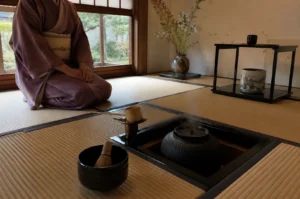
Water begins to move in a small iron kettle. The sound is faint, almost like wind through pines, and in a quiet room lined with tatami mats, it is enough to fill the silence. A host kneels in the tea room. A guest waits. Nothing is said, yet something has already begun. This is where…
-
The Tea I Keep Drinking When I Don’t Feel Like Myself
There are days when tea feels unnecessary. Not because I stop liking it, but because I don’t feel like the version of myself who usually drinks it slowly, thoughtfully, and with attention. On those days, I still make tea anyway. Not out of ritual, but out of habit. It is never the elaborate kind of…
-
Tea Ceremony Kyoto: A Slow Dance of Bowls and Breath
The room is quiet enough to hear water. Somewhere beyond the paper screens of this traditional tea ceremony venue, a garden drips after morning rain. Inside a tea house on a tatami mat worn soft by years of kneeling, a tea master lifts a bamboo whisk and begins tea making. There is no rush in…