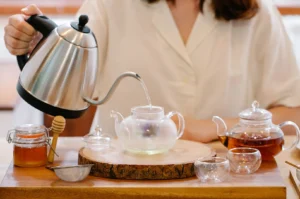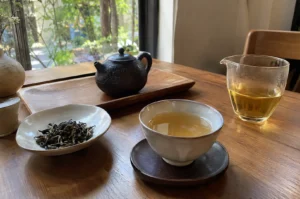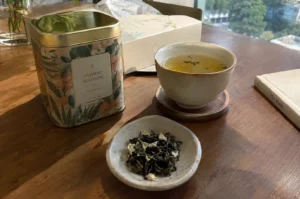
I have often found that the simplest cup of tea carries the most subtle lessons. Not every tea moment is dramatic, ceremonial, or picturesque. Some are ordinary, even fleeting, yet they manage to teach something quietly about patience, observation, and care.
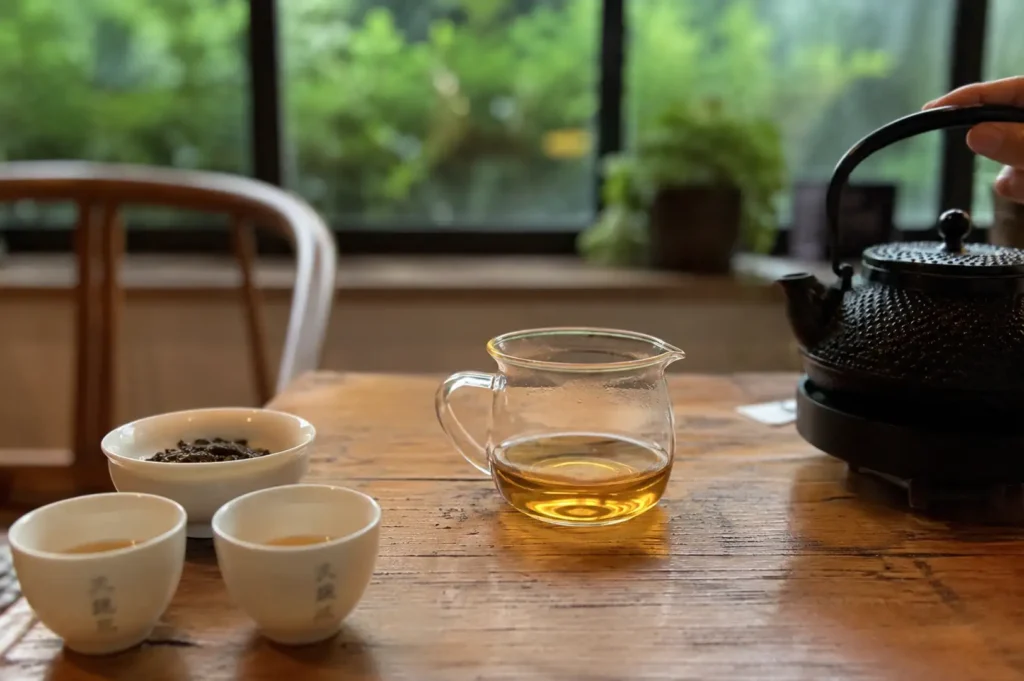
Take the leaves themselves. Watching them unfurl in hot water is a small, deliberate act, but it reveals a surprising amount about the tea’s character. Some leaves open quickly, giving off bold aromas immediately.
Others unfold slowly, requiring repeated infusions to reveal their depth. It is a gentle reminder that not everything valuable reveals itself at once, and that patience often uncovers subtle layers we might otherwise overlook.
Tea also teaches about balance. Water temperature, steeping time, and the amount of leaf all influence the final cup. Each choice has a ripple effect. Even a small adjustment can change the flavour entirely. In life, as in tea, small details matter. Decisions carry consequences, and awareness brings better outcomes, even if the effects are subtle.
What I love most, however, is how tea connects us to people. Sharing a pot with a friend or family member creates a space for conversation that is slow by design.
The act of pouring, waiting, and tasting together forms a quiet rhythm, a shared experience that is both grounding and intimate. Even when we are physically apart, a memory of a tea session can evoke the same warmth, reminding us that connection is often created in the smallest gestures.
Finally, tea encourages reflection. It asks us to notice flavour, texture, and aroma, but it also asks us to notice ourselves. Are we distracted, hurried, or present? Do we take the time to breathe between sips? In those quiet moments, tea becomes more than a drink. It becomes a teacher, a mirror, and a companion.
For anyone curious about exploring tea more thoughtfully, visiting spaces like Tea Manor in Singapore offers a chance to experience these lessons firsthand, from understanding different leaves to appreciating the ritual behind each brew.
Their approach reminds us that tea is both personal and shared, simple and intricate, ordinary and meaningful. You can explore more here: https://tea-manor.com.sg/
Tea is never just about drinking. It is about noticing, learning, and sharing. Each cup carries an opportunity to slow down, reflect, and connect—both with ourselves and with the world around us.
— Maria Tan
On tea, culture, and everyday rituals.

Why “No Bitterness” Is a Terrible Goal (And Makes Tea Boring)
I used to think a good tea was supposed to be smooth. No bitterness. No sharp edges. Nothing that made me pause and wonder whether I was doing something wrong. It seemed logical. We naturally gravitate toward things that are easy to enjoy. A tea that is sweet, gentle, and immediately comforting feels like a…
-
Best Tea Brands Singapore: 10 Names Worth Knowing
There’s a small sound I’ve always liked. It’s the soft knock of a teapot lid settling back into place, just before the first pour. It happens at home. It happens in old shophouses and in bright mall boutiques like those in Suntec City. The setting changes, but the pause stays the same. This list is…
-
“Rare” Tea Is Often Manufactured Scarcity: Here’s How to Tell
There is a word in tea that carries unusual power. Rare. It immediately creates curiosity. A rare harvest. A rare batch. A rare tree. A tea that may never return. The suggestion is simple: if something is difficult to obtain, it must be more valuable. Sometimes, this is true. Some teas are genuinely limited because…
-
LiHO Tea Singapore: A Greeting You Can Drink
Some words carry a whole childhood inside them. Li ho. I heard it at kopitiam tables, across corridors, from uncles who never waited for a real answer. It meant “how are you,” but it also meant I see you. So when I saw that name on a tea shop sign, somewhere in the middle of…

The Myth of “Perfect” Tea: What I Stopped Chasing
For a long time, I thought I was looking for the perfect tea. I imagined there would be a moment when I found the one. The tea that made every other tea feel unnecessary. The tea I would recommend to everyone. The tea that would finally make me understand what true appreciation was supposed to…
-
Teh O: Understanding the Tea Order Behind the Name
There is a stall near where I grew up that has changed hands twice, but the tea has stayed the same. I still remember the first time I ordered teh o on my own, sometime in my early teens, mumbling the words at the counter and half-expecting to get them wrong. The uncle didn’t blink….
-
Stop Buying Tea for the Aesthetic: How Packaging Hijacks Taste
There is something fascinating about the way we buy tea today. Before we taste the leaves, we have already formed an opinion. The box is elegant. The label is beautifully designed. The colours suggest calm, luxury, or tradition. The story feels carefully written. And before the first sip, we have already decided that the tea…
-
A Tea Table in the Clouds: The Westin Singapore High Tea Review
It was one of those afternoons when the city felt too loud and too fast, and I wanted to sit somewhere quiet without really explaining why. So I went up. All the way up, to Level 32 of The Westin Singapore, where the Lobby Lounge sits above the noise like it knows something the rest…
-
“Caffeine-Free Tea” Confuses Everyone—Let’s Fix the Language
I have noticed that tea conversations can become surprisingly confusing. Not because tea itself is complicated, but because we sometimes use the same words to mean completely different things. One phrase that always catches my attention is “caffeine-free tea.” It sounds simple enough. A tea without caffeine. But is that really what we mean? Because…
-
The Pull, Pour, and Ritual Behind Singapore’s Favourite Milk Tea: Teh Tarik
It starts with a sound. A long ribbon of tea, arcing from one metal mug held high to another held low. The stream catches the light. Then the froth rises, pale and soft, and the whole thing gets poured back and lifted again. Nobody at the stall looks up. This happens a hundred times a…