Introduction
Across centuries of Chinese culture, tea has held a place of quiet importance. It appears in homes, markets, and tea houses across China, where the simple act of sharing a cup reflects patience, hospitality, and tradition. For many people, Chinese tea is not only a beverage. It is a moment of reflection and a way to slow down.
Although tea may appear simple at first glance, the world of types of Chinese tea is remarkably diverse. From delicate white teas to deep and earthy pu’er, each tea reveals how the handling of a single leaf can shape flavour, aroma, and colour.
All traditional tea varieties come from the same plant, Camellia sinensis. What creates the diversity of flavours is the production process, which determines how the tea leaves are heated, oxidised, rolled, or aged. Over centuries, tea makers in China developed a system that classifies tea into six categories, commonly known as the six types of Chinese tea.
Understanding these tea types helps explain why one cup feels fresh and light while another tastes roasted, creamy, or earthy. It also reveals the deep craftsmanship behind one of the world’s most respected drinks.
The Six Types of Chinese Tea at a Glance
Traditional Chinese tea classification recognises six types of tea. Each type reflects a different balance of oxidation, heating, and fermentation.
The six categories are:
- Green tea
- White tea
- Yellow tea
- Oolong tea
- Red tea (known as black tea in the West)
- Dark tea
Each type begins with the same tea leaves, harvested from the tea bush. What follows in the production process determines the character of the final tea.
These main categories form the foundation of traditional Chinese tea culture, allowing tea drinkers to explore a wide spectrum of flavours and aromas.
Green Tea: Fresh and Vibrant
Green Tea
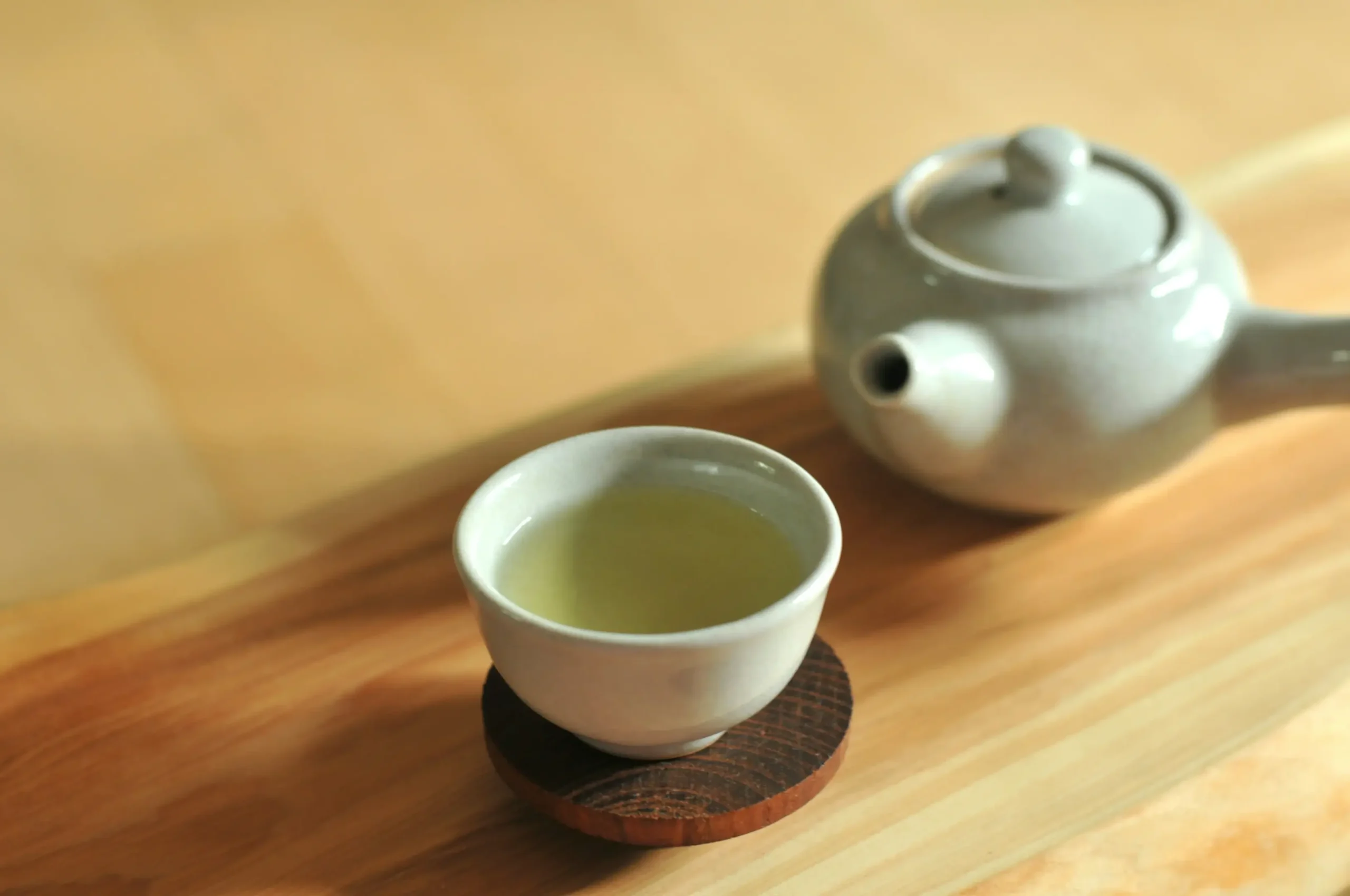
Among the most well known types of Chinese tea, green tea is valued for its bright and refreshing character.
After harvest, the leaves are quickly heated to stop oxidation, which preserves their green colour and fresh flavour. In China, this heating is often done by pan firing, though some teas are gently steamed.
Because green tea undergoes minimal oxidation, its flavour is often described as clean, slightly grassy, and lively.
Some of the most famous Chinese teas belong to this category:
- Bi Luo Chun – a delicate tea known for its floral fragrance
- Dragon Well (Longjing) – smooth, slightly nutty, and highly respected
- Huangshan Maofeng – light with gentle sweetness
Green tea is often brewed multiple times, allowing tea drinkers to enjoy multiple infusions from the same leaves.
White Tea: Simplicity and Minimal Handling
White Tea
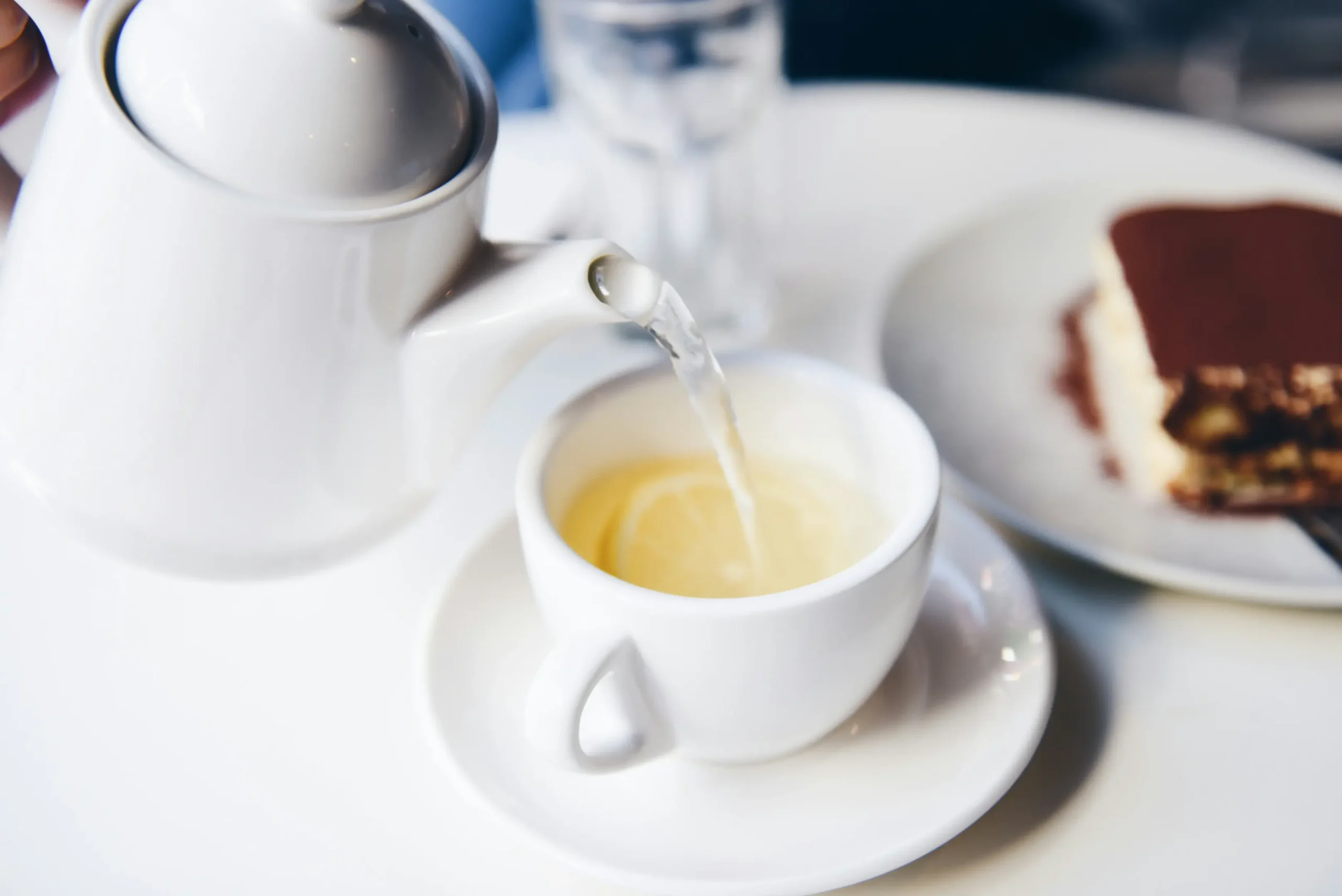
White tea represents one of the most delicate tea types in China.
Unlike many other teas, white tea undergoes minimal handling. The leaves and buds are simply harvested and allowed to dry naturally. This gentle approach preserves the natural sweetness of the leaf.
Many white teas are made from one bud or young leaves covered with fine silvery hairs.
Two famous varieties include:
- Silver Needle – made almost entirely from young buds
- White Peony – a tea made from buds and leaves that produces a soft floral taste
White tea is appreciated for its light body and subtle aroma. The brewed colour is pale and luminous, reflecting the tea’s delicate character.
Oolong Tea: The Craft of Partial Fermentation
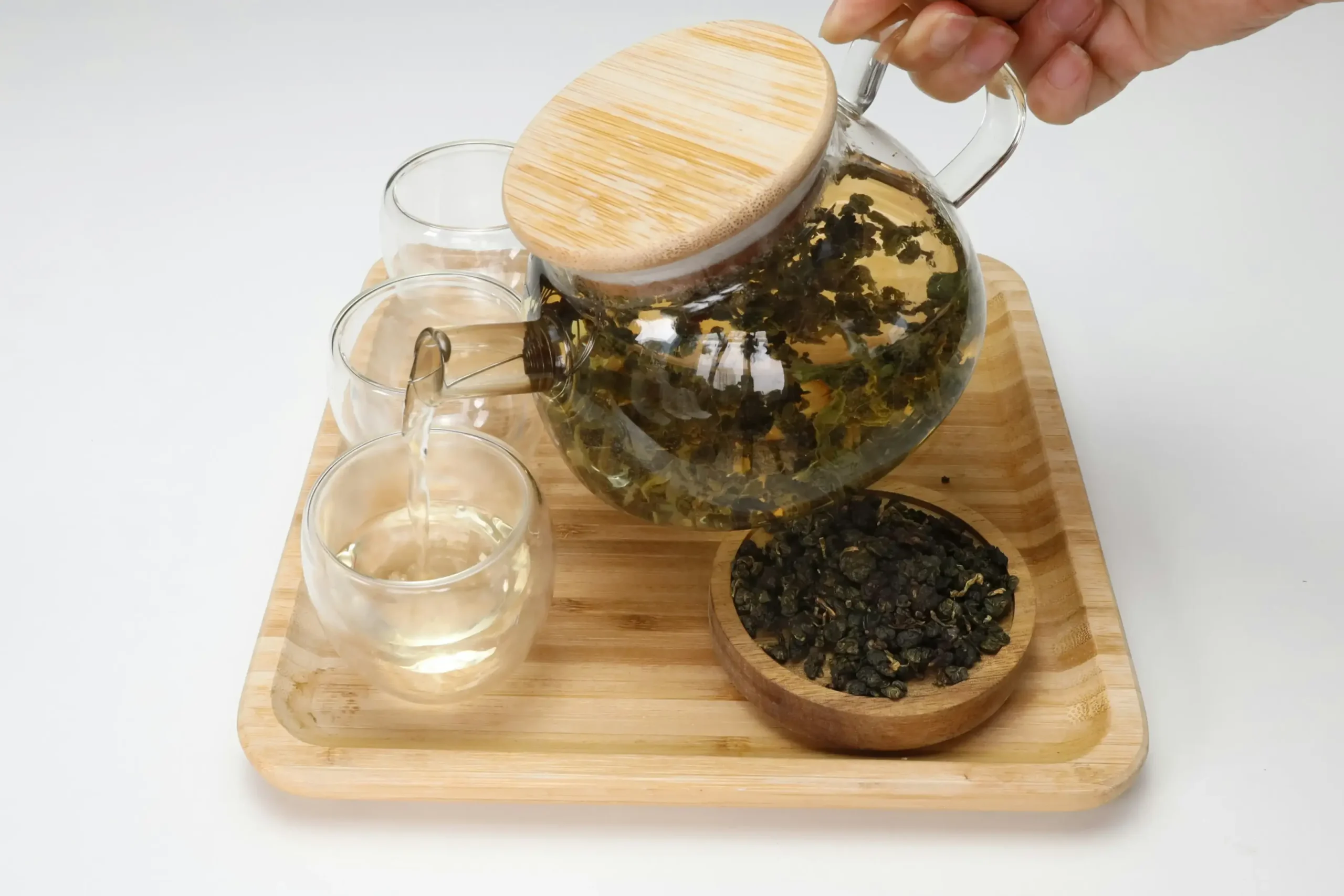
Oolong Tea
Few teas demonstrate the skill of tea makers as clearly as oolong tea.
Oolong leaves are lightly fermented, placing them between green tea and fully oxidised teas. This partial oxidation creates remarkable diversity in flavour.
Some oolongs are light and floral. Others are darker and roasted.
Notable examples include:
- Da Hong Pao, also known as Big Red Robe, a famous roasted tea
- Fujian oolong tea grown in the Wuyi Mountains
- Taiwanese oolong teas known for creamy and floral aromas
When brewed, oolong leaves slowly unfurl in the teapot. Many oolong teas are enjoyed through multiple infusions, revealing layers of flavour over time.
Red Tea: Known Globally as Black Tea
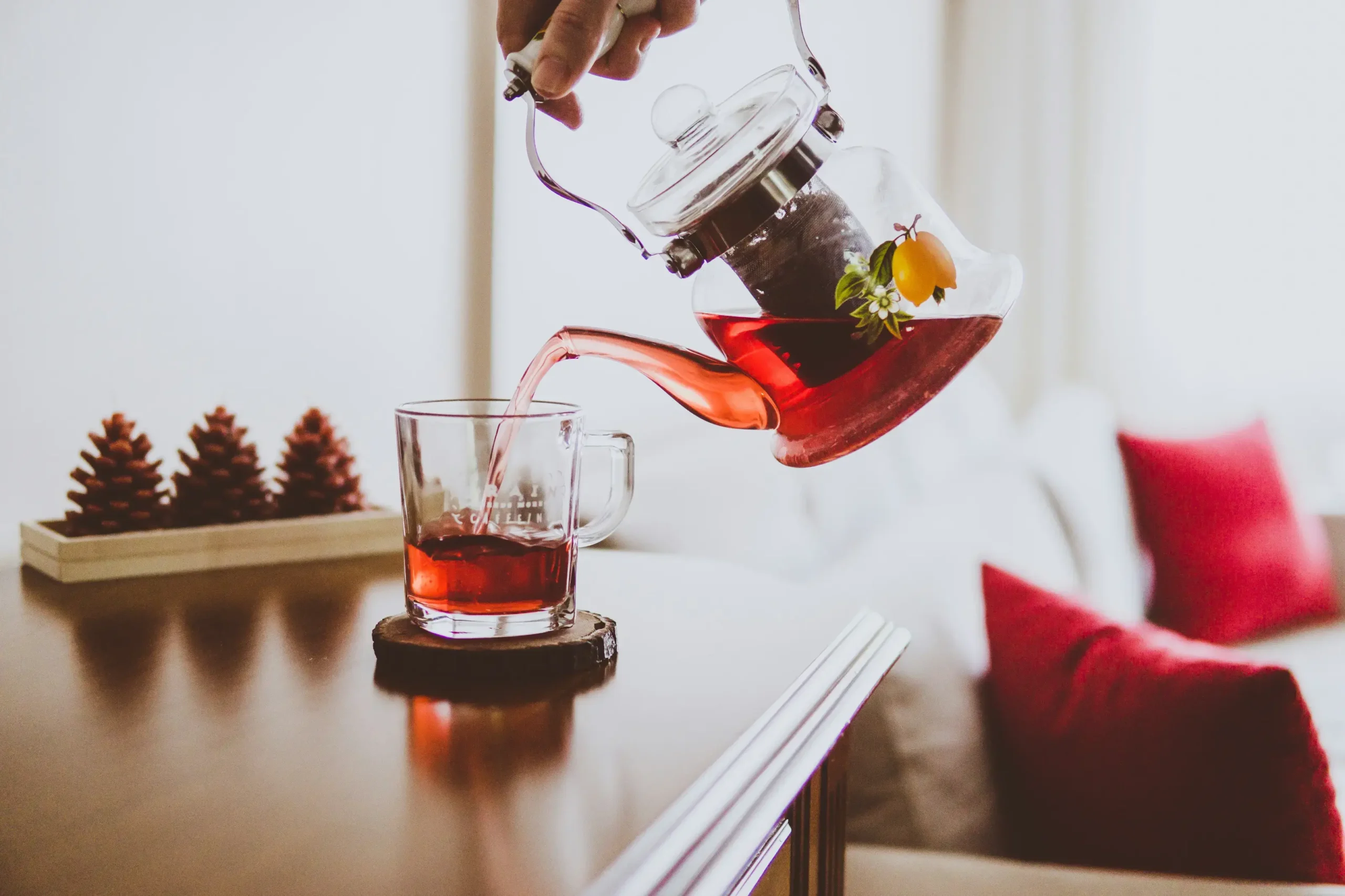
Red Tea
In Chinese classification, red tea refers to what the Western world calls black tea.
The name comes from the warm reddish colour that appears in the cup. During the production process, the leaves are fully oxidised, which creates deeper flavours and darker tones.
Examples of Chinese red tea include:
- Lapsang Souchong, known for its smoky aroma
- Keemun, a tea prized for its smooth character
Red tea often produces a rich, slightly sweet flavour that pairs well with food or morning drinking.
Yellow Tea: Rare and Carefully Crafted
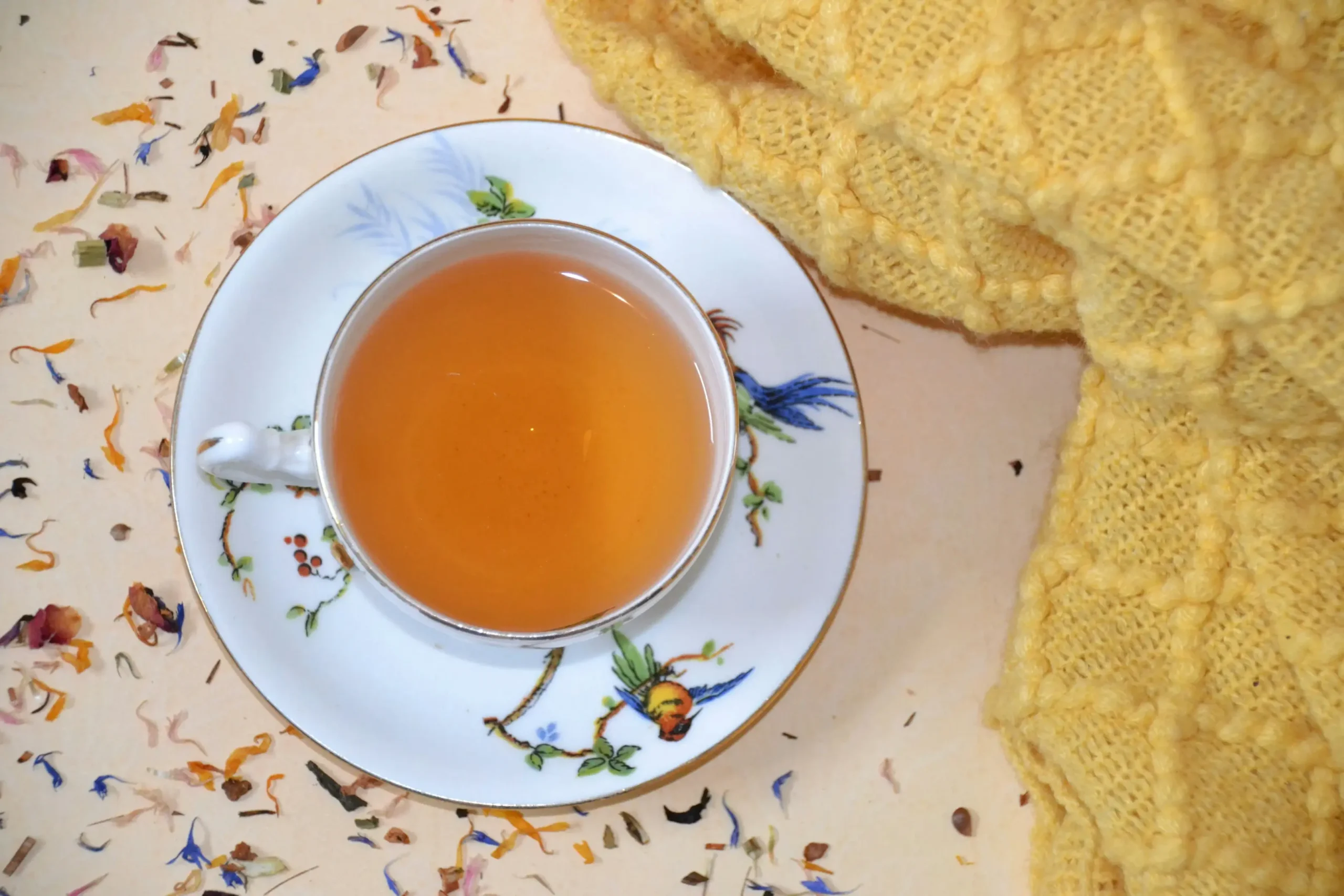
Yellow Tea
Among the six types of Chinese tea, yellow tea is one of the rarest.
Its production involves an additional stage known as sealed yellowing. After heating, the leaves are gently wrapped, allowing them to mellow before drying.
This process softens the grassy character often found in green tea and creates a smoother taste.
Yellow tea is less common outside China, but it remains an important part of traditional tea craftsmanship.
Dark Tea and the World of Pu’er
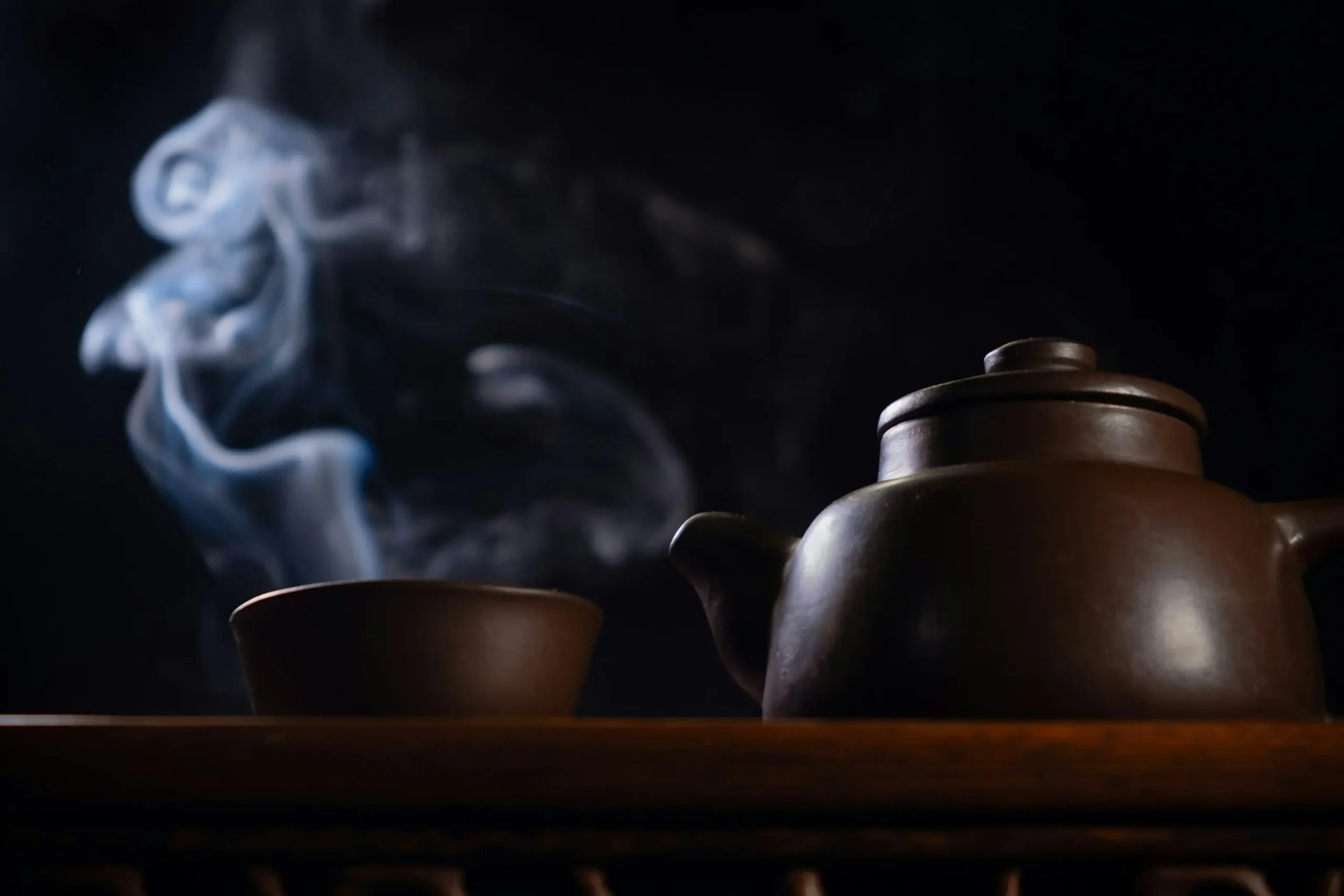
Dark Tea
The final category in the six types of Chinese tea is dark tea.
Unlike other teas, dark tea undergoes microbial fermentation after processing. This makes it a post fermented tea.
The most famous example is Pu’er tea, produced mainly in Yunnan Province. Many pu’er teas come from ancient tea trees growing in regions such as Yiwu Mountain.
Key characteristics of dark tea include:
- Colour: deep reddish to dark brown
- Flavour: earthy, smooth, and aged
- Production: microbial fermentation and aging
Pu’er tea is often pressed into cakes and aged over time. With proper storage, the flavour becomes deeper and more complex.
Chinese Tea Culture and Tea Appreciation
Understanding the types of Chinese tea also means appreciating the cultural traditions surrounding tea.
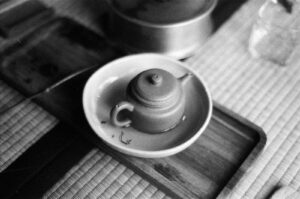
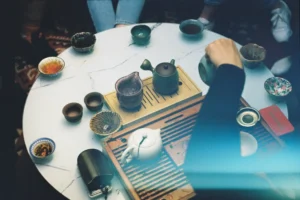
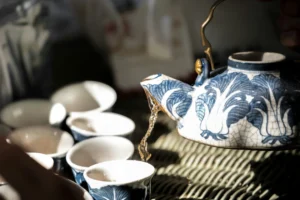
In many tea houses across China, tea is served slowly and thoughtfully. Visitors sit around wooden tables while tea is brewed in clay teapots and poured into small cups.
Places such as Yixing Xuan Teahouse demonstrate this quiet ritual of tea appreciation.
Tea drinking here is not rushed. Each infusion allows the drinker to notice subtle changes in aroma, colour, and taste.
This approach reflects a broader idea in Chinese tea culture. Tea is not simply consumed. It is experienced.
The Journey From Tea Trees to the Cup
Every cup of Chinese tea begins in the fields where tea trees grow.
Farmers harvest young leaves from the tea bush, often during early spring. From there, the production process transforms the leaf through heating, rolling, oxidation, or fermentation.
The result is a wide world of flavours that emerge from the same plant.
From the freshness of green tea to the deep earthiness of pu’er, the six types of Chinese tea reveal the remarkable diversity that can emerge from a single leaf.
For tea lovers, learning about these tea types adds depth to every cup. It turns an everyday drink into a quiet journey through tradition, craft, and the landscapes where tea first took root.

The Simplicity of Tea: Finding Joy in the Uncomplicated
Tea seems simple, doesn’t it? Water. Leaves. A cup. Yet we’ve turned this quiet ritual into something complicated. The perfect temperature, the right teapot, the precise timing. But is it really necessary? Tea, at its core, was never meant to be complicated. In the beginning, it was an uncomplicated drink shared between friends, brewed over…

Tea Chapter Singapore: A Tranquil Tea House in Chinatown
When it comes to tea in Singapore, there’s something special about stepping into a place like Tea Chapter Singapore. Tucked away in the heart of Chinatown, this tea house isn’t just about offering a wide selection of teas. It’s about the experience, the atmosphere, and the chance to disconnect from the fast pace of the…
-
Why Tea People Secretly Judge Your Tea Bags
There is a moment every tea drinker recognizes. You visit someone’s home, they kindly offer you tea, and you happily say yes. The kettle begins to boil. A cupboard opens. And then it happens. A tea bag appears. Now, there is nothing wrong with tea bags. They are convenient and often exactly what someone wants…
-
The Finest High Tea Singapore: An Exploration of Elegant Afternoon Delights
Picture this: a gleaming three-tiered stand arrives at your table, laden with delicate finger sandwiches, freshly baked scones served with clotted cream, and artful delicate pastries. The gentle clink of fine china accompanies the pouring of a perfectly brewed pot of TWG Tea or Bacha Coffee. This is the enduring magic of high tea, a…

The Quiet Patience That Tea Teaches
Tea does not rush. Water must be heated. Leaves must open. Flavour slowly reveals itself in the cup. None of these things happen instantly. Perhaps this is why tea has always felt slightly different from other drinks. It asks for patience. Not loudly, but quietly. The tea will be ready when it is ready. For…
-
A Guide to the Best Tea Singapore Has to Offer
Introduction In a city known for its vibrant food culture, tea quietly holds its own place among Singapore’s favourite indulgences. While coffee often dominates cafe conversations, many tea lovers know that the search for the best tea Singapore offers leads to a surprisingly diverse world of flavours, traditions, and carefully crafted blends. Across the city,…
-
A Tea Lover’s Guide to the Best Japanese Restaurant Singapore Dining Experiences
Searching for the best Japanese restaurant Singapore offers usually leads people toward sushi counters, omakase menus, or beautifully plated sashimi. Those elements certainly define much of the appeal of Japanese cuisine, but anyone who has spent time dining in Japan knows that the experience rarely ends with the food alone. Tea quietly accompanies the meal….

Why Tea Conversations Always Last Longer Than Expected
There is a small pattern I have started to notice about tea. Whenever tea is involved, conversations tend to last longer than planned. Someone says they will only stay for a short while. A kettle is placed on the stove. Tea is poured into a few cups, and suddenly the conversation begins to stretch in…
-
White Tea: The Most Delicate Expression of Chinese Tea
Introduction Among the many tea types that have emerged from centuries of tea cultivation, white tea often stands apart for its quiet character. It is light in colour, gentle in aroma, and remarkably simple in its making. Yet behind this softness lies a long tradition of craftsmanship that has shaped some of the most refined…
-
The Quiet Discipline of Brewing Tea
There is a quiet discipline that lives inside the act of brewing tea. It is not something that announces itself loudly. There are no strict rules written on the wall, no visible signs that something significant is taking place. From the outside, the process appears simple enough. Water is heated. Leaves are placed into a…