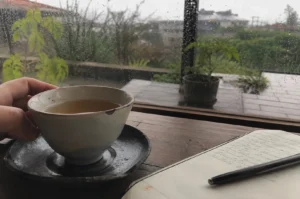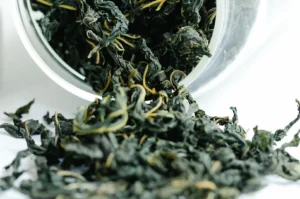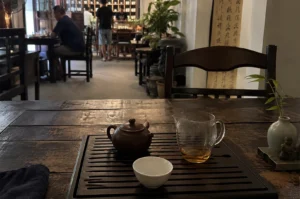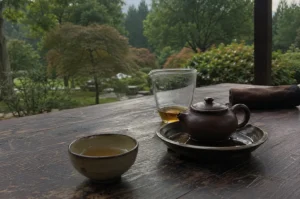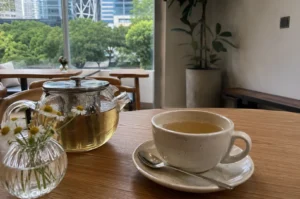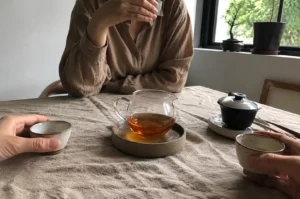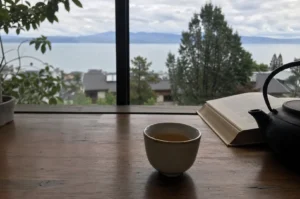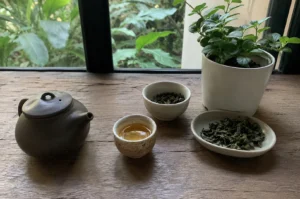
There is something ironic about rushing tea.
We order it to relax. We call it calming. We describe it as grounding. And yet, more often than not, we drink it the same way we drink everything else — between emails, between meetings, between scrolling.
Tea has become background noise.
A mug beside the laptop. A thermos in the car. A takeaway cup clutched while walking to the MRT. It is present, but rarely noticed.
And that feels like a loss.
Tea was never meant to compete for attention. It was meant to hold it. The warmth in your hands. The first rise of steam. The subtle shift in flavour from the first steep to the second. These are small details, yes. But they are the point.
Somewhere along the way, we started treating tea like coffee’s quieter sibling. Functional. Efficient. A mild alternative.
But tea is not an alternative.
It is a ritual.
Even in its simplest form, tea asks for patience. Water must cool slightly. Leaves need time to unfurl. You cannot rush infusion without changing the result. When we hurry tea, we flatten it.
And perhaps we flatten ourselves in the process.
In Singapore, life moves quickly. Efficiency is admired. Multitasking is expected. It makes sense that our tea habits have adapted. But not everything needs to follow that rhythm.
What if tea remained the one thing we refused to rush?
What if, instead of sipping absentmindedly, we allowed a few quiet minutes before returning to the noise?
Tea does not demand ceremony in silk robes. It does not require perfection. It simply asks for presence.
The next time you brew a cup, let it sit for a moment. Notice the colour. Taste it before adding anything. Let the second steep surprise you.
You might find that tea tastes different when you give it time.
And maybe so do you.
— Maria Tan

The Tea That Keeps Me Coming Back
I have a tea I return to more than any other. It is not rare. It is not expensive. In fact, most people would probably pass it by without a second thought. And yet, somehow, it has become a quiet companion over the years. I first drank it on a rainy afternoon. I had been…
-
Tie Guan Yin: The Iron Goddess of Chinese Oolong Tea
Tie Guan Yin, also known as Iron Goddess or Iron Goddess Oolong, is a celebrated Chinese oolong tea originating from Anxi County in Fujian Province, China. This tea from Anxi Fujian holds a special place among other teas due to its unique aroma, flavour, and rich cultural story. It is made from the tea plant…
-
Why Tea Shops Might Be the Last Quiet Places We Have
There is a growing habit in Singapore that I find both comforting and slightly unsettling. People are working everywhere now. Cafés, co-working spaces, neighborhood bakeries, even small corner shops. A laptop seems to turn any table into an office. And in many ways, this flexibility is impressive. It reflects how life has adapted to work,…
-
Why Not Every Tea Deserves Your Attention
Tea culture encourages curiosity. There are endless varieties, origins, and rituals to explore. Some teas are rare, some are aged, some are celebrated in distant mountains. The temptation is to try them all, to chase novelty in the hope that every cup will surprise you. But not every tea deserves your attention. I have learned…
-
Sipping Serenity: Where to Enjoy Chamomile Tea Singapore in the City
Singapore moves quickly. The trains run on time, the workdays stretch long, and the humidity outside rarely lets anyone slow down by choice. Yet within this busy rhythm, a quiet counter-current persists. People look for small pockets of stillness, and increasingly, they find one in a warm cup of chamomile tea. There is something fitting…
-
Why Some Teas Taste Better When Shared
I’ve always found that tea, more than most drinks, seems to gain something when shared. A cup alone can be comforting, quiet, even meditative. But a cup shared with someone else, whether a friend, a family member, or a stranger in a small tea house, somehow becomes richer, fuller, more alive. It’s not just the…
-
The Timeless Charm of Tea Culture Through English Breakfast Singapore
There is a small ritual I return to on the warmest Singapore afternoons. The city outside shimmers with heat, the air conditioning hums softly, and I reach for a familiar tin of English Breakfast tea. The kettle clicks, steam rises, and within a minute or two the kitchen fills with a warm, malty aroma that…
-
The Tea That Reminds Me of Home
I still remember the first cup of tea I drank after returning from a long trip. It was nothing remarkable, a simple black tea brewed in my kitchen but it tasted different from any cup I had drunk abroad. It wasn’t the leaves themselves. It wasn’t the water or the pot. It was the familiarity…
-
A Tea Lover’s Honest Review of Gryphon Tea Company Singapore
There is a particular hush that settles over my kitchen on a weeknight, after the dishes are done and the day finally loosens its grip. That is when I open a new box of tea from Gryphon Tea Company Singapore. Last week, the box belonged to Gryphon Singapore, and the moment I lifted the lid,…
-
Why Tea Can Teach Us About Mindful Consumption
I’ve been thinking a lot about waste lately. Not just the kind we notice-the piles of packaging, leftover food, discarded cups-but the quiet, everyday kind: the tea leaves left unused, the leaves steeped once and thrown away, the water poured down because the cup is “not perfect.” Tea has a way of making you notice…