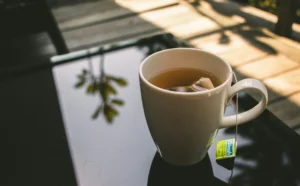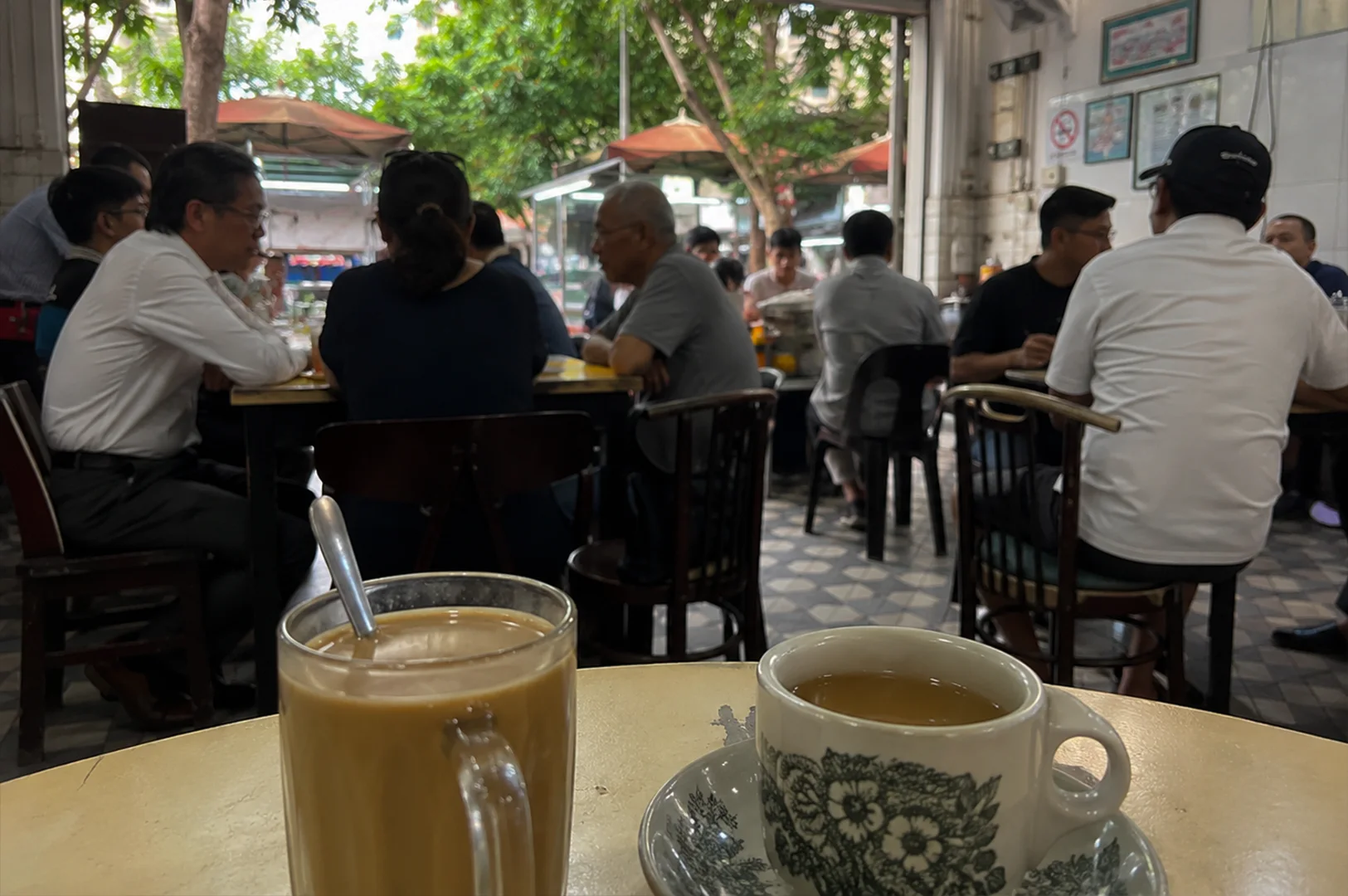
One of the things I love most about Singapore is that we never really chose between kopi and tea.
We kept both.
Walk into almost any hawker centre or coffee shop and you'll see it immediately. One person orders kopi-o. Another asks for teh-c. Someone else is drinking Chinese tea from a flask they brought from home, echoing how tea is increasingly shaping Singapore’s café culture in its own right, as Tea Manor explores.
The table somehow makes room for all of it.
For years, I assumed kopi and tea belonged to different worlds. Kopi felt practical and energetic. Tea felt slower and more reflective. One was associated with morning routines and busy coffee shops. The other seemed tied to tea houses, family gatherings, and quiet afternoons.
The older I get, the less convinced I am that the distinction is so clear.
Both drinks are deeply woven into everyday life here.
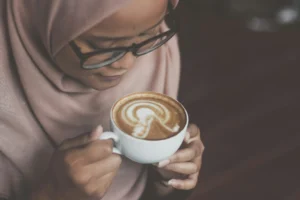
Kopi tells a story about adaptation. Coffee arrived from elsewhere, but Singapore made it its own. The roasting methods, the preparation style, even the language surrounding kopi feel uniquely local. Our friends at SG Street Eats Blog recently explored how coffee culture in Singapore stretches from traditional hawker stalls to modern specialty cafés, highlighting just how diverse the local coffee scene has become.
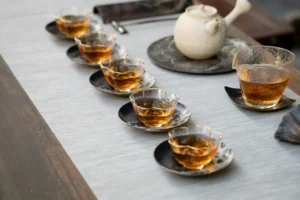
Tea tells a different story. It connects Singapore to centuries of Chinese, Indian, Malay, and international traditions. Every community seems to have found its own way of welcoming tea into daily life.
And yet they often exist side by side.
I find that fascinating.
Many countries have strong coffee cultures. Many have strong tea cultures. Singapore somehow embraces both without asking people to choose a side.
Perhaps that reflects something larger about the country itself.
Singapore has always been a place where traditions overlap rather than replace one another. Different influences sit next to each other, sometimes blending together and sometimes remaining distinct.
Kopi and tea do the same.
A person can start the day with kopi and end it with tea without feeling contradictory. One drink does not cancel out the other.
Both belong.
Maybe that is why debates about which is better have never interested me very much.
The more interesting question is why Singapore continues making space for both.
In a world that increasingly asks people to pick a side, there is something refreshing about a culture that simply says yes to another cup.
Whether it happens to be kopi or tea.
— Maria Tan
On tea, culture, and everyday rituals.

The Quiet Difference Between Muslim-Owned Cafés and MUIS-Certified Halal High Tea Spots in Singapore
I remember wandering down Arab Street years ago, searching for a quiet café where I could settle into an afternoon of coffee, tea, and conversation. I found a minimalist little space filled with delicate pastries and beautiful dessert displays, but hesitation quietly crept in as I began wondering about alcohol-based syrups, gelatin, and whether the…
-
Why Tea Shops Always Feel Slightly Different From Cafés
I’ve noticed something interesting over the years. People behave differently in tea shops. Not dramatically different, of course. No one suddenly becomes wiser the moment tea is poured. But the atmosphere tends to shift in subtle ways. Conversations slow down. Phones appear less often. Even silence feels more comfortable somehow. Tea shops carry a different…
-
High Tea Halal Singapore: Elegant and Inclusive Dining Experiences
There is something deeply comforting about slowing down for tea in Singapore. In a city that moves quickly, afternoon tea offers a rare excuse to pause for a few quiet hours over warm pots of tea, delicate pastries, and long conversations that linger far beyond the last bite. Yet finding a halal high tea experience…

Why Oolong Tea Always Feels Slightly Mysterious
Oolong tea never feels entirely straightforward. Green tea usually introduces itself immediately. Black tea does the same. You understand them quickly. One feels fresh and bright. The other feels deep and familiar. But oolong tends to sit somewhere in between. Not fully green. Not fully black. Not always easy to describe. Perhaps that is part…
-
Benefits of Black Tea: Why This Everyday Drink Still Matters
For many people, black tea is simply part of a routine. It is the first thing brewed in the morning, poured during afternoon tea, or enjoyed quietly at the end of a long day. Familiarity often makes it easy to overlook, but the benefits of black tea extend far beyond comfort or habit. In the…
-
Why Tea Somehow Tastes Better on Rainy Days
I don’t know when I first started believing this, but tea genuinely feels different when it rains. Not scientifically different, of course. The leaves do not magically change because of the weather. And yet somehow, a cup of tea on a rainy afternoon feels softer, warmer, maybe even a little more comforting than usual. Just…

Brew, Sip, Heal: The Powerful Chamomile Tea Benefits Explained
Singapore is a city that rarely stops moving. Between the hum of the MRT, the endless glow of screens, and the heavy humidity that clings to the air, finding a moment to genuinely wind down can feel like a luxury. For the longest time, my evening routine consisted of scrolling through my phone while finishing…
-
Why Tea Feels Different at Night
Tea changes after dark. The same leaves, brewed in the same pot, somehow feel quieter in the evening. The aroma lingers longer. The warmth of the cup feels more noticeable in the hands. Even conversation seems to soften slightly around tea at night. Perhaps it is because the world itself becomes quieter. During the day,…

Tea Health Benefits: Best Teas for Relaxation, Focus, and Sleep
Tea is one of the world’s most beloved drinks, enjoyed every day across countless cultures. When we talk about tea health benefits, it’s helpful to know the difference between true tea and herbal infusions. True tea comes from the Camellia sinensis plant, giving us popular varieties like green, black, white, and oolong tea. On the…

The Secret Joy of a Simple Cup of Tea
There’s something so deeply satisfying about a cup of tea-especially when it’s the simplest cup. No complicated brewing methods. No fancy leaves. Just tea, water, and a moment of quiet. I’ve had tea in many places, from grand tea houses to humble kitchen counters. But the most memorable tea moments often happen in the least…