I’ve always found it strange how a café can spend so much time perfecting its coffee and then serve tea that tastes like someone briefly introduced a teabag to hot water.
You know the kind.
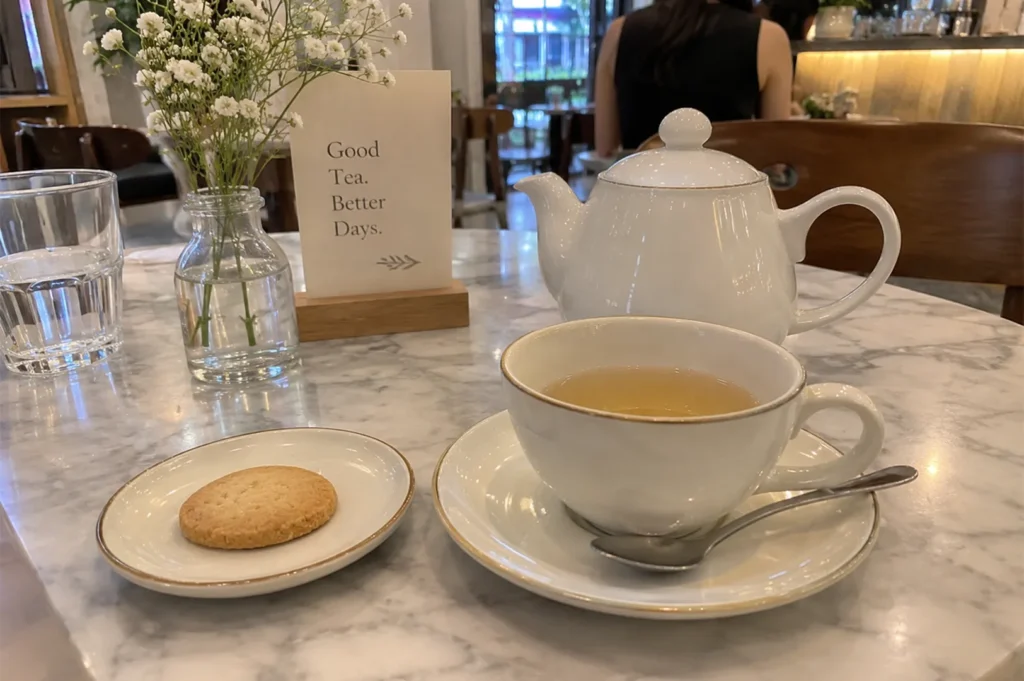
Beautiful cup. Lovely presentation. Maybe even a little biscuit on the side.
And then you take a sip.
Nothing much happens.
I don’t expect every café to become a specialist tea house. But when you’re paying café prices for a cup of tea, I think it’s reasonable to expect something more than vaguely flavoured water.
What bothers me is how often tea feels like an afterthought.
Coffee gets carefully selected beans, calibrated grinders, and baristas who understand extraction. Tea sometimes gets a generic teabag, water at whatever temperature is available, and instructions to let it sit for a few minutes.
And somehow, we’re supposed to accept the difference.
Of course, not every café operates this way. Some take their tea selections seriously, and I appreciate that.
But I wonder how many cafés have actually tasted the tea they’re serving.
Because good tea doesn’t necessarily require expensive equipment or an elaborate ceremony.
A decent Assam should have character. A jasmine green tea should offer more than a faint floral smell. Even a straightforward English Breakfast blend can be satisfying when it’s prepared thoughtfully.
These aren’t unreasonable expectations.
I think part of the problem is that tea drinkers are sometimes treated as customers who simply don’t want coffee, rather than people who genuinely enjoy tea.
And that’s a missed opportunity.
Imagine if cafés gave their tea menus even a fraction of the attention they give their espresso offerings. Better leaves, sensible brewing methods, and staff who can explain what each tea actually tastes like.
Nothing particularly complicated.
Just care.
I don’t think every café knowingly serves disappointing tea. Sometimes it’s a matter of training, cost, or simply never questioning how things have always been done.
But that’s exactly why I think the conversation matters.
If a café can recognise the difference between a good and bad espresso, surely it can learn to recognise a disappointing cup of tea.
Tea doesn’t need to compete with coffee.
I’d just like it to stop being treated as the drink nobody notices.
Because some of us do.
— Maria Tan
On tea, culture, and everyday rituals.

A Table Set for Stillness: Inside Antea Social’s Quiet Tea Ritual
Luxury usually announces itself before we have time to question it. It arrives through marble lobbies, silver stands and tiny sandwiches placed in strict formation. Antea Social offers a quieter argument. This is not afternoon tea in the familiar hotel sense. There is no grand procession of pastries or waiter lifting a polished lid. Instead,…
-
9 High Tea in Orchard Places for Scones, Tea, and a Quiet Afternoon
There is a particular kind of tiredness that comes from Orchard Road. Not the tiredness of a hard day, but the softer sort, the ache of too many shopfronts, too much bright glass, too many people moving faster than you feel like moving. And somewhere in the middle of all that, if you know where…
-
High Tea Orchard: Why the City Still Does It Best
It is easy to dismiss high tea in Orchard as an expensive pause between shopping bags. The tiered stands are photogenic, the hotel lounges polished, and the prices increasingly difficult to defend. ome scones arrive dry. Some savouries feel like banquet food made miniature. Some desserts are designed more for cameras than appetite. Still, Orchard…
-
McDonald’s Queensway Ridout Tea Garden Review: What It Is Like Dining in a Heritage Setting
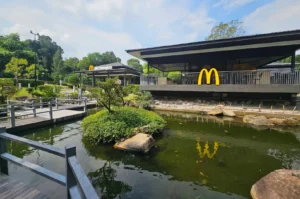
I did not expect to find quiet at a McDonald’s Queensway Ridout Tea Garden outlet. But there I was, standing outside the McDonald’s outlet at 580 Queensway, listening to the water instead of the traffic. A much loved pond sat just beyond the glass, surrounded by stone lanterns and trees leaning over it. Somewhere behind…
-
Understanding Tea Beyond the Cup
Tea is deceptively simple. A cup of hot water and leaves. And yet, it carries centuries of culture, craftsmanship, and subtlety that many of us may overlook. As tea lovers, we often focus on taste, aroma, or ritual, but there is more beneath the surface. Take the leaves themselves. Different cultivars, growing regions, and harvest…
-
Clifford Pier High Tea Review: Local Flavours by the Waterfront
I went looking for a building that no longer serves tea. The Clifford Pier still stands where it always has, at the edge of Marina Bay, its old timber trusses arching overhead like the ribs of something patient. But when I arrived, hoping to relive a Heritage Afternoon Tea I’d taken there years ago, I…
-
The Quiet Lessons a Cup of Tea Can Teach
I have often found that the simplest cup of tea carries the most subtle lessons. Not every tea moment is dramatic, ceremonial, or picturesque. Some are ordinary, even fleeting, yet they manage to teach something quietly about patience, observation, and care. Take the leaves themselves. Watching them unfurl in hot water is a small, deliberate…
-
A Journey Through Popular Bubble Tea Brands and Shops: Bubble Tea Singapore
The first time I really tasted bubble tea, I mean actually tasted it, I was standing outside a shoppers mall in the rain, waiting for a friend who was late. I had ordered something on autopilot from one of the many bubble tea shops in Singapore. But that day, without distraction, I noticed the tea…
-
Tea in a World That Never Pauses
Scrolling through my feed this morning, I realized something. We live in a world that barely stops. Notifications pile up. Videos play automatically. Messages arrive faster than we can read them. Every surface seems to demand attention. And then there is tea. A cup of tea does not ping. It does not scroll. It does…
-
From Plantation to Cup: The Journey of Sri Lanka’s Black Tea Pekoe
Black tea pekoe is all about whole-leaf black tea made from those long leaves and buds, usually the youngest ones right near the shoot tips. And when you hear Orange Pekoe, it’s not about orange flavor at all; it’s actually the name of that grade. For tea lovers or anyone curious about quality Sri Lankan…