I used to think comfort was supposed to be easy.
A familiar drink. A familiar taste. Something that immediately made me feel better.
For a long time, I gravitated towards teas that were gentle. Soft flavours. Natural sweetness. Anything that felt welcoming from the first sip.
Then I started appreciating bitter teas.
Not because I suddenly changed my preferences, but because I began to understand that comfort does not always arrive in the form we expect.
Some teas ask us to stay a little longer.
They do not immediately offer sweetness. They introduce themselves slowly. There may be a bitterness at first, a sharpness that makes you pause.
And then, if you give them time, something else appears.
A deeper flavour.
A lingering finish.
A character that was hidden beneath the first impression.
I think tea teaches us this better than almost anything else.
We live in a world that often encourages us to avoid discomfort. We choose the easiest option. The quickest reward. The most immediately satisfying experience.
Tea does not always work that way.
Some of the most memorable teas are not the ones we love instantly. They are the ones we learn to understand over time.
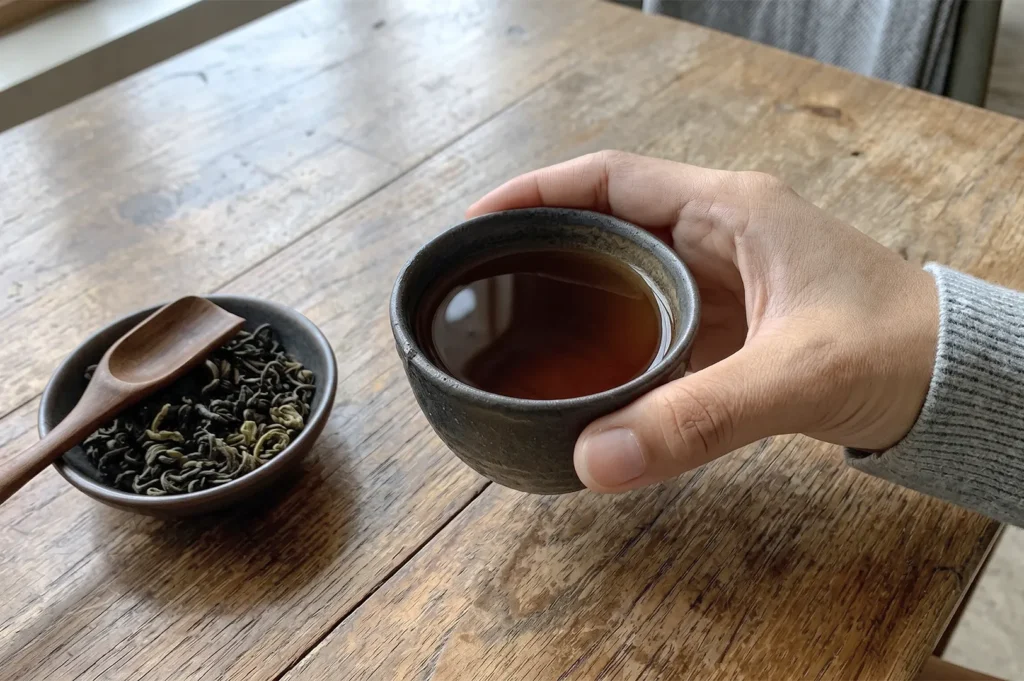
A roasted oolong with a slightly bitter edge. A green tea with a stronger vegetal character. A tea that feels unfamiliar at first but slowly becomes something we look forward to.
Perhaps this is why bitterness has become something I appreciate.
Not because it is pleasant immediately.
Because it feels honest.
There is something refreshing about a tea that does not try to hide what it is. It does not cover itself with sweetness or ask for approval. It simply presents itself and waits for us to decide.
And maybe people are like that too.
Some things we appreciate instantly. Others take patience. Some people, places, and experiences only reveal their value after we spend enough time with them.
Tea reminds me that not everything meaningful needs to be effortless.
Sometimes, the things that challenge us a little are the things we remember most.
I still enjoy sweet and comforting teas. I still love a cup that feels familiar after a long day.
But I have learned not to dismiss bitterness so quickly.
Because sometimes, what we first mistake for a flaw is simply another kind of beauty waiting to be understood.
— Maria Tan
On tea, culture, and everyday rituals.

Stop Chasing Tasting Notes: Tea Isn’t Wine and That’s a Relief
I have a small confession to make. Sometimes I have absolutely no idea what I am supposed to be tasting. A tea description might promise orchid, honey, toasted nuts, stone fruit, and something wonderfully mysterious called a “long mineral finish.” I take a sip. I taste tea. And then I start wondering if everyone else…
-
Chinese Tea Sets: Beautiful on the Table, But How Do They Brew?
There is a small arrangement on the table this evening, and I have not touched it yet. A pale bowl with a lid resting slightly askew. A round pitcher beside it, waiting to be filled. Cups no larger than a thumb and two fingers, lined up like a quiet sentence. The surfaces catch the last…
-
Floral Teas Are Not “For Beginners”—They’re For People With Taste
There is a curious assumption in tea culture that I have never quite understood. If you are new to tea, you begin with something floral. Jasmine. Rose. Osmanthus. Lightly scented blends. Then, supposedly, you move on. You discover roasted oolongs. Aged teas. More complex leaves. Stronger flavours. Eventually, you become a “serious” tea drinker. I…
-
How to Make Cold Brew Tea: The Slow Method for a Smoother Cup
There is a jar on the top shelf of my refrigerator that I did not need this morning. I filled it last night, before the kitchen went dark. Loose tea leaves, cool water, a lid resting loosely on top. Then I closed the door and left it alone, the way you leave bread to rise…
-
Milk Tea Isn’t “Ruining” Tea—But Some Milk Tea Is Ruining Milk Tea
I have noticed that few things can start an argument among tea drinkers quite as quickly as milk. Mention adding milk to a good tea and suddenly everyone has an opinion. Some insist that milk covers the flavour of the leaves. Others will tell you that certain teas were practically made for it. I have…
-
There Are Always Good Things to Eat at The Marmalade Pantry
The afternoon rain had just eased when I climbed up to Level 4 of ION Orchard, home to the Marmalade Pantry Ion. Outside, Orchard Road was doing its usual thing: too many people, too much noise, everyone somewhere to be in the bustle of the city. Inside, at a corner table, someone was pouring tea…
-
The Teacup as a Compass: What My Daily Brew Taught Me About Pace
I never intended for tea to become a way of keeping track of my days. It just happened. There are mornings when I drink the first cup quickly, barely noticing the taste because my mind is already somewhere else. Then there are afternoons when I make tea and somehow manage to sit with it for…
-
Silk Tea Bar Review: A Quiet Climb Worth Making on Sago Street
I almost walked past it. Sago Street was loud that afternoon, the way Chinatown often is. Voices, footsteps, the clatter of a hundred small transactions. I was looking for a door and nearly missed the narrow one that led upstairs. Then I climbed. And somewhere between the ground floor and the second, the noise fell…
-
“Artisan” Doesn’t Mean Ethical: The Supply Chain Questions We Avoid
I have always been drawn to the word “artisan.” Maybe because it creates a certain image in my mind. Someone carefully working with their hands. Someone who knows their craft deeply. Someone preserving a tradition that has existed long before the rest of us discovered it. When I see “artisan tea” on a label, I…
-
A Quiet Afternoon at A Beautiful Day Café
The rain had just started when I stepped in off Paya Lebar Road. Not heavy. Just enough to soften the light and slow everyone down. Inside, someone was pouring tea, and the sound of it carried further than it should have. A small room can do that. It can make a pour feel like a…