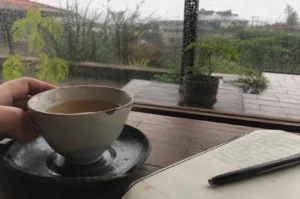
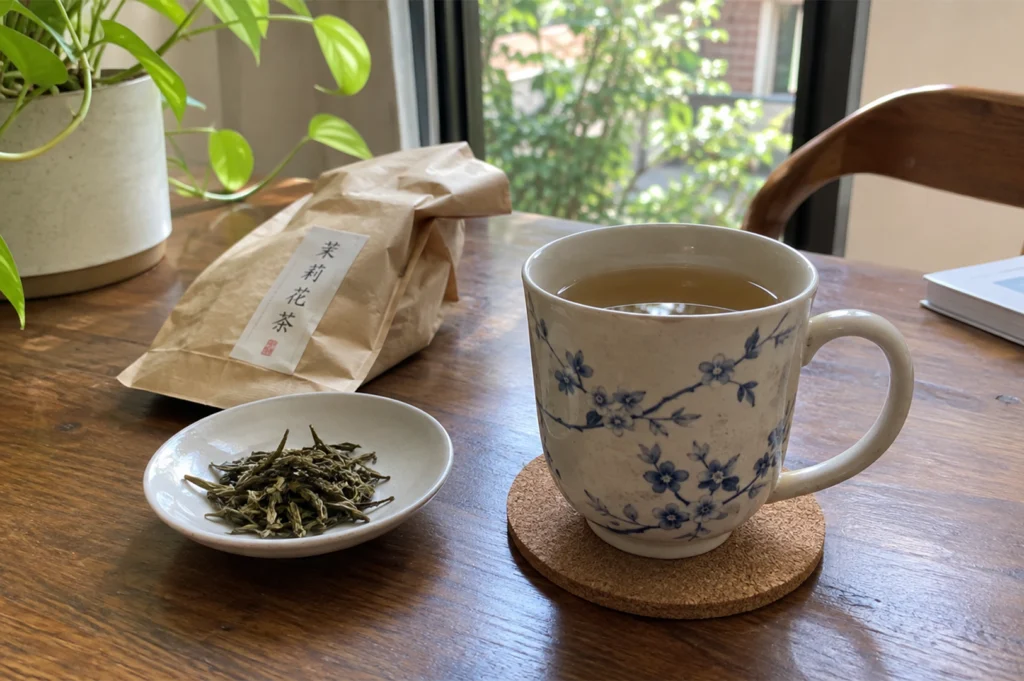
There is something reassuring about making tea in an ordinary mug.
No carefully arranged tray. No matching cups. No elaborate preparation.
Just leaves, hot water, and a few quiet minutes.
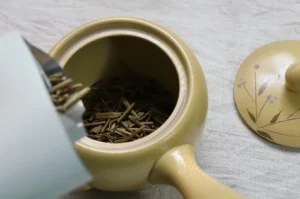
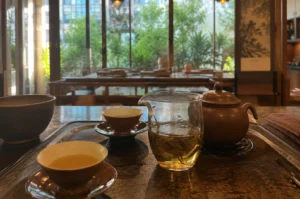
I have always appreciated beautiful teaware. A well-made gaiwan, a traditional clay teapot, or a thoughtfully arranged tea table can bring a certain pleasure to brewing. These objects carry knowledge, craftsmanship, and sometimes generations of tradition.
But I wonder when we began treating them as requirements.
Tea culture has accumulated an impressive collection of equipment. We speak of vessels, materials, temperatures, and techniques with considerable seriousness.
Much of this knowledge is valuable.
Yet I sometimes worry that we have made the appearance of tea preparation more important than the experience itself.
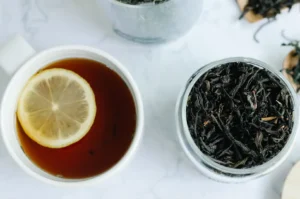
A cup of jasmine green tea does not become less fragrant because it was brewed in a kitchen mug. A good Assam does not lose its character simply because the person preparing it owns no specialised equipment.
The leaves respond to water and time.
Not to the beauty of the table.
Of course, different vessels can influence how tea brews. A gaiwan allows greater control over successive infusions, while certain teapots offer their own practical advantages.
There is satisfaction in learning these distinctions.
But knowledge should expand our enjoyment, not establish conditions for it.
I think about how easily we postpone simple pleasures while waiting for the right circumstances. The better teapot. The proper cups. A quiet afternoon when everything can be arranged perfectly.
Meanwhile, the tea remains untouched.
Perhaps we have misunderstood what makes a tea ritual meaningful.
It is not necessarily the equipment, nor the precision of our movements. Sometimes it is simply the decision to pay attention to something ordinary.
To notice the fragrance.
To taste without distraction.
To allow a familiar cup a little space in the day.
I would never discourage someone from collecting beautiful teaware. There is genuine pleasure in craftsmanship, and much to learn from traditional methods.
But I would rather see someone enjoy tea imperfectly than hesitate because their kitchen lacks the proper arrangement.
A tea setup can deepen an experience.
It should never become the price of admission.
The mug you already own is enough to begin.
With quiet regard,
N. P. Lim

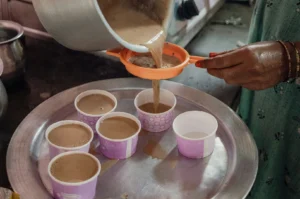
Masala Chai Tea Origins: The Cultural Evolution of India’s Spiced Tea Tradition
There is a sound that belongs to mornings across India: the hiss of milk rising in a battered pot, the clink of a spoon against metal, the low murmur of a tea seller calling out to passing crowds. Before the first sip, there is the scent. Cardamom pods, fresh ginger, and cinnamon stick curling into…
-
We Are Turning Tea Into Something It Was Never Meant to Be
There is something quietly strange happening in tea culture. The more popular the tea becomes, the more it starts to resemble everything it once stood apart from. Speed. Branding. Productivity. Performance. Tea, which once belonged to unhurried moments, is increasingly being asked to do more. To energize. To optimize focus. To replace coffee. To support…
-
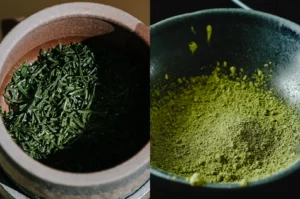
Sencha Green Tea vs. Matcha Powder: Understanding the Differences in Japanese Green Tea
Two tins of tea powder sit side by side on a shelf. Both hold a fine green powder. Both promise the taste of authentic Japanese tea. To the eye, they look almost identical, and that is precisely where the confusion begins. One is matcha powder, often used in matcha lattes and desserts. The other is…
-
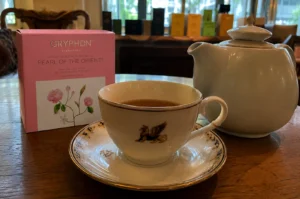
Discovering Gryphon Tea Company’s Earl Grey in Singapore
I recently tried the Earl Grey from Gryphon Tea Company Singapore, and I have to admit, it surprised me. Not because it was flawless-it wasn’t, but because it felt like a tea that knew exactly what it wanted to be. The aroma is the first thing that hits you. Bergamot is present but subtle, not…
-
Hojicha: The Roasted Japanese Green Tea With A Mellow Twist
There is a moment, just after the hot water meets the hojicha tea leaves, when the kitchen fills with the aroma of something toasted. Not grassy. Not sharp. Warm, like roasted nuts or the edge of a freshly baked loaf. That moment is where hojicha begins. Hojicha (sometimes spelled houjicha) is a roasted green tea…
-
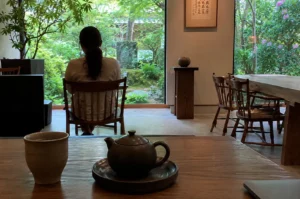
A Quiet Afternoon at Yixing Xuan Teahouse
I recently spent a quiet afternoon at Yixing Xuan Teahouse, a place that feels like a pause in the city. The moment you step inside, the world seems slower. The air carries the gentle aroma of steeped leaves, and the staff move with quiet precision. I chose an oolong, simple yet familiar. Watching the leaves…
-
The Controversial Smoky Tea That Divides Enthusiasts: Lapsang Souchong Black Tea
There is a tea that empties rooms and fills them in equal measure. Open a box of loose leaf lapsang souchong black tea, and someone nearby will lean in with delight while another quietly steps away. Few teas provoke such immediate, honest reactions. That divide is part of its story. This smoked lapsang souchong smells…
-
The Tea That Keeps Me Coming Back
I have a tea I return to more than any other. It is not rare. It is not expensive. In fact, most people would probably pass it by without a second thought. And yet, somehow, it has become a quiet companion over the years. I first drank it on a rainy afternoon. I had been…
-
Tie Guan Yin: The Iron Goddess of Chinese Oolong Tea
Tie Guan Yin, also known as Iron Goddess or Iron Goddess Oolong, is a celebrated Chinese oolong tea originating from Anxi County in Fujian Province, China. This tea from Anxi Fujian holds a special place among other teas due to its unique aroma, flavour, and rich cultural story. It is made from the tea plant…
-
Why Tea Shops Might Be the Last Quiet Places We Have
There is a growing habit in Singapore that I find both comforting and slightly unsettling. People are working everywhere now. Cafés, co-working spaces, neighborhood bakeries, even small corner shops. A laptop seems to turn any table into an office. And in many ways, this flexibility is impressive. It reflects how life has adapted to work,…