I have noticed that tea conversations can become surprisingly confusing.
Not because tea itself is complicated, but because we sometimes use the same words to mean completely different things.
One phrase that always catches my attention is “caffeine-free tea.”
It sounds simple enough.
But is that really what we mean?
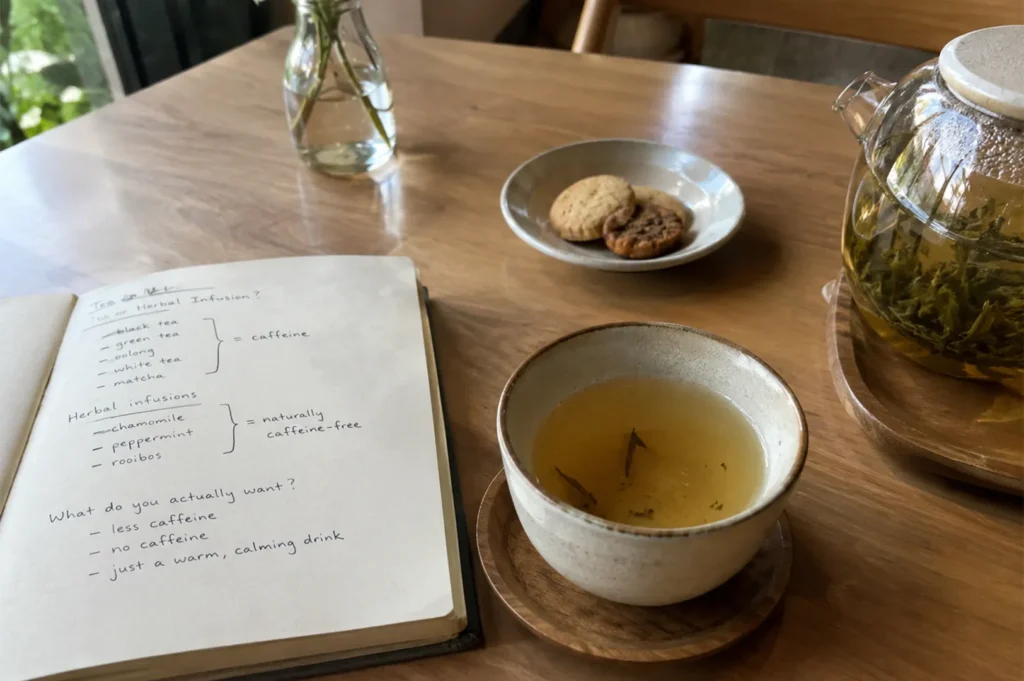
Because technically, many traditional teas are not completely caffeine-free. Black tea, green tea, oolong, white tea, and matcha all naturally contain caffeine because they come from the Camellia sinensis plant.
What many people are actually looking for is something slightly different.
A tea with little or no caffeine.
Or perhaps a naturally caffeine-free herbal infusion.
The distinction seems small, but it matters.
I think part of the confusion comes from how we casually use the word “tea” for almost everything we steep in hot water. A cup of chamomile, peppermint, or rooibos is often called tea, even though they are technically herbal infusions rather than traditional tea.
And honestly, I understand why.
Language follows everyday life. Most people are not thinking about botanical categories when they are choosing a comforting drink before bed.
They simply want something warm.
Something calming.
Something that will not keep them awake.
But perhaps understanding the difference can make our choices easier.
A person looking for a naturally caffeine-free option might enjoy herbal infusions. Someone who wants the flavour and tradition of tea but less caffeine might explore lighter teas or adjust how they brew them.
Neither choice is more correct.
This is what I find interesting about tea. The more we learn about it, the more we realise how many assumptions we carry.
We think we know what tea means.
Then we discover there is another layer.
But I also think we should be careful not to make tea feel like a vocabulary lesson. At the end of the day, people are not searching for the perfect term. They are searching for a drink that fits their lives.
Sometimes that means a delicate green tea in the morning.
Sometimes it means a cup of chamomile before bed.
Sometimes it means simply knowing what is actually inside your cup.
Maybe the goal is not to correct everyone who says “caffeine-free tea.”
Maybe the goal is to make the conversation clearer.
Because tea is already interesting enough without making it harder to understand.
— Maria Tan
On tea, culture, and everyday rituals.

A Quiet Guide To The Best Tea Houses In Singapore For Chinese Tea Appreciation
There is a difference between drinking tea and making time for it. Only the best tea houses in Singapore understand this deeply. They don’t treat traditional Chinese tea as decoration or a quick gesture. Instead, they create ideal conditions: a warmed pot, a quiet table often on a serene floor, premium tea leaves, and enough…
-
Where Tea Complements Coffee: Discover the Best Pairings at Apartment Coffee Singapore
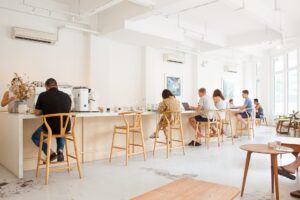
Introduction When you think of Apartment Coffee Singapore, the first thing that probably comes to mind is their expertly brewed coffee. The café, located along Selegie Road, is well-known for its exceptional coffee experiences, from beautifully crafted lattes to the bold espresso. But what sets this coffee shop apart is something you might not expect-its…
-
Izakaya Nijumaru: Discover the Best Tea Pairings at This Japanese Restaurant
Introduction Tucked away in Cuppage Plaza, Izakaya Nijumaru stands as a testament to the charm of traditional Japanese dining with a relaxed, welcoming atmosphere. Known for its hearty, bold flavours and laid-back vibe, this Japanese restaurant isn’t just a place to enjoy good food-it’s where the experience of eating becomes about more than just what’s…
-
KOMA Singapore: A Dramatic Japanese Restaurant with a Quiet Tea Finish
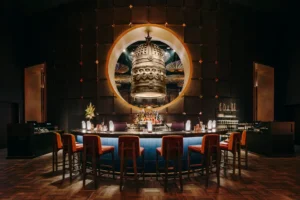
Introduction Most people arrive at KOMA Singapore, a stunning venue by Tao Group Hospitality located in Marina Bay Sands, expecting a spectacle. And to be fair, that is exactly what they get. From the moment guests enter, the experience begins with glowing vermillion arches inspired by Kyoto’s Fushimi Inari Shrine, leading into a dining space…

The Simplicity of Tea: Finding Joy in the Uncomplicated
Tea seems simple, doesn’t it? Water. Leaves. A cup. Yet we’ve turned this quiet ritual into something complicated. The perfect temperature, the right teapot, the precise timing. But is it really necessary? Tea, at its core, was never meant to be complicated. In the beginning, it was an uncomplicated drink shared between friends, brewed over…
-
Tea Chapter Singapore: A Tranquil Tea House in Chinatown
When it comes to tea in Singapore, there’s something special about stepping into a place like Tea Chapter Singapore. Tucked away in the heart of Chinatown, this tea house isn’t just about offering a wide selection of teas. It’s about the experience, the atmosphere, and the chance to disconnect from the fast pace of the…
-
Why Tea People Secretly Judge Your Tea Bags
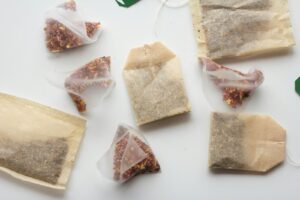
There is a moment every tea drinker recognizes. You visit someone’s home, they kindly offer you tea, and you happily say yes. The kettle begins to boil. A cupboard opens. And then it happens. A tea bag appears. Now, there is nothing wrong with tea bags. They are convenient and often exactly what someone wants…
-
The Finest High Tea Singapore: An Exploration of Elegant Afternoon Delights
Picture this: a gleaming three-tiered stand arrives at your table, laden with delicate finger sandwiches, freshly baked scones served with clotted cream, and artful delicate pastries. The gentle clink of fine china accompanies the pouring of a perfectly brewed pot of TWG Tea or Bacha Coffee. This is the enduring magic of high tea, a…

The Quiet Patience That Tea Teaches
Tea does not rush. Water must be heated. Leaves must open. Flavour slowly reveals itself in the cup. None of these things happen instantly. Perhaps this is why tea has always felt slightly different from other drinks. It asks for patience. Not loudly, but quietly. The tea will be ready when it is ready. For…
-
A Guide to the Best Tea Singapore Has to Offer
Introduction In a city known for its vibrant food culture, tea quietly holds its own place among Singapore’s favourite indulgences. While coffee often dominates cafe conversations, many tea lovers know that the search for the best tea Singapore offers leads to a surprisingly diverse world of flavours, traditions, and carefully crafted blends. Across the city,…