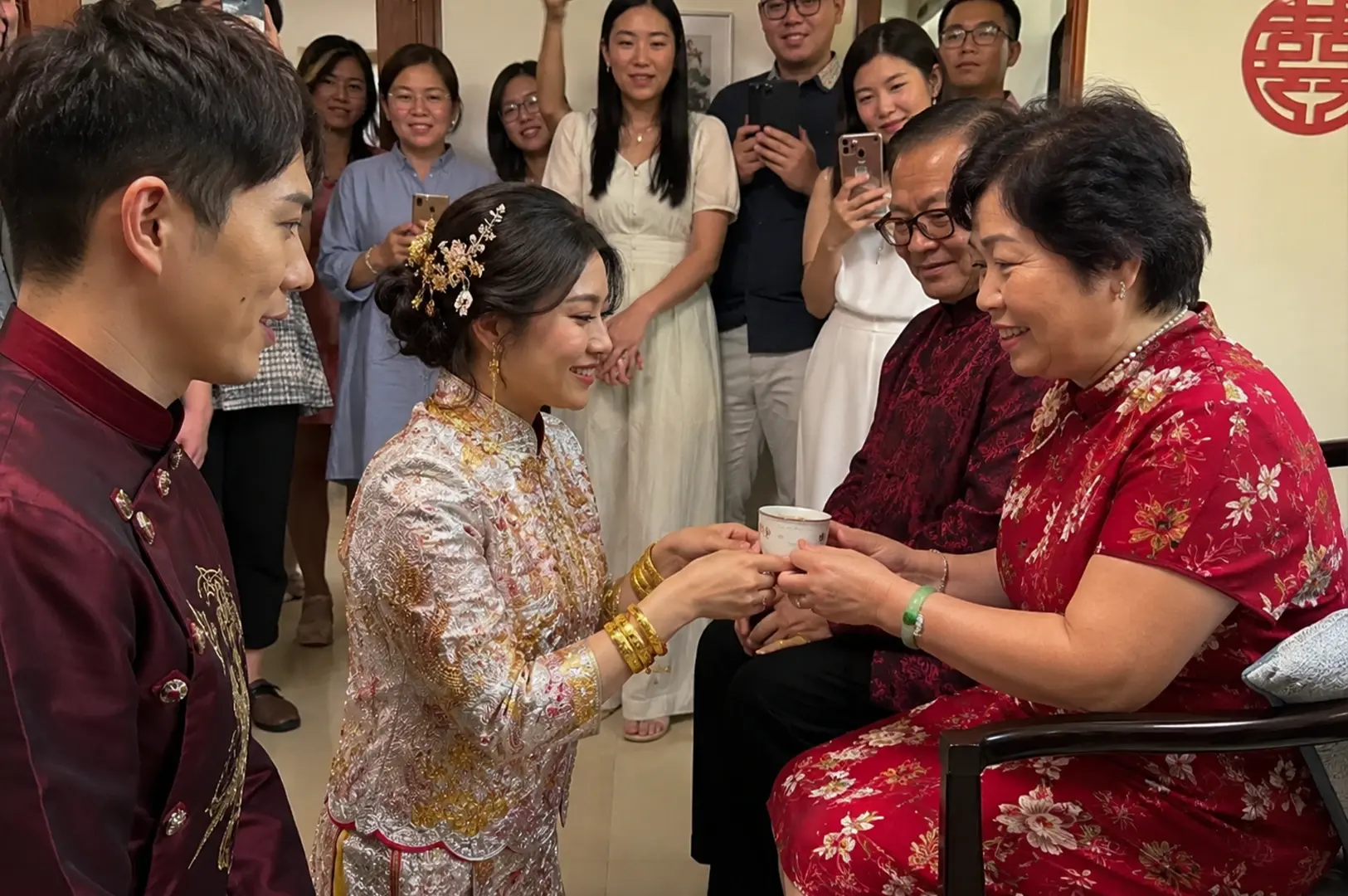
I still remember the morning of my older sister’s wedding day. We were packed into my parents' flat, and the sticky humidity in the air was intense, even with the air conditioning running on full blast. Amidst the loud laughter and the fun of the morning gatecrash, everything suddenly slowed down.
I watched her kneel in her heavy, traditional dress, her hands trembling slightly as she prepared to offer tea to our grandmother. The room fell completely silent. Our grandmother took the cup, smiled warmly at her granddaughter, and slipped a red packet containing family gifts into her hands with a quiet blessing.
That was the exact moment I realized this ritual is not just an obligatory photo opportunity. It is a profound emotional anchor. In our fast-paced world, where marriages often feel like massive, heavily produced events, this quiet break forces everyone to stop and acknowledge the joining of two families. If you are preparing for your own journey and feeling overwhelmed, take a breath. In my experience, it is entirely possible to honor this beautiful tradition without losing your mind.
Wedding Tea Ceremony Singapore
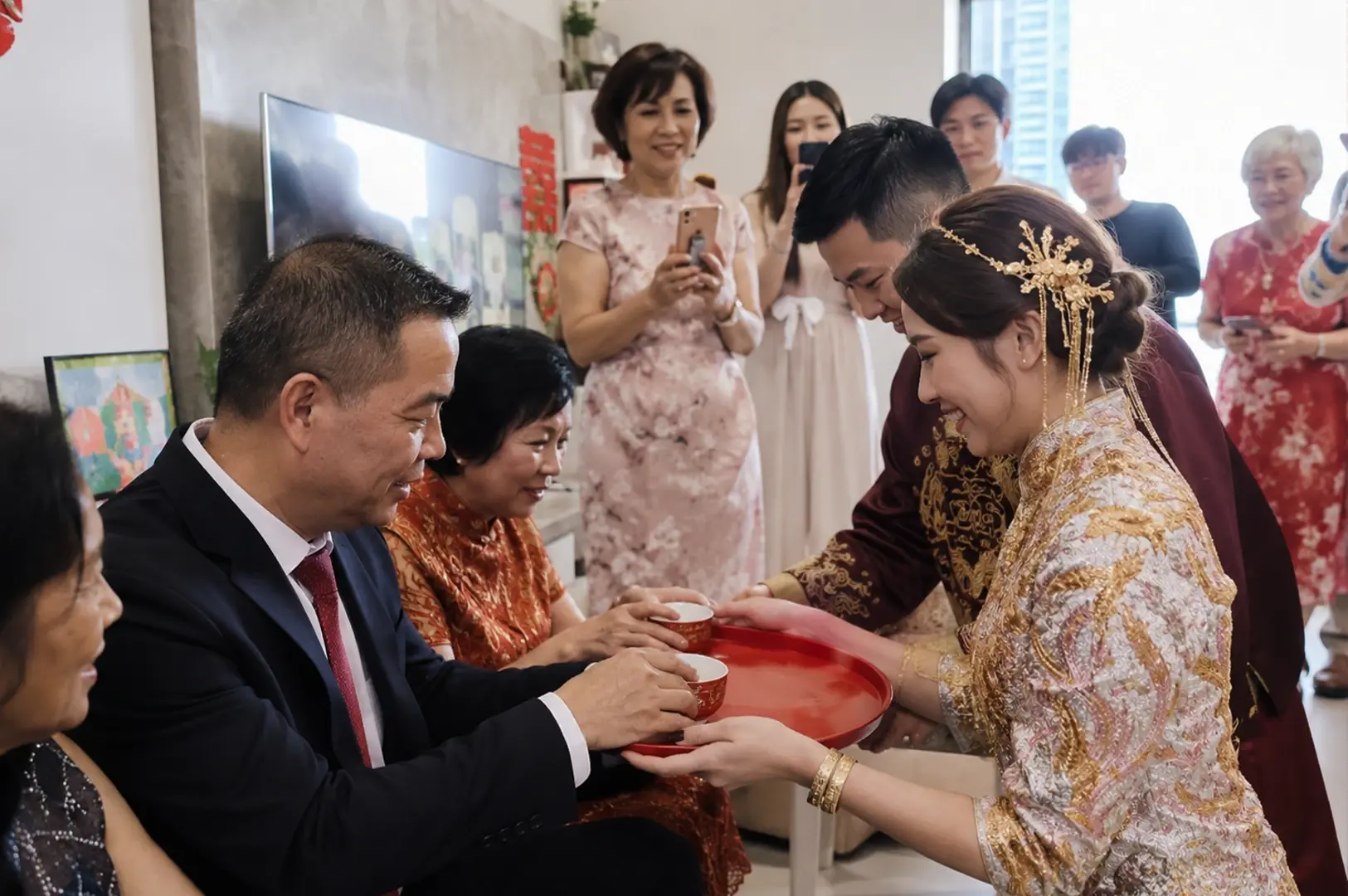
At its core, the Chinese wedding tea ceremony is a symbolic act of deep respect and family unity. It marks the formal introduction of the bride and groom to their new extended families. Historically, it was the specific moment a bride was officially accepted into the groom's household, often tied to the giving of the bride price and other ancestral customs.
Today, in modern Singapore, the tradition has evolved beautifully. We now use it to show gratitude to both sets of parents for raising us. While your evening banquet might celebrate the newlyweds with hundreds of guests, colleagues, and friends, this morning ritual remains fiercely intimate.
It acts as a quiet, profound bridge between generations. Whether your family has lived here for generations or you are blending many cultures into one celebration, the act of serving tea transcends language. It is a universal sign of respect and the true beginning of your life as a happily married couple.
What may look like a simple ritual is actually guided by traditions rooted in the tea ceremony and its long-established practices of etiquette and presence.
Tea Leaves and Symbolic Ingredients
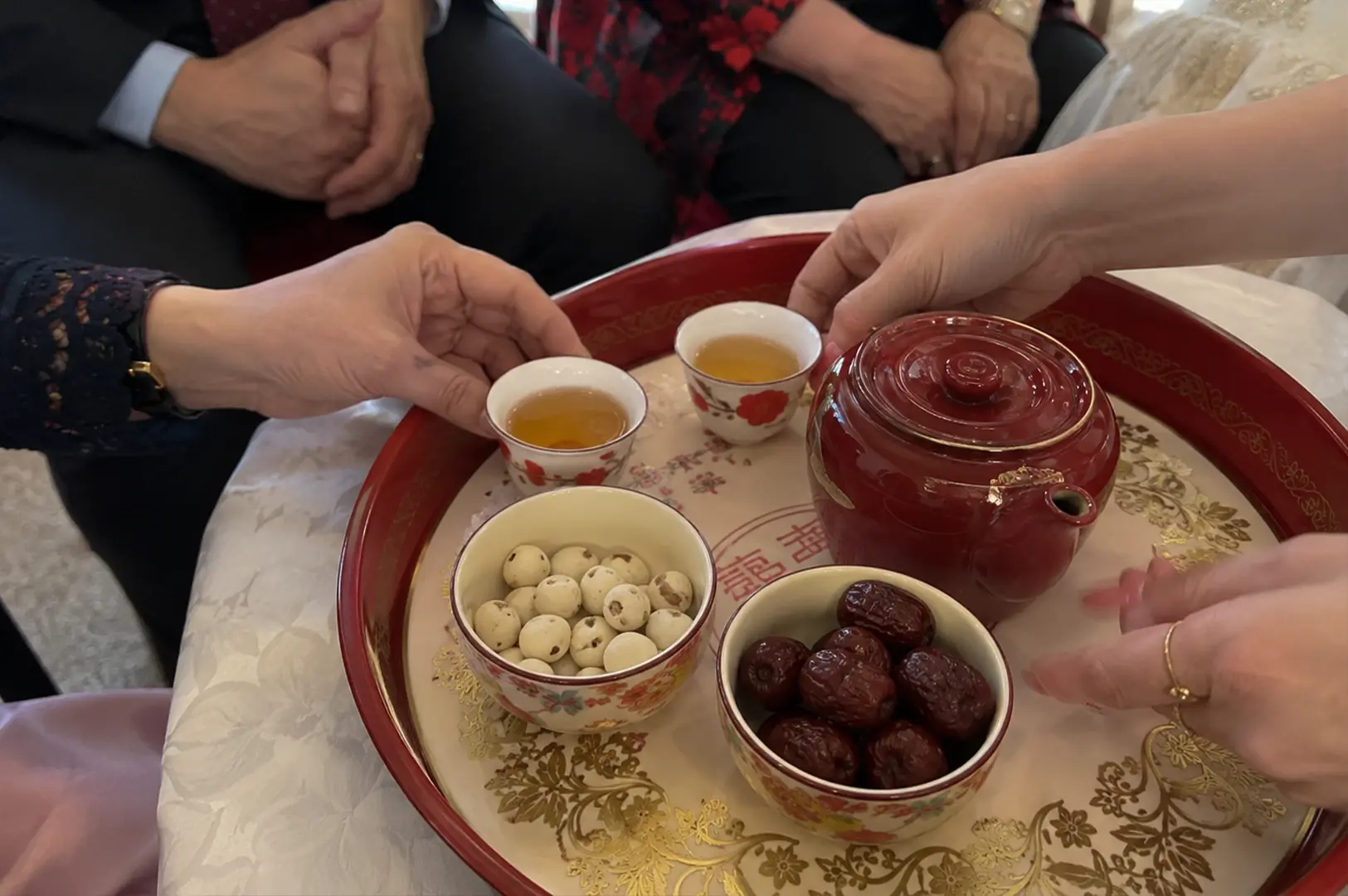
The ceremony revolves around a few specific items, and none of them are chosen simply for their beauty. The style and freshness of your ingredients matter deeply.
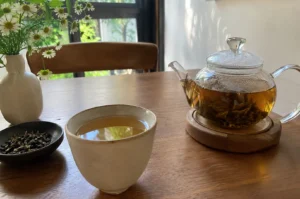
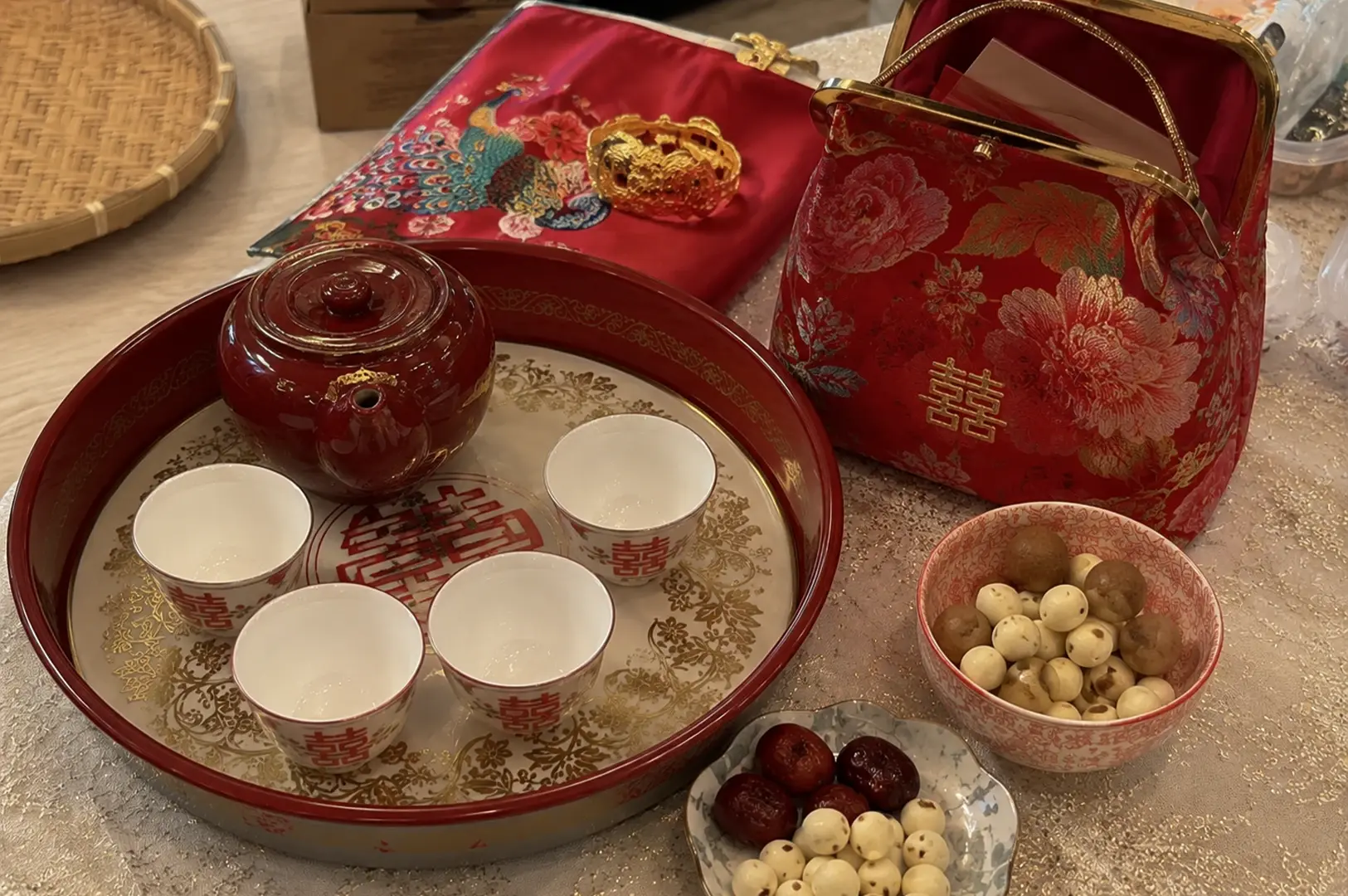
You will need a proper tea set, which is usually gifted by the bride's family and proudly displayed on a serving tray. When it comes to the brew itself, we almost never use plain oolong, green tea, or bitter infusions. Instead, we serve a sweet combination brewed with red dates, dried longan, and lotus seeds. Sometimes, subtle herbs or light florals are added to the infusion to enhance the aroma.
When you take a sip, the taste is distinctly sweet and rich. These specific fruits and ingredients carry heavy symbolism, representing fertility, harmony, and the promise of a sweet marriage. The tea is carefully prepared in quality teapots and served in tiny, handle-less teacups.
The serving order is another crucial element you must get right. Traditionally, you serve the groom’s family first, starting with the grandparents, then the father and mother, followed by older uncles and aunts. You always serve strictly by seniority.
The Wedding Ceremony: Answering Your Biggest Fears
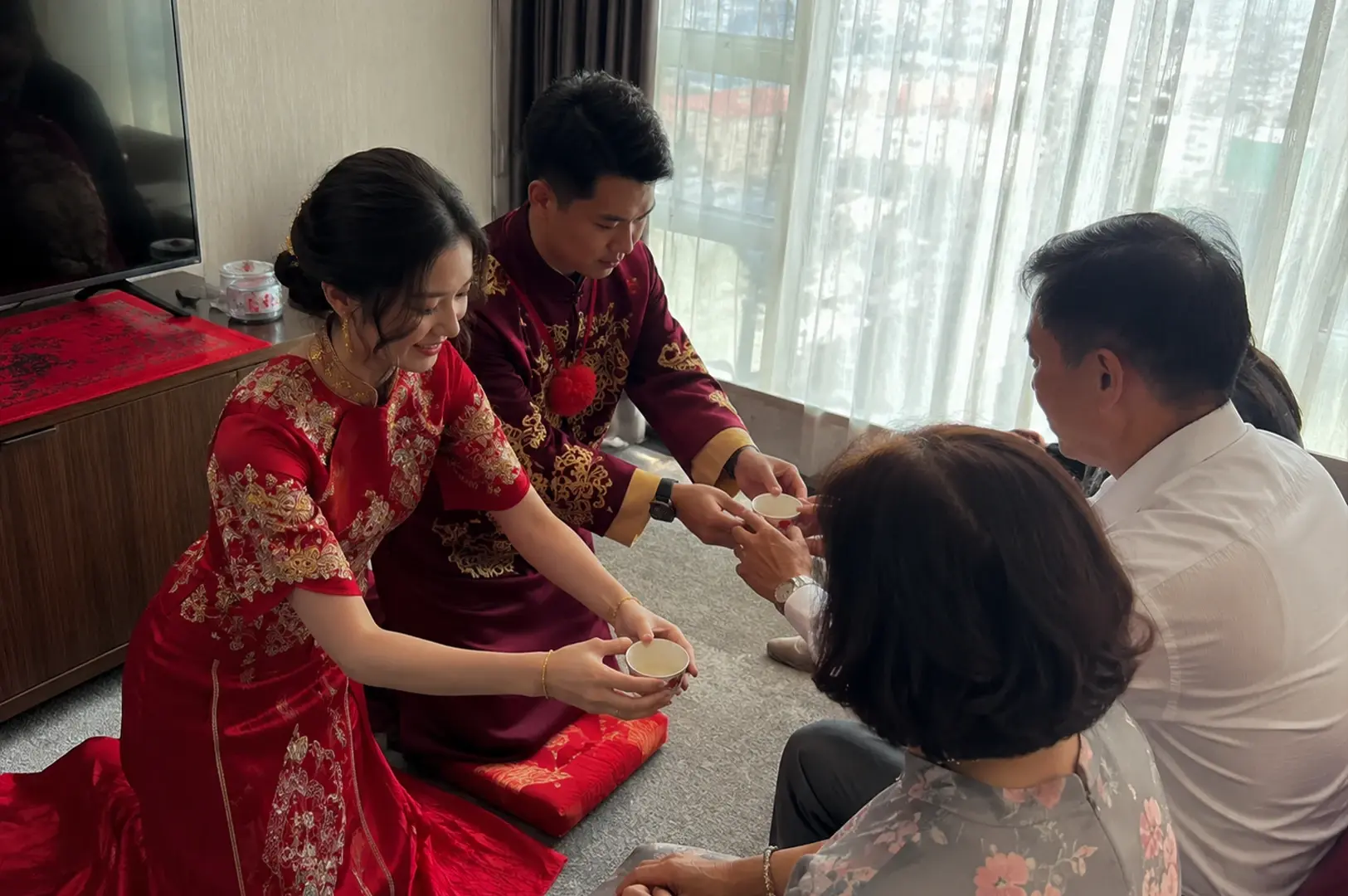
When couples ask me for advice, the same few fears always pop up. Here is the honest truth about making the wedding ceremony work smoothly.
Do we really need to kneel?
Not necessarily. Traditionally, couples kneel on red cushions to show maximum respect to their parents. However, I have found that many modern families are incredibly flexible. If your grandparents have mobility issues, or if the bride is wearing a restrictive dress, sitting on chairs or offering a deep bow is perfectly acceptable. Talk to your family beforehand to set realistic expectations.
What if my partner is not Chinese?
Intercultural weddings are incredibly common in Singapore, and this occasion is a wonderful way to share your heritage. I suggest keeping the ritual brief and perhaps printing small cards with English explanations of what the tea represents. In my experience, non-Chinese in-laws absolutely love the gesture of being served tea, provided someone gently guides them through the steps.
Serving the tea boiling hot
This sounds trivial, but it happens constantly. You pour fresh boiling water from a thermos, hand the tiny ceramic cup to an elderly aunt, and she burns her fingers. Always let the brewed tea cool slightly so it is just pleasantly warm by the time you pour it.
Practical Tips for Your Wedding Venue
Organization is the secret to a stress-free morning. Moving between multiple locations can exhaust you before the night even begins. Here is what I highly suggest to keep things running smoothly.
Host it at a central location
The classic schedule involves the groom fetching the bride, holding a ceremony at her home, rushing across the island to his home, and then scrambling to the hotel for a banquet. Many couples now choose to host a combined tea ceremony at their primary wedding venue. Renting a day-use room or using a hotel suite makes logistics infinitely easier and provides a comfortable, air-conditioned escape for your elderly guests.
Assign a Tea Ceremony Captain
You cannot pour tea, manage your dress, and coordinate your uncles all at once. Assign a vocal, organized person—usually one of your bridesmaids—to be your captain. Their sole job is to call out names, usher the right elders to the chairs, and handle the tea refills. This dramatically reduces the chaos in the room.
Prepare your tools the night before
Create a designated bag for your essential items. It should include your teapots, extra teacups, a thermos for warm water, and paper towels for inevitable spills. You should also bring a beautifully designed bag or pouch to safely hold the red packets and gold jewelry you receive.
A Simple Cup of Tea: Why This Tradition Matters
It is incredibly easy to view the tea ceremony as an outdated chore that disrupts your schedule. I completely understand the temptation to rush through it so you can get to the rest of the celebrations. But I encourage you to see it differently.
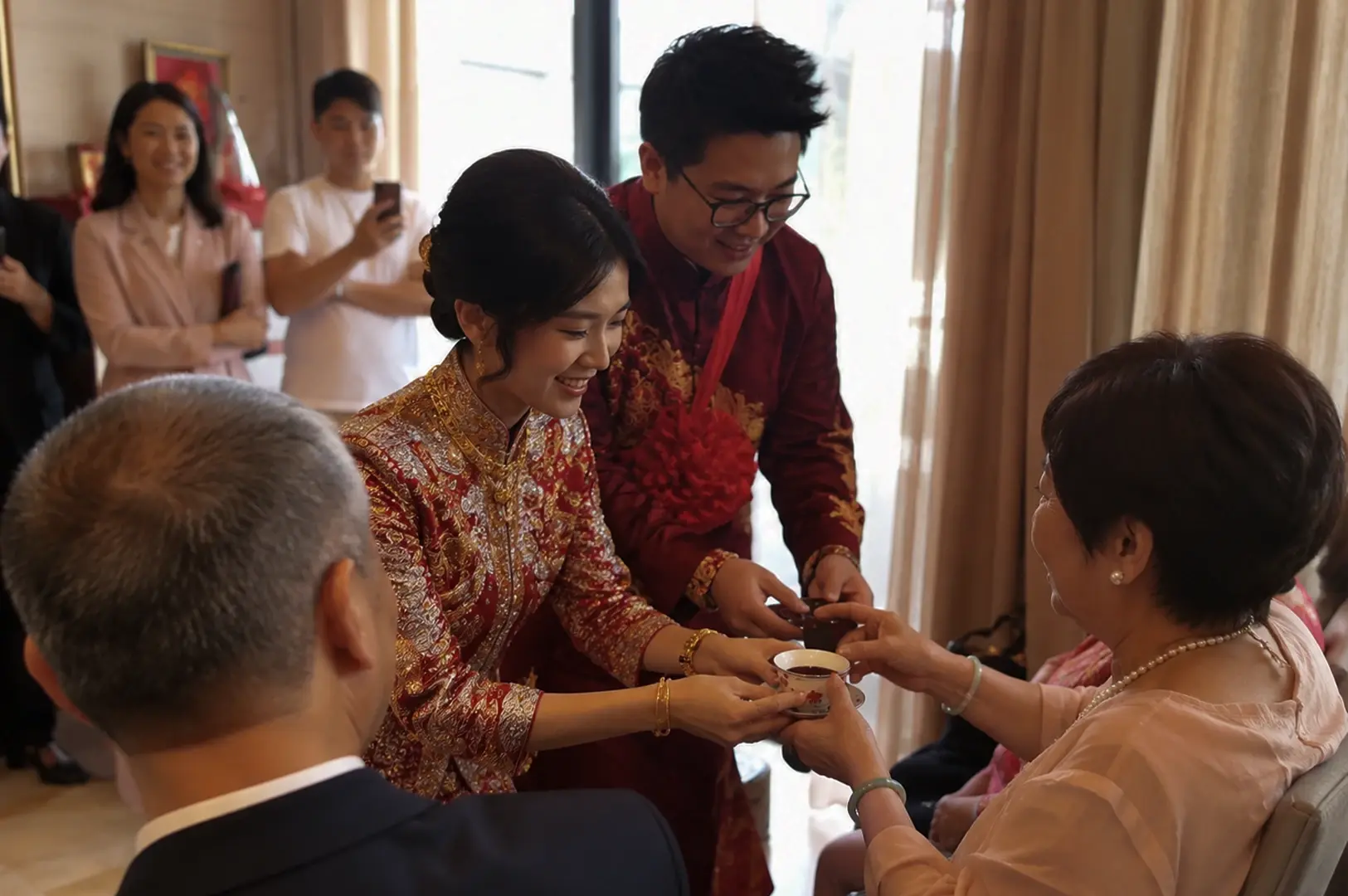
This ceremony is often the only time your entire extended family will be gathered in one room solely to wish you well. When you hand that cup of tea to your parents, you are acknowledging decades of their sacrifice and care. When they hand you a gift in return, they are formally acknowledging your transition into adulthood.
The most successful ceremonies I have witnessed are never the flawless, highly rigid ones. They are the ones where someone mispronounces a title, where a bit of tea spills on the tray, and where everyone simply laughs it off. Do not get hung up on creating a perfect, cinematic moment. Prepare your tools, rely on your bridesmaids, and let go of the stress. Hold the cup with both hands, look your family in the eye, and simply enjoy the warmth of the tradition.

Tea Snobs Made Brewing Hard—So I’m Making It Simple Again
Tea Snobs Made Brewing Hard—So I’m Making It Simple Again There was a time when I thought I was making tea incorrectly. The water was probably too hot. The leaves were probably wrong. The pot was certainly not the right one. At least, that was what I had been led to believe. Tea culture can…
-
The Leaf That Waits in the Dark: Understanding Gyokuro Tea
Anyone who has waited at a bus stop at midday in Singapore knows how much shade matters. You step under the roof, the glare softens, and everything slows down a little. Tea plants respond to shade too, though in their own way. In parts of Japan, farmers deliberately cover their tea bushes in the weeks…
-
What “Quality” Really Means (To Me) When Choosing Tea
I used to think choosing good tea meant knowing what to look for. The right origin. A respected producer. Beautiful leaves. A good harvest. Maybe even a price tag that made me think, “This must be worth it.” Over time, I realised I was making tea shopping much harder than it needed to be. Because…
-
Tea Cocktails: The Rise of Tea-Infused Mixology in Modern Bars
Tea usually arrives quietly. Steam rising from a pot, a cup set down on a saucer, the scent of roasted tea leaves or jasmine drifting across a kitchen table. A cocktail bar keeps a different rhythm. The light is low, the glassware is chilled cocktail glass, and ice rattles sharply in a cocktail shaker. Yet…
-
Stop Adding Sugar First: You’re Training Your Tongue Wrong
There is a habit I have noticed among tea drinkers. Sugar goes in before the first sip. Perhaps it is only a small spoonful. Perhaps two. But the tea is sweetened before it has been given a chance to introduce itself. I used to do this too. It seemed harmless. Tea was bitter, sugar made…
-
Is Tea a Diuretic? What Your Daily Cup Really Does for Hydration
Picture a sticky afternoon in Singapore. The kind where the air sits heavy on your shoulders and the walk from the MRT feels longer than it should. You reach for something cold. Maybe a teh peng from the drinks stall, ice clinking in a plastic cup. Maybe a bottle of green tea from the convenience…
-
Cold Brew Tea Isn’t Lazy, Hot Purists Just Don’t Like Being Wrong
I used to think cold brew tea was cheating. Not seriously, of course. But there was something about it that felt almost too easy. No kettle. No worrying about water temperature. No watching the clock while the leaves steep. Just tea, cold water, and a little patience. It seemed suspiciously effortless. Then I actually started…
-
A Taste of Taiwan in Every Pour: Yi Fang Taiwan Fruit Tea
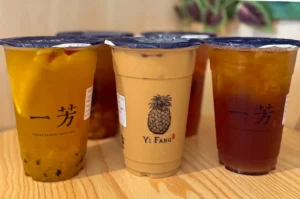
There are drinks that catch your eye before you even take a sip. A tall cup, fruit pressed gently against the plastic, tea glowing amber underneath. Something about it feels right for a warm afternoon. Light. A little cheerful. Easy to carry. But if you slow down for a moment, some of those cups have…
-
Your Tea Isn’t Bitter—You’re Overbrewing It (And It’s Not Your Fault)
There is a particular disappointment that comes from making a cup of tea that tastes bitter. You choose the leaves carefully. You heat the water. You wait. Then the first sip arrives, and something feels wrong. For a long time, I assumed bitterness meant the tea itself was not very good. Perhaps the leaves were…
-
When Tea Meets Tropical: 5 Fruit Teas in Singapore to Try
There’s a specific kind of Singapore afternoon. The air feels thick, your shirt clings a little, and every mall entrance feels like a reward. On days like that, I don’t want anything heavy. I want something cold, bright, and full of fruit, but still recognizably tea. That’s where fruit teas come in. In Singapore, they’ve…