My grandmother kept her camellia tea in a battered tin that had once held biscuits.
She never called it anything fancy. It was just cha, brewed strong in the mornings using fresh tea leaves from the tea plant, poured into small cups that had lost their matching saucers years ago. I didn't know then that those leaves came from a single, remarkable species: Camellia sinensis. I only knew that the smell of them meant the day had properly begun.
It took me years to understand what I'd been drinking. That the green tea in a Kyoto cup, the black tea steeped in a London kitchen, and my grandmother's morning brew all traced back to the same plant. One plant. One quiet, generous leaf.
This is the story of that evergreen shrub, the camellia sinensis, and the legacy it carries in modern tea culture.
What We Really Mean by Camellia Sinensis and Different Types of Tea Leaves

When people say camellia tea, they’re pointing at something more specific than they might realize.
True tea, the kind that has shaped tea culture and crossed oceans, comes from one species: Camellia sinensis. This tea plant is cultivated worldwide, from the tea plantations of China and India to East Africa, Taiwan, and Japan. Various types of tea, green tea, black tea, white tea, oolong tea, pu erh, and yellow tea, all begin as buds and young leaves harvested from this same plant.
Everything else we call tea, like chamomile or peppermint, is technically an infusion, made from other plants such as the tea tree, and not from camellia sinensis.
That quiet fact reframes everything. The astonishing variety of the world’s most popular teas doesn’t come from many plants. It comes from one, treated differently through processes like oxidation, fermentation, and roasting.
One Plant, Many Lives: The Oxidation Process and Making Tea with Camellia Sinensis Varieties

Here is the part that still amazes me.
Take the fresh leaves and buds from camellia sinensis var. sinensis or camellia sinensis var. assamica, and what you end up with depends almost entirely on what happens after they’re picked and how they are treated during the oxidation process.
The difference between a delicate white tea and a full-bodied, roasted pu erh isn’t the plant. It’s the craft of making tea.
The Gentle End: White Tea and Green Tea
White tea is the lightest of the different teas, made from the youngest buds and whole leaves, barely treated and only lightly oxidized. Its aroma is sweet and floral, like the first pale hour of spring bloom.
Green tea is next. Its fresh leaves are heated early by steaming or pan-firing to halt oxidation, preserving the leaf’s natural green color and fresh flavor. This process keeps green tea light and sweet, with more caffeine and more flavour than many expect.
The Middle Ground: Oolong Tea and Yellow Tea
Oolong tea is partially oxidized, ranging from 20% to 80%, creating a spectrum of floral, roasted, or sweet flavors. It’s a tea that rewards patient craftsmanship, with leaves often rolled or bruised to encourage a controlled oxidation process.
Yellow tea, rarer and cultivated mostly in China, is prepared with a unique resting process that allows oxidation without oxygen, giving it a mellow, sweet infusion.
The Deeper End: Black Tea and Pu Erh
Black tea is fully oxidized, producing a rich, malty drink with a full-bodied aroma. It’s the tea many recognize as the classic brew, often prepared with whole leaves or, in modern tea culture, conveniently in tea bags.
Pu erh tea stands apart, undergoing fermentation and aging over years. This tea’s flavor deepens with time, much like fine wine, offering a unique taste that reflects its growing conditions and meticulous preparation.
A Legacy Carried Across Centuries: The Story of Camellia Sinensis Varieties and Robert Fortune

Tea history begins, by most accounts, in ancient China, where the tea plant was first cultivated and revered. Chinese tea culture blossomed around this evergreen shrub, whose small white flowers bloom with delicate petals.
The species Camellia sinensis has two main varieties: camellia sinensis var. sinensis, native to China and Japan, and camellia sinensis var. assamica, found in India and East Africa. These varieties thrive under different growing conditions, influencing the flavor and caffeine content of the tea leaves harvested.
In 1848, Robert Fortune, a Scottish botanist and plant hunter, famously smuggled tea plants and skilled workers from China to India to establish tea plantations in British colonies. This act helped spread tea cultivation worldwide, shaping the modern tea culture we know today.
Why the Land and the Hands Matter in Brewing Tea Leaves
If one plant makes all these different teas, why do two green teas taste so different? The answer lies in terroir, the unique growing conditions such as altitude, soil, and climate, and in the craftsmanship behind harvesting and processing.
Tea plants are often pruned to waist height to make harvesting easier, allowing pickers to gather fresh leaves without excessive bending or sitting. The timing of the pluck, whether only the buds and two young leaves or older leaves are taken, impacts the flavor and caffeine content.
Brewing tea is an art in itself. Whether using whole leaves or tea bags, the water temperature, steeping time, and even the vessel affect the infusion’s aroma and taste. For example, green and white teas prefer water at 80°C to 85°C and steeping for 2 to 3 minutes, while black tea and pu erh require hotter water and longer steeping.
The Meaning We Pour Into a Cup: Camellia Tea in Modern Tea Culture

Tea has never really been only about quenching thirst.
In many cultures, tea is a popular drink symbolizing hospitality, respect, and mindfulness. It’s the cup poured for guests, the ritual to start the day, and the quiet moment shared between friends.
Modern tea culture embraces this legacy while innovating with new blends and brewing methods. From the traditional Chinese tea ceremonies to contemporary tea bars, camellia tea remains a bridge between past and present.
My grandmother never spoke about any of this. She just made the tea, every morning, in her biscuit tin and her mismatched cups. But I understand now that she was passing something down—not just a drink, but a way of beginning the day with care.
Why Camellia Tea Still Matters in a World of Fast Drinks

We live surrounded by beverages engineered for speed and novelty. Against all that noise, camellia tea remains quietly enduring.
In a single cup, there is botany and history, geography and craft, culture and memory. The tea leaf connects the person drinking it to countless others across centuries and continents.
To drink tea with awareness is to hold all of that for a moment. To taste not just flavor, but a legacy. The flower on the tea plant, the leaf carefully harvested and treated, the long human story that brought it to your cup. None of it demands ceremony. You don’t need the right pot or the perfect leaf to begin. You only need to slow down enough to notice what you’re holding.
So the next time you reach for a cup, whether it’s a fragrant green tea, a mellow oolong, or a strong black tea to start the morning, let yourself pause.
Consider where those tea leaves came from, the growing conditions, and the hands that shaped them. Seek out the finest teas made with care, from people who honor the craft. Let the drink be more than a habit.

The Timeless Charm of Tea Culture Through English Breakfast Singapore
There is a small ritual I return to on the warmest Singapore afternoons. The city outside shimmers with heat, the air conditioning hums softly, and I reach for a familiar tin of English Breakfast tea. The kettle clicks, steam rises, and within a minute or two the kitchen fills with a warm, malty aroma that…
-
The Tea That Reminds Me of Home
I still remember the first cup of tea I drank after returning from a long trip. It was nothing remarkable, a simple black tea brewed in my kitchen but it tasted different from any cup I had drunk abroad. It wasn’t the leaves themselves. It wasn’t the water or the pot. It was the familiarity…
-
A Tea Lover’s Honest Review of Gryphon Tea Company Singapore
There is a particular hush that settles over my kitchen on a weeknight, after the dishes are done and the day finally loosens its grip. That is when I open a new box of tea from Gryphon Tea Company Singapore. Last week, the box belonged to Gryphon Singapore, and the moment I lifted the lid,…
-
Why Tea Can Teach Us About Mindful Consumption
I’ve been thinking a lot about waste lately. Not just the kind we notice-the piles of packaging, leftover food, discarded cups-but the quiet, everyday kind: the tea leaves left unused, the leaves steeped once and thrown away, the water poured down because the cup is “not perfect.” Tea has a way of making you notice…
-
Why We Secretly Judge Tea Shops by Their Music
I never thought much about music in tea shops, until I started noticing patterns. The tea is brewed, the cups are warm, and the aroma drifts through the room. But then the music starts, and suddenly, the entire experience changes. Some shops play classical or soft jazz. Conversations linger. Sips are slow. Even the tea…
-
The Best Everyday and Gift-Worthy Blends from Gryphon Tea Singapore
I have a small confession. For the longest time, I treated tea like a background character in my day. It was just the thing I gulped between meetings, barely tasting it. Then a friend handed me a proper cup one quiet afternoon, and I finally slowed down enough to notice the aroma, the warmth, the…
-
We Talk Too Much About Tea and Not Enough About Drinking It
Tea culture has become remarkably good at talking about tea. We discuss origins. Elevation. Harvest seasons. Processing methods. Water temperatures. Brewing vessels. There are endless conversations about tea. And yet I sometimes wonder whether we spend enough time simply drinking it. This may sound like an odd criticism coming from someone who enjoys learning about…
-
High Tea St Regis: A Grand Afternoon Ritual at Regis Singapore
The light in the late afternoon does something quiet to a room. It softens. It lingers on the rim of a porcelain cup in the elegant Tea Room, slides along the curve of a silver pot, and settles into the folds of a linen napkin without asking for attention. There is a stillness here, the…
-
Why We Keep Looking for the Perfect Tea
I used to think there would be a moment when my tea journey felt complete. A tea so good that I would stop searching. A tea that would make every other tea feel unnecessary. Years later, I can confidently say that moment has never arrived. And I’m starting to think that’s the point. Tea drinkers…
-
Darjeeling First Flush: Capturing the Himalayan Spring in a Teacup
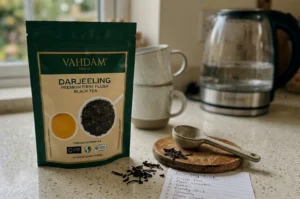
I still remember the first time someone handed me a cup of Darjeeling First Flush, a prized form of black tea, and asked me, quite seriously, not to add milk. I almost laughed. Tea without milk felt like toast without butter. But I humored my friend, took a sip, and paused. The liquid was pale…