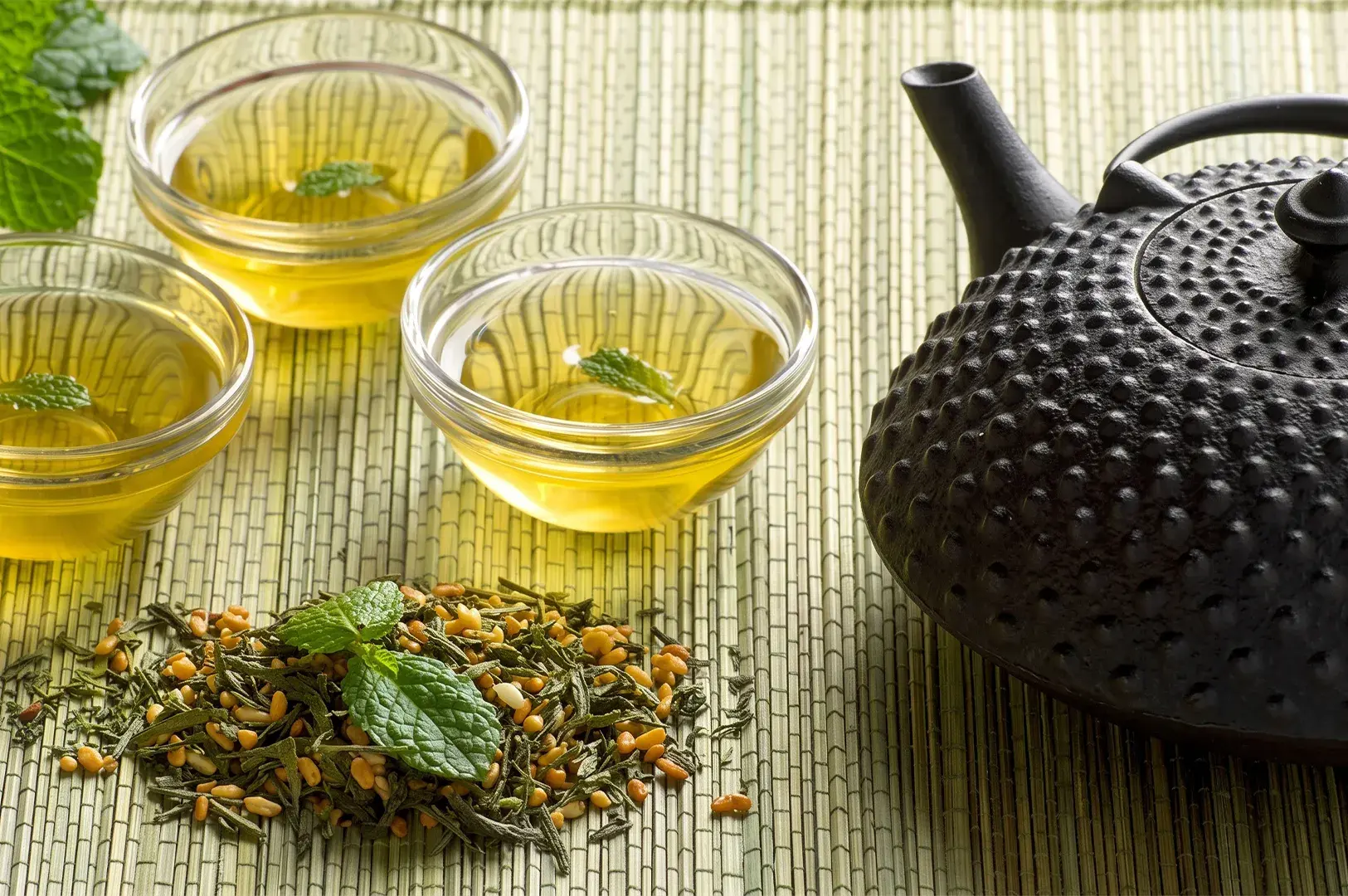
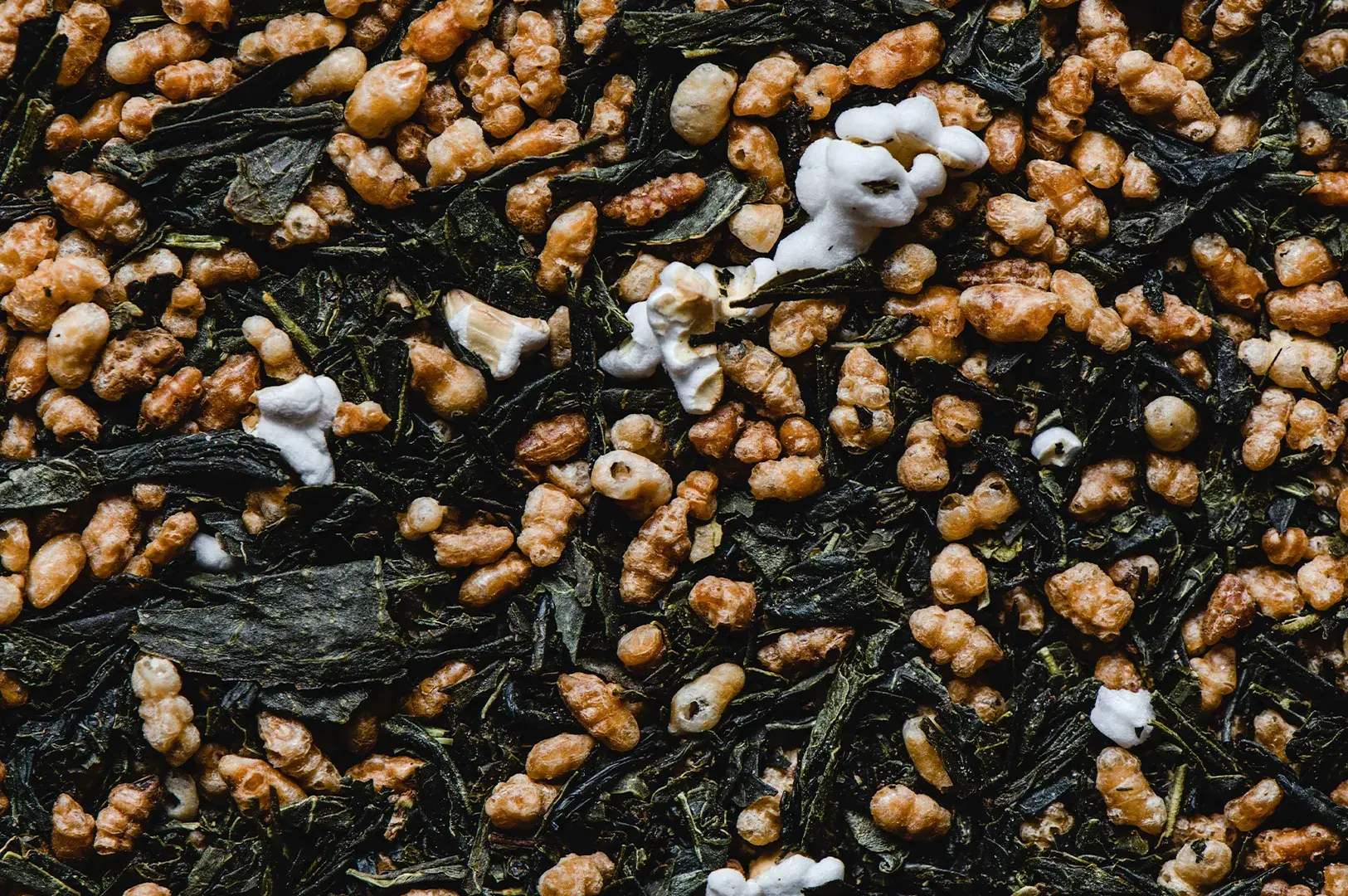
Some teas announce themselves before the cup reaches the lips. The water goes in, and almost at once the air changes. The scent is not grassy or floral but toasted, something like rice left a moment too long in a dry pan. Look into the cup and a few small grains may drift near the bottom. Some of them have burst open, pale and white, like tiny pieces of popcorn.
It is an unusual sight for a green tea. Most Japanese teas are pure leaf, kept clean of anything else. This one carries rice.
That tea is genmaicha tea. It is humble, widely loved, and quietly interesting once you begin to ask how it came to be. This feature looks at what genmaicha green tea actually is, what the rice and leaves each contribute, the stories told about its beginnings, and why such a simple cup has held its place for so long.
What Is Genmaicha? Discover the Unique Taste of Popcorn Tea
The word itself offers a starting point. Genmai means brown rice, and cha means tea. Put together, genmaicha translates as "brown rice tea."
The rice that isn't quite brown: roasted flavour and more
According to the Global Japanese Tea Association, the rice used in genmaicha tea is usually roasted white rice, and sometimes glutinous rice, the kind used for mochi. Whole brown rice, they note, would likely overwhelm the tea. The roasting turns the white grains golden brown, which may help explain why the name has endured even though the rice inside is rarely brown to begin with.
This roasted flavour is a key part of genmaicha's unique taste, offering an inviting aroma that sets it apart in the world of Japanese tea.
A combination, not a single leaf: the perfect tea blend
At its simplest, Japanese genmaicha tea is a blend of green tea leaves and roasted rice. The proportions are often described as roughly half and half, though both the Global Japanese Tea Association and Sugimoto Tea Company note that this depends on the producer.
That balance shapes everything about the tea experience. Half the cup's character comes from the field, and half comes from the roasting pan, creating the perfect cup.
The Rice: Toasted, Sometimes Popped, and Refreshing
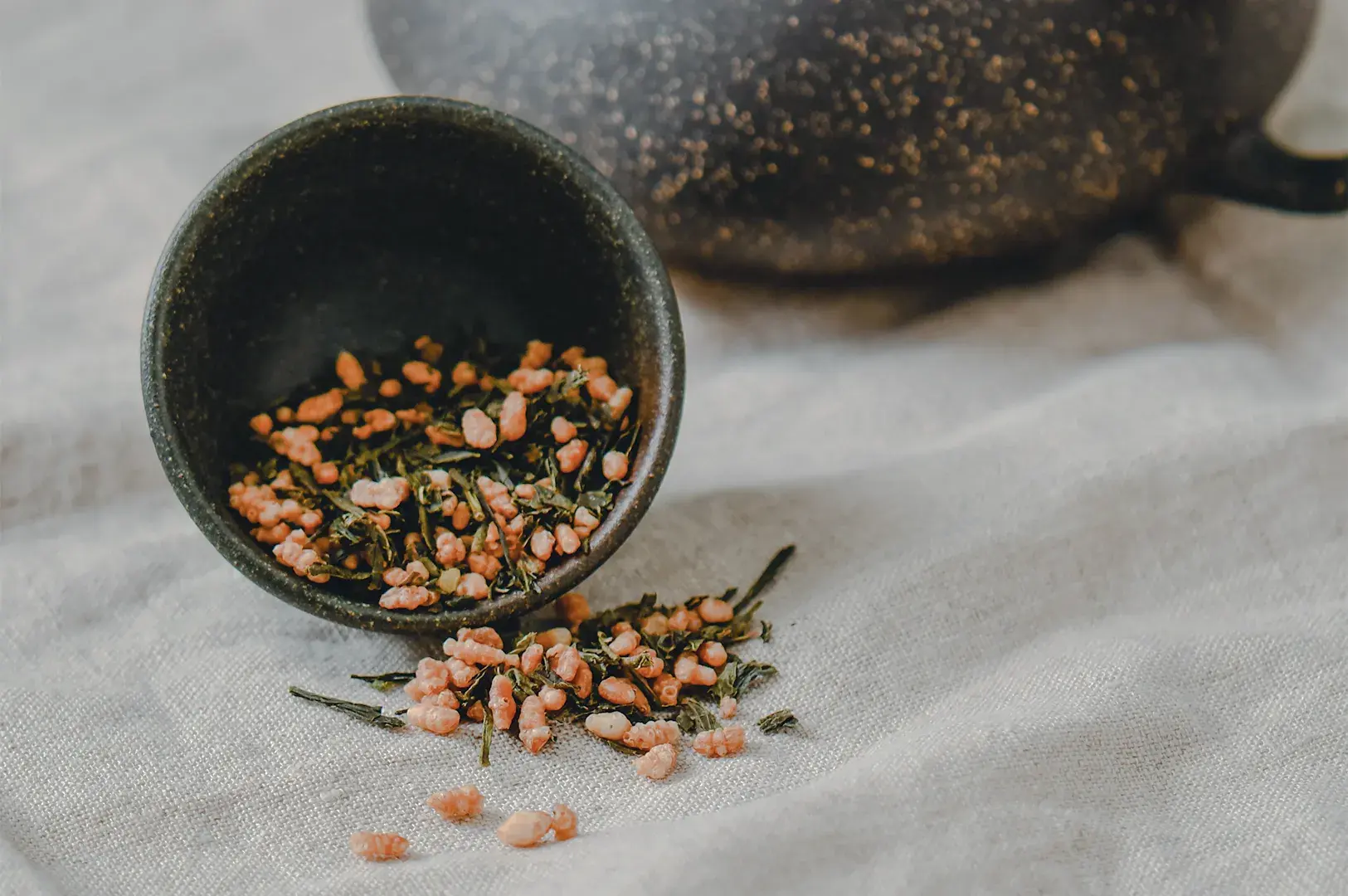
Before it ever meets the tea, the rice goes through its own quiet preparation. Sugimoto Tea Company describes the process in five stages: soaking, steaming, drying, roasting and cooling. Each step moves the grain further from the soft rice of a dinner bowl and closer to something dry, fragrant and crisp.
During roasting, some grains puff and burst. These popped kernels are why genmaicha is sometimes called "popcorn tea," a name that appeals to the discerning palate.
Why some grains burst: an inviting sight
Sugimoto explains that popping was once an unavoidable result of traditional roasting, when temperatures were difficult to control. With modern equipment, producers can regulate heat more closely, and popped rice is now often added mainly for its appearance.
Opinions vary on what the popped grains mean for the infusion. The Global Japanese Tea Association is clear that their presence does not affect quality, describing them as largely aesthetic. Sugimoto, for its part, suggests that unpopped rice carries a stronger aroma and flavour. Both views can sit side by side. What matters more is the overall blend, and how well the rice and leaves suit each other.
What the rice brings to the cup: a soothing, mild character
The rice is responsible for genmaicha's most recognisable trait: its nutty, toasted aroma. It is the reason people often describe this roasted rice green tea as comforting, warm, even a little savoury.
It also softens the drink. Because rice makes up so much of the blend, the tea leaves have less room to dominate. The result, as the Global Japanese Tea Association puts it, is a tea that is soft, gentle and low in astringency, that dry, puckering sensation strong green tea can leave behind. They also note that the rice helps cleanse the palate, which is part of why genmaicha is so often enjoyed after a meal.
The Leaves Beneath the Rice: grassy notes and antioxidants
It would be easy to think of genmaicha as a rice drink with a little tea added. That would miss half the story.
Bancha, sencha and beyond: the tea offers a refreshing mood
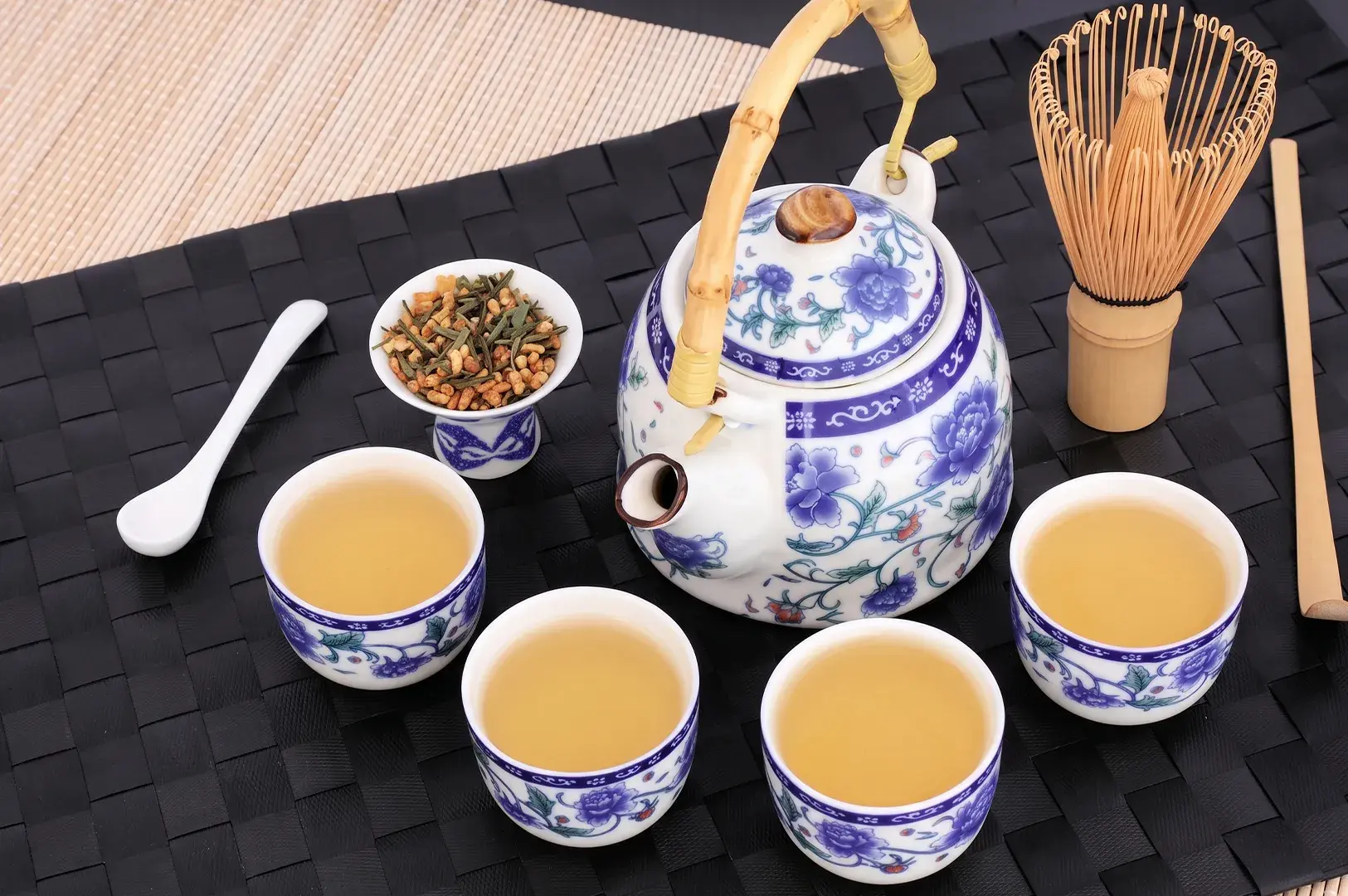
Traditionally, genmaicha has been made with bancha, a more everyday grade of Japanese green tea, often harvested later in the season. Sencha, the familiar steamed green tea of Japan, is also commonly used. Sugimoto notes that some producers now blend the rice with hojicha (roasted green tea) or even gyokuro, a shade-grown tea usually prized on its own.
Each choice changes the cup. With bancha, the Global Japanese Tea Association describes the tea as mellow, with the rice's nuttiness clearly present. With sencha, the flavour becomes more decisive, the green character of the leaf stepping forward to meet the toasted grain.
A conversation, not a cover: the perfect cup for a discerning palate
This is what makes genmaicha green tea more than a novelty. The leaves provide freshness and a gentle green backbone with grassy notes. The rice offers warmth and roundness. Neither erases the other.
It is less a mixture than a quiet conversation between two familiar parts of Japanese daily life.
Stories Without Certainty: the head of legends
Every well-loved food seems to gather a few stories along the way. Genmaicha has several, and none of them can be confirmed.
The Global Japanese Tea Association gathers a handful of the most common tales:
- A servant dropped grains of rice, perhaps by accident, into his samurai master's tea.
- A Kyoto tea merchant mixed leftover New Year's mochi into tea so it would not go to waste.
- A sweet maker scraped up mochi that had fallen and blended it with tea, again to avoid throwing it away.
A few Kyoto tea shops, the association notes, claim to be the origin of the mochi story. Yet they are candid that the truth may never be known.
Mottainai, the thread that connects them: the benefits of not wasting
What these stories share is more revealing than any single one of them. Almost every version turns on the same impulse: not wanting to waste.
The Japanese word mottainai captures this feeling. It expresses a kind of regret at waste, and a quiet encouragement to make use of what is already there. Whether or not a servant ever spilled rice into a cup, the idea that leftover grains could become something worth drinking feels true to the tea's spirit.
Perhaps that is why the legends persist. They may not be history. But they say something honest about the tea.
An Everyday Tea, by Design: naturally low caffeine content and soothing qualities
Genmaicha has long been considered a simple tea for daily drinking. It is often made with more affordable leaves, and it has never carried the formality associated with matcha in chanoyu, the Japanese way of tea.
There is no ceremony required here. A pot after dinner. A cup alongside a simple meal. A warm drink on a grey afternoon, or a chilled one when the heat refuses to lift.
That ordinariness is part of its appeal. The Global Japanese Tea Association describes genmaicha as easily loved by both experienced tea drinkers and beginners. For someone new to Japanese tea, its softness can feel welcoming. For a seasoned drinker, it offers something different: comfort rather than complexity, though the two are not always far apart.
Genmaicha often contains less caffeine than many conventional green teas because part of the blend consists of roasted rice. This makes it an appealing everyday option, although people sensitive to caffeine may still prefer a caffeine-free drink in the evening.
New Expressions of an Old Blend: spices, fruits, and a richer tea experience
Genmaicha has not stood still.
One of the most common variations is matcha-iri genmaicha, genmaicha with matcha added. According to the Global Japanese Tea Association, the matcha gives the tea a brighter green colour and a fresher taste. Sugimoto notes that it also smooths the flavour, and that you can often spot it by the green coating on the rice grains.
Blends built on hojicha lean further into roasted notes, while those made with higher-grade sencha carry more of the leaf's own character. Each version keeps the same essential idea, rice and leaves together, while shifting the balance in its own direction.
Some producers add subtle spices or fruits to the blend, enhancing the tea experience and inviting the drinker to fully enjoy the infusion.
A Gentle Word on Caffeine: low caffeine content and catechins
Because genmaicha contains tea leaves, it contains caffeine. That point is worth stating plainly, since its mellow flavour can sometimes suggest otherwise.
Sugimoto explains that genmaicha generally has less caffeine than most other Japanese green teas, simply because rice takes up part of the blend. Still, the exact amount varies with the tea used, the ratio of leaves to rice, and how the tea is brewed and served. A matcha-rich or sencha-heavy blend may be quite different from one made mostly with bancha.
For those who are mindful of caffeine, it may help to think of genmaicha as lighter, not caffeine-free. Its caffeine content is often lower than that of plain green tea, although the exact amount varies by blend and brewing method. For those who prefer a gentler cup, genmaicha may be a suitable choice, but it is not caffeine-free.
The Quiet Wisdom of a Simple Cup: benefits for the immune system and more
Genmaicha green tea begins with two ordinary things: a handful of leaves and a handful of rice. Neither is rare. Neither is precious on its own.
Together, they make something that has lasted. A tea that is warm without being heavy, gentle without being dull, and rooted in a quiet respect for not letting things go to waste.
If you have only known Japanese green tea through its brighter, grassier forms, consider pouring a cup of genmaicha. Notice the toasted scent as the water meets the rice. Look for the pale popped grains. Then, if your curiosity carries you further, set it beside a sencha or a hojicha, and let each cup tell its own small story.
Genmaicha contains green tea catechins and other naturally occurring compounds found in tea leaves. These compounds have been studied for their antioxidant properties, although this does not mean that drinking genmaicha has been proven to strengthen immunity, improve digestion, or prevent ageing. Its most established qualities remain its distinctive roasted-rice aroma, gentle flavour and everyday appeal.
For a more detailed experience and knowledge on Japanese teas, we have prepared you a list of Best Japanese Restaurants that serves tea well.

“Detox Tea” Is Mostly Marketing: Here’s What Tea Actually Does
I have always found the phrase “detox tea” a little strange. Not because I dislike tea. Quite the opposite. Tea has been part of my daily life for years. I love the quiet ritual of choosing leaves, waiting for the water, and taking a moment to slow down. But somewhere along the way, tea became…
-
The Tea House That Time Did Not Forget: Tea Chapter Trading Pte Ltd
I almost walked past it. Located at Nine Neil Road, Tea Chapter Trading Pte Ltd sits quietly, a three-storey shophouse just across from Maxwell MRT in Singapore, its restored facade catching afternoon light. Around it, Chinatown moves at its usual pace. Inside, something slower has been happening since October 1989. I stepped in on a…
-
Expensive Tea Doesn’t Guarantee a Better Cup, Here’s Why
There is a belief in tea that we rarely question. If something costs more, it must be better. It is an understandable assumption. A rare tea from a respected region, carefully harvested and beautifully packaged, naturally creates expectations. We associate price with effort, craftsmanship, and quality. And often, that connection is justified. But not always….
-
SUN with MOON Singapore at Wheelock Place: A Unique Tea Dining Cafe Experience on Orchard Road
The lunch crowd had gone. Dinner hadn’t arrived yet. I came in during that strange, in-between hour, a little after three on a weekday, when the escalators at Wheelock Place hum quietly and Orchard Road feels almost gentle. Most people were still at their desks. I wasn’t. I wanted tea, and I wanted to sit…
-
Cold Brew Tea Is Underrated (And Hot Purists Are Missing Out)
I used to think tea had to be hot. There was something about the ritual of it. Boiling water, warming the pot, watching the leaves open. A proper cup of tea seemed to require steam. Then I tried cold brew tea, and I had to admit something slightly uncomfortable. I liked it. More than I…
-
All Things Delicious Review: The Quiet Pleasure of Tea and Cake.
There’s a particular kind of afternoon that asks for tea, and All Things Delicious answers it with a quiet, comforting tea-and-cake experience on Arab Street: handmade sweet treats, warm approachable teas, and a room that makes simple pleasures feel like enough. Not coffee, with its urgency. Tea. The slow kind, poured while the conversation drifts…
-
Wellness Tea Is a Scam, but Tea Can Still Be Good for You
There is a strange contradiction in the way we talk about tea today. For centuries, tea was appreciated for its taste, its rituals, and the moments it created. Today, it is often sold as something else entirely. A solution. A promise. A shortcut. The language surrounding wellness tea has become increasingly familiar. Detox tea. Cleansing…
-
Camellia Tea: A Blossom, A Leaf, A Legacy Rooted in Camellia Sinensis
My grandmother kept her camellia tea in a battered tin that had once held biscuits. She never called it anything fancy. It was just cha, brewed strong in the mornings using fresh tea leaves from the tea plant, poured into small cups that had lost their matching saucers years ago. I didn’t know then that…
-
Why “Caffeine-Free Tea” Marketing Should Be Regulated (Seriously)
Hear me out: we have become far too comfortable with the phrase “caffeine-free tea.” It appears on beautiful packaging, wellness websites, and café menus with the confidence of a health guarantee. The words suggest calm evenings, better sleep, and a gentler relationship with what we drink. But there is a problem. The phrase sounds clearer…
-
The Forgotten Luxury of Sitting Still at Japanese Tea House
You stoop to enter the traditional japanese tea house. That is the first thing the tea house asks of you, before the tea, before the talk, before anything at all. The doorway is low, deliberately so, and even the tall must bow to pass through it. In that small act of folding the body, something…