I have a feeling green tea has become the tea we’re all supposed to love.
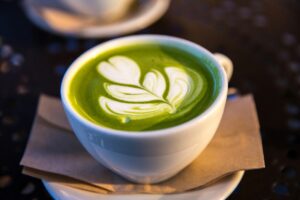
It’s everywhere. Wellness conversations, morning routines, skincare trends, and those beautiful matcha drinks that somehow make an ordinary afternoon look more interesting.
And honestly, I get it.
Green tea can be wonderful. Fresh, grassy, sometimes sweet. But I’ve started wondering why we talk about it as though it’s the obvious choice, while darker teas barely get a mention.
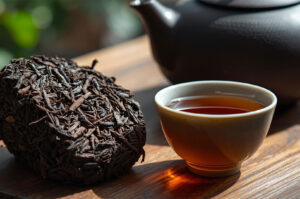
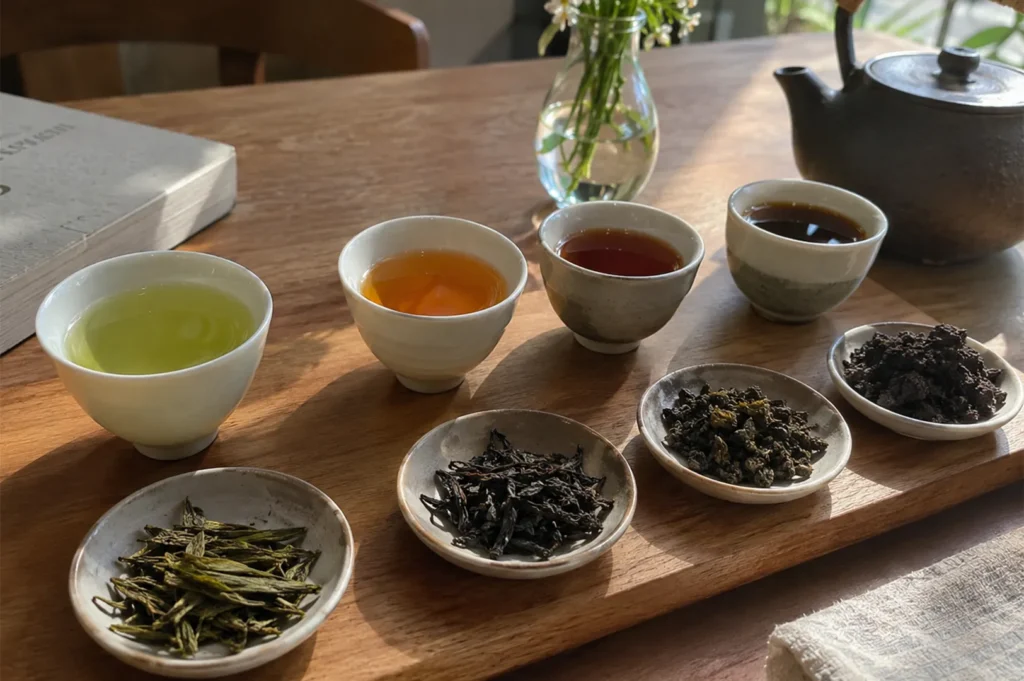
Because what about a rich black tea? Or a roasted oolong? Or a Pu-erh that develops an entirely different character with age?
I think we’re missing quite a lot.
Somewhere along the way, green tea became associated with being healthier and more refined. Its antioxidants receive plenty of attention, while darker teas sometimes get treated as though processing has made them less valuable.
But tea isn’t quite that simple.
Black tea undergoes extensive oxidation, while oolong can fall anywhere across a broad spectrum. These processes change the leaves’ chemistry and flavour, but they don’t automatically make one tea better than another.
And personally, I’d rather choose my tea based on what I enjoy drinking.
There’s something lovely about the malty richness of Assam, the roasted depth of certain oolongs, or the earthy character of ripe Pu-erh. They’re different experiences, and not everyone will enjoy them equally.
That’s perfectly fine.
What bothers me is how easily trends become rules. We discover something popular, convince ourselves it’s the best option, and forget there’s an entire world beyond it.
Maybe that’s why I think the green tea obsession deserves a little questioning.
Not because green tea is overrated in itself, but because no single tea should define what good tea looks like.
Some days, a light green tea might be exactly what I want. Other days, something darker and fuller sounds much more appealing.
I don’t think we need to choose sides.
Green tea can keep its popularity.
I’d just like us to remember that some of the most interesting cups aren’t green at all.
— Maria Tan
On tea, culture, and everyday rituals.

Raw vs. Ripe: Understanding the Two Paths of Pu Erh Processing
In the vast and ancient world of Chinese tea, few categories carry as much mystery and prestige as pu erh tea. Pu’er tea is renowned for its unique fermentation and aging techniques, which not only develop its complex flavor profiles but also contribute to its cultural significance and traditional production methods. Unlike most teas such…

From Keemun to Darjeeling: A Global Tour of Premium Black Teas
Black tea is more than just a morning ritual; it’s a global phenomenon steeped in rich history, cultural significance, and craftsmanship. From the misty mountains of India to the ancient gardens of China, each cup tells a story of its origin, flavor, and tradition. Throughout history, brewed tea has been cherished in various cultures, with…
-
Understanding Oolong Tea Oxidation Levels: The Spectrum of Oxidation in Tea Classification
When you step into the world of tea, you quickly learn about the main categories: white, green, oolong, and black. For many, green tea is fresh and vegetal, while black tea is bold and malty. But what about oolong? This category seems to defy easy definition, with some oolongs tasting light and floral like a…
-
Beyond Matcha: Exploring the Diverse World of Japanese Green Tea Varieties
Let’s be honest, when you hear “Japanese green tea,” your mind likely pictures a vibrant, frothy bowl of matcha. From trendy matcha lattes in every café to ice cream and desserts, matcha has become the undisputed global face of Japanese tea culture. And for good reason! It’s a delicious, versatile ingredient with numerous health benefits….
-
Silver Needle White Tea: The Delicate Emperor of Chinese Tea
In the vast and storied world of Chinese tea, few varieties command the reverence and prestige of Silver Needle white tea. Celebrated as Bai Hao Yin Zhen (白毫銀針)-meaning “White Hair Silver Needle”-this exceptional Chinese white tea sits atop the hierarchy of not just white tea, but among all tea types. Each slender ‘needle’ is not…
-
Thai Oolong Tea: Thailand’s Oolong Revolution in Ancient Tea Territory
In the shadowy folds of Northern Thailand’s mountains, where cool, misty air hugs the slopes and the morning dew clings to fragrant tea leaves, a revolution is steeping. Once known largely for its role in the Golden Triangle, this region now blossoms as a new epicenter for Thai oolong tea and innovative tea beverages like…
-
Dong Ding Oolong: The Artisanal Craft Behind Taiwan’s Most Famous Tea
Imagine a warm, inviting aroma that fills the room with essence reminiscent of delicate flowers, toasted nuts, honeycomb, chocolate, and ripe stone fruit. The initial scent from a freshly opened tin of Dong Ding Oolong loose leaf tea can feel almost transportive. Upon brewing, the tea’s infusion shines with a brilliant golden colour, and your…
-
Yerba Mate Tea: Argentina’s Ancient Energy Brew and Modern Revival
Picture a sun-drenched plaza in Buenos Aires, where the air hums with laughter and the scent of fresh flowers. In the center, friends gather in a close-knit circle, a cherished gourd filled with fragrant yerba mate tea making its way from hand to hand. Each person sips this herbal tea-brewed from green yerba mate leaves-through…

The Complete Guide to Kenyan Tea Industry Transformation in the Great Rift Valley
Imagine standing at the edge of Kenya’s Great Rift Valley, the birthplace of world-renowned Kenya tea. Here, undulating hills blanket the landscape in a lush sea of deep green, where rows of thriving tea bushes stretch across the horizon. This breathtaking region forms the core of the Kenyan tea industry-a powerhouse producing some of the…
-
Ceylon High Grown Tea: The Bright, Crisp Profiles of Nuwara Eliya
Imagine standing amidst a sea of emerald green on the island of Sri Lanka, where manicured tea bushes climb rolling hills and disappear into a cool, persistent mist. This is the world of Ceylon high grown tea, centred in Nuwara Eliya – a region characterized by bright sunshine in the morning and cool, misty nights….