The order is often over before you notice it began.
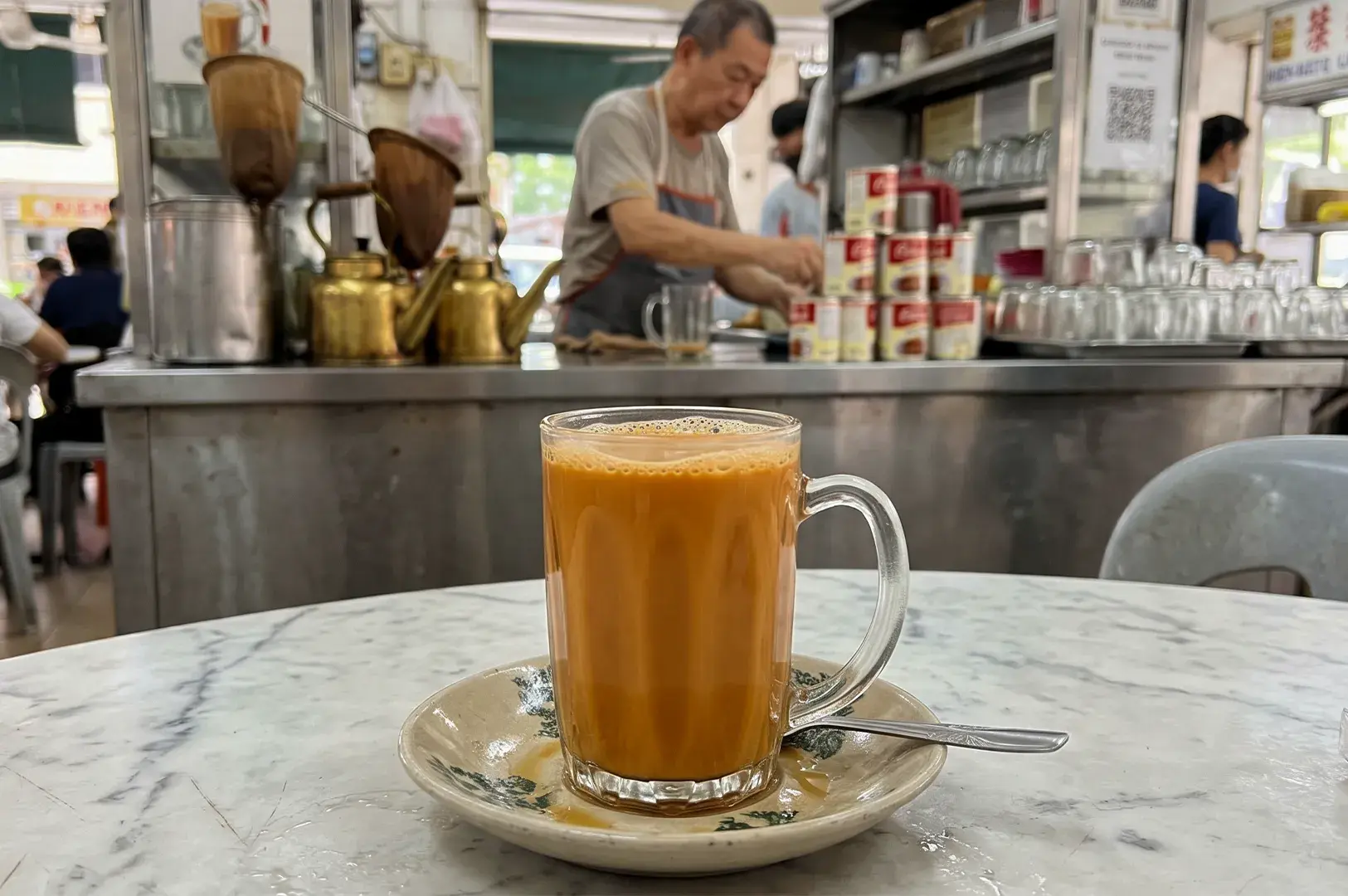
A few syllables are spoken across the counter. There is no menu consulted, no pause, no follow-up question. The drinks uncle nods, reaches for a tin, and a few moments later a glass of tea arrives: milky, sweet, and exactly what was asked for.
To someone standing behind that customer, the exchange can sound like code. Teh c siew dai peng. Kopi o kosong. It is quick and practiced, a small daily ritual at hawker centres and kopitiams across the island.
It is a language, and like most languages, it makes sense once you learn its grammar. This quick guide walks you through that grammar slowly: what the letters mean, how sweetness and strength are adjusted, and why a cup of teh is built the way it is.
By the end, ordering tea or local coffee in Singapore should feel less like a test and more like a conversation, letting you order coffee and tea like a local.
Coffee and Tea at the Kopitiam: Two Drinks, One Language
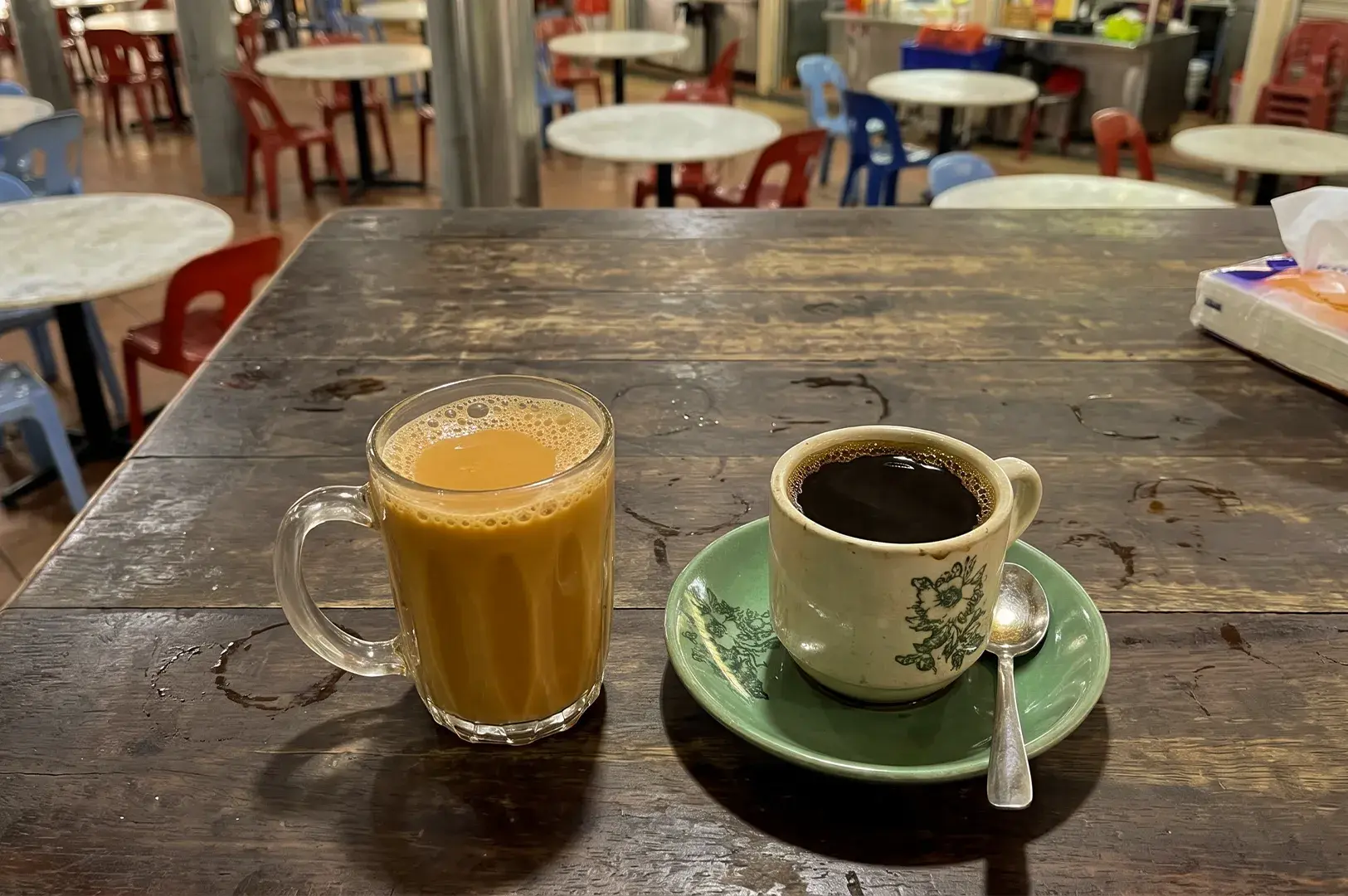
Every order starts with a single word: teh for tea, or kopi for coffee.
These two drinks share a counter, and more importantly, they share a vocabulary. The words you use to adjust a teh are the same words you use to adjust a kopi. Learn one, and you have learned most of the other.
The vocabulary itself is a mix of Malay and Hokkien, with a little Singlish woven through. Teh and kopi come from Malay. Kosong means zero or nothing in Malay. Siew dai and gah dai come from Hokkien. That blend says something about the drink. It belongs to many communities at once, which may be why it has lasted.
The tea used for teh is typically a strong, full-bodied black tea, brewed dark enough to hold its own against milk and sugar. This is not a delicate cup. It is meant to be sturdy.
How to Order Tea in Singapore: The Letters That Matter
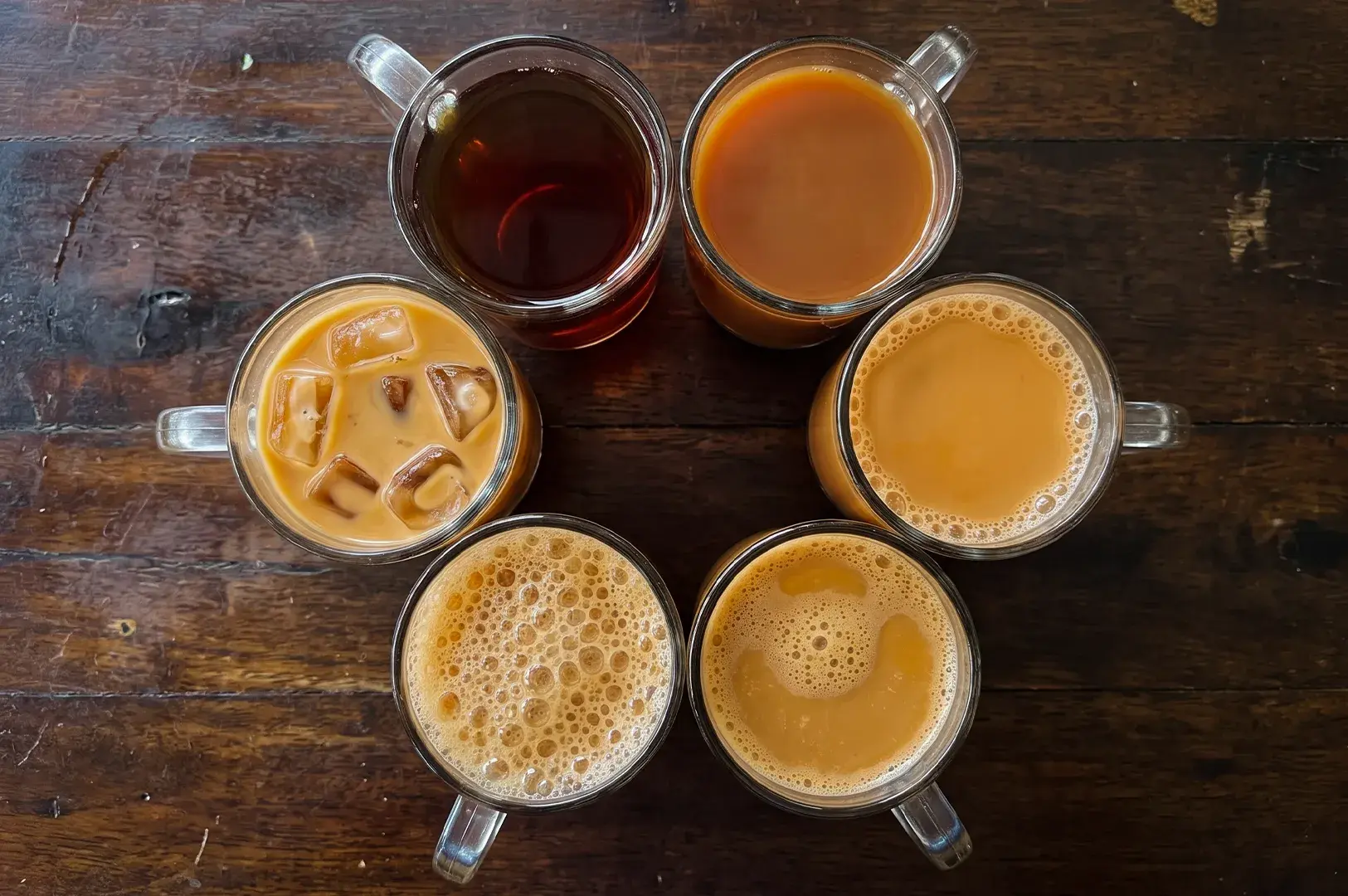
Two letters do most of the work. They decide what kind of milk goes into your cup, or whether any milk goes in at all.
Teh: The Default, With Condensed Milk
If you simply ask for teh, you will receive tea with condensed milk and sugar. This is the starting point, the drink the counter assumes you want unless you say otherwise.
It is rich, sweet, and creamy. For many people, it is the taste of an ordinary morning, a warm cuppa to sip alongside your breakfast or local food.
Teh C: Evaporated Milk Instead
Add the letter C, and the milk changes. Teh c is tea with evaporated milk and sugar.
The result is lighter and less dense than the default. The sweetness comes from added sugar rather than from the milk itself.
Teh O and Teh O Kosong
The letter O removes the milk entirely. Teh o is black tea with sugar.
If you want neither milk nor sugar, add kosong. Teh o kosong is tea at its barest: just the brew, hot and plain. It is the closest a kopitiam beverage comes to a simple cup of black tea.
Condensed Milk vs Evaporated Milk: Why the Difference Matters
It helps to understand what these two milks actually are, because the difference shapes the whole drink.
Condensed milk is milk that has had much of its water removed and sugar added. It is thick, glossy, and very sweet. When it goes into tea, it adds body and sweetness at the same time.
Evaporated milk also has much of its water removed, but it is not sweetened. It is thinner and has a slightly cooked, mellow flavor. In teh c, it brings creaminess without the heavy sweetness, so sugar is added separately.
This is why a default teh and a teh c can taste so different, even though both contain milk. One is built around a sweet, dense dairy base. The other lets the tea come forward a little more.
Sweetness Levels: Siew Dai, Gah Dai, and Extra Sweet
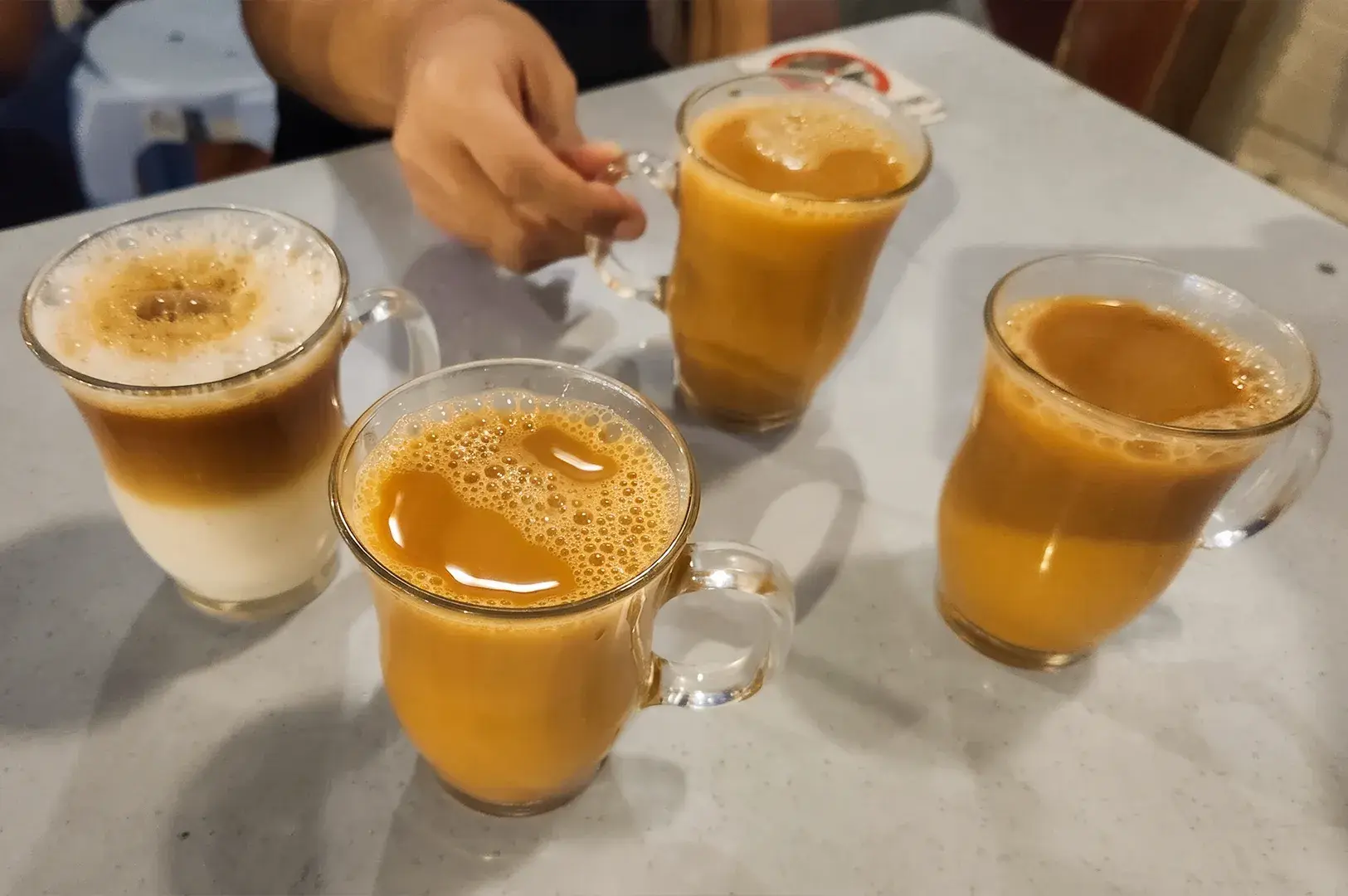
Sweetness works a little differently depending on the drink. Standard teh and kopi get much of their sweetness from condensed milk, while teh O and teh C are usually sweetened with added sugar.
Siew dai means less sweet, and gah dai means extra sweet, although stalls may adjust either the condensed milk or added sugar depending on the order.
- Kosong means no sugar.
- Siew dai (sometimes written siu dai): less sugar.
- Gah dai: more sugar, for those who like it extra sweet.
These words attach to the end of your order. A teh c with reduced sugar becomes teh c siew dai. A kopi made extra sweet becomes kopi gah dai.
For many people, siew dai is a gentle middle ground. The drink keeps its familiar character, just with the sweetness eased back a little. If you want to order coffee, you might say kopi siew dai to get a less sweet local coffee.
Strength: Gao, Po, and Di Lo
Beyond sugar, you can also adjust how strong the drink is.
Gao means stronger, with the brew more concentrated. Po means weaker, with more water added to dilute it. Di lo goes further than gao: extra thick, with no water added at all.
These terms work for both teh and kopi, though they are especially common with coffee. Di lo, in particular, is intense, and worth approaching with some care if you are sensitive to caffeine.
Peng: When You Want It Cold
Standard kopi and teh orders are generally served hot unless you request otherwise. To make them iced, add peng to your order.
Teh peng is the default teh, with condensed milk and sugar, poured over ice. On a heavy afternoon, it is one of the most common orders you will hear.
Peng can sit at the end of almost any combination: teh o peng, teh c siew dai peng, siew dai peng on its own after your base drink.
Building Your Order, One Word at a Time
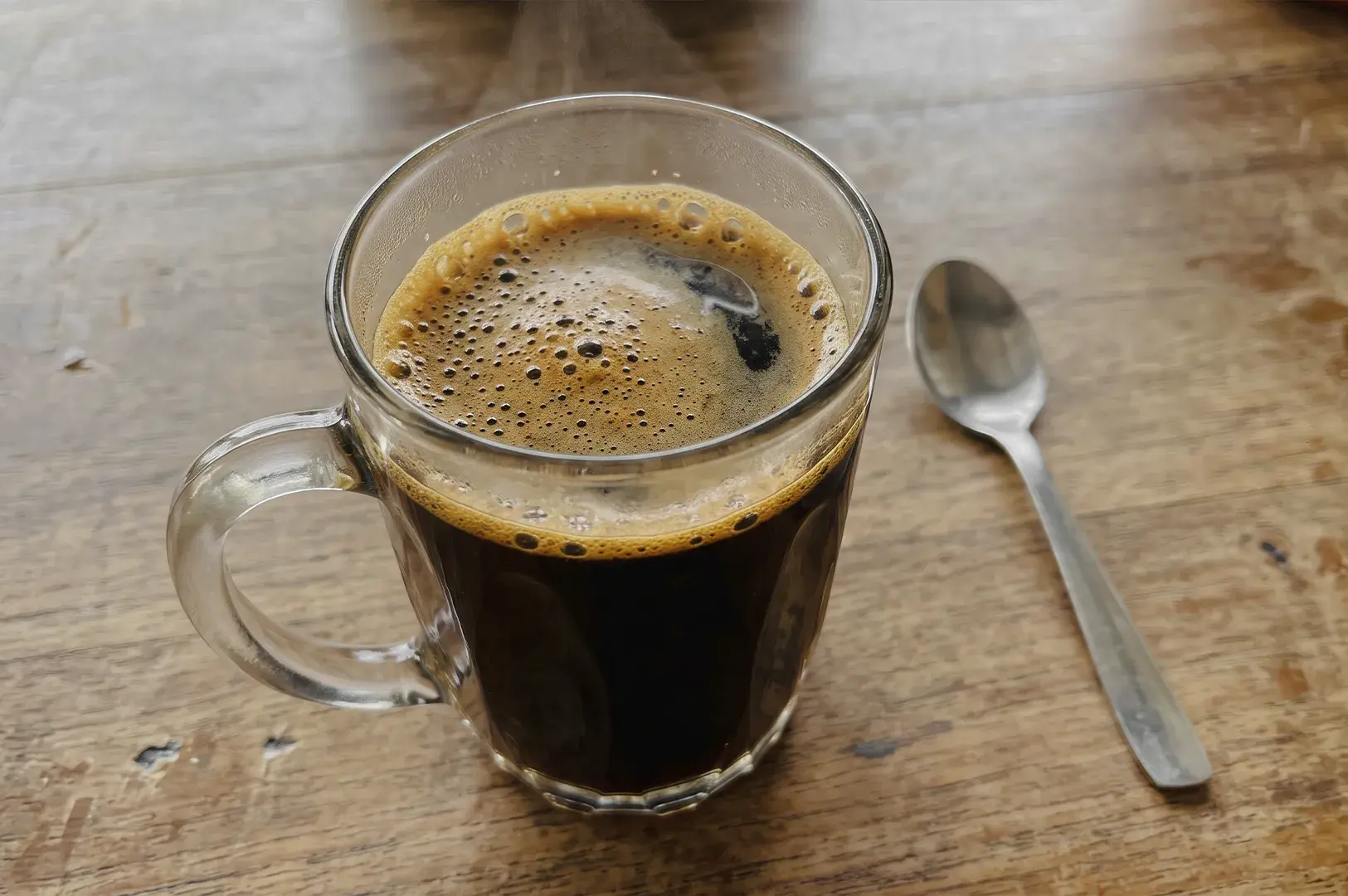
Once the pieces are clear, ordering follows a simple sequence. Think of it as building the drink in the same order it is made.
- Choose your base. Teh or kopi.
- Choose your milk. Nothing for condensed milk, C for evaporated milk, O for no milk.
- Choose your sweetness. Nothing for the default, siew dai for less, gah dai for more, kosong for none.
- Choose your strength. Gao for stronger, po for weaker, di lo for extra thick.
- Choose your temperature. Nothing for warm, peng for iced.
So iced tea with evaporated milk and less sugar becomes teh c siew dai peng. Hot black tea with no sugar becomes teh o kosong.
A quiet tip: If you lose your place mid-sentence, it is perfectly fine to slow down or say it in English. The goal is a drink you enjoy, not a flawless performance.
The Kopi Side: Robusta, Kopi O, and Black Coffee
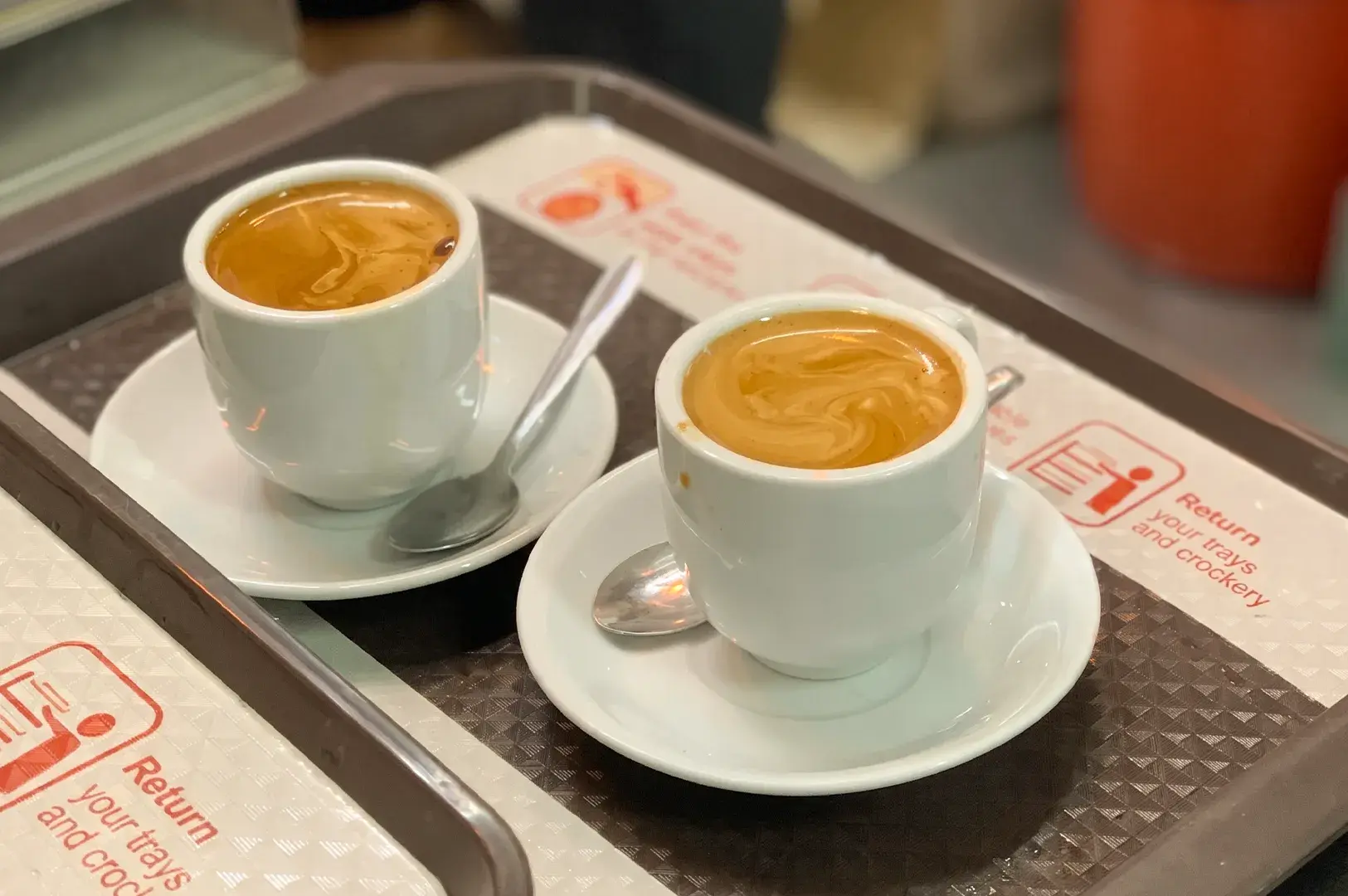
Even if tea is your drink, it helps to understand its neighbor. The two are rarely apart.
What Goes Into Local Kopi
Local coffee, or kopi, sometimes called Nanyang coffee, is usually made from robusta coffee beans. Robusta is a hardy coffee species with a bolder, more bitter character and more caffeine than arabica.
What makes kopi distinctive is the roast. The beans are traditionally roasted with sugar and margarine (some roasters use butter) under high heat, which caramelizes them and deepens their flavor. The ground coffee powder is then brewed with hot water and strained through a cloth sock filter.
The result is dark, aromatic, and slightly smoky: a traditional coffee that pairs naturally with kaya toast and local food.
Kopi O and Black Coffee
Kopi o is black coffee with sugar. Kopi o kosong is black coffee with neither milk nor sugar, the plainest version on offer. If you usually drink your coffee black, this is the order that will feel most familiar.
Kopi Gao, Kopi Po, and Kopi Di Lo
Kopi gao is a stronger, more concentrated coffee, while kopi po is lighter or more diluted. Kopi di lo refers to an especially concentrated preparation, commonly understood as coffee served straight from the brew without the usual dilution. The exact preparation can vary between stalls.
Kopi Gah Dai and Kopi Gu You
Kopi gah dai is coffee made sweeter with extra condensed milk. At some stalls, the precise preparation may vary.
Kopi gu you is less common: hot coffee with a pat of butter melting into it. The butter adds a salty, rich note that surprises many first-time drinkers. It is not offered everywhere, so it is worth asking.
Beyond the Basics: Teh Tarik, Teh Halia, Teh Cino, and Yuanyang
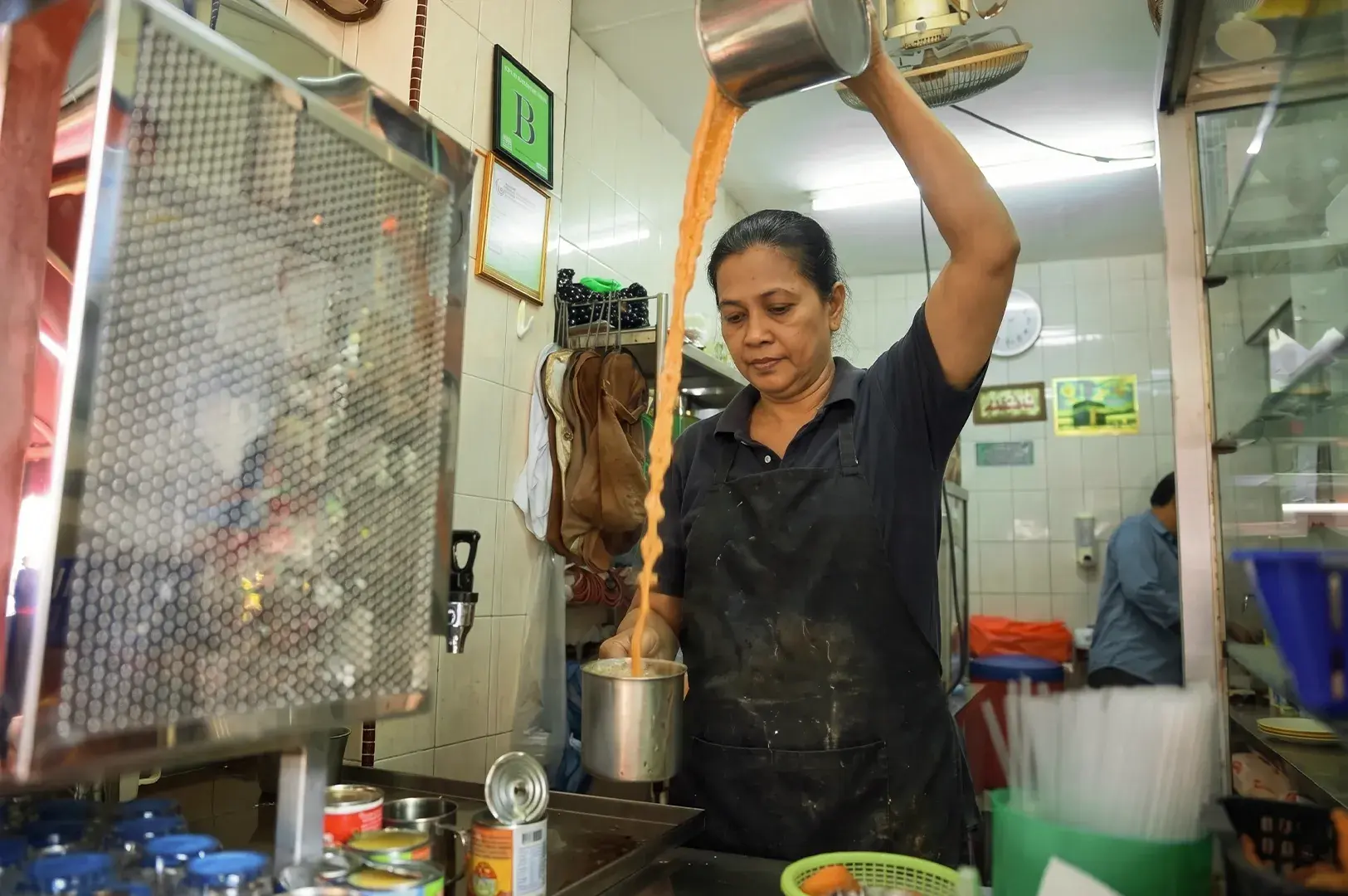
Some teh options carry their own names, often tied to particular stalls and traditions.
Teh Tarik and the Pulled Hot Tea
Tarik means "pull" in Malay. Teh tarik is tea with condensed milk and sugar, poured back and forth between two vessels from a height.
The pulling is not just for show. It cools the tea slightly, blends the milk evenly, and builds a soft layer of foam on top. Watching it done well, the long arc of tea passing through the air, is part of the drink's appeal. You will most often find it at Indian Muslim and Malay stalls.
Teh o tarik follows the same method without milk: pulled hot tea with sugar only.
Teh Halia
Halia means ginger. Teh halia is pulled tea with condensed milk, sugar, and ginger. The ginger brings gentle warmth and a slight bite, which many people turn to on rainy days.
Teh Cino
Teh cino arrives layered: sweetened milk at the bottom, tea resting above it. It is usually served unstirred, so you can see the layers before deciding how to sip it.
Yuanyang
Yuanyang combines coffee and tea in one cup. It is bold and layered, and carries plenty of caffeine.
Where Chinese Tea Fits In
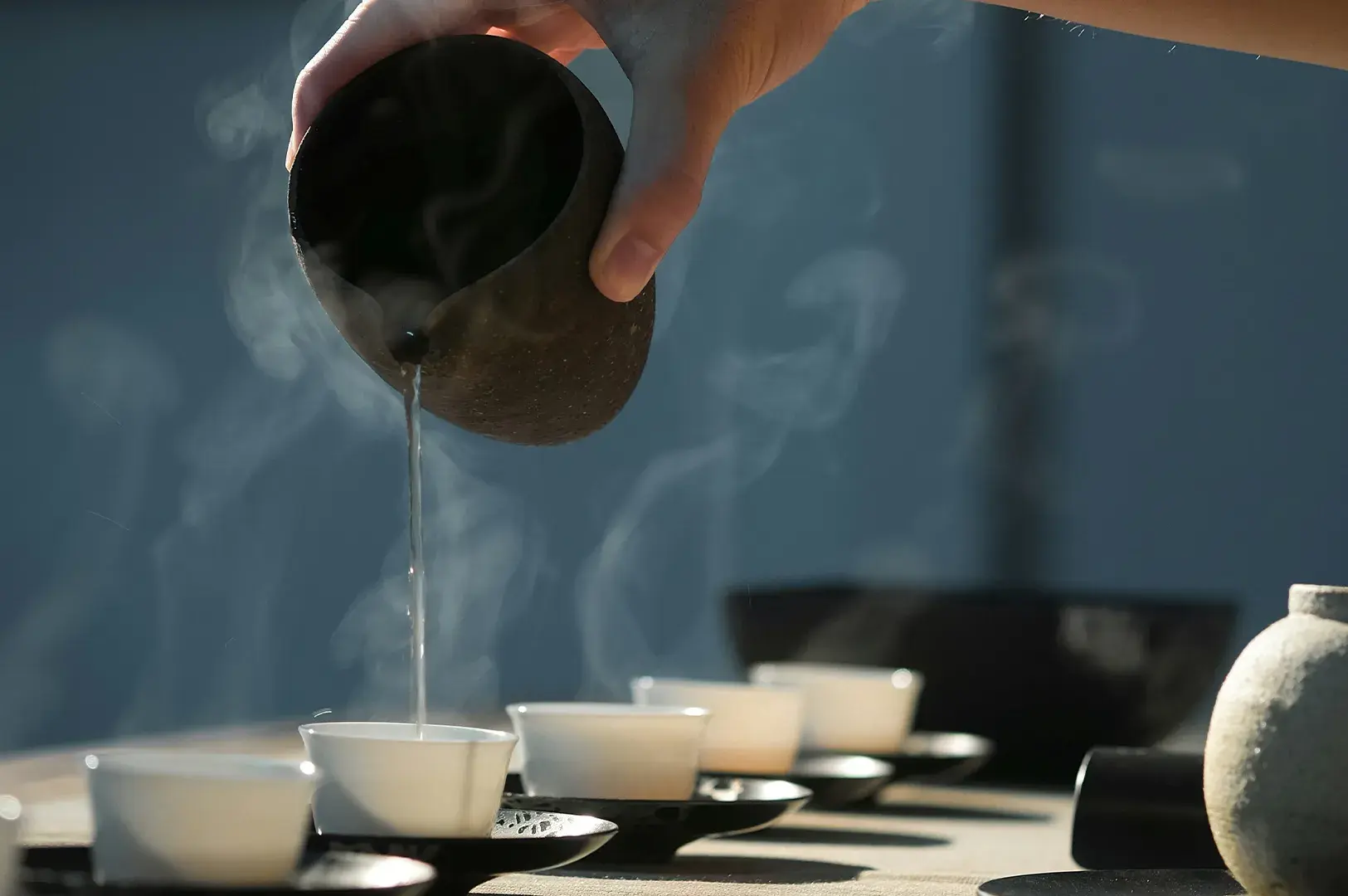
It is worth noting what teh is not. The milky, sweetened tea of the kopitiam is a separate tradition from Chinese tea, which is usually brewed from loose leaves and served without milk or sugar.
Chinese tea often accompanies family meals and dim sum, poured from a pot into small cups and refilled through the meal. Both traditions are part of tea in Singapore, but they answer different moments. One is brisk and comforting. The other is slower and shared.
Small Missteps Worth Avoiding
A few common mix-ups are easy to sidestep:
- Assuming "teh" means plain tea. It means tea with condensed milk and sugar. For plain tea, ask for teh o kosong.
- Mixing up C and O. C adds evaporated milk. O removes milk entirely.
- Forgetting to say peng. Without it, your drink will arrive warm.
- Ordering kopi di lo casually. It is very strong. Start with kopi gao if you want a stronger cup.
A Few Common Questions
Do I need to speak Hokkien or Malay? No. The terms are used by everyone, and English works when you are unsure.
Is siew dai the same everywhere? Not exactly. Each stall has its own hand, so "less sugar" varies.
Can I combine several modifiers? Yes. That is how the system is designed to work.
A Cup That Asks Only for Attention
Learning to order tea in Singapore is not really about memorizing terms. It is about noticing a small, steady ritual that unfolds every day, at every counter, in a language shaped by many hands.
The next time you stand at a drinks stall, listen for a moment before you speak. Then try one new word: siew dai, perhaps, or peng. Let the cup that arrives tell you whether you got it right.
Most of the time, it will.

Why Tea Might Be the Break You Didn’t Know You Needed
Scrolling through my feed this morning, I realized how easy it is to forget what a quiet moment feels like. Notifications, stories, messages- they all seem to arrive at once, asking for attention I don’t always want to give. And yet, in the middle of it, I poured myself a cup of tea. It wasn’t…
-
A Golden Sip of Serenity chrysanthemum tea
There is a pot on many kitchen tables in Singapore that no one talks about much. Pale yellow gold in the glass, with a few small chrysanthemum flowers or flower buds drifting at the bottom. It appears after a heavy meal, at a grandmother’s house, or in a hawker centre when the weather turns unbearable….
-
Tea in a Scrollable World
I often think about how tea fits into a world that moves as fast as ours does. Every day, there are notifications, updates, trends, and posts competing for attention. Memes, videos, tweets, they all demand a response, a like, a share. It is a constant motion that leaves very little space for pause. And then…
-
Marriott High Tea 1 for 1: Indulge in Luxury at Singapore Marriott Tang Plaza Hotel
I almost didn’t go. Hotel afternoon tea always felt like something you did for a birthday or a special occasion with loved ones, or when a relative flew in and you wanted to seem like you had your life together. Expensive. A little performative. The kind of thing you photograph more than you eat. If…
-
Why Some Teas Feel Like Company
I’ve always thought of tea as a companion of sorts. Not a person, not a friend, but something that sits quietly beside you while the day moves forward. A cup of tea doesn’t interrupt your thoughts. It doesn’t demand attention. It simply exists, warm and steady, while you figure out what comes next. Some teas…
-
A Refined Afternoon Tea Experience at the Pan Pacific Atrium High Tea
Pan Pacific Atrium High Tea is the afternoon tea experience at the Atrium Lounge in Pan Pacific Singapore: a refined, unhurried sitting with TWG tea or Lavazza coffee, elegant seating pods above the reflection pool, and a menu that pairs classic English tea traditions with Peranakan flavours. For couples, friends, families, and tea lovers looking…
-
The Tea We Drink for No Reason
Tea is often praised for its ritual, its mindfulness, its ability to transform ordinary moments into quiet ceremonies. And I appreciate all of that. I really do. But there is another kind of tea, one that rarely gets mentioned in articles or recommended in guides. The tea we drink for no reason at all. I…
-
A Tea Lover’s Map to Elegant Finds in the City Teaware Shop
There is a particular quiet that settles when you pour hot water over tea leaves in a pot you chose with care. The weight of the clay in your hand. The porcelain capacity that holds just the right amount of warmth. A small ritual, repeated, until it becomes yours. Singapore knows tea in many languages….
-
Why We Pretend Every Tea Moment Should Be Peaceful
There is a quiet expectation we place on tea that I’m not sure we talk about enough. We expect it to calm us. To slow us down. To make everything feel a little more intentional, a little more put together, a little more peaceful than whatever came before it. But I’ve started to wonder if…
-
The Discipline of Grace in Every Bowl: Tea Ceremony in Japan
Water begins to move in a small iron kettle. The sound is faint, almost like wind through pines, and in a quiet room lined with tatami mats, it is enough to fill the silence. A host kneels in the tea room. A guest waits. Nothing is said, yet something has already begun. This is where…