Introduction
Most people arrive at KOMA Singapore, a stunning venue by Tao Group Hospitality located in Marina Bay Sands, expecting a spectacle. And to be fair, that is exactly what they get. From the moment guests enter, the experience begins with glowing vermillion arches inspired by Kyoto’s Fushimi Inari Shrine, leading into a dining space that feels almost cinematic.
But after the first impression settles, something else begins to surface.
Beyond the scale, the music, and the movement of the room, there is a quieter layer to the experience. One that does not compete for attention. One that appears gradually as the meal unfolds.
Tea.
At first, it feels like an afterthought. But by the end of the evening, it becomes clear that tea plays a subtle but important role in shaping the rhythm of the KOMA Singapore dining experience. For those interested in exploring more about tea pairings at top Japanese restaurants in Singapore, this A Tea Lover’s Guide to the Best Japanese Restaurant Singapore Dining Experiences offers valuable insights.
KOMA Singapore and the First Impression of Contrast
A Dramatic Space That Calls for Balance
Walking into KOMA Singapore, the contrast is immediate.
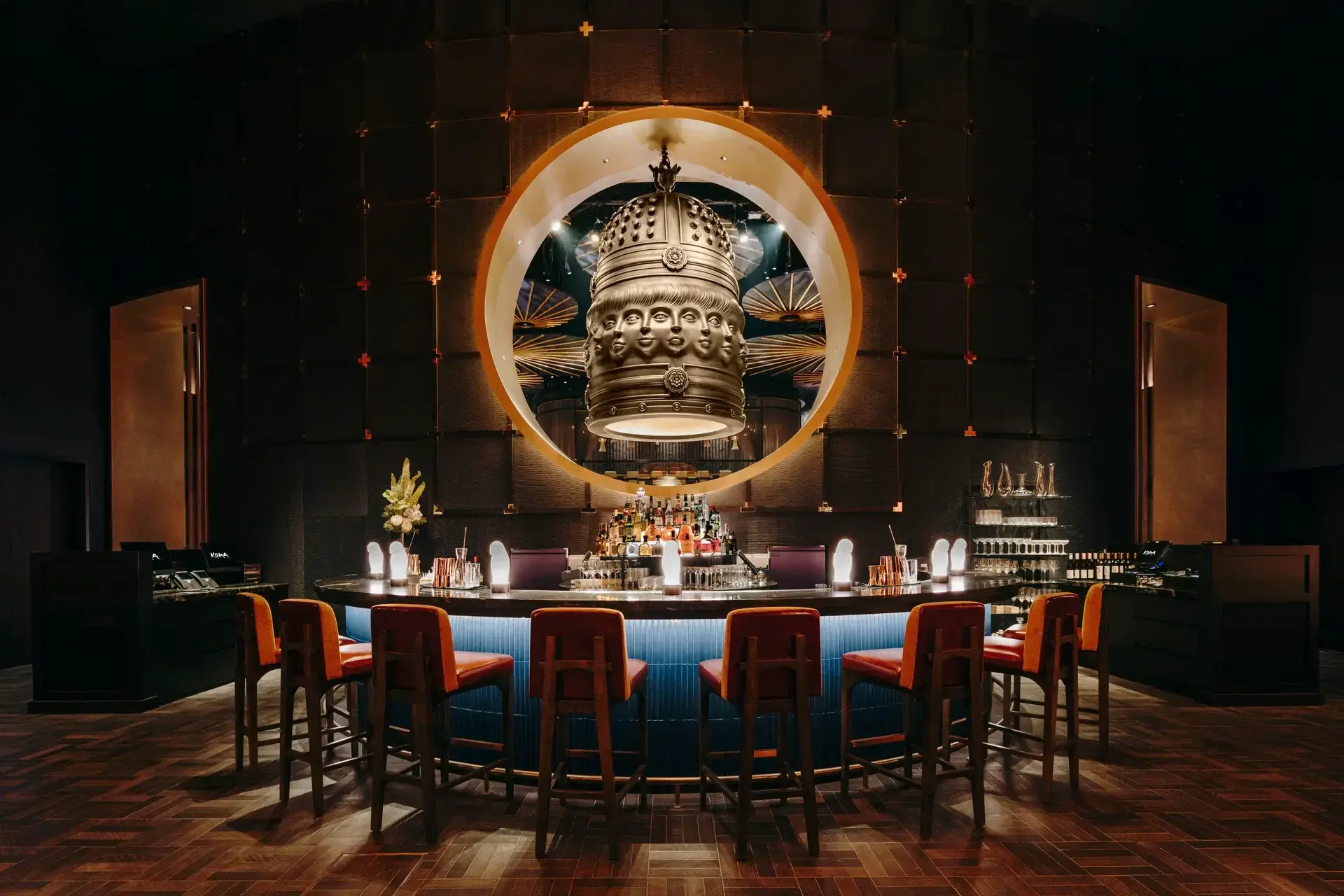
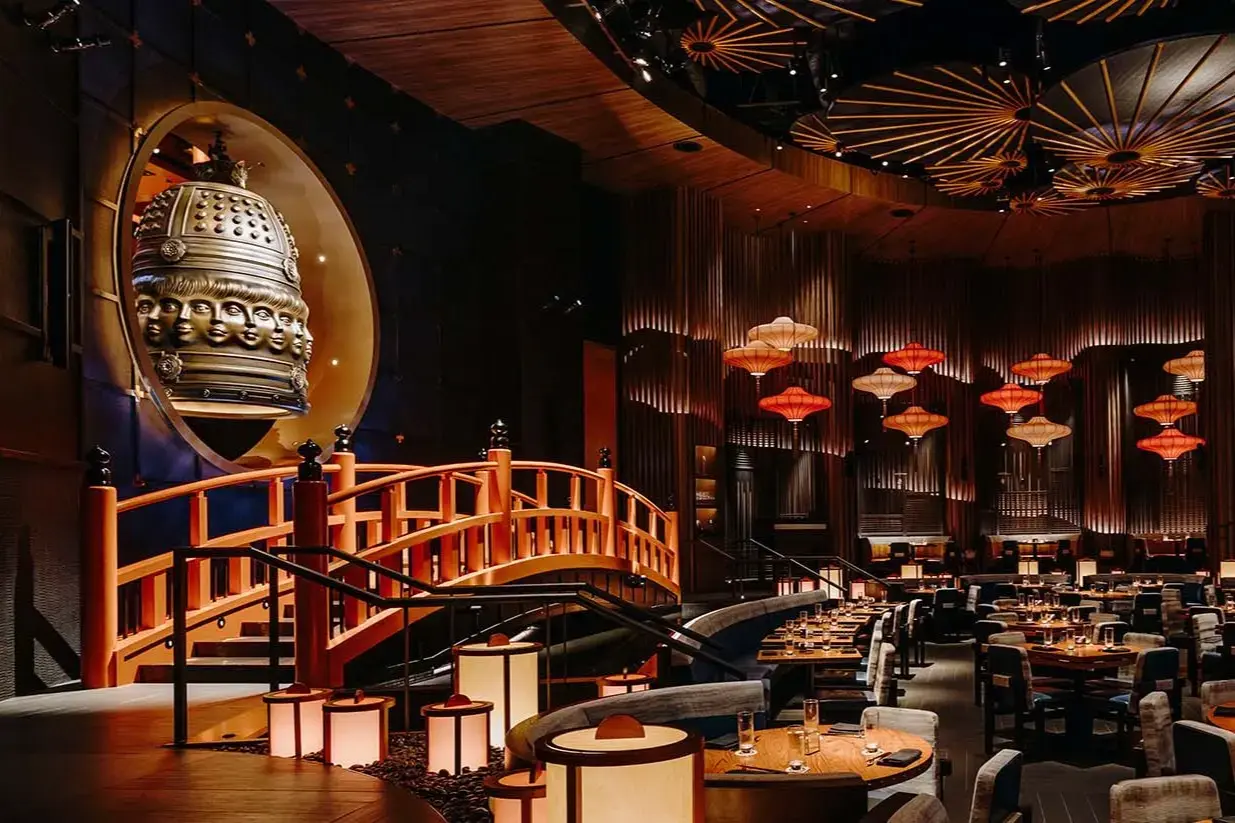
The space is bold. The main dining room stretches out beneath soaring high ceilings, anchored by a striking 2.5m tall Japanese bell. The traditional Japanese foot bridge cuts across the room, creating a visual focal point that draws your attention inward. The orange arches lining the entrance passageway set the tone for a dramatic night.
It is easy to get caught up in the scale of it all.
Yet spaces like this also create a need for balance. With so much visual energy, the dining experience could easily become overwhelming. This is where tea begins to make sense, even before the first cup arrives.
Tea, by nature, slows things down. It introduces a pause. And in a setting like KOMA, that pause feels necessary.
The KOMA Singapore Menu and the Weight of Flavour
A Bold Approach to Japanese Cuisine Featuring Innovative and Traditional Flavours
The KOMA Singapore menu is built around a modern interpretation of Japanese cuisine, featuring innovative twists on traditional maki and dishes that incorporate fresh and seasonal produce from Japan. It does not shy away from intensity. Flavours are layered, textures are contrasted, and presentation is designed to stand out with modern presentations.
The menu moves across several styles:
- sushi from an oversized sushi bar offering light makis, nigiri, and sashimi
- grilled selections from the robata grill
- dishes built around fresh and seasonal produce
- premium cuts such as snow aged Niigata wagyu ribeye and wagyu sirloin
Some of the more memorable standout dishes include:
- barbecued beef short rib with deep, smoky flavour and a hint of truffle oil
- crispy chicken finished with roasted jalapeño and crispy shallot
- shrimp tempura roll and spicy tuna crispy rice with inventive twists
- truffle fried rice with truffle paste and oil
Each dish leans toward richness. The flavours are bold, often enhanced with sauces like tomato ponzu or seasoning that build quickly across the palate.
And this is exactly where tea begins to matter.
Tea as a Counterbalance to Rich Dishes
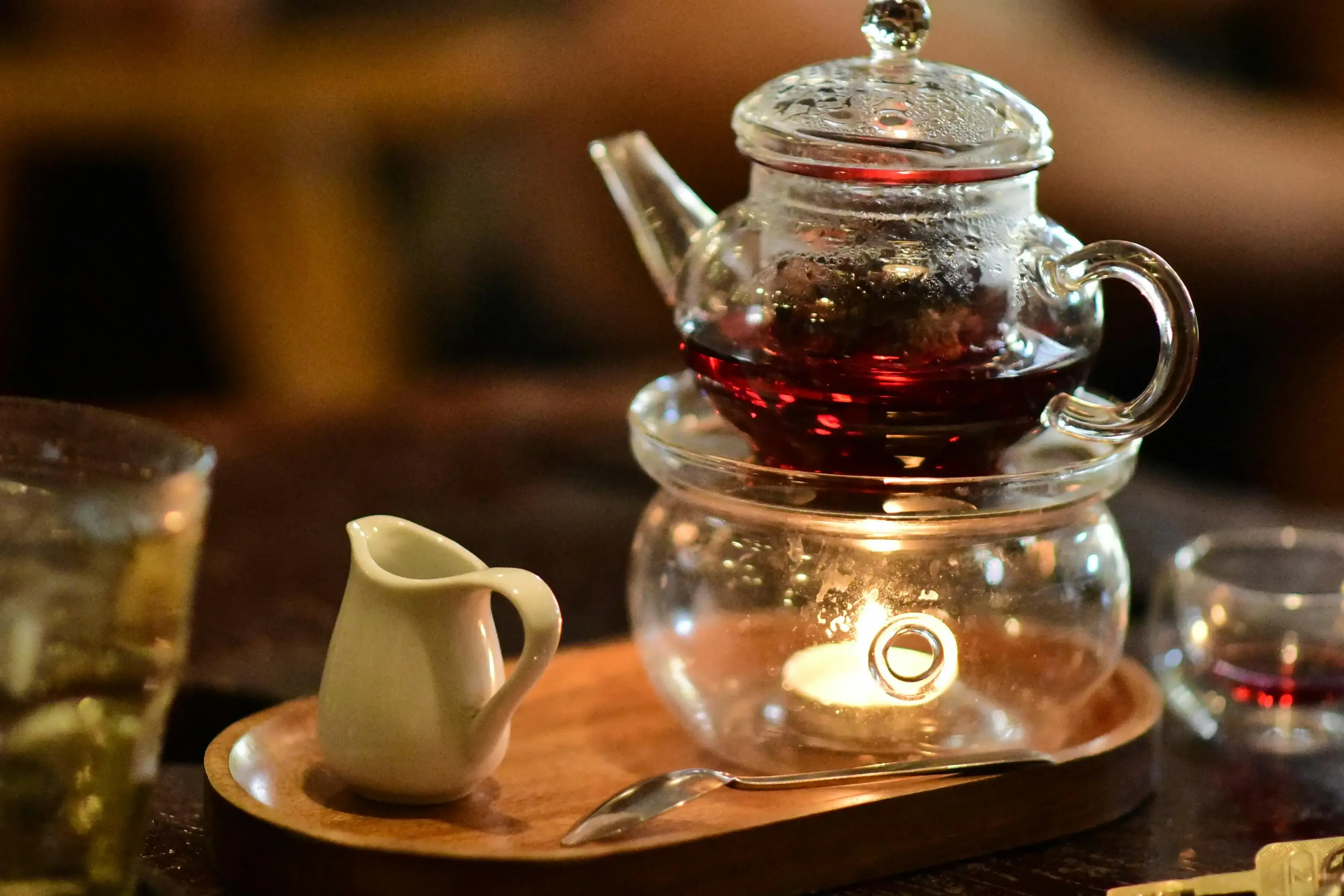
Resetting the Palate in a Lounge Sunday Setting
After a sequence of dishes like wagyu beef, sushi, and fried rice, the palate becomes layered.
Flavours linger. Textures overlap. Even great food can begin to feel heavy if nothing interrupts the flow.
This is where tea enters the experience more clearly.
A simple cup, often served quietly in the intimate lounge area, resets the palate in a way that nothing else does. It clears the richness of barbecued beef short ribs, softens the oil from fried dishes, and allows the next bite to feel distinct again.
Unlike cocktails or sake, tea does not add complexity. It removes it.
That difference becomes noticeable the longer you stay at the table.
Tea Pairings Within the KOMA Experience
Not Highlighted, But Always Present Alongside the Venue's Extensive Sake List
KOMA does not position itself as a tea-focused restaurant. The emphasis remains on food, presentation, and atmosphere. But tea still finds its place within the flow of the meal.
After pre-dinner cocktails or even the venue’s creative new cocktails, tea shifts the tone of the evening.
It often appears:
- after heavier dishes
- toward the final courses
- or as a quiet ending to the meal
The pairing is not formal, but it works.
With dishes that rely on fresh ingredients and bold seasoning, tea acts as a neutral ground. It brings clarity back to the palate without distracting from the flavours that came before.
This complements the artfully curated selection of drinks, including yuzu sake and other Japanese spirits, enhancing the overall dining experience.
A Connection to Japanese Tea Culture
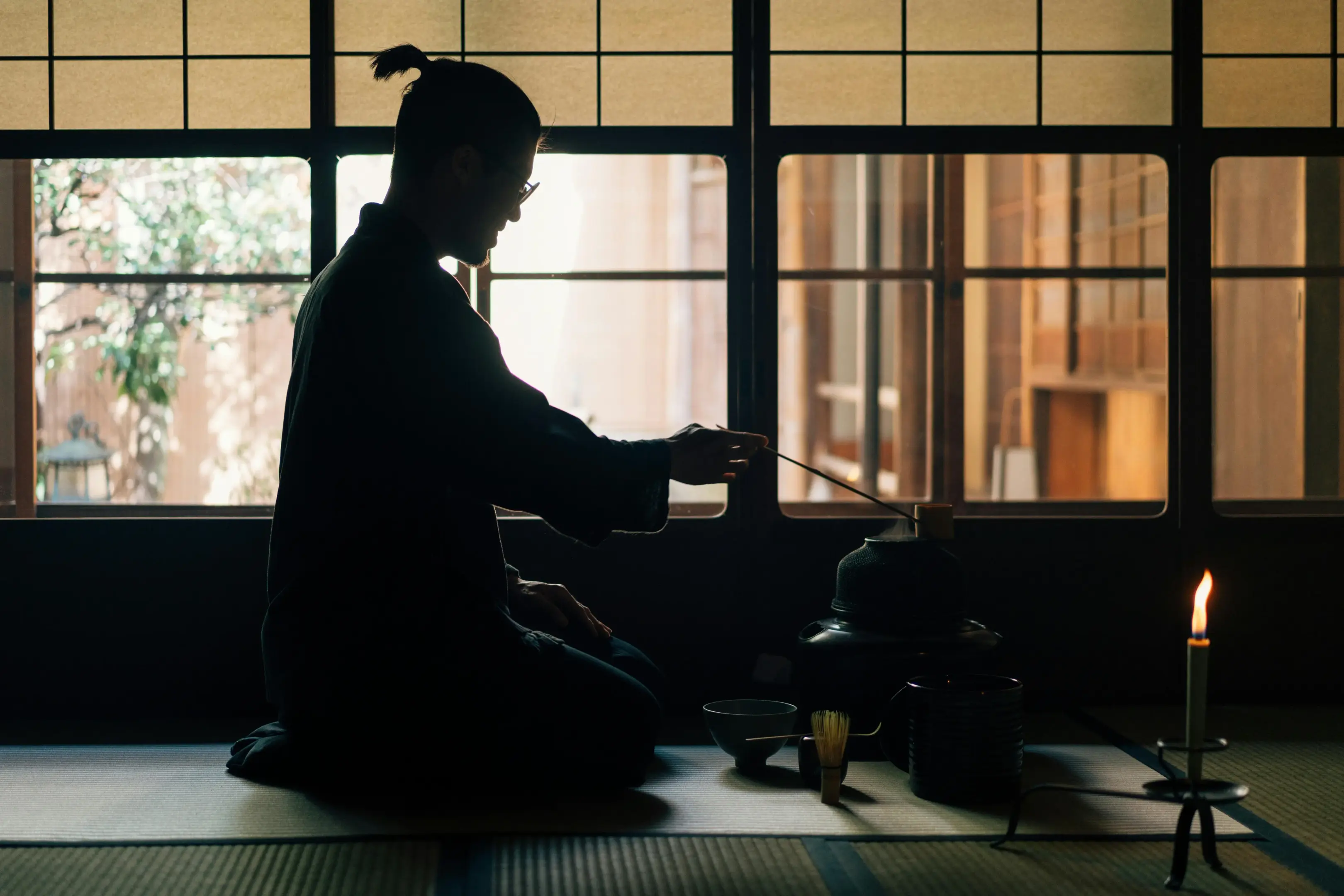
Subtle, But Intentional in a Venue Featuring Innovative Japanese Flavours
In traditional Japanese cuisine, tea is never the centre of attention. But it is always there.
It serves a purpose:
- to cleanse the palate
- to provide warmth between courses
- to mark the transition toward the end of a meal
At KOMA Singapore, this connection is subtle. The restaurant leans heavily into a dramatic modern Japanese restaurant identity, but traces of tradition still remain.
Tea becomes one of those traces.
Even within a space defined by visual spectacle, tea quietly anchors the experience back to something more familiar. Something rooted in balance rather than excess.
The Atmosphere and the Role of Tea in Slowing It Down
Finding Stillness in a Busy Room During Dinner Sunday
KOMA is rarely quiet.
The room moves constantly. Guests arrive, dishes are served, conversations rise and fall. It is part of the appeal.
But within that movement, there are smaller moments that feel more contained.
A cup of tea creates one of those moments.
It gives you something to hold onto. Something to focus on that is not the room, not the next dish, not the next course.
Just a pause.
In that sense, tea does something the rest of the experience does not try to do. It slows everything down without asking for attention.
The Overall Dining Experience at KOMA Singapore
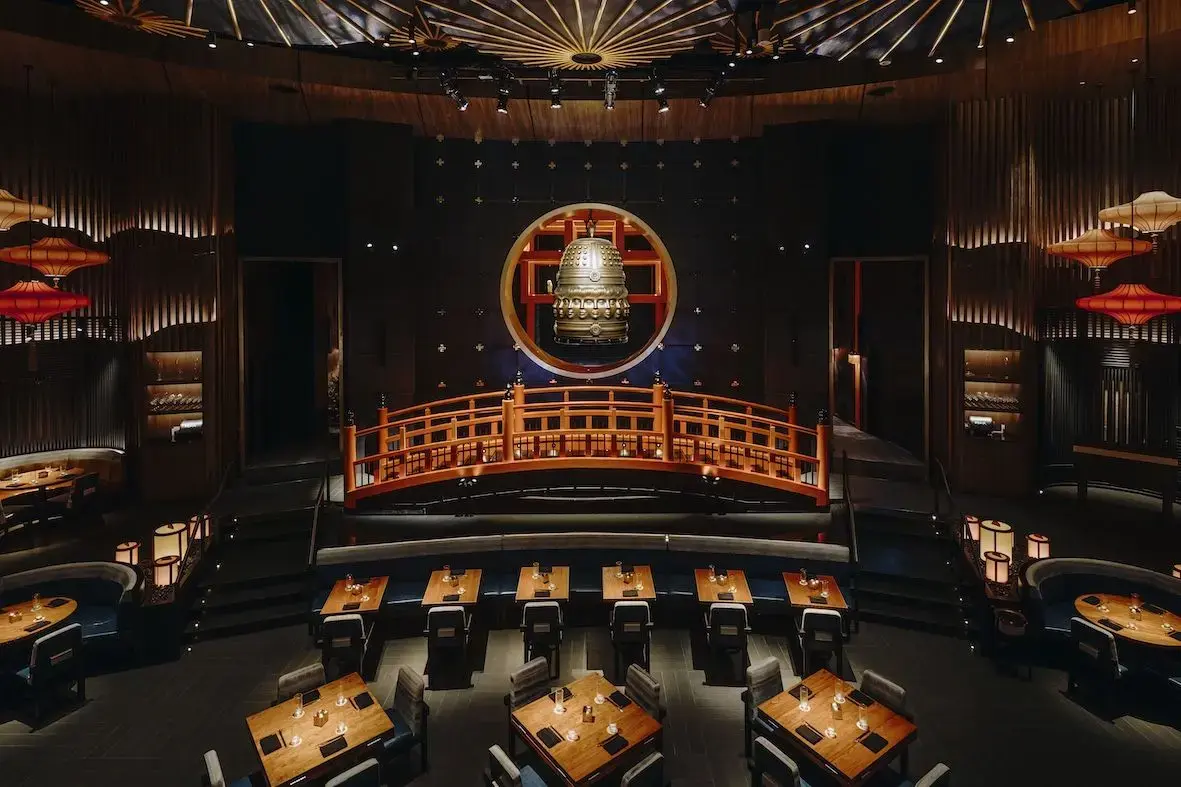
More Than Just a Japanese Restaurant and Sushi Bar
It would be easy to describe KOMA Singapore simply as a japanese restaurant and sushi bar known for good food and a dramatic setting.
And it is both of those things.
The combination of:
- a visually striking dining room with orange arches and a rising sun motif
- a menu built around premium ingredients like Kaluga Queen Oscietra caviar
- dishes with bold and distinct approach featuring Japanese flavours and inventive twists
makes it one of the more memorable restaurants in Singapore.
It works well for:
- date night
- celebrations
- group dining experiences
The presence of a private dining room also allows for more controlled, intimate settings within the larger space.
Where Tea Fits In
What makes the experience feel complete is not just the scale or the menu.
It is how everything settles at the end.
After the last dish, after the intensity of flavours, tea becomes the final note. It does not compete with the meal. It completes it.
Conclusion
KOMA is often approached as a destination for bold Japanese cuisine, and it delivers on that expectation with confidence.
The space is dramatic. The menu is expressive. The energy is constant. But what lingers is not just the spectacle. It is the quiet moments that follow.
Tea, in its simplest form, becomes part of that memory. Not as the main feature, but as the element that brings everything back into balance.
At KOMA Singapore, the experience may begin with impact, but it ends with something softer.
For more Asian tea culture contents, visit and read our article at Tea Manor Singapore.

Expensive Tea Doesn’t Guarantee a Better Cup, Here’s Why
There is a belief in tea that we rarely question. If something costs more, it must be better. It is an understandable assumption. A rare tea from a respected region, carefully harvested and beautifully packaged, naturally creates expectations. We associate price with effort, craftsmanship, and quality. And often, that connection is justified. But not always….
-
SUN with MOON Singapore at Wheelock Place: A Unique Tea Dining Cafe Experience on Orchard Road
The lunch crowd had gone. Dinner hadn’t arrived yet. I came in during that strange, in-between hour, a little after three on a weekday, when the escalators at Wheelock Place hum quietly and Orchard Road feels almost gentle. Most people were still at their desks. I wasn’t. I wanted tea, and I wanted to sit…
-
Cold Brew Tea Is Underrated (And Hot Purists Are Missing Out)
I used to think tea had to be hot. There was something about the ritual of it. Boiling water, warming the pot, watching the leaves open. A proper cup of tea seemed to require steam. Then I tried cold brew tea, and I had to admit something slightly uncomfortable. I liked it. More than I…
-
All Things Delicious Review: The Quiet Pleasure of Tea and Cake.
There’s a particular kind of afternoon that asks for tea, and All Things Delicious answers it with a quiet, comforting tea-and-cake experience on Arab Street: handmade sweet treats, warm approachable teas, and a room that makes simple pleasures feel like enough. Not coffee, with its urgency. Tea. The slow kind, poured while the conversation drifts…
-
Wellness Tea Is a Scam, but Tea Can Still Be Good for You
There is a strange contradiction in the way we talk about tea today. For centuries, tea was appreciated for its taste, its rituals, and the moments it created. Today, it is often sold as something else entirely. A solution. A promise. A shortcut. The language surrounding wellness tea has become increasingly familiar. Detox tea. Cleansing…
-
Camellia Tea: A Blossom, A Leaf, A Legacy Rooted in Camellia Sinensis
My grandmother kept her camellia tea in a battered tin that had once held biscuits. She never called it anything fancy. It was just cha, brewed strong in the mornings using fresh tea leaves from the tea plant, poured into small cups that had lost their matching saucers years ago. I didn’t know then that…
-
Why “Caffeine-Free Tea” Marketing Should Be Regulated (Seriously)
Hear me out: we have become far too comfortable with the phrase “caffeine-free tea.” It appears on beautiful packaging, wellness websites, and café menus with the confidence of a health guarantee. The words suggest calm evenings, better sleep, and a gentler relationship with what we drink. But there is a problem. The phrase sounds clearer…
-
The Forgotten Luxury of Sitting Still at Japanese Tea House
You stoop to enter the traditional japanese tea house. That is the first thing the tea house asks of you, before the tea, before the talk, before anything at all. The doorway is low, deliberately so, and even the tall must bow to pass through it. In that small act of folding the body, something…
-
Stop Calling It “Premium”: Why Most Luxury Tea Branding Is Empty
There is a word I have become increasingly cautious of in the tea world. Premium. It appears everywhere. Premium leaves. Premium harvests. Premium collections. Premium experiences. The word sounds reassuring. It suggests care, quality, and something worth paying attention to. But after seeing it attached to almost everything, I sometimes wonder whether it has started…
-
Pryce Tea: A Modern Pour with Old Tea-Room Ambitions
I visited on a weekday afternoon, around three, when the city had quieted into that particular lull between lunch and the evening rush. I’d been curious about Pryce Tea for a while, mostly because the brand keeps surfacing among people who talk about teas the way some people talk about wine. With a reputation built…