I think milk tea deserves a little more respect.
Not because it needs to become expensive or sophisticated, but because we’ve somehow accepted that milk tea is supposed to be sweet, colourful, and filled with enough toppings to qualify as dessert.
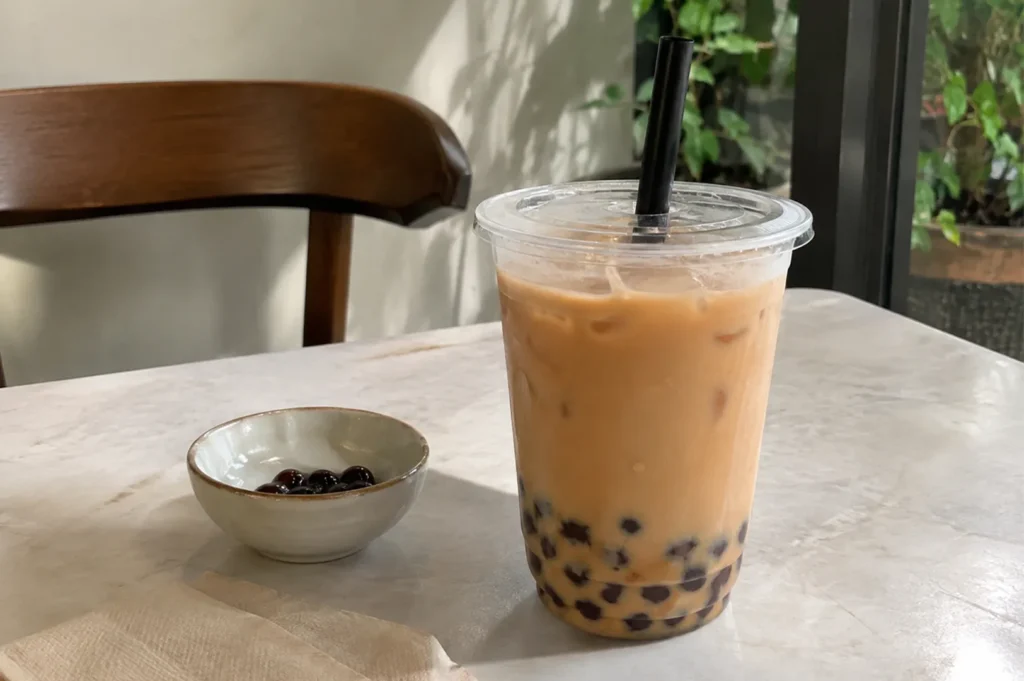
And honestly, I enjoy a good bubble tea.
There’s something fun about choosing your sweetness level, adding pearls, and walking around with a drink that feels more like a treat than an afternoon refreshment.
But sometimes I wonder whether we’ve forgotten about the tea itself.
Because milk tea can be genuinely beautiful when someone pays attention to what goes into it.
A strong Assam with milk can have a wonderful malty richness. A carefully prepared Hong Kong-style milk tea balances robust tea with a smooth, creamy texture. Even a simple cup of milk tea at home can feel surprisingly satisfying when neither the milk nor the sweetness overwhelms everything else.
None of these needs an elaborate presentation.
Just a little thought.
What bothers me about some modern milk tea shops is how much effort seems to go into creating the next exciting flavour, while the actual tea becomes almost an afterthought.
More toppings. More syrups. More combinations that sound impressive on a menu.
But what if the most interesting thing a milk tea shop could offer was simply a really good cup of milk tea?
I don’t think elegance has to mean fine china, expensive ingredients, or a café that takes itself too seriously.
Sometimes elegance is knowing when to stop adding things.
Of course, there’s room for playful drinks. Fruit jellies, brown sugar pearls, and creamy toppings have their own appeal, and I wouldn’t want milk tea culture to lose that creativity.
I just wish more shops treated the tea base with the same enthusiasm they give everything else.
After all, milk tea has a rich place in everyday drinking traditions, from Hong Kong cafés to South Asian households and Singapore’s own kopi tiam culture.
It doesn’t need to borrow sophistication from somewhere else.
Maybe it simply needs us to notice what was already there.
A good tea. The right balance. A cup worth enjoying even without the extras.
That sounds pretty elegant to me.
— Maria Tan
On tea, culture, and everyday rituals.

Temperature Rules Are Overblown: The Real Brewing Variable Nobody Mentions
I used to think making tea required a thermometer. Not literally, perhaps, but almost. Every tea seemed to have a number attached to it. Green tea at this temperature. Oolong at another. Black tea a little hotter. Too hot and you had apparently ruined everything. For a while, I took these rules quite seriously. Then…
-
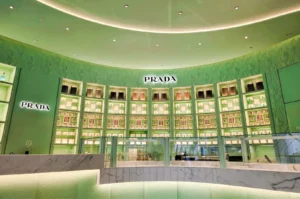
Afternoon Tea at Prada Caffè ION Orchard: A Green Room, a Pale-Blue Cup
Afternoon tea has always been about the pause for me. Not the tiers or the silverware. Just the moment when the cup is set down, the steam rises, and everything outside seems to slow a little. So I wondered what a pause would feel like inside a fashion house. One floor above Orchard Road, past…
-
A Love Letter to Oolong: The In-Between That Changed My Mind
I did not understand oolong when I first encountered it. It seemed unnecessarily complicated. Green tea was green tea. Black tea was black tea. I understood where they stood. Oolong seemed determined to remain somewhere in between. Perhaps that was what initially kept me from appreciating it. Over time, however, I began to realise that…
-
Tea from Assam: The Geography, Craft, and Character Behind the Brew
The colour arrives first. A deep amber that darkens towards red as the tea leaves give up their strength. Then comes the aroma. It is warm and rounded, often compared to malt or the crust of fresh bread. The first sip has weight. It fills the mouth with a rich body and leaves a slight,…
-
Why “No Bitterness” Is a Terrible Goal (And Makes Tea Boring)
I used to think a good tea was supposed to be smooth. No bitterness. No sharp edges. Nothing that made me pause and wonder whether I was doing something wrong. It seemed logical. We naturally gravitate toward things that are easy to enjoy. A tea that is sweet, gentle, and immediately comforting feels like a…
-
Best Tea Brands Singapore: 10 Names Worth Knowing
There’s a small sound I’ve always liked. It’s the soft knock of a teapot lid settling back into place, just before the first pour. It happens at home. It happens in old shophouses and in bright mall boutiques like those in Suntec City. The setting changes, but the pause stays the same. This list is…
-
“Rare” Tea Is Often Manufactured Scarcity: Here’s How to Tell
There is a word in tea that carries unusual power. Rare. It immediately creates curiosity. A rare harvest. A rare batch. A rare tree. A tea that may never return. The suggestion is simple: if something is difficult to obtain, it must be more valuable. Sometimes, this is true. Some teas are genuinely limited because…
-
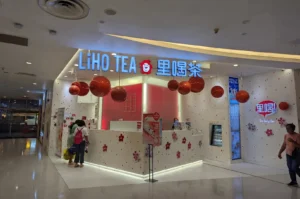
LiHO Tea Singapore: A Greeting You Can Drink
Some words carry a whole childhood inside them. Li ho. I heard it at kopitiam tables, across corridors, from uncles who never waited for a real answer. It meant “how are you,” but it also meant I see you. So when I saw that name on a tea shop sign, somewhere in the middle of…

The Myth of “Perfect” Tea: What I Stopped Chasing
For a long time, I thought I was looking for the perfect tea. I imagined there would be a moment when I found the one. The tea that made every other tea feel unnecessary. The tea I would recommend to everyone. The tea that would finally make me understand what true appreciation was supposed to…
-
Teh O: Understanding the Tea Order Behind the Name
There is a stall near where I grew up that has changed hands twice, but the tea has stayed the same. I still remember the first time I ordered teh o on my own, sometime in my early teens, mumbling the words at the counter and half-expecting to get them wrong. The uncle didn’t blink….