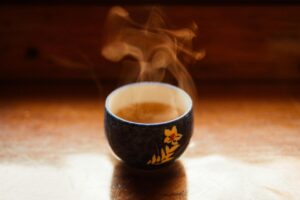
It begins as something small and closed. A tight, round bundle of dried leaves, about the size of a large marble, resting at the bottom of a clear glass.
Then the water arrives.
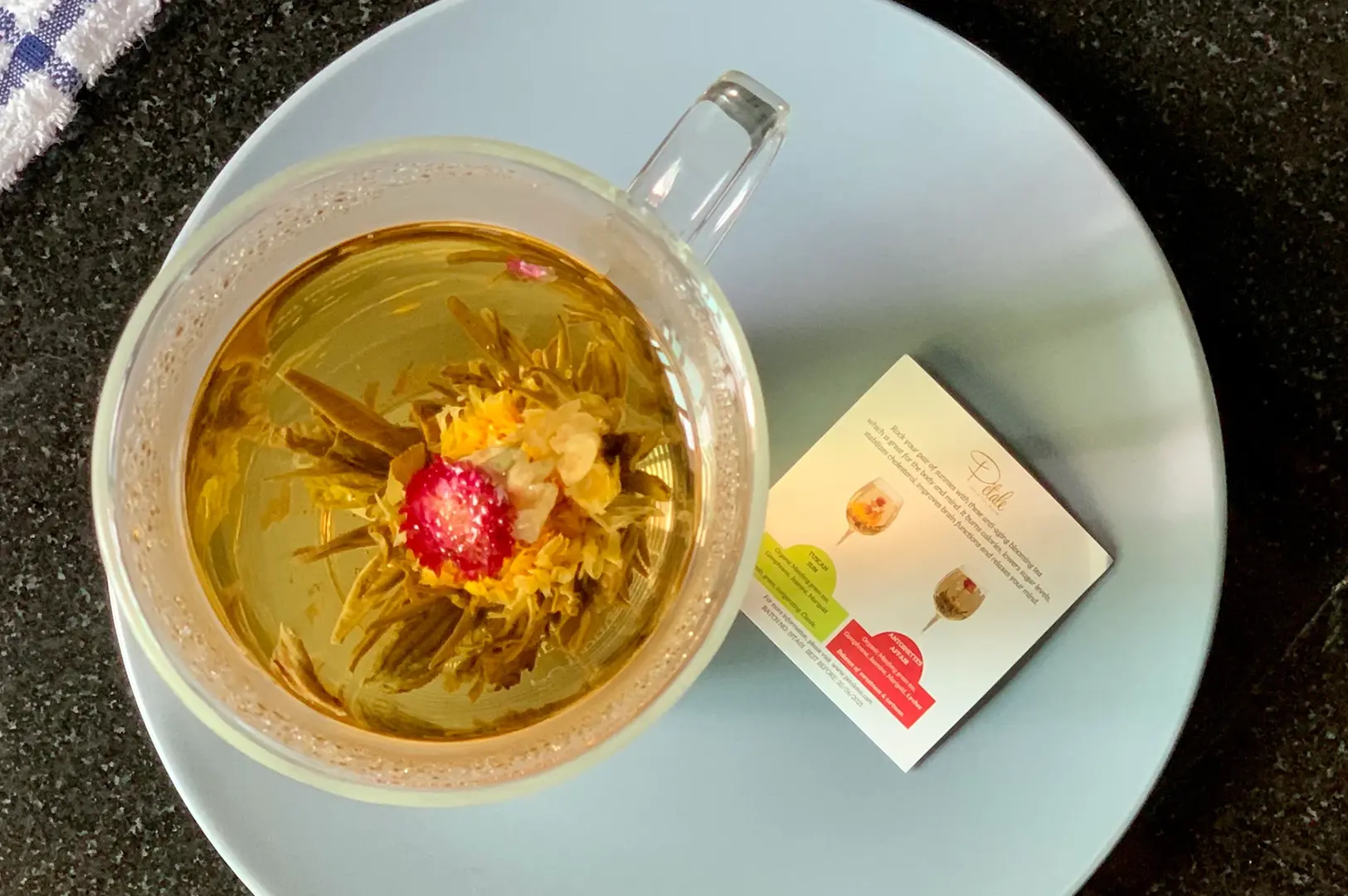
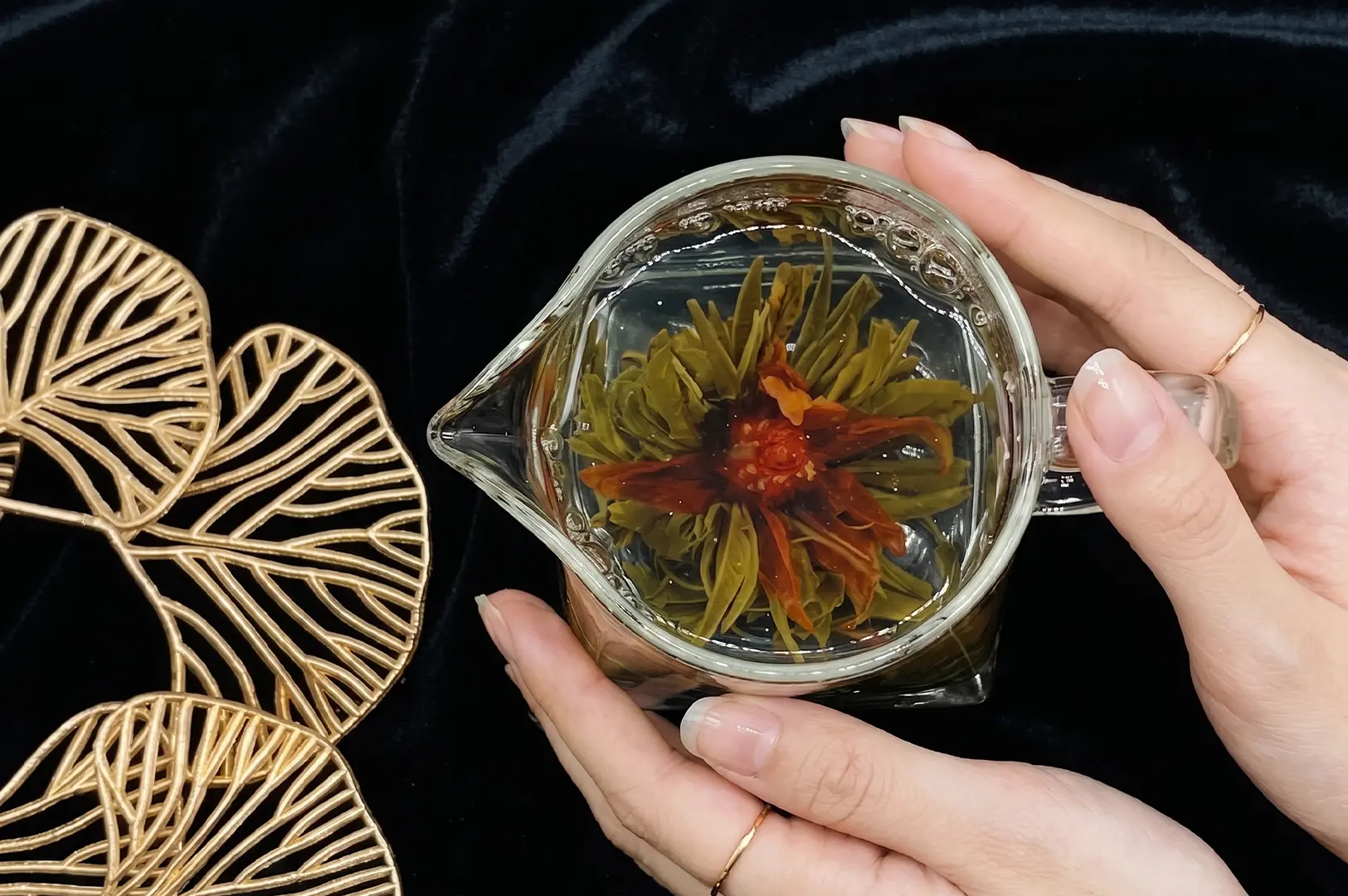
For a while, nothing seems to happen. The ball darkens and grows heavy. A few leaves loosen at the edges. Then, slowly, the bundle opens. Green leaves fan outward, and from the centre a flower rises, held in place by a thread you can only just see. The glass becomes a small, still garden.
This quiet transformation sits at the heart of Petale Tea, a Singapore-based brand built around hand-sewn blooming teas. Watching a flowering tea open can feel like a performance. But behind that moment are patient hands, a long tradition of pairing flowers with tea, and a modern habit of attaching meaning to what we drink and give.
This piece follows that thread.
The Story Behind Pétale Tea
Pétale Tea was founded by Rosemary Kwa in 2015 and established its identity as a blooming tea specialist in 2018. The Singapore-based brand specialises in handcrafted blooming teas designed to make tea-drinking a mindful, sensory experience.
The brand tells its own beginnings in gentle terms. Its About page says Kwa's story "began in the tearooms," where she spent years refining her craft before shaping a traditional practice into something modern. The company describes tea as "a ritual of self-discovery" and uses the line Sip. Reflect. Bloom. as a kind of quiet promise.
From blooming teas to a wider range
Blooming teas came first, and they remain the brand's signature. Over time, the range has grown to include wellness infusions and each tea blend is designed with a distinct flavour and story.
Pétale Tea introduced its Wellness Teas collection at a Takashimaya Shopping Centre pop-up in January 2024, before making the range available through its website later that year. Kwa explained that café and restaurant clients had asked for options beyond blooming teas, and that many customers wanted non-caffeinated choices. The result was a set of 10 floral blends, which first appeared at the brand's pop-up at Takashimaya Shopping Centre before moving online.
The same report notes something that many casual drinkers might not expect. More than 60% of Pétale Tea's sales come from the HoReCa sector, meaning hotels, restaurants and cafés, with the rest from retail. Much of its business happens behind the scenes, delivering tea served by others.
Kwa also spoke candidly about the market she entered. By her account, there were already more than 50 local independent tea brands when Pétale Tea started. Her response was to focus on becoming a tea specialist, curating blends and teaching people how to sew blooming teas themselves.
An aspiration, stated plainly
The brand's ambitions are written clearly on its website. It hopes to become what it calls Southeast Asia's leading sustainable luxury tea brand by 2029.
That is a goal, not a measure of where it stands today. I find it useful to read such lines for what they are: a glimpse of how a small company sees its own future. Recent news and business updates can offer further context, though its stated ambition remains its own purpose and inspiration.
When Tea Leaves and Flowers Become an Experience
So what is a blooming tea, exactly?
At its simplest, it is a bundle of tea leaves and dried flowers sewn together by hand into a ball. When steeped, the leaves relax and open, revealing the flowers tucked inside. Pétale Tea describes its own as "artisan hand-sewn tea balls that bloom in hot water."
The Straits Times offered a closer look in August 2025. In the brand's Gratitude tin, each blooming tea ball is made of lily and gomphrena, hand-sewn with cotton string to green tea leaves. The Growth tin pairs carnation and jasmine flowers with green tea leaves, carrying a muscat and apple flavour.
Each tin holds eight blooming tea balls alongside a loose-leaf blend. For Gratitude, that loose tea is a mix of black Ceylon tea with mint, coconut bits and pandan extract. For Growth, it is a muscat white tea with marigold and rose petals.
There is something worth pausing on here. The flowers are not simply placed among the leaves. They are stitched. Someone has to hold each element in place and draw the thread through, again and again, so that the bloom rises properly when water meets it.
That is slow work. It is easy to forget, watching the glass, that the opening you see was decided long before by a pair of hands.
Beyond Appearance
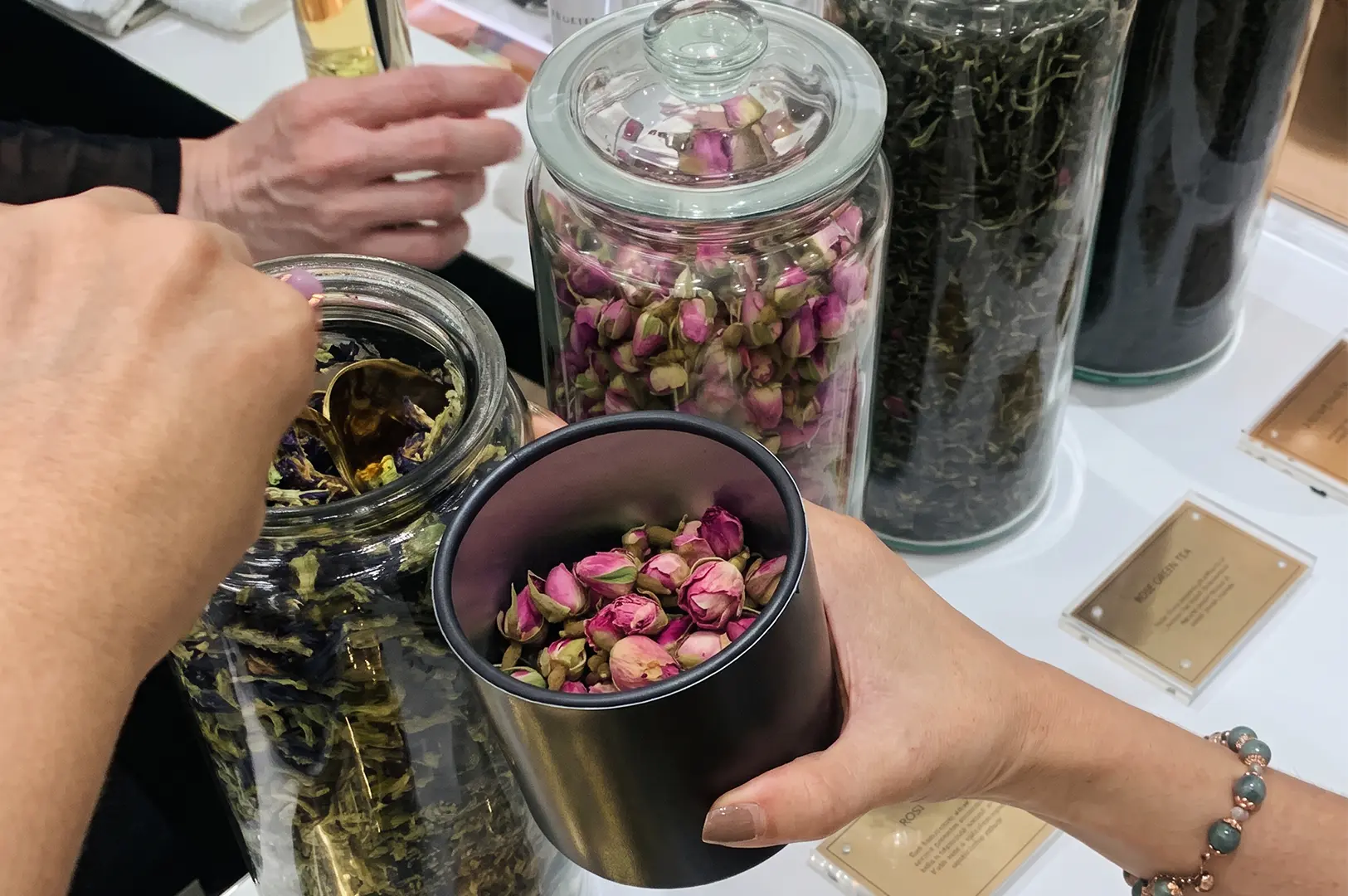
A blooming tea invites the eyes first. But a cup is still meant to be drunk. It is a beverage as well as a visual experience, and Pétale Tea combines taste with artistry.
Aroma, flavour and texture all depend on the tea and flowers inside, how they were made, and how they are steeped. These vary from blend to blend and from cup to cup. I will not pretend to describe a taste I cannot vouch for, and I would gently suggest that no one judge a tea by its bloom alone.
What can be said is this. The blooming teas described above are built on green tea leaves, which come from Camellia sinensis, the plant behind green, black, white and oolong teas. That means they are true teas, and they naturally contain caffeine.
Pétale Tea's Wellness Teas are different. The brand describes them as caffeine-free floral infusions. They are closer to what many people call herbal or flower teas, made without tea leaves.
The distinction matters, especially for anyone watching their caffeine. Not every floral blend is caffeine-free, and not every flowering tea is an herbal tea. It is always worth asking what sits beneath the petals and checking product details before you order.
Flowers, Tea and Cultural Meaning
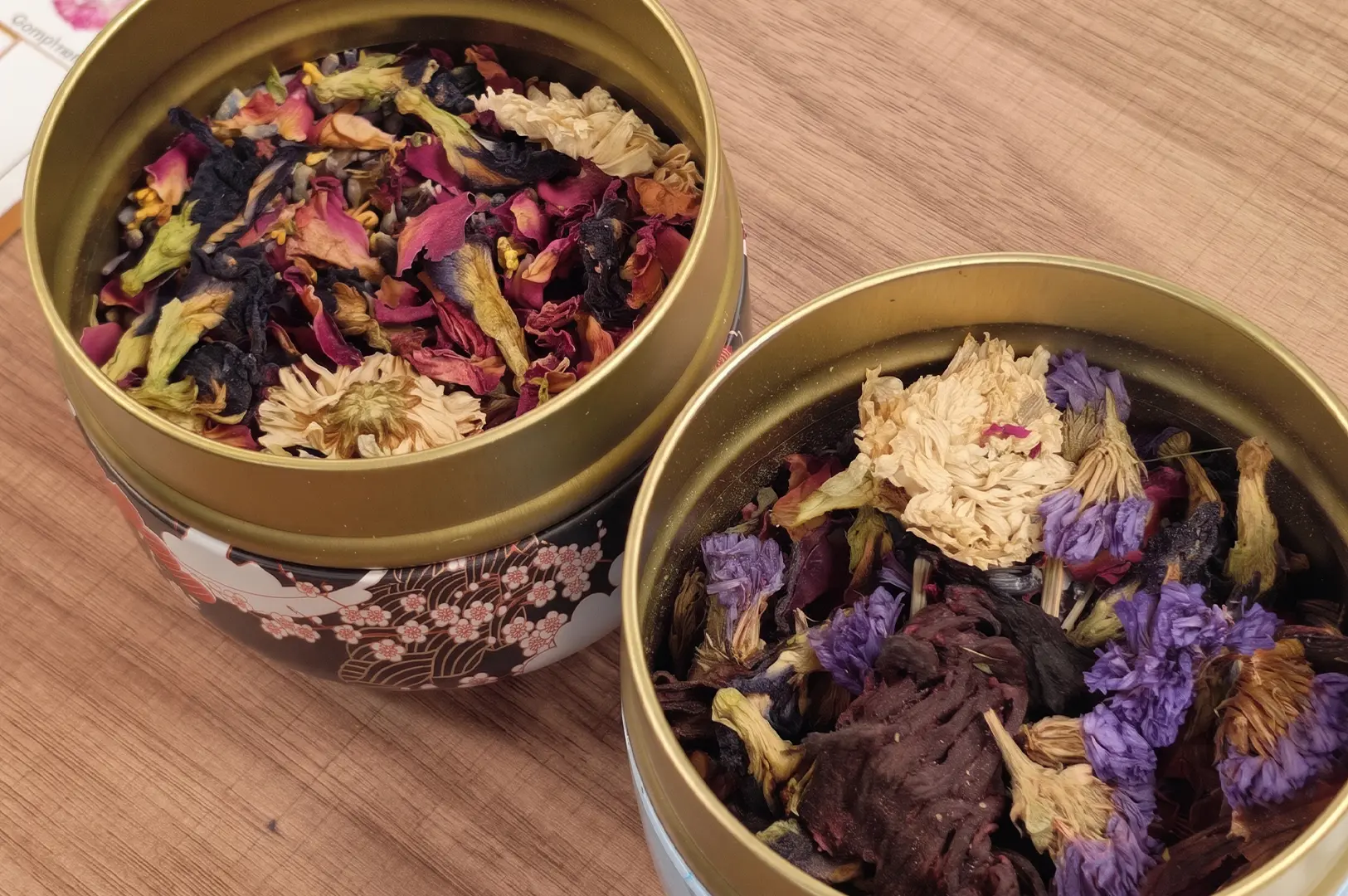
Flowers and tea have kept each other company for a long time. Many of us in Singapore grew up around jasmine or chrysanthemum in the cup, poured at family tables or bought cold from a hawker drinks stall.
The precise origins of hand-tied flowering teas are told in different ways, and I would rather not repeat a story I cannot check. What feels clearer is how such teas are being read today. Pétale Tea leans into the bloom as a symbol: of growth, of patience, of a moment that unfolds in its own time.
A taste of home in a tin
The brand's storytelling becomes most interesting when it turns local.
Gratitude, which The Straits Times described as a best-seller, is inspired by ondeh ondeh. For many in Singapore, that kueh carries its own small memories: soft glutinous rice balls, gula melaka bursting inside, a dusting of grated coconut on the fingertips. Gratitude's loose-leaf blend brings coconut and pandan into the cup, reaching for that familiar flavour and a gentle sense of nostalgia.
According to The Straits Times, the tin's message is about noticing what is going well and letting that awareness shape one's outlook. It is a modern idea placed beside an old snack.
Pétale Tea has played with local flavours before. NutraIngredients reported a nasi lemak-inspired blend, one the brand says it developed itself. Whether such pairings suit your taste is a personal matter. Still, they show a brand trying to speak in a language its home audience already understands.
Storytelling in Singapore's Tea Culture
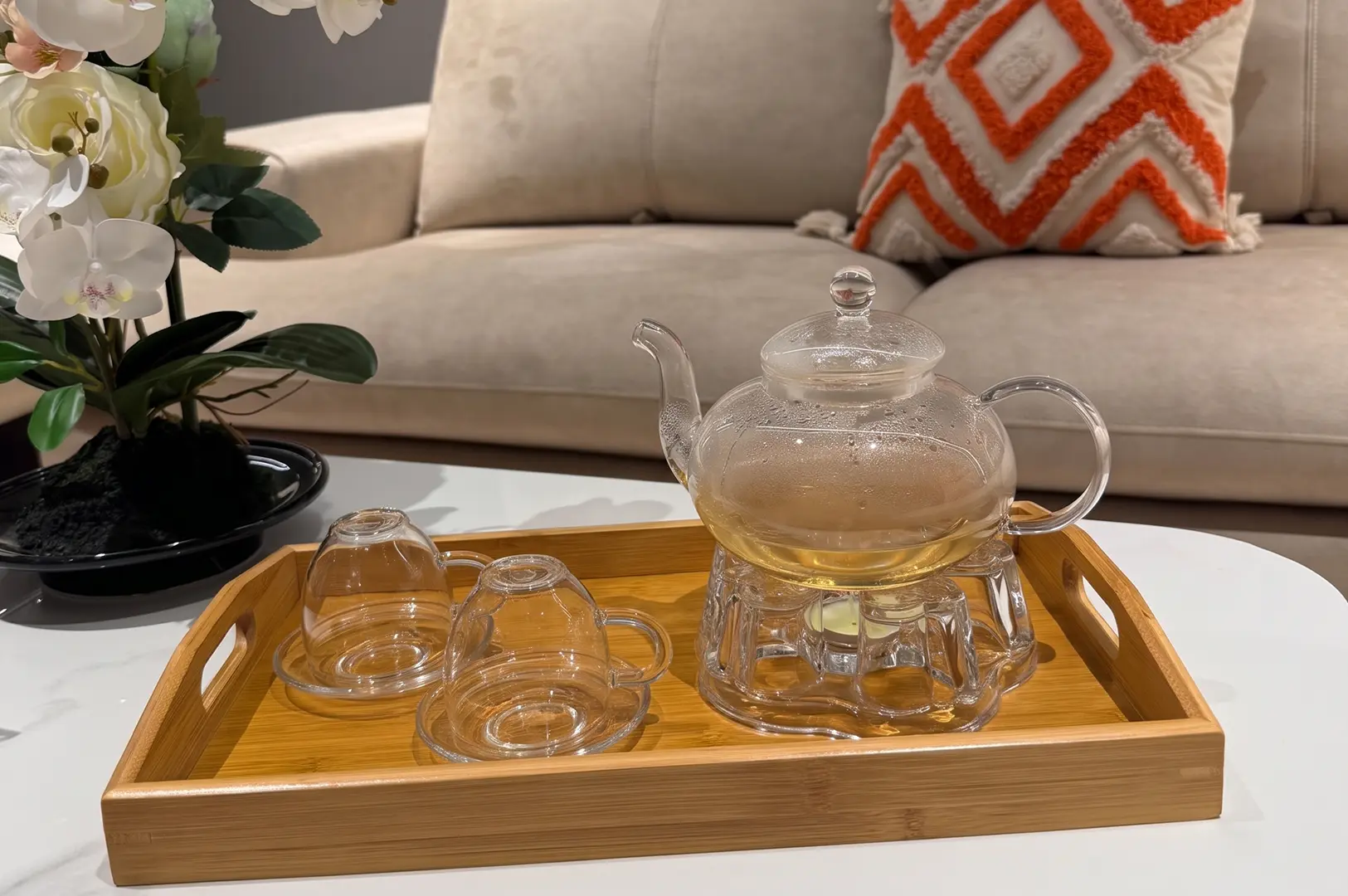
In June 2025, Pétale Tea launched its Classic Storytelling Tin series. The collection has 10 flavours, each named after an attribute such as Elegance, Passion, Resilience, Gratitude and Growth.
When it was introduced, The Straits Times reported a launch price of $58 for both Gratitude and Growth, with a usual price of $63. Prices may since have been updated, so it is worth checking the brand directly.
Growth carries a particularly fitting message. As The Straits Times put it, the tin stands for how personal growth happens gradually, just as a tea bud slowly unfurls. The tea, in other words, is meant to be both a drink and a quiet reminder.
Tea as a gift
Tea has long been something we give. A tin brought to a relative's home. A box exchanged between colleagues. A small gesture that says I thought of you.
Pétale Tea seems to understand this well. Kwa told NutraIngredients that because teas are often given as gifts, being at Takashimaya, where many people shop for presents, has worked well for the brand. People who love thoughtful gifts may find that a tea tin offers a personal alternative to more familiar choices.
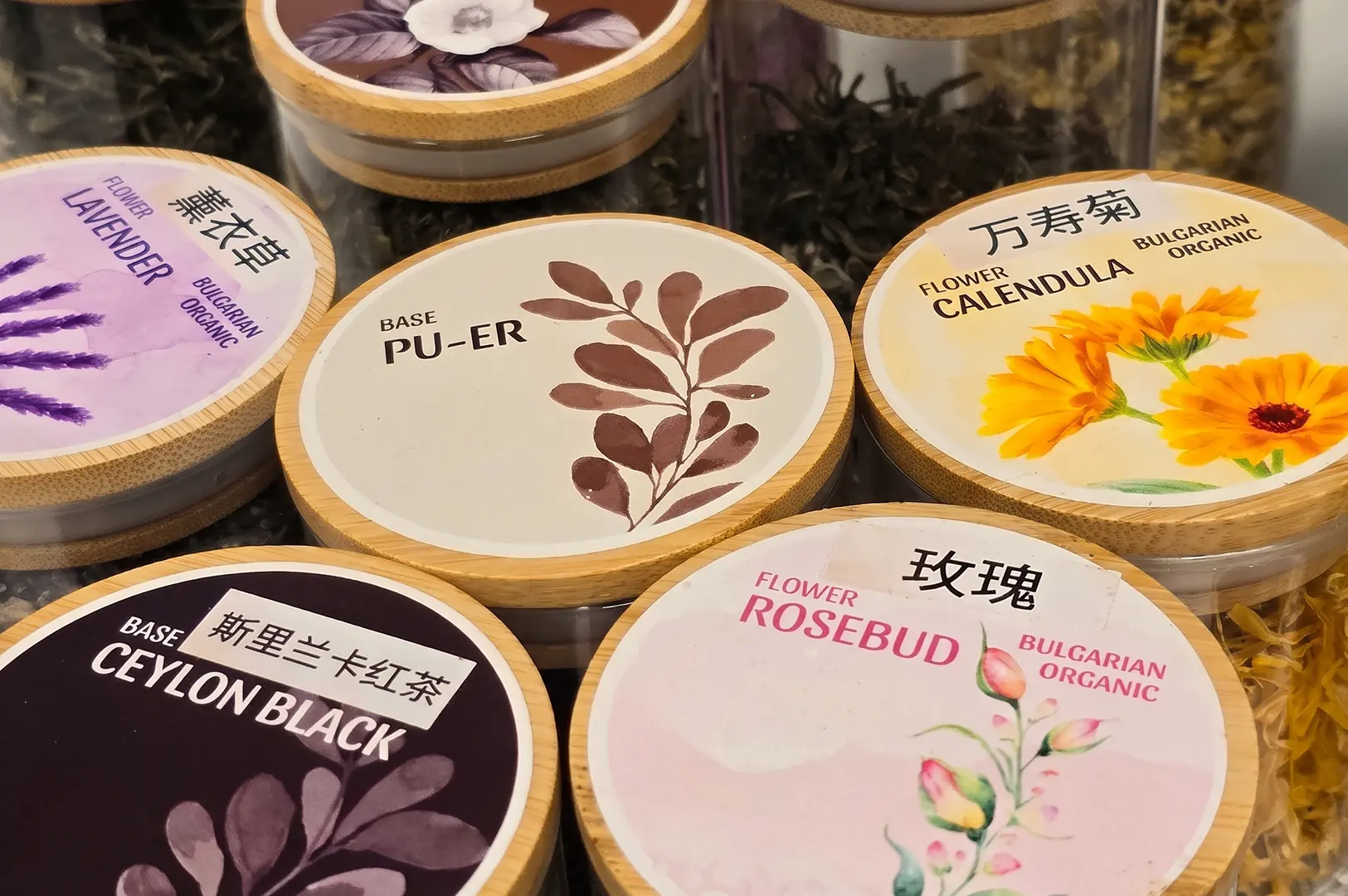
Its corporate work extends the same idea. In one example shared with NutraIngredients, Pétale Tea created a blend for Mercedes that reflected the brand's values. Mango pandan offered a local, nostalgic touch. Bulgarian black tea with rosebud stood for elegance. Forget-me-not was added because the campaign focused on customer renewal.
Pétale Tea has also created a bespoke blend for Singapore Airlines, showing how a tea can express a brand's identity through flavour and story. These collaborations are a lot more than selecting ingredients: each one is chosen to carry a message. That is storytelling, expressed in leaves and petals.
Shared hands, shared cups
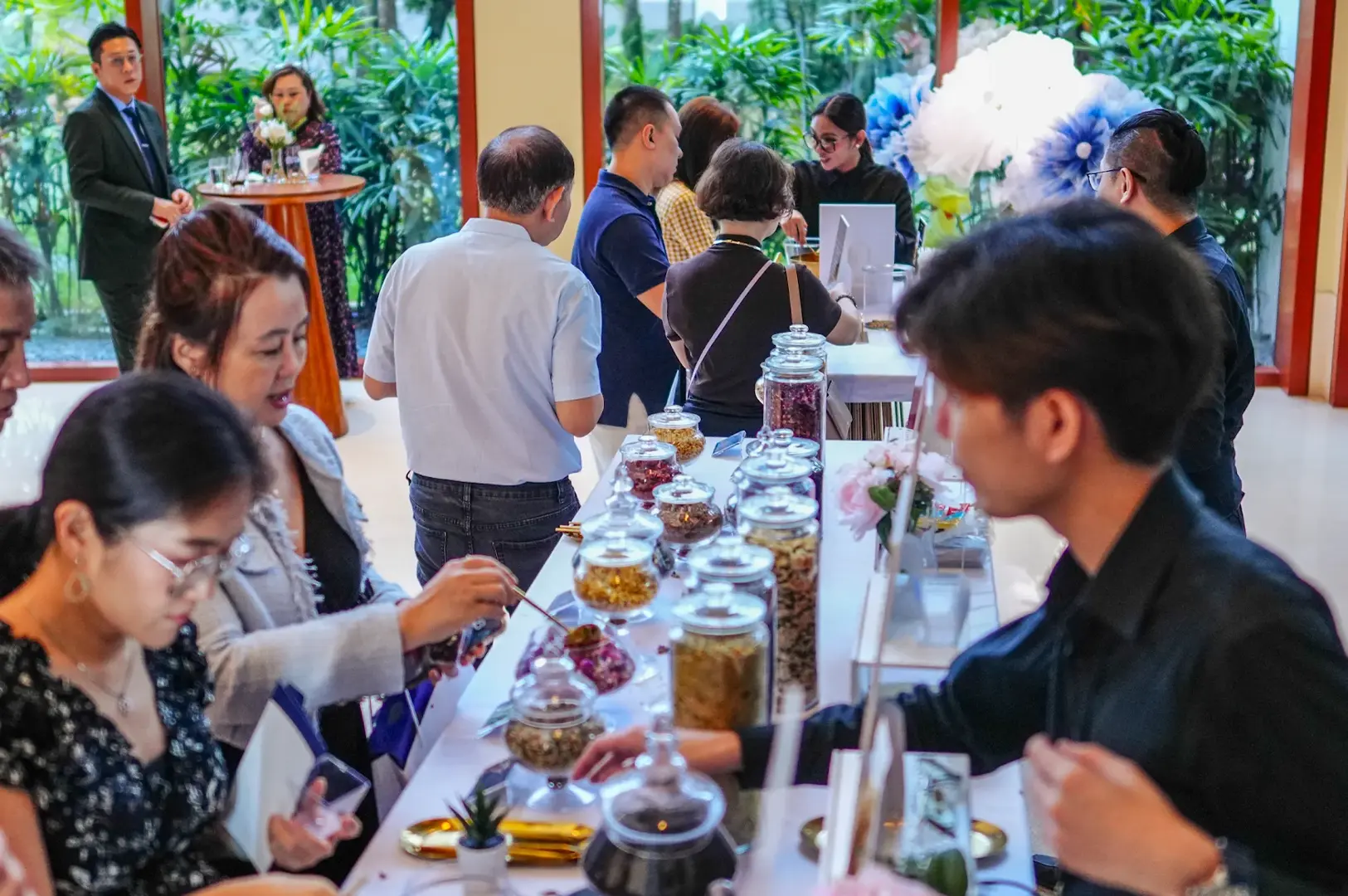
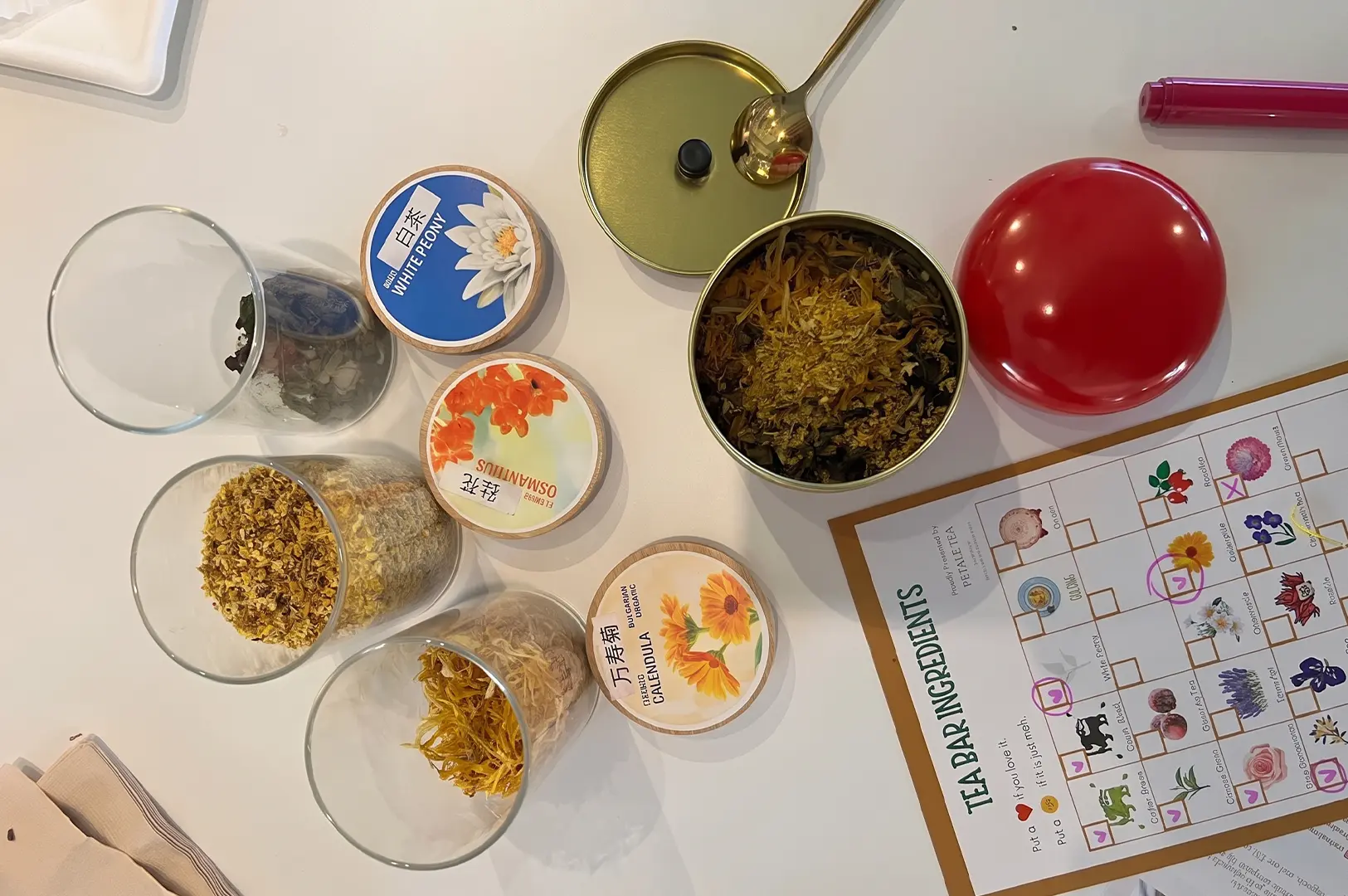
The brand's site also lists tea appreciation sessions, DIY blooming tea workshops and event activations. Kwa noted in 2024 that workshops teaching people to sew blooming teas were part of how the brand set itself apart.
There is something meaningful in that. To sew a blooming tea yourself is to understand how much care goes into each one. Workshops can also create genuine connections as participants share the stories behind their choices, learn about tea leaves and their meanings, and take home a handcrafted blend. As with any listed offering, current availability is best confirmed with the brand.
Part of a wider bloom
Pétale Tea is not alone. In its August 2025 report on Singapore's growing tea scene, The Straits Times observed that floral and herbal infusions, as well as tea balls combining Chinese and Western teas, were gaining popularity. Pétale Tea was one of seven purveyors featured.
That context is worth holding gently. Blooming tea in Singapore is not a single brand's story. It is part of a broader return to tea as something to slow down with, alongside gongfu brewing, fresh fruit teas and much else. You may agree that the appeal lies in both the cup and the pause around it.
Conclusion
A blooming tea asks for very little. A glass. Some hot water. A few minutes of attention.
What it gives back depends partly on the tea and partly on us. If we rush, it is just a pretty drink. If we wait, it can become a small pause in an otherwise crowded day: a reminder that some things open only in their own time.
Pétale Tea has built its work around that pause. Its hand-sewn blooms, its local flavours and its storytelling tins all point in the same quiet direction, toward tea as something shared, given and noticed.
If you are curious, Pétale Tea's site lists its blooming teas, wellness infusions and stockists across Singapore, with pick-up from its Ubi Techpark office by appointment. Check the website for current details, sign up for news if available, and review any email updates or subscription preferences before choosing to receive marketing messages. For the latest products and availability, contact the brand directly.
For those who prefer a more intimate setting with their teas, read our article about private dining rooms in Singapore for places to enjoy a quieter meal with family and friends.

We Are Drinking Tea Too Quickly
There is something ironic about rushing tea. We order it to relax. We call it calming. We describe it as grounding. And yet, more often than not, we drink it the same way we drink everything else — between emails, between meetings, between scrolling. Tea has become background noise. A mug beside the laptop. A…

Where Tea Meets Cuppage Plaza Food: Restaurants That Serve Both Well
Just a short walk from Somerset MRT Station, Cuppage Plaza is a go-to spot for anyone craving authentic Japanese cuisine. Sure, Orchard Road is just outside, all shiny and bustling, but once you step inside this older building, the vibe totally shifts. The hallways are dimly lit, the signboards tell stories of the past, and…
-
Milk Tea Is Not Tea
This is not an argument about preference. It is a question about naming. Milk tea is everywhere now. It travels in oversized cups, sealed with plastic film. It arrives layered with foam, syrup, pearls, jelly, whipped cream. It is photographed before it is tasted. It is queued for. It is branded. It is loved. But…
-
A Journey into Herbal Teas: Exploring Nature’s Finest Infusions
Imagine cupping your hands around a warm mug, inhaling the sweet, floral scent of chamomile tea or the invigorating peppermint tea aroma from the peppermint plant. As you take the first sip, you feel a sense of calm and comfort wash over you. This soothing experience is the magic of herbal teas, a diverse and…
-
Singapore Tea for Every Palate and Every Ritual
What draws us to seek something deeper in a simple cup of tea? In Singapore, where countless cultures have settled like leaves steeping in warm water, the answer unfolds quietly in the spaces between tradition and modernity. Good tea emerges from patient sourcing, from the steady hands of those who understand its language, from leaves…
-
Where to Find Private Room Singapore Spaces for Tea Rituals
In a city that never truly rests, quiet becomes something you have to choose. You feel it when you’re weaving through Orchard Road in the middle of the day, or squeezing past crowds in the Central Business District at lunch hour. The lights are bright, the notifications keep coming, and even when you sit down, your…
-
Tea Is Losing Its Ceremony — And We Let It Happen
No one announced it. There was no collective decision, no moment of cultural shift. And yet, the ceremony has quietly receded from everyday tea. What was once deliberate has become automatic. Tea used to require attention. Water temperature mattered. Leaves were measured with care. The cup was chosen, not grabbed. Even in the absence of…

The Art of Aging: Understanding Authentic Yunnan Pu-erh Tea
Among the world’s most revered fermented dark teas, few types evoke as much intrigue and respect as Yunnan pu erh tea (普洱). Crafted from ancient tea trees in Yunnan province, this tea produced by traditional methods is a living testament to China’s rich beverage heritage. Unlike most loose leaf tea or black teas, high-quality pu…
-
Cafe Singapore Says It Values Craft. So Why Is Tea an Afterthought?
Singapore loves its café culture. We celebrate espresso machines. We admire single-origin beans. We debate tasting notes and extraction times like it is a sport. When someone says “Cafe Singapore,” most of us immediately picture coffee. But look at the tea menu. In many cafés, tea is reduced to a small corner of the page….
-
Tea from Japan: A Journey Through Culture, History, and Varieties
In Japan, tea is not merely a drink; it is a cultural cornerstone, a spiritual discipline, and an integral part of daily life. Tea is an important part of Japanese food culture, traditional ceremonies, and daily routines, reflecting its deep-rooted presence in society. The simple act of preparing and drinking Japanese tea is imbued with…