Stop Treating Pu-erh Like Crypto: Collecting Isn’t the Same as Enjoying
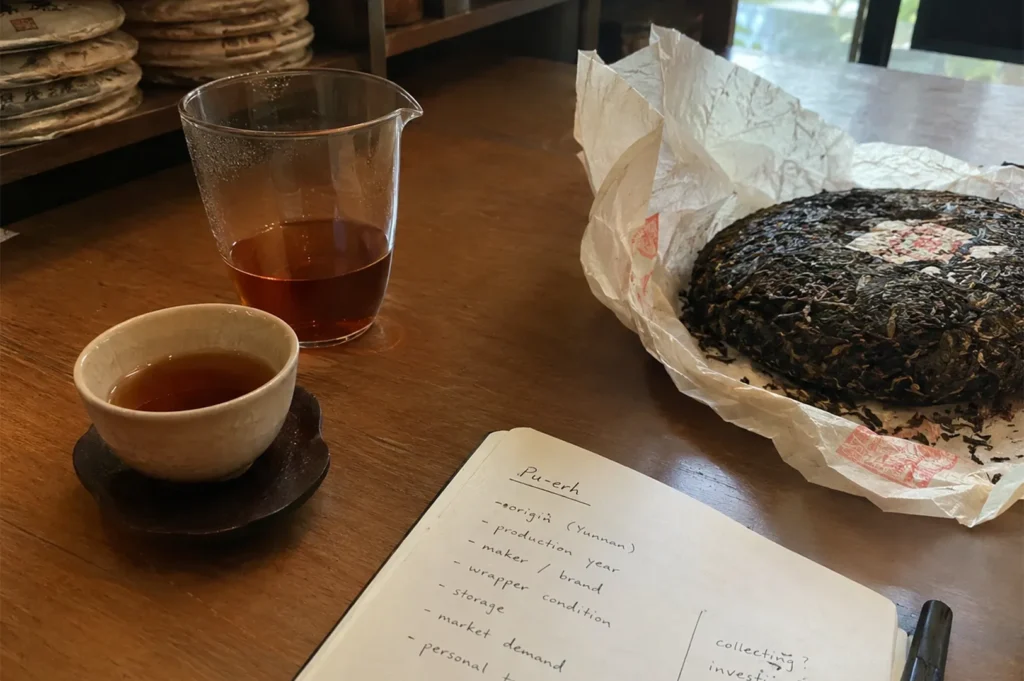
There is something peculiar about buying tea that we have no intention of drinking.
We examine its origin. We study the production year. We consider the reputation of the maker, the condition of the wrapper, and whether the tea might become more valuable in another decade.
Then we put it away.
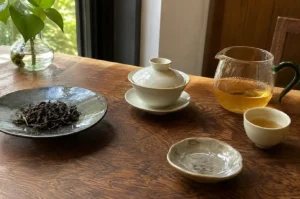
I understand the attraction. Pu-erh has a history that rewards curiosity, and its ability to change with age makes it unlike many other teas. A well-stored cake of raw Pu-erh can develop characteristics quite different from those it possessed when first produced.
There is pleasure in witnessing that transformation.
But somewhere along the way, I wonder whether we have confused appreciation with accumulation.
Tea collecting has begun to resemble another familiar activity: investing in something because we believe someone else might eventually pay more for it.
The language is remarkably similar.
Scarcity. Provenance. Appreciation. Market demand.
Even the anxiety feels familiar.
We worry about buying too late, choosing the wrong vintage, or opening something that might be worth more unopened. A tea cake becomes less a drink and more an asset whose future value must be protected.
I find that a strange responsibility to place upon a few hundred grams of leaves.
Of course, collecting Pu-erh is not inherently foolish. Serious collectors have helped preserve important teas, documented production histories, and developed knowledge about ageing that ordinary drinkers might otherwise never encounter.
I respect that.
There is also nothing unreasonable about setting aside tea to observe how it changes over time. That is part of Pu-erh’s fascination, particularly with sheng, or raw Pu-erh, which can undergo significant changes during storage.
But ageing is not a guarantee of improvement. Time changes tea; it does not automatically make it better. Storage conditions, the original material, and personal taste all influence whether those changes are desirable.
With quiet regard, N. P. Lim

Understanding Tea Beyond the Cup
Tea is deceptively simple. A cup of hot water and leaves. And yet, it carries centuries of culture, craftsmanship, and subtlety that many of us may overlook. As tea lovers, we often focus on taste, aroma, or ritual, but there is more beneath the surface. Take the leaves themselves. Different cultivars, growing regions, and harvest…
-
Clifford Pier High Tea Review: Local Flavours by the Waterfront
I went looking for a building that no longer serves tea. The Clifford Pier still stands where it always has, at the edge of Marina Bay, its old timber trusses arching overhead like the ribs of something patient. But when I arrived, hoping to relive a Heritage Afternoon Tea I’d taken there years ago, I…
-
The Quiet Lessons a Cup of Tea Can Teach
I have often found that the simplest cup of tea carries the most subtle lessons. Not every tea moment is dramatic, ceremonial, or picturesque. Some are ordinary, even fleeting, yet they manage to teach something quietly about patience, observation, and care. Take the leaves themselves. Watching them unfurl in hot water is a small, deliberate…
-
A Journey Through Popular Bubble Tea Brands and Shops: Bubble Tea Singapore
The first time I really tasted bubble tea, I mean actually tasted it, I was standing outside a shoppers mall in the rain, waiting for a friend who was late. I had ordered something on autopilot from one of the many bubble tea shops in Singapore. But that day, without distraction, I noticed the tea…
-
Tea in a World That Never Pauses
Scrolling through my feed this morning, I realized something. We live in a world that barely stops. Notifications pile up. Videos play automatically. Messages arrive faster than we can read them. Every surface seems to demand attention. And then there is tea. A cup of tea does not ping. It does not scroll. It does…
-
From Plantation to Cup: The Journey of Sri Lanka’s Black Tea Pekoe
Black tea pekoe is all about whole-leaf black tea made from those long leaves and buds, usually the youngest ones right near the shoot tips. And when you hear Orange Pekoe, it’s not about orange flavor at all; it’s actually the name of that grade. For tea lovers or anyone curious about quality Sri Lankan…
-
To the Tea Lovers and the Tea That Holds Us
I want to write a letter, not to anyone in particular, but to the quiet ritual that has accompanied so many of our days. To the tea in our cups and to the people who take the time to notice it. Tea is patient. It waits for us when we are rushing. It sits quietly…
-
What Is Rooibos Tea: Red Gold in Your Cup, the Science and Benefits
There is a certain hour when the day loosens its grip. The coffee has long gone cold. Black tea feels like too much. And yet the kettle still calls, because the ritual matters more than the caffeine. This is where rooibos often arrives. A deep russet red pouring into the cup, warm and unhurried, carrying…
-
The Cup I Always Return To
There is one tea I always return to, even after tasting countless others. It is not rare. It is not expensive. The leaves are ordinary, the aroma familiar. And yet, it has a way of anchoring me, no matter the day or the mood. I first drank it years ago, during a week that felt…
-
Where to Buy Turkish Tea: Finding Authentic Çay for the True Turkish Tea Experience
The first time I understood Turkish tea, I was not drinking it in a café. I was standing in a small shop, watching a man refuse to sell me the wrong thing. I had pointed at a shiny box of flavoured black tea, and he shook his head, quietly, the way someone corrects a friend…