Tea as Hospitality: The Small Gestures That Make a Home
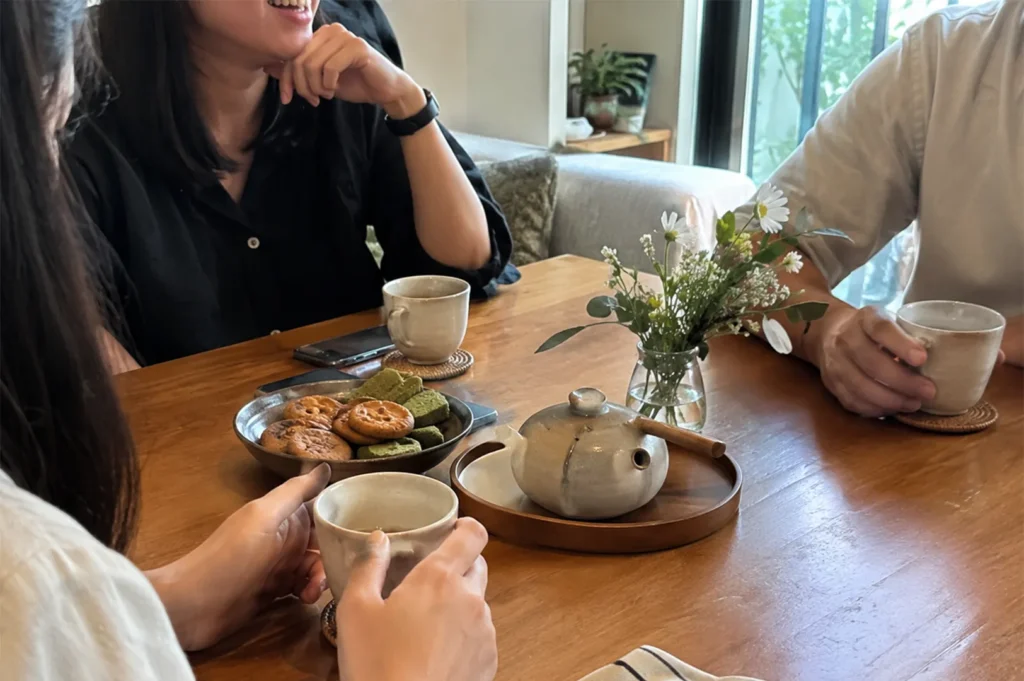
I think we sometimes make hospitality sound more complicated than it needs to be.
A beautifully arranged dining table. Matching plates. Fresh flowers. Something impressive coming out of the oven just as everyone arrives.
All lovely things, of course.
But when I think about the homes where I have felt most welcome, the details I remember are usually much smaller.
Someone offering me a seat before asking anything else. A glass of water appearing without me having to request it. Or, my personal favourite, being asked whether I would like some tea.
It’s such an ordinary question.
And yet, I think it says quite a lot.
Offering tea is one of those gestures that can make someone feel welcome without requiring a grand display of hospitality. You’re not necessarily promising an elaborate experience. You’re simply inviting someone to settle in.
And sometimes, that’s exactly what a guest needs.
I’ve always found it interesting how tea manages to fit into so many different versions of hospitality. In some Chinese households, serving tea is closely connected to respect and family relationships. In Japan, the traditions surrounding tea can involve careful attention to the guest, the setting, and the moment itself. Across many South Asian homes, chai is a familiar part of welcoming visitors and spending time together.
The customs aren’t identical, and I wouldn’t want to pretend they are.
But there is something worth appreciating in how a drink can become part of the way people express care.
Not through the tea alone, but through everything happening around it.
The person who remembers you prefer your tea without sugar. The host who brings out another cup because someone has arrived unexpectedly. The family member who starts preparing tea while everyone is still figuring out where to sit.
None of these gestures requires particularly expensive leaves or beautiful teaware.
They require attention.
And I wonder whether that’s the part of hospitality we sometimes overlook.
We spend so much time thinking about what we should serve guests that we forget to consider how we make them feel while they’re there.
Does everyone have somewhere comfortable to sit? Are we actually listening to the conversation? Does someone feel awkward about accepting a second cup?
I know I’m guilty of thinking too much about getting everything ready and not enough about simply being present.
Because here’s the thing about offering tea: the preparation doesn’t have to be perfect.
The cups don’t need to match. The tea doesn’t need an impressive origin story. You don’t even need to know the ideal brewing temperature to make someone feel at home.
Of course, good tea is always appreciated. I love the idea of choosing something thoughtfully, especially when you know what your guest enjoys.
But I don’t think hospitality should depend on how much we know about tea.
Someone might prefer a strong black tea with milk. Someone else might ask for something floral or caffeine-free. Another person might not want tea at all.
And that’s okay.
Maybe genuine hospitality is also knowing when not to insist.
There’s a difference between wanting to share something you enjoy and expecting everyone else to enjoy it in exactly the same way.
I’ve come to think that the best hosts understand this without making a big deal of it.
They offer, they listen, and they let people feel comfortable enough to be themselves.
What I especially like about tea is that it gives people something to do together without demanding constant conversation.
You can sit with a cup while catching up on months of news. You can talk about absolutely nothing important. You can even have a comfortable silence while everyone enjoys their drink.
Not every gathering needs to become an occasion.
Sometimes a visit is just a visit.
Someone drops by after a long day. A friend has an hour to spare. A relative comes over without much warning.
The kettle goes on, a few cups come out, and suddenly there’s a reason to sit together for a little longer.
I like that.
Perhaps we’ve become so used to seeing hospitality presented through beautiful interiors, carefully styled tables, and impressive food that the everyday version feels almost too ordinary to celebrate.
But what if the most welcoming homes aren’t necessarily the ones that have everything prepared?
What if they’re simply the places where nobody feels like an inconvenience?
Tea can’t create that feeling on its own, obviously. A beautifully brewed cup means very little if the person holding it feels unwelcome.
Still, I think offering tea can be a lovely place to begin.
It’s a small way of saying there’s room for you here.
And maybe that’s what makes a home feel like a home in the first place.
Not the things we put on display.
But the little ways we make space for one another.
— Maria Tan On tea, culture, and everyday rituals.

Stop Adding Sugar First: You’re Training Your Tongue Wrong
There is a habit I have noticed among tea drinkers. Sugar goes in before the first sip. Perhaps it is only a small spoonful. Perhaps two. But the tea is sweetened before it has been given a chance to introduce itself. I used to do this too. It seemed harmless. Tea was bitter, sugar made…
-
Is Tea a Diuretic? What Your Daily Cup Really Does for Hydration
Picture a sticky afternoon in Singapore. The kind where the air sits heavy on your shoulders and the walk from the MRT feels longer than it should. You reach for something cold. Maybe a teh peng from the drinks stall, ice clinking in a plastic cup. Maybe a bottle of green tea from the convenience…
-
Cold Brew Tea Isn’t Lazy, Hot Purists Just Don’t Like Being Wrong
I used to think cold brew tea was cheating. Not seriously, of course. But there was something about it that felt almost too easy. No kettle. No worrying about water temperature. No watching the clock while the leaves steep. Just tea, cold water, and a little patience. It seemed suspiciously effortless. Then I actually started…
-
A Taste of Taiwan in Every Pour: Yi Fang Taiwan Fruit Tea
There are drinks that catch your eye before you even take a sip. A tall cup, fruit pressed gently against the plastic, tea glowing amber underneath. Something about it feels right for a warm afternoon. Light. A little cheerful. Easy to carry. But if you slow down for a moment, some of those cups have…
-
Your Tea Isn’t Bitter—You’re Overbrewing It (And It’s Not Your Fault)
There is a particular disappointment that comes from making a cup of tea that tastes bitter. You choose the leaves carefully. You heat the water. You wait. Then the first sip arrives, and something feels wrong. For a long time, I assumed bitterness meant the tea itself was not very good. Perhaps the leaves were…
-
When Tea Meets Tropical: 5 Fruit Teas in Singapore to Try
There’s a specific kind of Singapore afternoon. The air feels thick, your shirt clings a little, and every mall entrance feels like a reward. On days like that, I don’t want anything heavy. I want something cold, bright, and full of fruit, but still recognizably tea. That’s where fruit teas come in. In Singapore, they’ve…
-
Temperature Rules Are Overblown: The Real Brewing Variable Nobody Mentions
I used to think making tea required a thermometer. Not literally, perhaps, but almost. Every tea seemed to have a number attached to it. Green tea at this temperature. Oolong at another. Black tea a little hotter. Too hot and you had apparently ruined everything. For a while, I took these rules quite seriously. Then…
-
Afternoon Tea at Prada Caffè ION Orchard: A Green Room, a Pale-Blue Cup
Afternoon tea has always been about the pause for me. Not the tiers or the silverware. Just the moment when the cup is set down, the steam rises, and everything outside seems to slow a little. So I wondered what a pause would feel like inside a fashion house. One floor above Orchard Road, past…
-
A Love Letter to Oolong: The In-Between That Changed My Mind
I did not understand oolong when I first encountered it. It seemed unnecessarily complicated. Green tea was green tea. Black tea was black tea. I understood where they stood. Oolong seemed determined to remain somewhere in between. Perhaps that was what initially kept me from appreciating it. Over time, however, I began to realise that…
-
Tea from Assam: The Geography, Craft, and Character Behind the Brew
The colour arrives first. A deep amber that darkens towards red as the tea leaves give up their strength. Then comes the aroma. It is warm and rounded, often compared to malt or the crust of fresh bread. The first sip has weight. It fills the mouth with a rich body and leaves a slight,…