There is a particular moment that has become increasingly familiar in modern tea culture.
A tea is presented.
Before the first sip, we are introduced to its story.
The region. The altitude. The history. The carefully chosen words that describe its character.
Perhaps there are notes of wildflowers, distant forests, roasted grains, or forgotten memories.
The language is beautiful.
Sometimes, almost too beautiful.
And I find myself wondering whether we are tasting the tea itself or the story surrounding it.
This is not a criticism of knowledge. Understanding tea requires patience, experience, and years of learning. A skilled tea professional can reveal details that many of us would overlook. They can guide us toward new experiences and help us appreciate the work behind each leaf.
That knowledge has value.
But there is a difference between helping someone understand tea and creating an expectation they feel obligated to experience.
Sometimes the description arrives before the tea.
We are told what we should notice.
We search for the floral notes because they were mentioned. We look for the sweetness because it was promised. We convince ourselves that the tea is extraordinary because the story says it should be.
And somewhere in that process, our own experience becomes secondary.
Tea is unique because it cannot be separated from the person drinking it.
The same tea can feel completely different depending on the moment. A highly praised tea may leave one person unmoved, while an ordinary tea may become unforgettable because it was shared with someone meaningful.
No description can predict that.
Perhaps this is where we need to be careful with the idea of expertise.
A tea sommelier should not be someone who tells us what to feel.
They should be someone who helps us notice what is already there.
There is a quiet difference between guidance and influence.
One opens the door.
The other tells us what we should find inside.
The beauty of tea has always been its ability to create a personal relationship between leaf and drinker. It is not a performance where everyone reaches the same conclusion.
It is a conversation.
So the next time someone describes a tea with perfect words and promises an unforgettable experience, perhaps pause before searching for those promised flavours.
Taste first.
Think later.
Because the most honest relationship with tea begins when we trust our own cup.
With quiet regard,
N. P. Lim

The Art of Pouring: Height, Froth, and Hospitality in Moroccan Tea Service
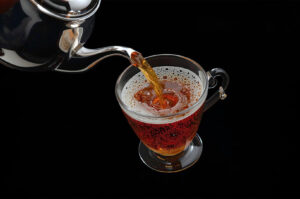
Imagine this: you’re seated on low cushions in a Marrakech riad, surrounded by patterned tiles and the scent of spices wafting through the air. Your host approaches with a polished silver teapot, or berrad, holding it high above a small glass. A thin stream of steaming green tea flows gracefully, landing perfectly in an ornate…
-
British Tea Traditions: Beyond Cucumber Sandwiches and Modern Tea Accompaniments
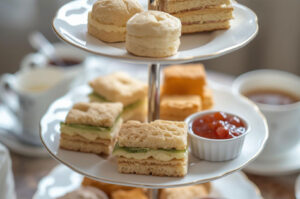
The ritual of British tea-especially the celebrated afternoon tea-conjures a very specific image: tiered cake stands laden with delicate finger sandwiches, fluffy scones, and exquisite cakes. This cherished tradition, born in the 1840s, is often attributed to Anna, the seventh Duchess of Bedford, who sought a small meal to bridge the long gap between lunch…
-
The Dance of Aroma: Appreciating Tea Through All Senses in Gongfu Cha
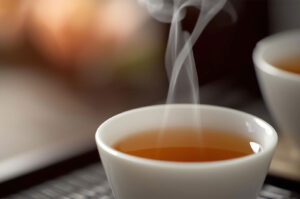
Imagine a wisp of steam carrying the scent of orchids from a tiny tea cup, a fragrance so vivid it transports you to a misty mountainside in China. This sensory immersion lies at the heart of the gongfu cha method, the traditional Chinese tea ceremony where every movement, from handling the tea leaves to pouring…
-
Japanese Tea Ceremony Principles: Harmony, Respect, Purity, and Tranquility
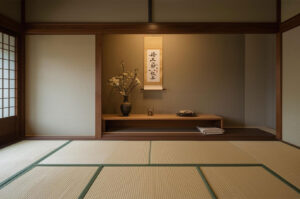
In a quiet tea room, a host moves with deliberate grace. The sound of hot water being ladled from an iron pot fills the air. This is the Japanese tea ceremony, known as Chanoyu or the Way of Tea, an art form that transforms the simple act of drinking tea into a profound experience. Far…
-
Beyond Chamomile: Exploring Lesser-Known Herbal Infusions from Around the World
Tea is one of the most popular drinks worldwide, cherished for centuries as much for its taste as for its role in tradition and culture. While many people immediately think of green tea, black tea, or perhaps a steaming mug of mint tea, the spectrum of herbal infusions—blends using various herbs, fruits, and flowers—offers countless…
-
Raw vs. Ripe: Understanding the Two Paths of Pu Erh Processing
In the vast and ancient world of Chinese tea, few categories carry as much mystery and prestige as pu erh tea. Pu’er tea is renowned for its unique fermentation and aging techniques, which not only develop its complex flavor profiles but also contribute to its cultural significance and traditional production methods. Unlike most teas such…

From Keemun to Darjeeling: A Global Tour of Premium Black Teas
Black tea is more than just a morning ritual; it’s a global phenomenon steeped in rich history, cultural significance, and craftsmanship. From the misty mountains of India to the ancient gardens of China, each cup tells a story of its origin, flavor, and tradition. Throughout history, brewed tea has been cherished in various cultures, with…
-
Understanding Oolong Tea Oxidation Levels: The Spectrum of Oxidation in Tea Classification
When you step into the world of tea, you quickly learn about the main categories: white, green, oolong, and black. For many, green tea is fresh and vegetal, while black tea is bold and malty. But what about oolong? This category seems to defy easy definition, with some oolongs tasting light and floral like a…
-
Beyond Matcha: Exploring the Diverse World of Japanese Green Tea Varieties
Let’s be honest, when you hear “Japanese green tea,” your mind likely pictures a vibrant, frothy bowl of matcha. From trendy matcha lattes in every café to ice cream and desserts, matcha has become the undisputed global face of Japanese tea culture. And for good reason! It’s a delicious, versatile ingredient with numerous health benefits….
-
Silver Needle White Tea: The Delicate Emperor of Chinese Tea
In the vast and storied world of Chinese tea, few varieties command the reverence and prestige of Silver Needle white tea. Celebrated as Bai Hao Yin Zhen (白毫銀針)-meaning “White Hair Silver Needle”-this exceptional Chinese white tea sits atop the hierarchy of not just white tea, but among all tea types. Each slender ‘needle’ is not…