Some drinks reach you before the cup does.
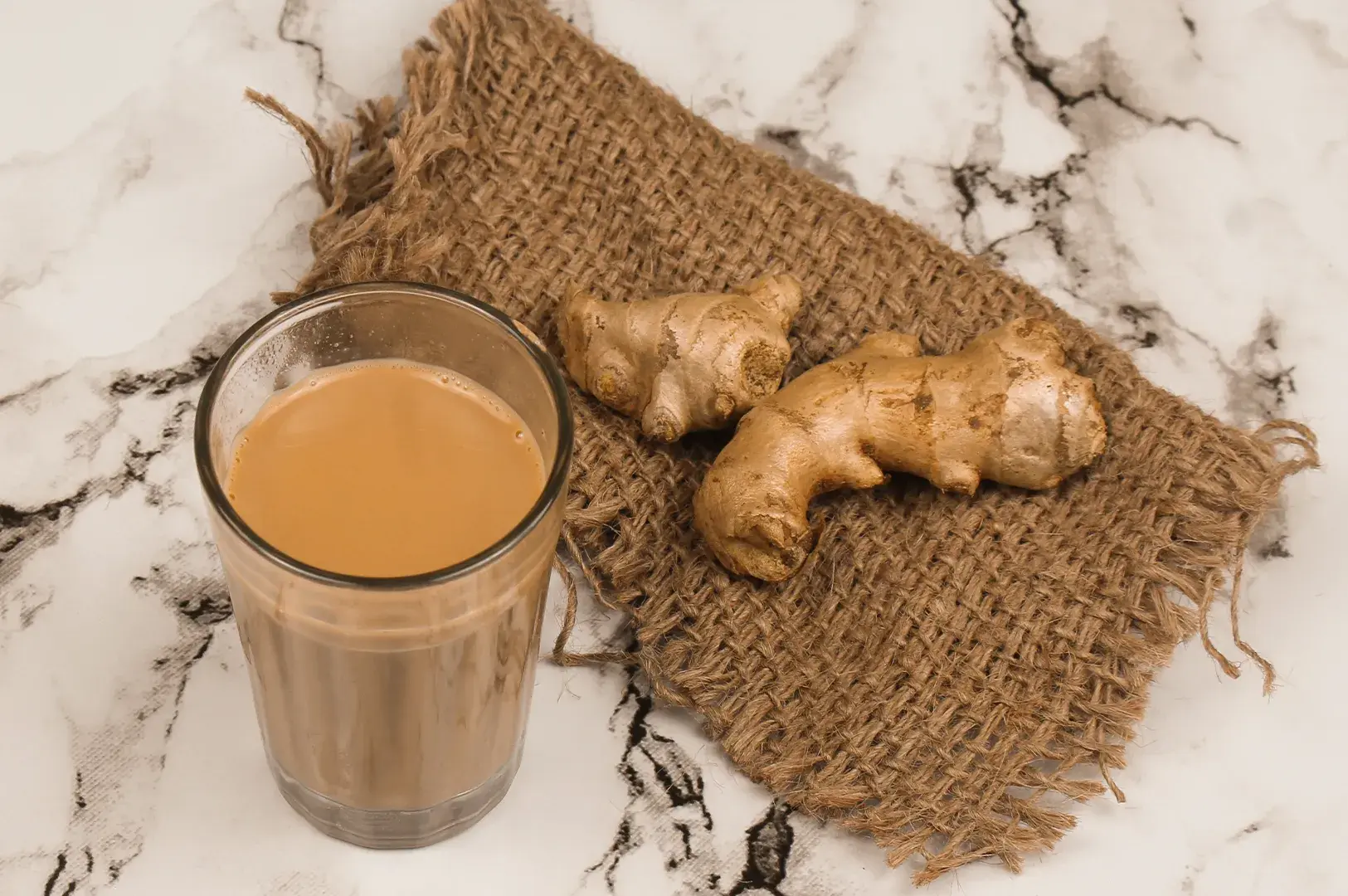
At a drinks stall or coffee shops across Southeast Asia, the scent of brewed loose leaf tea or tea bags and sweetened condensed milk is usually in the air. But every so often, something sharper cuts through it, warm and a little peppery, freshly grated young fresh ginger.
Halia is the Malay word for ginger. Teh halia is ginger tea in its kopitiam form: strong black tea, sweetened milk, and ginger, usually pulled between two vessels until it foams, creating a smooth, creamy beverage with a balanced ginger flavor.
It is a familiar drink in Singapore and an easy one to overlook. This piece looks at what teh halia ginger tea is, where it sits within Singapore tea culture, how it differs from its closest relatives, and what we can and cannot say about the ginger inside it.
What Is Ginger Milk Tea (Teh Halia)?
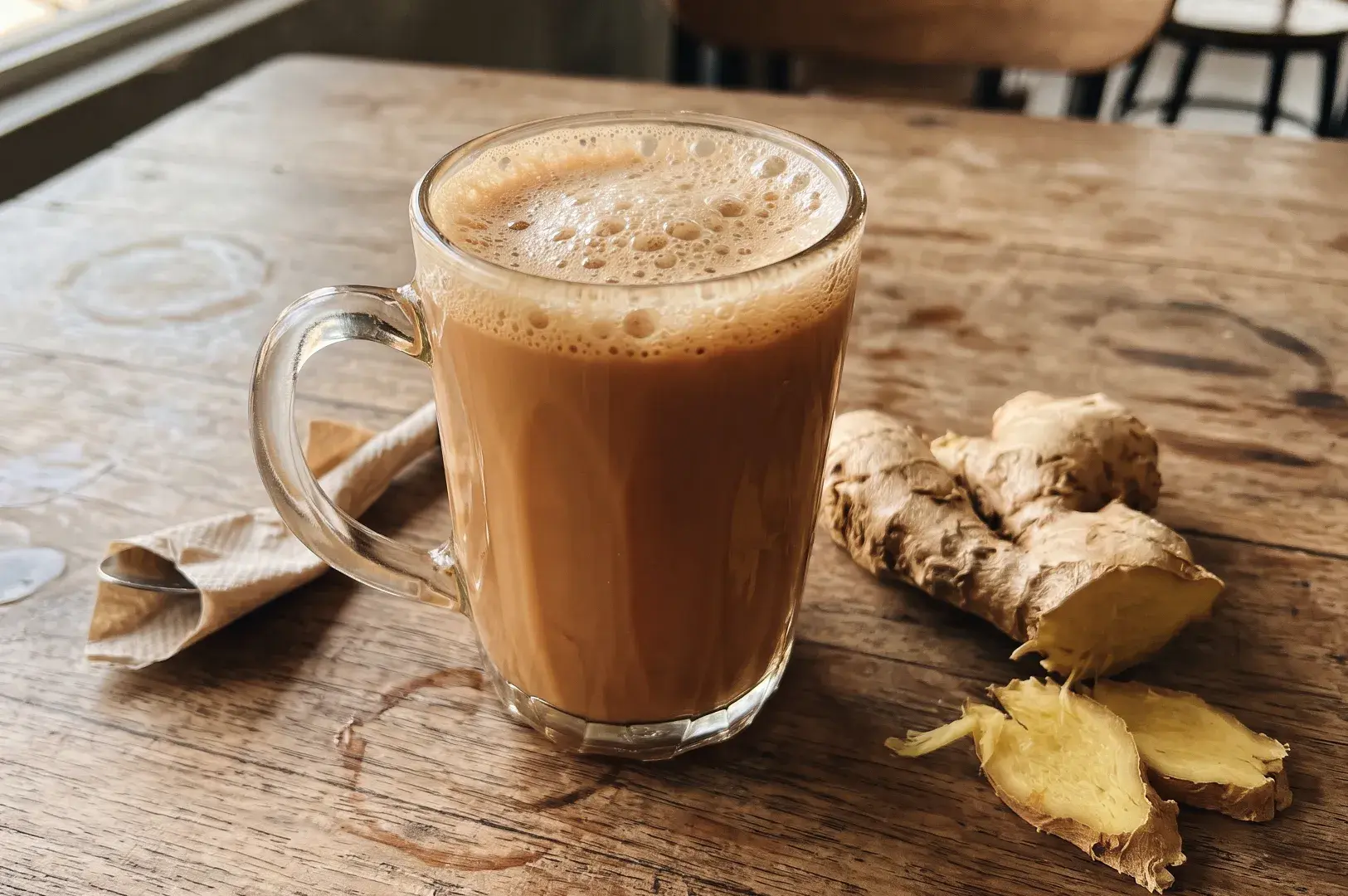
The National Library Board Singapore describes teh halia ginger milk tea (sometimes written alia) as a drink made with freshly grated ginger juice and sweetened condensed milk, usually "pulled" like teh tarik milk tea. The National Heritage Board offers a similar description. It calls teh halia "akin to teh tarik," with ginger added to give the drink a sharper, spicy taste.
Put those together and the picture is clear. Teh halia ginger tea is not a separate tea leaf or a special blend. It is a familiar milk tea that carries a second voice, the aromatic, spicy ginger.
The Ginger at Its Heart: Freshly Grated and Peeled
The ginger is what changes the drink. Freshly peeled and grated young ginger brings heat that sits at the back of the throat, along with a bright, almost citrus edge. Against the sweetness of sweetened condensed milk or evaporated milk and the depth of strong black tea, that heat gives the cup some structure.
How much ginger goes in is not fixed. Each stall works by its own hand, so one cup may be light and gentle, and the next quite fiery and spicy. That variation is part of the drink, not a flaw in it.
A Living Beverage, Not a Fixed Recipe
Teh halia ginger milk tea is best understood as a living beverage rather than a formula. The two Singapore heritage sources even differ slightly on the milk. The National Library Board names sweetened condensed milk for teh halia. The National Heritage Board, describing teh tarik, notes that it typically uses both evaporated and condensed milk.
Neither account is wrong. They describe a drink made daily by many hands, in many places, across many years.
Ginger Tea in Southeast Asia Coffee Shops
Teh halia ginger milk tea belongs to a much larger story.
The National Heritage Board includes the making and sharing of tea in Singapore's inventory of intangible cultural heritage. It describes tea as an intrinsic part of the country's social culture and food heritage, prepared and enjoyed by different communities in different ways. Tea goes by many names here: teh in Malay, cha in Chinese, theneer in Tamil.
According to the same source, tea was imported into Singapore by the British from the early 1800s. Since then it has settled into many corners of daily life: traditional teahouses, temples, homes, restaurants, and the coffee shops many people know as kopitiams.
Where It Is Found: Coffee Shops and Kopitiams
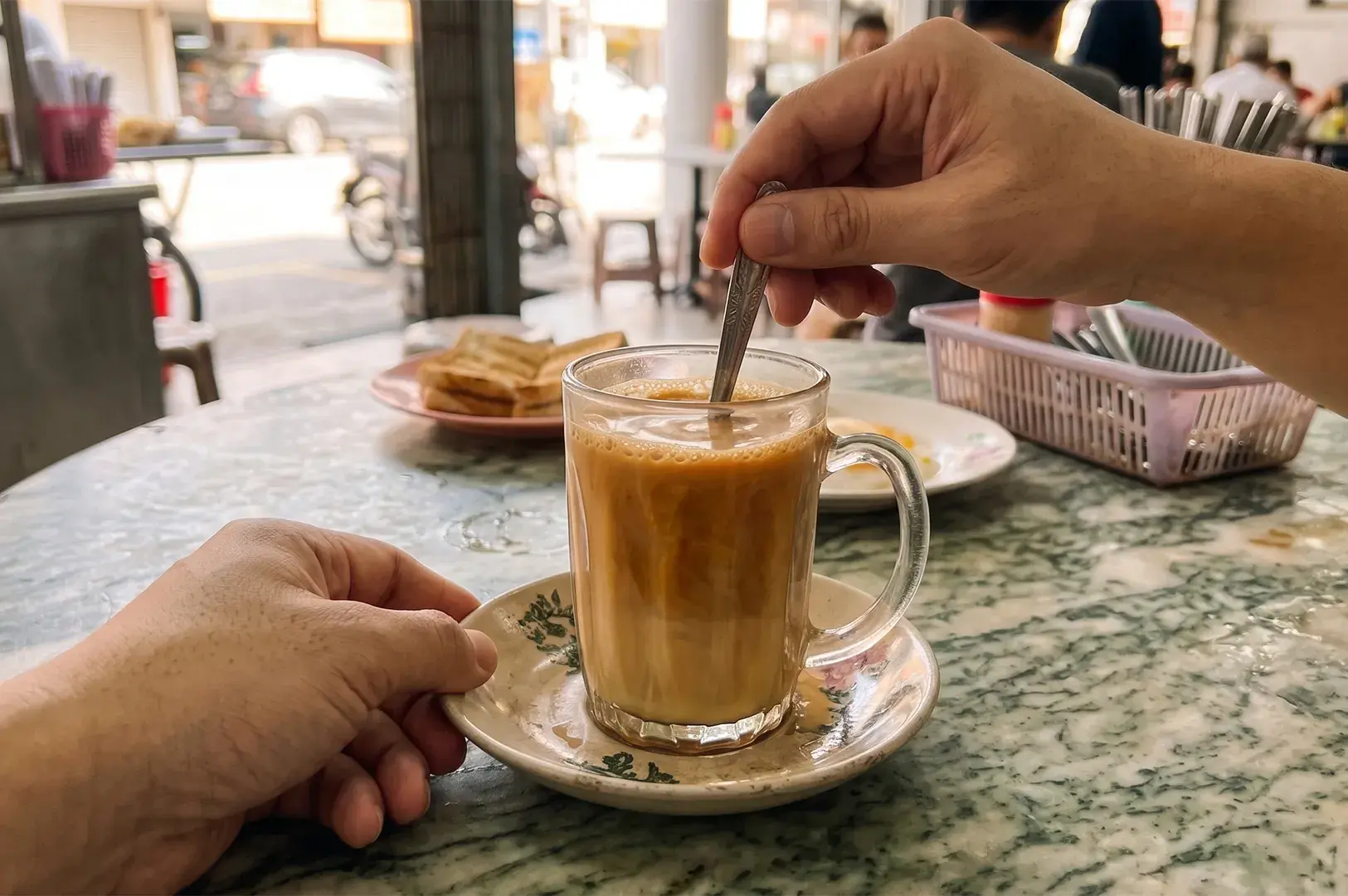
In hawker centres and coffee shops, teh is typically brewed using a large metal cylinder of hot water and a cloth sock filled with loose leaf tea or tea bags, as the Heritage Board notes. It is ordered in a quick, layered shorthand: teh, teh c, teh o, teh peng, and so on.
Teh halia ginger milk tea sits within that same counter culture. It is usually ordered by name rather than built from modifiers, which says something about how established it has become.
These are shared spaces.Hawker culture in Singapore was inscribed on UNESCO's Representative List of the Intangible Cultural Heritage of Humanity on 16 December 2020. Tea, in its many forms, is part of what happens there every day. Tea, in its many forms, is part of what happens there every day.
A Drink with Roots, Not a Single Owner
Teh halia ginger milk tea shares much of its story with teh tarik milk tea. The National Library Board traces teh tarik's origins to Indian-Muslim immigrants in the Malay Peninsula. After World War II, some set up sarabat (drink) stalls at the entrances of rubber plantations to serve workers there.
In Singapore, those stalls were relocated to hawker centres in the 1970s. The Library Board also notes an ongoing debate over whether teh tarik is more a speciality of Singapore or of Malaysia.
That history matters, and it deserves to be told plainly. But it does not make teh halia the property of any one community. Both heritage sources describe these drinks as enjoyed across ethnic backgrounds. A lineage and a shared table can exist together.
Close Relatives: Ginger Milk Tea, Teh Tarik, and Masala Chai
Teh halia ginger milk tea is often confused with two other drinks. The differences are worth knowing.
Teh Halia Ginger Milk Tea and Teh Tarik Milk Tea
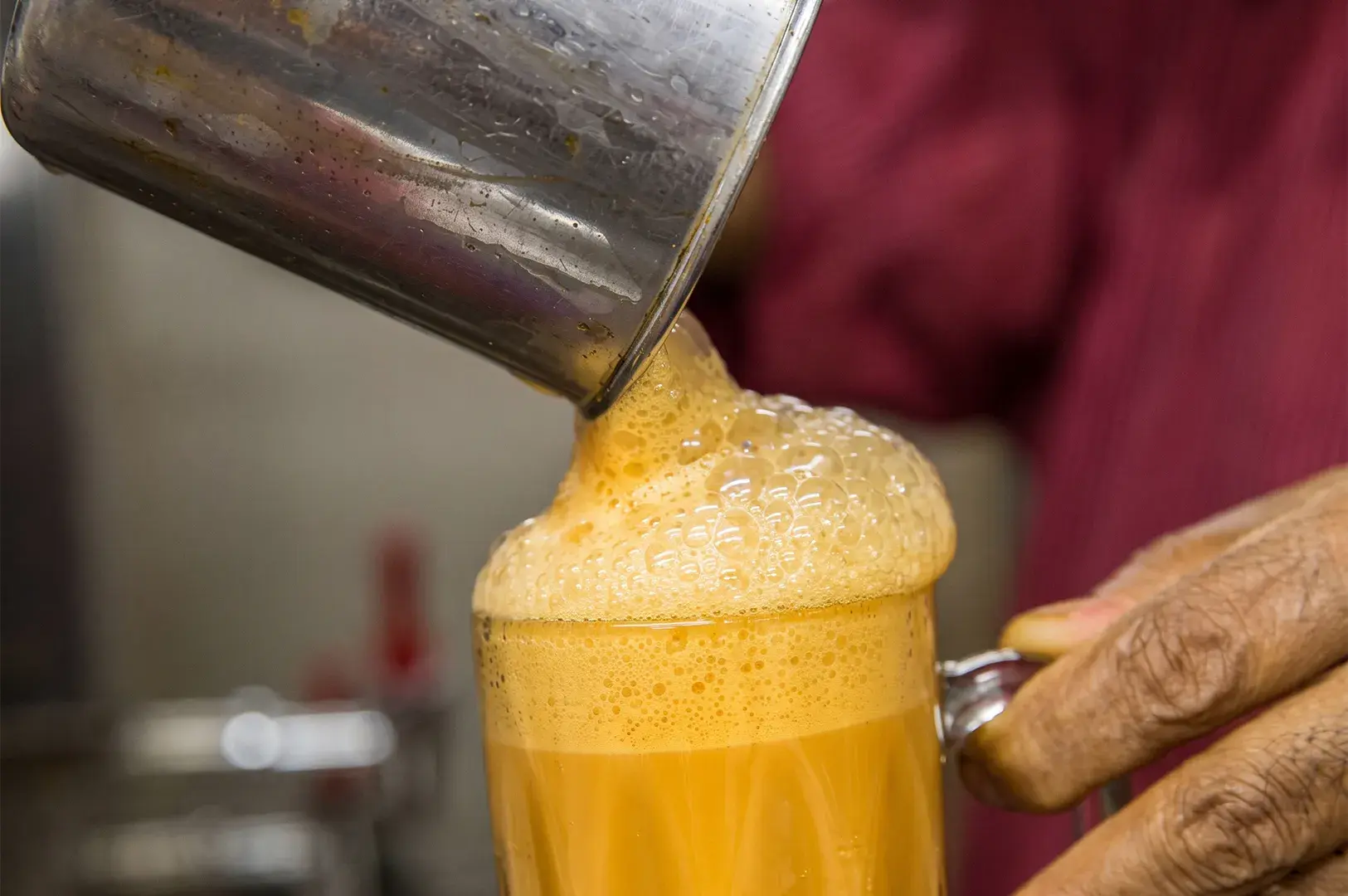
Tarik means "pull" in Malay. Teh tarik milk tea is tea and milk poured back and forth between two cups or mugs to create a rich, frothy drink. The National Library Board describes tea being poured from a height of about a metre, repeated until a layer of froth forms.
Teh halia ginger milk tea usually follows the same method. The key difference is simple: teh tarik has no ginger, while teh halia is defined by it.
There is a small wrinkle. The Library Board notes that spices such as cardamom, cloves and ginger can be added to teh tarik for extra flavor. So the line is not always sharp. But when you order teh halia, ginger is the point, not an option.
Teh Halia Ginger Milk Tea and Masala Chai
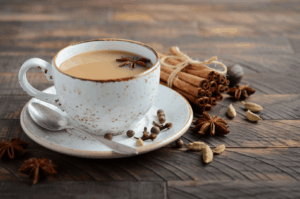
Masala chai is the other drink people often reach for as a comparison. The National Heritage Board describes it as a spice tea with roots in the Indian subcontinent. It is typically made with spices such as cardamom, cinnamon, cloves and ginger, mixed with milk.
Ginger appears in both cups, but the logic differs. Masala chai is built on a blend of several spices, and the Heritage Board notes that each household in Singapore has its own take. Teh halia leans on ginger alone, set against the sweetness of sweetened condensed milk.
One is a chorus. The other is a single, clear note.
How to Cook and Serve Teh Halia Ginger Milk Tea
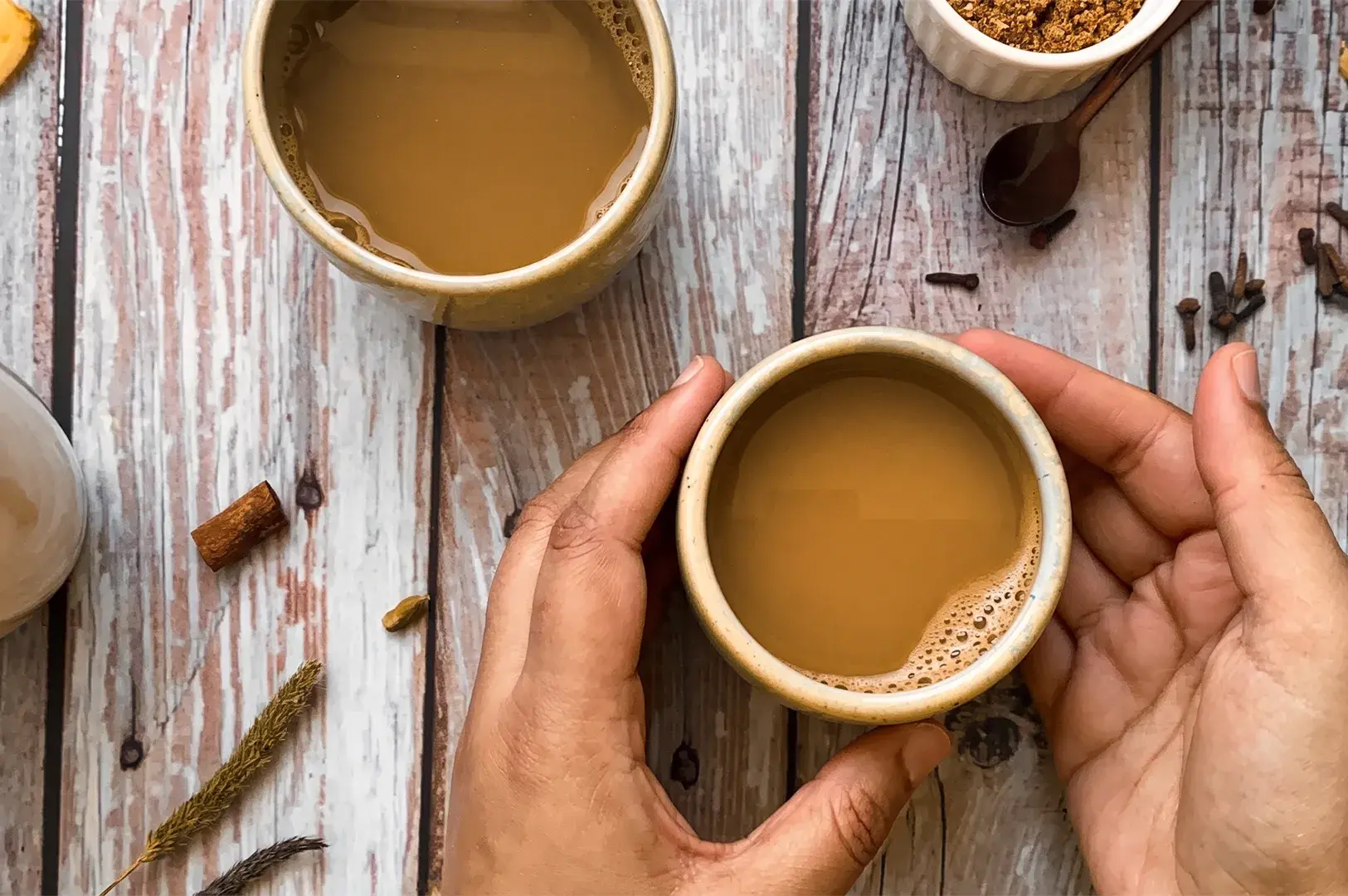
Making teh halia ginger milk tea at home involves simple ingredients and steps, but attention to detail ensures a yummy, aromatic, and balanced cup every time.
Ingredients and Tools
- Freshly peeled and grated young ginger or grated ginger
- Loose leaf tea or strong tea bags (preferably Assam or Ceylon)
- Sweetened condensed milk
- Evaporated milk or full fat milk (optional for creaminess)
- Sugar or honey (optional for sweetness)
- Pandan leaf (optional for aromatic extract)
- Water
- Small pot or saucepan
Step-by-Step Instructions
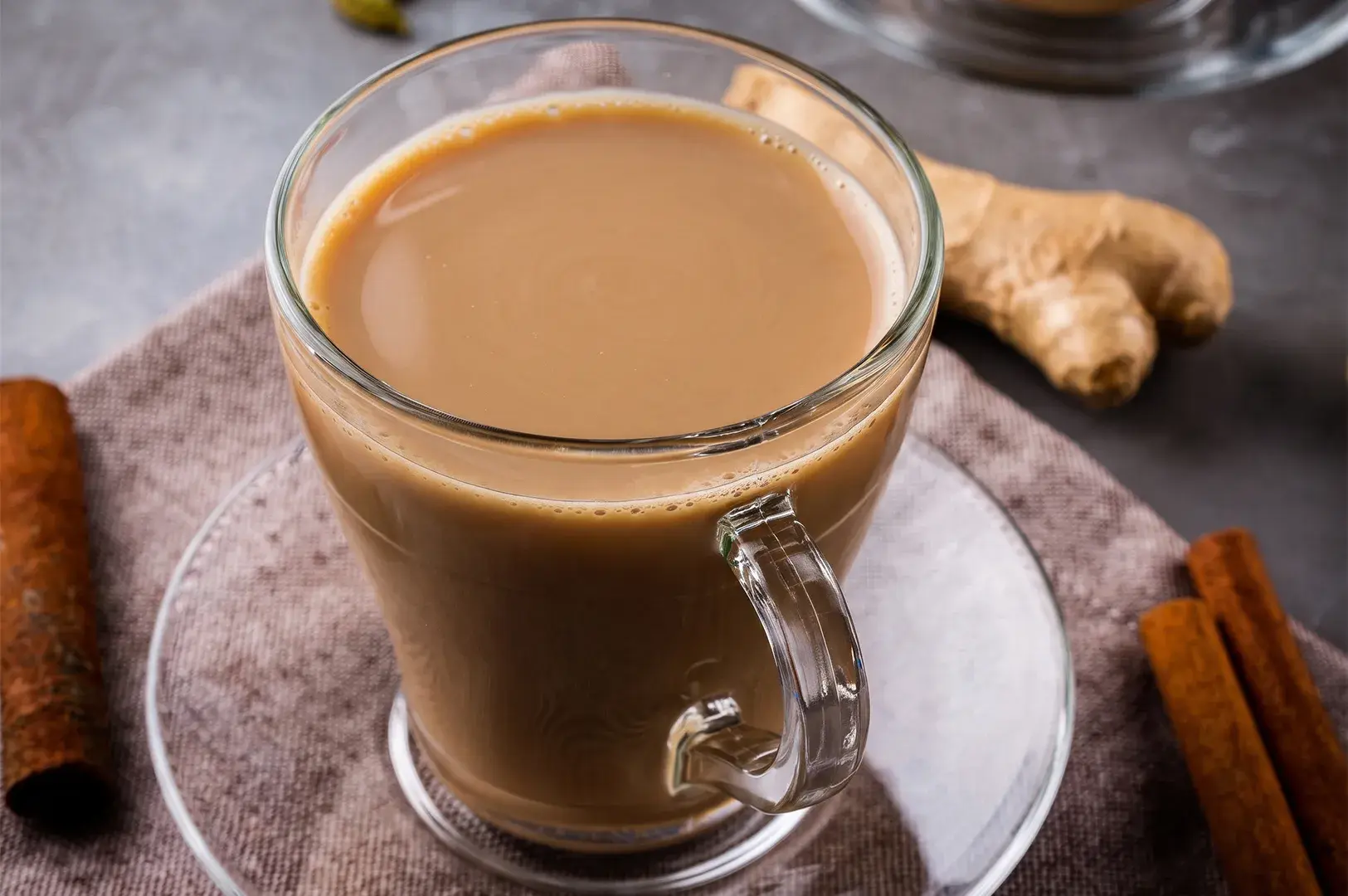
- In a small pot or saucepan, combine peeled and grated ginger with water. Bring to a boil over medium heat, then reduce to medium low and gently simmer for about 10 minutes to extract the ginger flavor fully.
- If using pandan, add a leaf while the ginger simmers for an additional aromatic note.
- Remove the pot from heat and strain out the solids, keeping the ginger-infused water.
- Steep tea bags or loose leaf tea in the hot ginger water for about 5 minutes.
- Remove the tea bags or strain the loose leaf tea.
- Return the tea to the pot or small pot and add sweetened condensed milk and evaporated or full fat milk, adjusting the amount to taste for a creamy, smooth texture.
- Taste the tea before adding any extra sweetener, as condensed milk already contains sugar. For a less sweet cup, start with a smaller amount of condensed milk and adjust to taste.
- Stir well and gently simmer the mixture over medium low heat for a few minutes to blend the flavors, but do not boil after adding milk.
- Serve immediately hot to enjoy the full aroma and spiciness.
Variations and Serving Suggestions
- Iced teh halia ginger milk tea can be served by cooling the tea and pouring it over ice for a refreshing, light, and spicy beverage.
- Coconut milk can be used as a dairy alternative for a tropical twist.
- Teh halia pairs wonderfully with spicy curry, rice dishes, or traditional kaya toast.
The Pull and the Variations Around It
Pulling is not just for show. According to the National Library Board, it cools the tea and enhances its flavor while building the froth on top.
In teh halia, that motion does one more quiet thing. It helps spread the ginger evenly through the cup.
Pulled or Simply Poured
Teh halia ginger milk tea is usually pulled, but not always. Some stalls stir it rather than pull it, and iced versions exist too. The drink adapts to the counter, the hour, and whoever is making it.
Halia-cino and Newer Takes
Newer variations have also appeared. The National Library Board mentions halia-cino, ginger tea topped with milk foam, alongside teh-cino, a layered tea inspired by the Italian cappuccino. Both are sold at modern sarabat stalls and Indian-Muslim eateries.
It is worth asking what that tells us. Perhaps that a tradition stays alive partly by being allowed to change.
The Ginger Itself: Health and Flavor
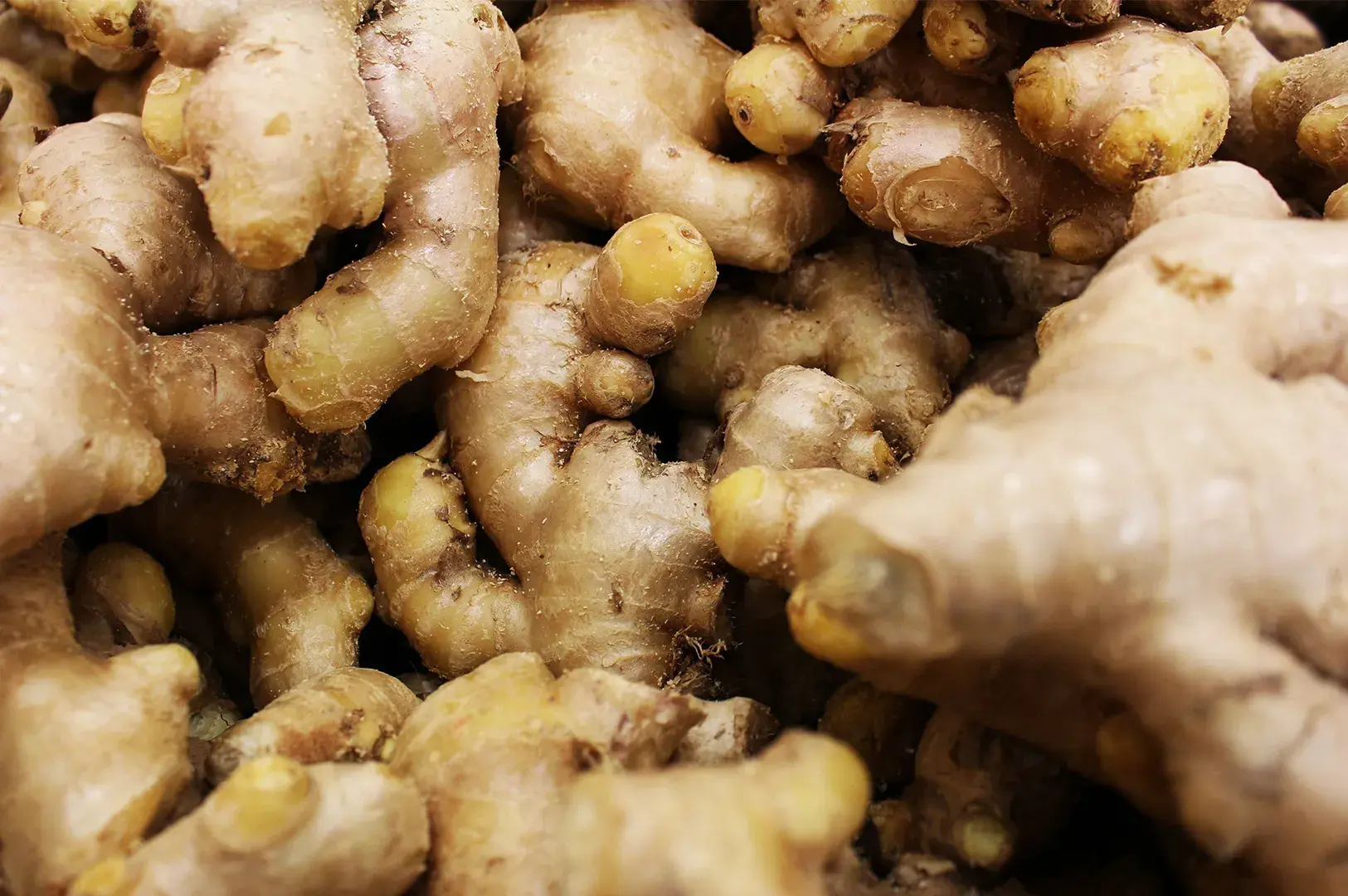
Ginger often carries a reputation for being good for you. That reputation deserves an honest look.
The U.S. National Center for Complementary and Integrative Health (NCCIH) notes that ginger has been studied for several conditions. Some evidence suggests it may help relieve nausea during pregnancy, although its effect on vomiting is less clear. Most studies examining ginger for motion sickness have not found it helpful.
Two points matter here. First, NCCIH notes that many studies have not been of high quality. Second, most of the research tested ginger dietary supplements rather than foods. A concentrated supplement is not the same as a cup of sweet, milky tea.
So teh halia ginger milk tea is not a cure, a detox, or a treatment. It is a beverage that contains ginger. NCCIH also notes that ginger can cause side effects such as heartburn or stomach discomfort for some people. Anyone taking medication should check with a healthcare provider before using ginger products for health purposes.
Why Teh Halia Ginger Milk Tea Is Worth Knowing
It would be easy to see teh halia ginger milk tea as just another line on a drinks board. One option among many, ordered in passing.
But look a little closer and it holds a lot. A tea brought in through colonial trade. A pulling method shaped by plantation workers and sarabat stalls. A spice native to the region, added to sweeten the edges of a long day. And a counter where people from every background order the same cup in the same few words.
That is Singapore tea culture at its most ordinary, and perhaps its most honest.
Then, if you are curious, keep going. Learn the names of the drinks beside it, and the stories behind them. There is a whole quiet history in a single cup, waiting for anyone willing to taste it slowly.

Silver Needle White Tea: The Delicate Emperor of Chinese Tea
In the vast and storied world of Chinese tea, few varieties command the reverence and prestige of Silver Needle white tea. Celebrated as Bai Hao Yin Zhen (白毫銀針)-meaning “White Hair Silver Needle”-this exceptional Chinese white tea sits atop the hierarchy of not just white tea, but among all tea types. Each slender ‘needle’ is not…
-
Thai Oolong Tea: Thailand’s Oolong Revolution in Ancient Tea Territory
In the shadowy folds of Northern Thailand’s mountains, where cool, misty air hugs the slopes and the morning dew clings to fragrant tea leaves, a revolution is steeping. Once known largely for its role in the Golden Triangle, this region now blossoms as a new epicenter for Thai oolong tea and innovative tea beverages like…
-
Dong Ding Oolong: The Artisanal Craft Behind Taiwan’s Most Famous Tea
Imagine a warm, inviting aroma that fills the room with essence reminiscent of delicate flowers, toasted nuts, honeycomb, chocolate, and ripe stone fruit. The initial scent from a freshly opened tin of Dong Ding Oolong loose leaf tea can feel almost transportive. Upon brewing, the tea’s infusion shines with a brilliant golden colour, and your…

Yerba Mate Tea: Argentina’s Ancient Energy Brew and Modern Revival
Picture a sun-drenched plaza in Buenos Aires, where the air hums with laughter and the scent of fresh flowers. In the center, friends gather in a close-knit circle, a cherished gourd filled with fragrant yerba mate tea making its way from hand to hand. Each person sips this herbal tea-brewed from green yerba mate leaves-through…

The Complete Guide to Kenyan Tea Industry Transformation in the Great Rift Valley
Imagine standing at the edge of Kenya’s Great Rift Valley, the birthplace of world-renowned Kenya tea. Here, undulating hills blanket the landscape in a lush sea of deep green, where rows of thriving tea bushes stretch across the horizon. This breathtaking region forms the core of the Kenyan tea industry-a powerhouse producing some of the…
-
Ceylon High Grown Tea: The Bright, Crisp Profiles of Nuwara Eliya
Imagine standing amidst a sea of emerald green on the island of Sri Lanka, where manicured tea bushes climb rolling hills and disappear into a cool, persistent mist. This is the world of Ceylon high grown tea, centred in Nuwara Eliya – a region characterized by bright sunshine in the morning and cool, misty nights….
-
Masala Chai Origins: The Cultural Evolution of India’s Spiced Tea Tradition
The rhythmic clanging of metal kettles echoes through narrow lanes as steam rises from countless chai stalls across India. The intoxicating aroma of cardamom, cinnamon, and fresh ginger mingles with robust black tea, creating an olfactory symphony that has captivated souls for centuries. This is masala chai-not merely a beverage, but a cultural phenomenon that…
-
Matcha Tea: The Versatile Japanese Green Tea Powder
The vibrant green powder that transforms simple hot water into liquid jade has captivated tea enthusiasts worldwide. Matcha tea represents more than just a trendy beverage-it’s a bridge connecting ancient Japanese traditions with modern culinary innovation. This unique form of powdered green tea offers endless possibilities, from meditative ceremonial drinking to creative kitchen applications that…
-
The Dragon Well Legacy: Exploring China’s Legendary Longjing Tea
Among the world’s most revered green teas, few carry the prestige and cultural significance of China’s legendary Dragon Well. This premium tea has captivated tea enthusiasts for centuries, earning its place as an imperial favourite and modern icon alike. From its mystical origins at West Lake to its meticulous processing methods, Longjing represents the pinnacle…